In This Blog
- Understanding anxiety and its impact on daily life
- Why structured anxiety support matters
- Types of anxiety commonly addressed serving Central Florida programs
- How anxiety treatment centers support regulation and stability
- Core elements guiding effective anxiety-focused programs
- The role of environment, routine, and consistency
- Family involvement and anxiety support
- Long-term outcomes linked to structured anxiety care
The aspect of anxiety is expected to affect how individuals think, feel, and perform in nearly all areas of life. As much as a certain degree of anxiety is normal when it comes to being a human being, persistent anxiety can have negative impacts on relationships, performance in the workplace, and choices and emotional well-being. In the eyes of the majority of people, anxiety is not something that is going to go away on its own, but only worsens when not correctly addressed.
Central Florida has proven to be a community where many individuals require systematic help on how to cope with anxiety due to the presence of well-balanced care environments that bring out stability, emotional regulation, and resilience. Anxiety treatment centers within this region have focused on helping an individual learn the pattern of anxiety, reducing the amount of symptoms, and developing long-term coping skills that help an individual achieve long-term functionality.
Understanding Anxiety and Its Impact
Anxiety involves persistent feelings of fear, tension, or unease that may occur even when no immediate danger exists. These responses are often rooted in the body’s stress system remaining activated for extended periods.
Common effects of unmanaged anxiety include:
- Difficulty concentrating or making decisions
- Sleep disruption and fatigue
- Irritability or emotional reactivity
- Avoidance of situations or responsibilities
- Physical discomfort such as muscle tension or restlessness
Over time, anxiety can shrink daily life, limiting engagement in meaningful activities and relationships.
Why Structured Anxiety Support Matters
Anxiety rarely improves through avoidance alone. While short-term coping may reduce discomfort temporarily, long-term relief often requires consistent structure, guidance, and emotional skill-building.
Anxiety treatment centers provide:
- Predictable routines that reduce uncertainty
- Supportive environments that lower stress responses
- Education about anxiety patterns and triggers
- Skill development focused on emotional regulation
Structured care allows individuals to practice managing anxiety safely while receiving consistent support.
Types of Anxiety Commonly Addressed
Anxiety can present in different forms, each with unique challenges. Central Florida programs commonly support individuals experiencing:
- Generalized anxiety patterns involving persistent worry
- Panic-related symptoms including sudden fear responses
- Social anxiety impacting relationships or work
- Trauma-related anxiety linked to past distressing experiences
- Obsessive or intrusive thought patterns
Recognizing the specific anxiety experience helps guide effective support strategies.
100% Confidential Support is Available 24/7
No matter what you’re going through, you’re not alone. Our dedicated team is here to provide a safe, judgment-free space where you can talk openly and honestly. Whether you need emotional support, resources, or just someone to listen.
We’re here for you—completely confidential and always respectful of your privacy. Call us today!
Anxiety and the Nervous System
Anxiety is closely tied to how the nervous system processes threat. When the stress response remains activated, the body may interpret neutral situations as dangerous.
This heightened state can lead to:
- Increased alertness and scanning for danger
- Difficulty calming once anxiety begins
- Strong physical sensations tied to fear
- Rapid emotional shifts
Anxiety-focused programs emphasize nervous system regulation as a foundation for recovery.
How Anxiety Treatment Centers Support Regulation
Anxiety treatment centers serving Central Florida focus on helping individuals restore a sense of internal safety. This is accomplished through structured environments that emphasize consistency, predictability, and emotional awareness.
Key areas of focus include:
- Emotional regulation skills
- Stress response education
- Gradual exposure to anxiety triggers
- Development of grounding techniques
Supportive environments allow individuals to practice these skills without overwhelming pressure.
Core Elements of Effective Anxiety Programs
Effective anxiety-focused programs share several foundational elements that guide care delivery.
These include:
- Emotional and psychological safety
- Clear communication and transparency
- Collaborative goal setting
- Respect for individual pace and boundaries
- Emphasis on empowerment rather than control
These principles reduce fear responses and promote sustained engagement.
Safety and Predictability
Anxiety thrives in uncertainty. Structured environments help reduce anxiety by providing consistent schedules, clear expectations, and reliable support.
Safety is reinforced through:
- Predictable daily routines
- Respectful interactions
- Clear explanations of activities
- Consistent boundaries
When individuals feel safe, anxiety symptoms often become more manageable.
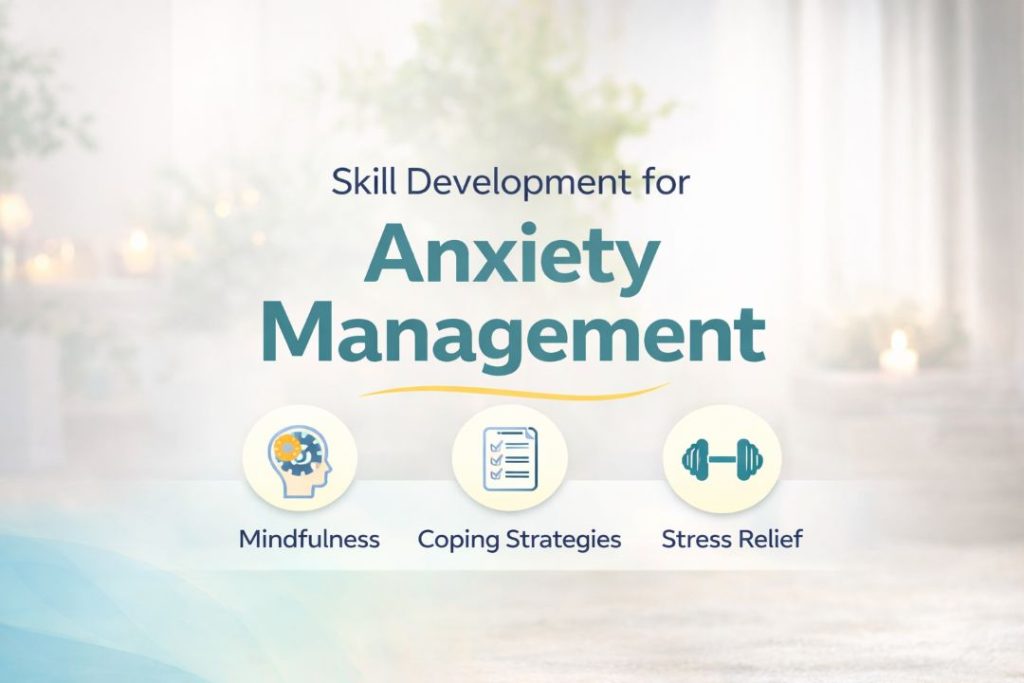
Skill Development for Anxiety Management
Anxiety-focused programs emphasize skill-building rather than symptom suppression. Skills are designed to help individuals respond differently to anxiety when it arises.
Common areas of skill development include:
- Breathing and grounding strategies
- Thought pattern awareness
- Emotional labeling and expression
- Stress tolerance techniques
Practicing these skills regularly builds confidence and resilience.
The Role of Environment in Anxiety Support
The physical and social environment significantly influences anxiety levels. Calm, structured spaces reduce sensory overload and support nervous system regulation.
Supportive environments often prioritize:
- Quiet, organized spaces
- Balanced daily activity levels
- Opportunities for reflection
- Supportive peer interactions
Environmental stability complements emotional skill-building.
Expert Advice: Structured anxiety care improves emotional regulation, engagement, and long-term stability.
Addressing Avoidance Patterns
Avoidance is a common response to anxiety, but it often reinforces fear over time. Anxiety treatment centers help individuals gently confront avoided situations while maintaining emotional safety.
This process supports:
- Increased confidence
- Reduced fear intensity
- Greater life participation
Gradual exposure allows anxiety to decrease naturally rather than escalate.
Family Involvement in Anxiety Support
Anxiety affects not only individuals but also families. Loved ones may unintentionally reinforce anxiety by accommodating avoidance or responding with fear.
Family-focused education helps:
- Improve communication
- Reduce misunderstanding
- Encourage supportive responses
- Strengthen emotional boundaries
Informed families create more supportive recovery environments.
Anxiety and Co-Occurring Challenges
Anxiety often overlaps with mood changes, trauma exposure, or substance use patterns. Addressing anxiety in isolation may limit effectiveness.
Integrated support considers:
- Emotional regulation difficulties
- Stress-related coping behaviors
- Interpersonal challenges
Comprehensive approaches support more durable outcomes.
Engagement and Retention in Anxiety Programs
Feeling understood and respected increases willingness to remain engaged in care. Anxiety treatment centers that emphasize collaboration and empowerment often experience stronger participation.
Retention is supported through:
- Trust-building relationships
- Clear expectations
- Individualized pacing
Sustained engagement improves long-term outcomes.
Long-Term Outcomes of Anxiety Treatment
Anxiety-focused support aims to help individuals live meaningful lives alongside manageable anxiety levels, rather than eliminating anxiety entirely.
Long-term benefits may include:
- Improved emotional regulation
- Increased confidence
- Reduced avoidance behaviors
- Stronger coping capacity
Recovery is measured by improved functioning and quality of life.
Central Florida as a Destination for Anxiety Support
Central Florida offers access to structured environments designed to promote emotional balance and recovery engagement. The region’s programs emphasize stability, routine, and compassionate support.
Many individuals seek care serving Central Florida to step away from daily stressors and focus fully on recovery goals.
FACT: Structured anxiety programs improve emotional regulation and engagement.
Anxiety can feel isolating, overwhelming, and exhausting when faced alone. Structured anxiety treatment centers offer environments designed to restore emotional safety, build resilience, and support meaningful change. With compassionate guidance and consistent structure, individuals can regain confidence and improve daily functioning.
Contact DeLand Treatment Solutions for Anxiety Support Guidance
Medical Disclaimer: This blog is for informational purposes only and is not a substitute for professional advice.
Key Takeaways
- Anxiety affects emotional, physical, and cognitive functioning
- Structured support reduces uncertainty and fear responses
- Emotional regulation skills form the foundation of anxiety recovery
- Safe environments promote engagement and stability
- Family education strengthens recovery support systems
- Long-term outcomes focus on resilience and quality of life
FAQs
What types of anxiety are supported at anxiety treatment centers?
Anxiety treatment centers commonly support generalized anxiety, panic-related symptoms, social anxiety, trauma-related anxiety, and intrusive thought patterns. Programs focus on understanding individual anxiety experiences and building emotional regulation skills that reduce symptom intensity while supporting long-term functioning and confidence across daily life situations.
How do anxiety treatment centers help with emotional regulation?
Anxiety treatment centers emphasize nervous system regulation through structured routines, grounding strategies, and emotional awareness. Individuals learn how anxiety develops, how stress responses activate, and how to respond effectively using practical skills that reduce intensity and promote calm without relying on avoidance behaviors.
Is anxiety treatment only for severe symptoms?
No. Anxiety treatment centers support individuals across a range of symptom levels. Structured care can be beneficial when anxiety interferes with relationships, work, sleep, or decision-making. Early support often prevents symptoms from escalating and helps individuals develop coping strategies before anxiety becomes more disruptive.
How long does anxiety-focused treatment usually last?
The length of anxiety-focused treatment varies based on individual needs, symptom patterns, and progress. Some individuals benefit from shorter structured support, while others require longer engagement to reinforce skills and confidence. Duration is typically guided by emotional stability, coping capacity, and personal recovery goals.
Can family involvement help anxiety recovery?
Yes. Family involvement often improves anxiety recovery by reducing misunderstandings and unhelpful responses. Education helps loved ones support regulation rather than avoidance, creating environments that reinforce coping skills, emotional safety, and consistent encouragement without increasing pressure or fear-based interactions.
What outcomes can individuals expect from anxiety treatment centers?
Outcomes often include improved emotional regulation, reduced avoidance, increased confidence, and better daily functioning. Rather than eliminating anxiety completely, treatment focuses on helping individuals manage anxiety effectively so it no longer controls decisions, relationships, or overall quality of life.
References
- National Institute of Mental Health
- Substance Abuse and Mental Health Services Administration
- National Institutes of Health
- Centers for Disease Control and Prevention
- American Psychiatric Association
- PubMed