In This Blog
- The difference between inpatient rehabilitation and outpatient rehabilitation
- Time commitment and everyday structure
- Supervision and the levels of support
- The factors of responsibility and lifestyle
- The change of care levels
- Making the correct choice according to your needs
When individuals or families start thinking of the available options of addiction treatment, the question they consider first is whether inpatient or outpatient rehabilitation is the most appropriate. The two are very widespread in the whole of Florida as well as the United States, but are very much contrasting in their way of building, strength, and unity of treatment into one’s life.
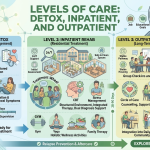
Inpatient rehab, it means that you are residing in a treatment center at a specific time as opposed to outpatient rehab, which means that you visit the treatment centers at some occasion at a fixed time as you continue to stay at home. They are all, in fact, not universally better than each other. Instead, they meet an assortment of needs, states, and recovery levels.
FACT: Recovery often involves transitioning between inpatient and outpatient care as needs change.
Understanding Inpatient Rehab
One type of treatment is inpatient rehab, or residential treatment, where patients are provided with full-time accommodation in a treatment facility. This paradigm takes people away from their regular life and gives them orderly assistance throughout the day.
The common type of inpatient rehab is the one that is typified by:
- 24-hour supervision
- Structured daily schedules
- On-site support staff
- Limited external influence
This is a profound method that is anchored on routine formation and stabilization.
Understanding Outpatient Rehab
In outpatient rehab, patients are provided with a chance to undergo treatment as they remain at home or as they remain in a supportive abode. The sessions are held regularly every few days every week.
Usually, outpatient rehab incorporates components which are:
- Routine therapy and education sessions
- Greater independence
- Continued work or family involvement
- Out-of-treatment time, which is individually controlled
This variant is directed to a pragmatic approach and flexibility.
Expert Advice: Appropriate care level depends on severity, stability, support needs, and recovery readiness.
Time Commitment Differences
One of the major differences between inpatient and outpatient rehabs is time commitment.
Inpatient rehab normally requires:
- Full-time participation
- Temporary break from work or school
- Remaining on-site for a course of weeks or months
Outpatient rehab allows:
- Part-time treatment programs
- Daily availability for work
- Flexible session frequency
Choice is normally affected by the availability of time.
Daily Structure and Routine
Structure plays a major role in the process of recovery. As far as the inpatient and outpatient programs are concerned, they provide diversity in day-to-day organization.
Inpatient programs provide:
- Highly programmed daily processes.
- Fixed time for diet, treatment, and activities
- Limited unstructured time
Outpatient programs offer:
- Structured sessions along with free time
- Intervened personal responsibility
- Real-world application of coping skills
Personal needs are not similar, varying from one individual to another.

Supervision and Support Levels
The availability of support between inpatient and outpatient rehab varies by a substantial margin.
Inpatient rehab offers:
- Continuous staff presence
- Immediate access to support
- Rigorous follow-up of healing in the early stages
Outpatient rehab provides:
- Frequent support offered by a professional
- Less frequent supervision
- Increased dependence on individual responsibility
The decisions on placement are likely to be affected by support needs.
Medical Oversight Considerations
Certain individuals need more medical attention, especially in the initial stages of recovery.
Inpatient rehab may include:
- Practitioners at the health care institution
- Stabilization surveillance
- Coordinated care services
Outpatient rebranding may include:
- Scheduled medical check-ins
- Outside medical coordination
- Greater self-responsibility
The level of care is dictated by medical needs.
Lifestyle and Responsibility Factors
The aspects of an individual’s lifestyle dictate whether inpatient or outpatient rehabilitation is more suitable for them.
Inpatient rehab can be used for individuals who:
- Need to be kept away from triggering environments
- Require complete involvement in treatment
- Can take a break from everyday duties
Outpatient rehab can be appropriate for individuals who:
- Come from good family backgrounds
- Need to work or fulfill caregiving roles
- Can take accountability for themselves
Individual circumstances are also important.
Environment and Distraction Management
Another significant difference is environmental control.
Inpatient rehab:
- Limits exposure to triggers
- Decrease in extraneous distractions
- Helps create a rehabilitative atmosphere
Outpatient rehab:
- Needs to deal with daily triggers
- Focuses on the use of skills
- Promotes maintaining boundaries
The two environments provide opportunities in learning.
Learn more about treatment options at DeLand Treatment Solutions
Accountability and Independence
While outpatient rehab places more emphasis on internal accountability, inpatient rehab puts more stress on external accountability.
Inpatient settings:
- Offer reminders and systematization consistently
- Reduce self-discipline to bare minimum since the very beginning
Outpatient settings:
- Require self-motivation
- Encourage independent decision-making
Shifting of accountability over time is required.
Comparing Inpatient and Outpatient Rehab
Feature | Inpatient Rehab | Outpatient Rehab |
Living arrangement | On-site | At home |
Supervision | 24/7 | Scheduled |
Flexibility | Limited | High |
Daily structure | Highly structured | Partially structured |
Transitioning Between Levels of Care
As they undergo the treatment process of recovery, many individuals transition between inpatient and outpatient rehab.
Transitions may include:
- Discontinuing from inpatient to outpatient
- Increasing support during difficult periods
- Regulation of intensity as stability increases
Recovery is often non-linear in nature.
Duration of Treatment
The two models differ in the duration of treatment.
Inpatient rehab may last:
- Several weeks
- A few months, depending on the individual’s needs
Outpatient rehab may continue:
- For months
- Through multiple phases
Duration varies from one person to another.
Financial and Insurance Considerations
Cost and insurance coverage may determine the possible choice of treatment.
Factors include:
- Insurance benefits
- Length of stay
- Level of services provided
Knowledge of the coverage can be applied in planning.
Emotional Readiness and Self-Awareness
Emotional readiness is highly influential in determining treatment type.
Inpatient rehab may support individuals who:
- Feel overwhelmed
- Need intensive guidance
Outpatient rehab may be appropriate for individuals who:
- Have developed coping mechanisms
- Feel ready for independence
Honest is quite useful in self-assessment.
Speak with DeLand Treatment Solutions to explore inpatient and outpatient rehab options
Family Involvement
Family involvement varies between inpatient and outpatient rehab.
Inpatient rehab:
- Often restricts direct contact in the beginning
- Concentrates on individual stabilization
Outpatient rehab:
- Enables ongoing family communication
- Promotes real-time communication changes
Family dynamics influence the making of choice.
Choosing Between Inpatient and Outpatient Rehab
Balance in safety, structure, responsibility, and support requirements is what one should evaluate while making a decision.
Helpful questions include:
- Do I need to be under constant observation?
- Will I be able to continue with day-to-day activities?
- What would be the most valuable framework for me?
Your decision can be supported by the help of mentorship.
There is an integrated inpatient and outpatient rehabilitation that is applicable at various levels of recovery of an individual as the level of stability improves.
An important process in the recovery planning is familiarity with the treatment choices. DeLand Treatment Solutions provides both inpatient and outpatient programs in the treatment that are concerned with the structure, flexibility, and informed decision making of the individual throughout the process.
Medical Disclaimer: “This blog is for informational purposes only and is not a substitute for professional medical advice.”
Key Takeaways
- Inpatient rehab works on a full-time basis
- Outpatient rehabilitation offers flexibility
- The levels of assistance are quite distinct
- Suitability is associated with lifestyle factors
- There is a very high level of cross over between levels by individuals
- The right decision is anchored on an individual’s needs
FAQs
What is the main difference between inpatient and outpatient rehab?
The main difference is living arrangement and supervision. Inpatient rehab requires individuals to live on-site with continuous support, while outpatient rehab allows individuals to live at home and attend scheduled sessions. Each option offers different levels of structure, flexibility, and daily responsibility management.
Is inpatient rehab more effective than outpatient rehab?
Inpatient rehab is not automatically more effective than outpatient rehab. Effectiveness depends on individual needs, stability, and support systems. Some people benefit from immersive structure, while others succeed with flexible outpatient care. Choosing the right level of care is more important than comparing effectiveness.
Who is outpatient rehab best suited for?
Outpatient rehab is often suitable for individuals with stable living environments, reliable support systems, and the ability to manage daily responsibilities. It allows people to apply recovery skills in real-world settings while maintaining work, family, or educational commitments alongside structured treatment sessions.
Can someone start in inpatient rehab and move to outpatient?
Yes, many individuals begin with inpatient rehab and later transition to outpatient care. This step-down approach allows for intensive stabilization first, followed by increased independence and flexibility. Transitioning helps maintain support while gradually integrating recovery skills into everyday life.
How do I know which option is right for me?
Determining the right option involves assessing safety, daily functioning, emotional readiness, and support needs. Speaking with experienced professionals can help evaluate personal circumstances objectively and recommend a level of care that aligns with current recovery goals and long-term stability planning.