
You are still foggy, constipated, or just off, hours after taking Imodium. So you’re sitting there thinking, How long do Imodium side effects last? Heck, is that a normal thing to wonder about? It is, and you are not doing too much to check it out.
Side effects of Imodium for a normal dose typically last for 8 to 12 hours, which is the usual duration of action. Loperamide has a half-life of approximately 10.8 hours, so that mild side effects such as drowsiness or constipation may persist for 1–2 days. The higher doses take much longer to pass, and come with increased health risks.
For most people, this is a manageable window that can be short. However, if you are asking this question because your friend or family member needs to take more and more Imodium, or because something about your loved one taking Imodium isn’t sitting right with you, things are completely different, and the risks are different.
Now, let’s go through how long each of these effects last, what causes that length of time, and when a lingering side effect is a cause for concern.
What Imodium Actually Does Once You Take It
Imodium, the brand name for loperamide, works by binding to opioid receptors in your intestinal wall, not your brain, to slow down digestion. That local action is why it controls diarrhea so effectively without producing a typical opioid high at normal doses.
At the standard over-the-counter dose, very little loperamide reaches your bloodstream or central nervous system. That changes dramatically once someone takes far more than directed.
According to a clinical review published on the NIH’s StatPearls platform, at recommended doses “almost no active loperamide is present in the systemic circulation,” though this protection breaks down at high doses.
How Long Does Imodium Side Effects Last After a Normal Dose
For a standard 2 mg dose, side effects like mild drowsiness, dry mouth, or constipation typically last 8 to 12 hours, in line with how long the drug remains active in your gut. Peak blood concentration is reached roughly 4 to 5 hours after swallowing a capsule.
Most people feel back to normal within a day. If diarrhea itself hasn’t resolved, that’s a different issue and worth a call to your doctor, especially past the two-day mark recommended for over-the-counter use.
100% Confidential Support is Available 24/7
No matter what you’re going through, you’re not alone. Our dedicated team is here to provide a safe, judgment-free space where you can talk openly and honestly. Whether you need emotional support, resources, or just someone to listen.
We’re here for you—completely confidential and always respectful of your privacy. Call us today!
Imodium’s Half-Life Explained
Loperamide’s elimination half-life averages 10.8 hours, with a typical range of 9.1 to 14.4 hours in healthy adults at recommended doses. It takes about five half-lives, roughly 45 to 72 hours, for the drug to clear your system almost completely.
Stage | Typical Timing |
Onset of relief | 1 to 3 hours |
Peak blood concentration | 4 to 5 hours |
Noticeable side effects fade | 8 to 12 hours |
Drug mostly cleared | 2 to 3 days |
This table reflects normal, directed use. Once someone starts taking more than recommended, every one of these numbers stretches out, sometimes dramatically.
Deland Treatment Solutions
Battling with Drug and Alcohol Addition? Remember, you are not alone and we are here to help you!
How Long Do Imodium Side Effects Last After Misuse or Overdose
At high, misused doses, Imodium’s half-life can stretch to as long as 41 hours, meaning side effects and health risks can persist for several days instead of one. The liver’s ability to break down the drug becomes overwhelmed, and it builds up in the body instead of clearing normally.
Fact: Half-lives up to 41 hours have been documented in people who took loperamide above the recommended dose.
This buildup is exactly why high-dose Imodium use is so dangerous. The heart-related side effects in particular don’t follow the same predictable timeline as the digestive ones.
Researchers writing in a pharmacology overview noted that following systemic absorption at high doses, loperamide’s half-life extends further still and warned that “the recommended dosage must therefore be adhered to in order to avoid potential toxicity.”
If you’re unsure why side effects are lasting longer than expected, DeLand Treatment Solutions can help you figure out what’s going.
Imodium Health Risks You Should Not Ignore
The most serious Imodium health risks involve the heart, including QT prolongation, a dangerous rhythm disturbance that can lead to cardiac arrest at high doses. This risk is why the FDA added a boxed warning to prescription Imodium labeling.
Beyond cardiac risks, other health risks include:
- Severe constipation, bloating, or abdominal swelling
- Urinary retention
- Central nervous system depression, including extreme drowsiness or confusion
- Paralytic ileus, a dangerous slowing or stopping of intestinal movement
Expert Advice: Never increase your Imodium dose without a doctor’s direction.
Factors That Affect How Long Imodium Side Effects Last
Dose size and frequency are the biggest factors in how long Imodium side effects last, but liver function, age, and other medications also play a real role. Someone with impaired liver function will clear the drug more slowly than someone in good health.
- Higher doses take longer to clear than standard doses
- Frequent, repeated dosing can cause the drug to accumulate
- Liver conditions slow elimination significantly
- Certain medications, including some antifungals, can extend loperamide’s half-life
- Older adults tend to process the drug more slowly than younger adults
Imodium Health Risks Linked to Opioid Use Disorder
Some people take Imodium in very high doses specifically to ease opioid withdrawal or chase a mild high, a pattern that dramatically raises every health risk discussed above. This misuse pattern has become common enough that emergency physicians actively screen for it.
- Doses in these cases often range from 60 mg to several hundred milligrams a day, far past the 8 mg over-the-counter limit
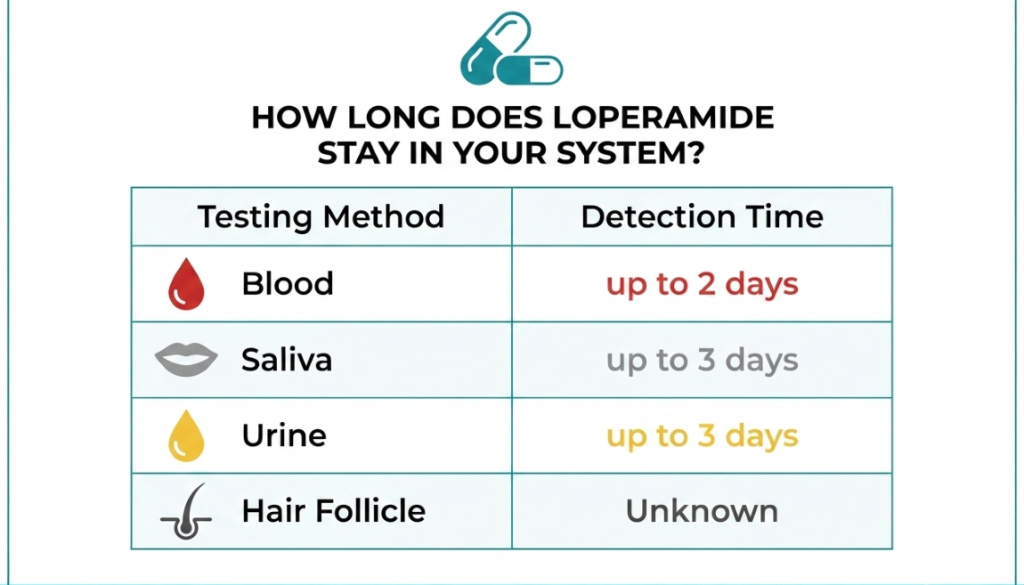
- Standard drug tests typically don’t detect loperamide, so misuse often goes unnoticed
- Stopping suddenly after heavy use can trigger withdrawal symptoms resembling those of other opioids
A case study published in psychiatric literature described successful treatment of loperamide use disorder using buprenorphine-naloxone, the same medication commonly used for opioid dependence.
When Imodium Side Effects Signal a Bigger Problem
If side effects last well beyond a day or two, or if someone needs increasing amounts to get relief, that pattern points to something beyond typical medication use. These are signs worth taking seriously rather than waiting out.
Watch for:
- Side effects that persist for several days instead of hours
- A pattern of taking Imodium far more often than diarrhea would require
- Heart palpitations, fainting, or chest discomfort
- Withdrawal-like symptoms when Imodium isn’t available
What to Do When Imodium Side Effects Won’t Go Away
If side effects haven’t improved after two to three days, stop taking Imodium and contact a medical provider right away, especially if there’s any chance the dose exceeded recommendations. An EKG may be needed to check for heart rhythm changes.
For ongoing or high-dose use tied to opioid dependence, a supervised medical evaluation and taper are far safer than stopping abruptly on your own. This is where professional support makes a real difference.

Imodium Health Risks Support at DeLand Treatment Solutions
If Imodium has become part of a bigger struggle with opioids in your family, DeLand Treatment Solutions offers residential and outpatient care built around the full picture, not just the symptom in front of you. Our team recognizes when Imodium misuse points to an underlying opioid use disorder that needs real treatment.
We offer Medication-Assisted Treatment alongside our opioid addiction treatment program, dual diagnosis treatment for co-occurring mental health needs, and our residential program, often described as the gold standard of care for individuals who need structured, 24-hour support to get stable. Our family therapy program helps loved ones understand what’s happening and how to help without enabling.
Our clinical team is accredited by The Joint Commission and licensed through FARR and NAATP, with every treatment plan built around a real clinical assessment rather than a one-size-fits-all approach.
Reach out through our contact page or call us to speak with someone who can help you sort out what’s really going on.
FAQs
How long do Imodium side effects last after a normal dose?
For most people taking Imodium as directed, mild side effects such as constipation, dizziness, or drowsiness usually last about 8 to 12 hours. This generally matches the medication’s active period before it begins clearing from the body and symptoms gradually improve.
How long does it take for Imodium to fully leave your system?
Imodium has an average elimination half-life of approximately 10.8 hours. It usually takes about 45 to 72 hours, or roughly two to three days, for the medication to be almost completely eliminated from the body of a healthy adult.
What are the biggest Imodium health risks?
The most serious risks of Imodium misuse include dangerous heart rhythm abnormalities such as QT prolongation, severe constipation, urinary retention, and central nervous system depression. These complications are much more likely with high doses than with recommended therapeutic use.
Do Imodium side effects last longer at higher doses?
Yes. High-dose or prolonged Imodium misuse can significantly extend the drug’s half-life, sometimes up to 41 hours. As a result, side effects and potentially dangerous complications may persist for several days instead of resolving within the usual timeframe after standard doses.
Can Imodium side effects come back after they seem to go away?
Yes. Taking additional doses before previous doses have fully cleared can cause loperamide to accumulate in the body. This buildup may cause side effects to return, become more intense, or last longer than expected, particularly with repeated or excessive use.
Why do some people take Imodium in very high doses?
Some people misuse high doses of Imodium in an attempt to reduce opioid withdrawal symptoms or produce mild opioid-like effects. Although it may seem accessible, this practice greatly increases the risk of serious heart problems, dependence, and other dangerous complications.
Is it safe to take Imodium every day?
Daily Imodium use should only occur under a healthcare provider’s supervision for certain chronic conditions. Using it every day without medical guidance increases the risk of drug accumulation, serious cardiac complications, constipation, and masking an underlying medical condition requiring evaluation.
What health conditions make Imodium riskier?
People with liver disease, existing heart rhythm disorders, or those taking medications that interfere with loperamide metabolism face a greater risk of complications. These conditions can slow drug clearance, prolong its effects, and increase the likelihood of dangerous side effects.
How do I know if Imodium side effects need medical attention?
Seek medical attention if side effects persist beyond two to three days or if you experience chest pain, fainting, an irregular heartbeat, severe abdominal swelling, difficulty breathing, or persistent vomiting. These symptoms may indicate a potentially serious complication requiring prompt evaluation.
Can stopping high-dose Imodium cause withdrawal?
Yes. People who regularly misuse high doses of Imodium may develop physical dependence and experience withdrawal symptoms similar to opioid withdrawal after stopping. Medical supervision can help manage symptoms safely and reduce the risk of complications during the withdrawal process.
Does Imodium show up on standard drug tests?
No. Standard workplace drug screening panels generally do not test for loperamide, the active ingredient in Imodium. However, specialized toxicology testing can detect it when specifically requested during medical evaluations or investigations involving suspected medication misuse.
Does insurance cover treatment for Imodium or opioid misuse?
Many major insurance plans cover addiction treatment services, although coverage varies by provider and policy. DeLand Treatment Solutions can verify your insurance benefits, explain available treatment options, and help you understand any expected out-of-pocket costs before beginning care.
References
- NIH/NCBI Bookshelf – StatPearls: Loperamide
- Drugs.com – Loperamide Prescribing Information
- FDA – Imodium Capsules Prescribing Information
- ScienceDirect Topics – Loperamide Overview
- Mayo Clinic – Loperamide (Oral Route) Side Effects
- Psychiatrist.com – Loperamide Addiction Treated With Buprenorphine/Naloxone
- CMAJ – Loperamide Abuse
- DeLand Treatment Solutions – Opioid Addiction Treatment
Medical Disclaimer: This article is for informational purposes only and is not a substitute for professional medical advice, diagnosis, or treatment; please consult a qualified healthcare provider and visit DeLand Treatment Solutions for personalized guidance.