In This Blog
- What does weed addiction mean
- Early warning signs of weed addiction
- Behavioral changes related to weed use
- Emotional and psychological symptoms
- Physical indicators of dependence on weed
- Social and lifestyle impacts
- Dangers of continued weed addiction
- When support may be needed
The weed is usually considered to be low risk but when one becomes addicted to the weed, with constant use and/or a lot of use, it may result in dependence in certain people. Weed addiction is an emergence of the inability to control the desire to consume the weed and begin to disrupt emotional control, motivation, and ability to meet the daily duties.
It is the awareness of the symptoms of weed addiction that will help individuals and families to catch the trends of the problematic behaviour before it gets out of control. Changing the tendencies that appear for a period of time are often forgotten from temporary habits and precisely for this reason consciousness is a very important step towards making a healthy choice.
Expert Advice: Addiction to weeds often happens gradually and responds well with early awareness.
What is Weed Addiction
With further use, a process of addiction to weeds takes place and results in psychological dependence and disruption of behavior. People are likely to continue its usage even though it hurts their concentration, relationships and productivity.
The consumption of the weed may increase with time towards becoming recreational, and eventually turning into compulsive. As such, turns out to be a major coping strategy, rather than an option.
Contact DeLand Treatment Solutions for trusted guidance
Early Warning Signs of Weed Addiction
Small changes to the way of behavior are typical in the beginning and they are more profound in actual usage.
Common early signs include:
- Increased frequency of use
- Difficulty cutting back
- within the possession or use of the weed obsession
- Irritability when not using
- Losing interest in one’s normal life.
Awareness to remote dependency can be prevented with early identification
Behavioral Changes Linked to Weed Addiction
Behavioral changes are commonly noted, which point at elevated dependence of weed for emotional control or stress alleviation.
Behavioral Change | Description |
Avoidance | Refraining from responsibilities or commitments |
Procrastination | Delayed tasks or reduced productivity |
Secrecy | Hiding consumption or minimizing concerns |
Routine disruption | Altered daily schedules |
Loss of interest | Decreased levels of participation in hobbies |
These behavioural tendencies, if left unchecked, may only get worse.
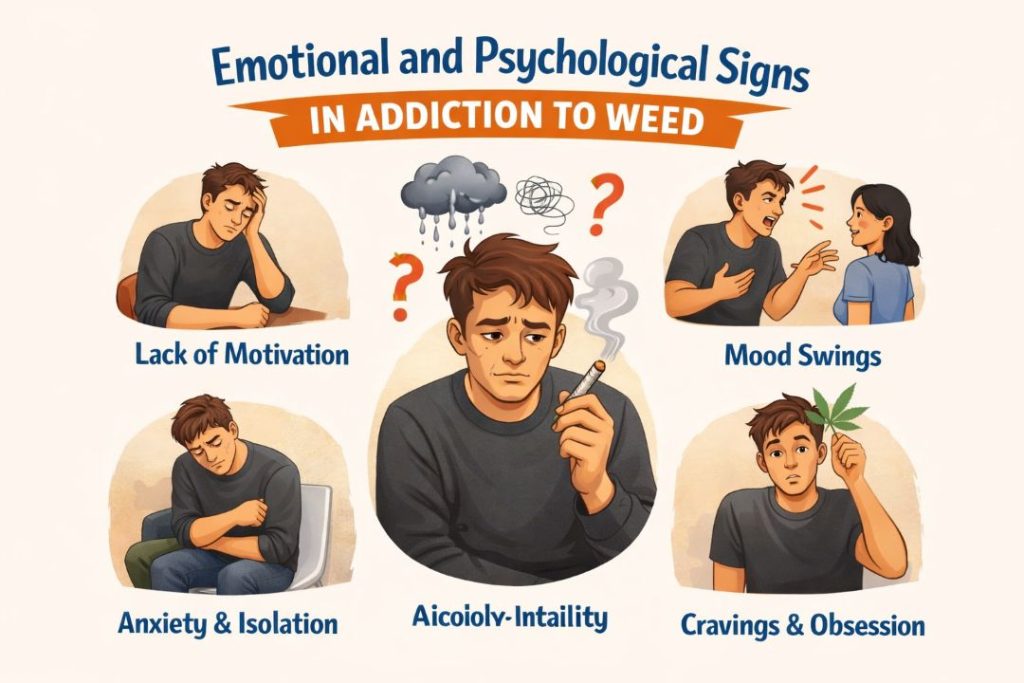
Emotional and Psychological Signs
In the long run, emotional control and clarity of mind may be a problem caused by an addiction to weed.
The major affective and cognitive symptoms include:
- More anxiety or nervousness.
- Weakened feeling or loss of emotions.
- On the side of abuse, irritation should abstinence.
- Difficulty concentrating
- Reduced stress tolerance
There is a tendency for emotional symptoms to perpetuate the use.
Physical Indicators of Weed Addiction
Even though the physical will be dissimilar, there are certain indicative signs to dependency still exist.
The physical manifestations that might happen are:
- Sleep disruption
- Changes in appetite
- Low energy levels
- Slowed reaction time
- Persistent fatigue
Symptoms can be measured in terms of physical symptoms, which are also accompanied by behaviour and emotional changes.
Social and Lifestyle Impacts
Relationships and corresponding daily structure can be affected by addiction to weed.
Area Affected | Common Impact |
Relationships | Increased conflict or withdrawal |
Work or studies | Declining performance |
Finances | Spending prioritization |
Daily routine | Irregular schedules |
Social life | Reduced engagement outside use |
Lifestyle disruption is an indicator of growing dependence.
Risks of Ongoing Weed Addiction
Constant addiction of the weed may lead a person to be emotionally not stable and may fail in developing his/her personal life. In long term the practice strengthens the avoidances behaviours and reduced the capacity of becoming resilient to challenges or stress.
Responding to the risks on time facilitates the long term balance.
DeLand Treatment Solutions offers confidential addiction guidance
When Support May Be Needed
The assistance could be proper in the event of the usage of the weed interfering with the obligations, emotional condition or individual ambitions in the individual. Being unable to stop smoking, having too much need or change in behaviour are some of the highlights.
Counseling may be utilized to introduce sanity in life and come up with positive coping skills.
FACT: Regular weed use can reduce motivation and emotional resilience over time.
Medical Disclaimer: This article is for informational purposes only and is not a substitute for professional medical advice.
Key Takeaways
- Addiction to weed can develop gradually through habitual and uncontrolled use
- Behavioral, emotional, and lifestyle changes are common early warning signs
- Trouble cutting back is a symptom of increasing weed dependence
- Established weed use may disrupt motivation, concentration, and daily schedules
- Early awareness improves the chances of regaining balance and control
FAQs
What are the common signs of addiction to weed?
Signs include frequent use, difficulty cutting back, irritability without weed, low motivation, and disrupted routines. Over time, emotional reliance may develop, causing individuals to prioritize weed over responsibilities or personal goals. Recognizing these patterns early helps reduce the risk of long-term dependence.
Can weed addiction affect mental well-being?
Yes, addiction to weed may impact emotional balance, focus, and stress tolerance. Some individuals experience increased anxiety, low mood, or emotional numbness. These effects can persist with continued use and may interfere with relationships, productivity, and overall life satisfaction.
Is it possible to be addicted to weed?
Yes, some individuals develop dependence on weed, especially with frequent or long-term use. Addiction occurs when use becomes compulsive and difficult to control despite negative consequences. Psychological reliance and behavioral disruption are key indicators rather than physical effects alone.
How does weed addiction impact daily life?
Weed addiction can disrupt routines, reduce motivation, and affect performance at work or school. Social withdrawal, financial strain, and emotional instability may also occur. These changes often develop gradually, making them harder to recognize without deliberate self-reflection or outside input.
When should someone seek help for weed addiction?
Support may be helpful when weed use interferes with goals, relationships, or emotional balance. Difficulty stopping, increased reliance, or declining daily functioning are strong signs. Early guidance improves the ability to regain control and establish healthier coping habits.