In This Blog
- Defining Autism Spectrum Disorder
- Distinguishing Developmental Conditions from Mental Health
- Common Co-occurring Mental Health Challenges
- The Importance of a Monitored Setting
- Navigating Structured Support Options
Autism Spectrum Disorder is a brain disorder and a developmental disorder that influences the interaction of the individuals, their communication and perception of the world. Since it has been included in the Diagnostic and Statistical Manual of Mental Disorders, there has been confusion as to whether it should be considered a mental health disorder strictly speaking. When it comes to the recovery services setting, it is crucial to be aware of this difference to offer proper, evidence-based care, which does not violate the individual, unique neurological composition of a person.
Autism is not an interim condition that may be fixed, but a life long trait of brain connectivity. Although it is not a mental health condition in a more conventional sense, neurodivergent people tend to operate in a world not created around their sensory or social requirements. This discrepancy may cause considerable stress, and it is imperative to offer a treatment environment, in which the primary emphasis should be put on stability, understanding, and specialized professional supervision to guarantee overall well-being.
Expert Advice: Autism is not a first-line mental illness or disorder but a developmental disorder.
Distinguishing Developmental Conditions from Mental Health
Another major divergence in professional recovery setting is the dissimilarity between a developmental condition and mental health disorder. Developmental disorders such as autism develop at a young age and entail differences in the maturation of the brain. These differences affect social communication, sensory processing, and repetitive behaviour. These do not represent a deviation out of some prior condition of healthy mental functioning.
Conversely, mental illnesses are usually developed by mood, thinking, or behavior changes which make one feel uncomfortable, and which can change with time. Although an individual may treat or even remit a mental health issue, autism is permanent in the lives of an individual. To develop and deliver systematic care to neurodivergent individuals, the dosage of standard normal must be considered to be different and thus it is important to formulate customized care within any following environment.
Comparison of Condition Types
The table below brings out the fundamental differences between developmental conditions and mental health disorders to help develop an idea of the extent of professional supervision.
Feature | Developmental Condition (Autism) | Mental Health Disorder (e.g., Depression) |
Origin | Early childhood/neurobiological | Can emerge at any age |
Duration | Lifelong/Permanent | May be episodic or temporary |
Primary Impact | Communication and sensory processing | Mood, emotion, and perception |
Goal of Support | Skills and environmental adaptation | Symptom reduction and stabilization |
Call the DeLand Treatment Solutions, in case you have any concerns regarding structured care.
Common Co-occurring Mental Health Challenges
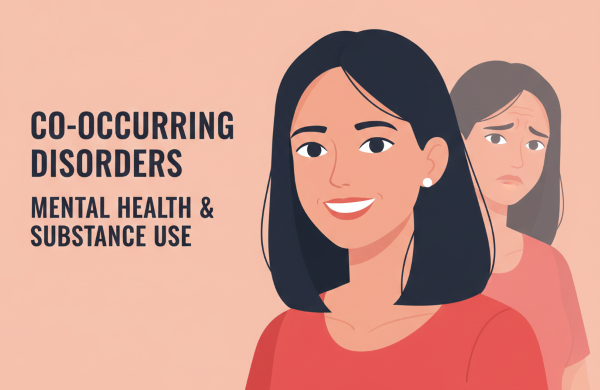
Autism is not a mental health condition, but people with the disorder are predisposed to other co-occurring mental health conditions. In a treatment setting, the professionals would tend to witness increased levels of anxiety, social fatigue and mood fluctuations. They are often by-products of existence in a society that might not support neurodivergent sensory requirements or communication patterns.
To most people, it burns them because, to adapt to societal expectations, they are forced to mask or conceal their autistic tendencies or character. Some of the symptoms of different mental conditions may resemble this burnout. An observed environment enables a subtle evaluation to decide whether one is facing an independent mental illness or an individual is responding to the environmental stress and demands an adjustment of his/her supervision regimen.
The Role of Sensory Processing and Environment
One of the essential elements of the autistic experience that can be misinterpreted in the non-professional environment is sensory processing. Hypersensitivity or hyposensitivity to light, sound, touch, or smell is common with many neurodivergent persons. The physical environment is also to be managed with appropriate care in a recovery services setting to avoid the state of sensory overload, which may indicate severe distress or a meltdown.
Sensory Category | Potential Hypersensitivity | Potential Hyposensitivity |
Auditory | Distress from buzzing lights | Seeking loud rhythmic noises |
Visual | Pain from fluorescent lighting | Fascination with bright lights |
Tactile | Dislike of certain clothing textures | High pain tolerance/seeking pressure |
Vestibular | Discomfort with sudden movement | Constant spinning or rocking |
These factors are considered in a structured care program because it establishes low-stimulus zones and routines that are predictable. With reduced environmental stressors the individual will be able to concentrate on coping and communication skills. Such a professional control will make sure that the environment helps and not impedes the personal growth of the individual towards their personal objectives.
Your needs are the information about the recovery services that DeLand Treatment Solutions provides.
Navigating Structured Support Options
Organized autism care is aimed at the development of functionality and increased life quality. This mostly entails a multidisciplinary team in a treatment setting. As opposed to a more conventional clinical environment where the healing process is grounded entirely on a fixation of a problem, neurodivergent-affirming care is based on the discovery of strengths and the support of instruments to overcome obstacles. The methodology honors the autonomy of the individual but provides the relevant professional control.
Some of the support may involve speech therapy, occupational therapy and coaching social skills. These interventions are embedded in a whole plan that will deal with the profile of the individual in a controlled environment. It is aimed at promoting independence and resilience, and the person should be able to find the sources he/she needs to succeed in different social and work contexts without losing his/her neurodivergent identity.
Communication Styles and Social Interaction
The number of social communication is among the most important cases under which autistic people might need an assisted approach. This does not imply that the way they communicate is wrong, it is the fact that they are not like the majority. Autistic communication is usually straightforward and concrete-oriented and uses non-verbal communications in a different manner such as eye contact or gestures.
The professionals strive to overcome the interracial gap in communication in a recovery services environment. This is the imparting of social navigation, and not coercion to conformity.
FACT: Autism influences the brain structure and neurons connection with other people.
The Importance of Routine and Predictability
Predictability is one of the pillars of proper support in a treatment setting of neurodivergent individuals. Drastic schedule and expectation shifts may lead to a high degree of anxiety. An observed environment gives a predictable structure within which the person will be aware of what to anticipate during his or her day. This stability enables the nervous system to stay in control, thus it becomes easy to learn and develop.
Routines in a recovery services model do not only concern a schedule; they mean giving the feeling of safety. Once a person becomes safe, he or she can better discover new abilities and cope with the symptoms of any mental health comorbidity.
Long-Term Wellness and Neurodivergent Identity
The eventual objective of a structured care program is to make the person self-reliant in living a full life. This entails the transformation of an autism deficit approach to an autism neurodiversity approach. Wellness here refers to possessing the requisites to deal with the sensory requirements, to communicate and to have a mental health balance without losing the true self.
It is important to keep the access to supervised support during various life transitions. There is a possibility that, as a person passes through one or another period of life, his/her support requirements will vary. A professional recovery climate provides the flexibility so that these plans can be changed at any time so that the person will have a safety net and roadmap to go by when dealing with the intricacies of a neurotypical world.

DeLand Treatment Solutions has a professional atmosphere that allows people to concentrate on their healing process. We focus on the role of a monitored environment in our services because all people should be provided with the right amount of managed care based on their individual conditions. By making a decision in favor of a structured approach, you are making a decision in favor of a background of safety and professional control which would facilitate the shift towards a healthier and more stable way of life.
Medical Disclaimer: This blog is for informational purposes only and is not a substitute for professional medical advice.
Key Takeaways
- Autism is a lifelong developmental condition related to brain maturation.
- It is distinct from mental health disorders but often co-occurs with them.
- Professional oversight is essential for managing sensory and communication needs.
- Structured care focuses on skills and environmental adaptation rather than “cures.”
- A monitored setting reduces the risk of sensory overload and social burnout.
- Respecting neurodivergent identity is a core component of modern recovery services.
FAQs
Is autism classified as a mental illness?
No, autism is a developmental and neurological condition rather than a mental illness. While it is listed in diagnostic manuals for professional oversight, it describes how the brain develops. Recovery services focus on providing a treatment environment that supports these neurological differences rather than attempting to treat them as an illness.
Can mental health disorders accompany autism?
Yes, individuals with autism often experience co-occurring challenges like anxiety or depression. These are often treated within a monitored setting alongside developmental support. Supervised support is necessary to distinguish between the core traits of autism and the symptoms of a mental health disorder to provide the most effective care possible.
How does structured care help autistic individuals?
Structured care provides a predictable treatment environment that minimizes sensory stress and supports social communication. By offering professional oversight, these programs help individuals develop functional skills for daily life. This supervised support is tailored to the individual’s unique sensory profile and communication style, fostering greater independence and long-term wellness.
What is the role of sensory processing?
Sensory processing refers to how the brain perceives light, sound, and touch. Many autistic individuals experience these inputs more or less intensely than others. In a recovery services context, professionals manage the environment to prevent sensory overload, which is a key factor in maintaining emotional and physical stability.
Why is professional oversight necessary for autism?
Professional oversight ensures that an individual’s support plan is evidence-informed and adapted to their changing needs. Within a monitored setting, experts can provide the necessary interventions for communication and sensory regulation. This structured approach provides the stability needed for individuals to navigate social challenges and maintain overall mental health.