Treatment for a mental health disorder doesn’t necessarily involve going into an inpatient treatment center. Many people would find that concept enough to put off treatment for months and even years. There’s the worry about the routine, the fear of work, and the wondering about family duties; all of these make an excuse to put it off.
However, most people do not get enough information about another option. Outpatient mental health care allows you to develop true recovery skills while maintaining the connection to your life. No overnight stays. No quitting your job, your family for weeks on end. Implementing well-structured, evidence-based care where you are.
If you (or someone you know) felt like inpatient treatment was too much to handle, this is for you. So what is outpatient mental health treatment, who is it best for, what can be expected, and how to determine if it’s the right choice.
Outpatient Mental Health Treatment
Outpatient mental health treatment is professional care for mental health conditions and co-occurring substance use disorders that does not require an overnight stay at a treatment facility. Individuals attend scheduled therapy sessions, groups, and clinical programming during the day or evening, then return home when sessions are complete.
It is not a lower standard of care than inpatient treatment. It is a different level of care, suited to different circumstances and stages of recovery. Many people move from inpatient or residential treatment into an outpatient program as they stabilize. Others begin their recovery journey in outpatient care from the start.
According to SAMHSA, outpatient treatment is one of the most utilized forms of behavioral health care in the United States, with millions of people accessing it annually for conditions ranging from anxiety and depression to dual diagnosis and trauma.
Mental Health Treatment: The Levels Explained
Outpatient mental health treatment is not a single program. It is a category that includes several distinct levels of care, each offering a different intensity of support. Understanding the differences helps you identify where in the continuum of care the right fit is.
Partial Hospitalization Program (PHP)
A Partial Hospitalization Program is the most intensive form of outpatient mental health treatment. According to CMS clinical guidelines, PHP requires 20 or more hours of structured therapeutic programming per week, typically delivered across five days.
PHP is designed for people who need close clinical oversight but do not require 24-hour residential care. It bridges the gap between inpatient treatment and less intensive outpatient options. A typical PHP day includes individual therapy, group therapy, psychiatric evaluation, medication management, and psychoeducation.
PHP is best suited for:
- People stepping down from inpatient or residential treatment
- Individuals with moderate to severe symptoms who can remain safe at home
- Those managing co-occurring substance use and mental health conditions
- People who need more structure than standard outpatient therapy provides
Intensive Outpatient Program (IOP)
An Intensive Outpatient Program provides structured behavioral health care for 9 to 19 hours per week, typically across three to four days. This allows participants to attend work, school, or manage family responsibilities around their treatment schedule.
IOP includes a combination of individual counseling, group therapy, family therapy where appropriate, skills-building workshops, and medication management. Sessions are available during daytime or evening hours at many treatment centers, making this one of the most flexible options in the mental health continuum of care.
IOP is best suited for:
- People who have completed PHP or residential treatment and are continuing to build recovery skills
- Individuals with mild to moderate symptoms who have a stable home environment
- Those managing work, school, or family responsibilities alongside treatment
- People who need more support than weekly outpatient therapy but do not require daily intensive programming
Standard Outpatient Treatment
Standard outpatient treatment involves individual therapy, group sessions, or medication management appointments on a less frequent schedule, typically one to three sessions per week. This is appropriate for individuals who have stabilized through a higher level of care and are now maintaining their progress, or for those whose conditions do not require intensive programming.
Seeking help from DeLand Treatment Solutions provides essential guidance
100% Confidential Support is Available 24/7
No matter what you’re going through, you’re not alone. Our dedicated team is here to provide a safe, judgment-free space where you can talk openly and honestly. Whether you need emotional support, resources, or just someone to listen.
We’re here for you—completely confidential and always respectful of your privacy. Call us today!
Who is Outpatient Mental Health Treatment Right For?
Outpatient mental health treatment is not appropriate for everyone at every stage of their recovery. Understanding who it works best for helps ensure the right level of care is chosen.
Outpatient Treatment Is a Strong Fit When:
- Symptoms are stable enough that the person is not an immediate risk to themselves or others
- There is a safe and supportive home environment to return to each day
- The person can reliably attend scheduled sessions without the structure of a residential setting
- Treatment is needed for a co-occurring mental health and substance use disorder at a manageable stage
- The person is transitioning from a higher level of care and needs continued support without full residential programming
- Work, school, or caregiving responsibilities make residential treatment impractical, and the person’s clinical presentation allows for outpatient care
When Inpatient or Residential Treatment May Be Needed First:
- Symptoms are severe and pose an immediate safety risk
- There is no stable or supportive home environment
- A previous attempt at outpatient treatment did not produce stabilization
- The person is in the early stages of recovery from a severe substance use disorder requiring medical detox
- Chronic relapse patterns indicate that more intensive, structured care is needed before outpatient is appropriate
A licensed clinician will assess each person individually to determine the right starting point. The goal is always to use the level of care that matches the level of need, without over- or under-treating.
Deland Treatment Solutions
Battling with Drug and Alcohol Addition? Remember, you are not alone and we are here to help you!
Conditions Treated in Outpatient Mental Health
Outpatient mental health treatment is designed to address a wide range of behavioral health conditions, both independently and in combination with substance use disorders.
Mental Health Conditions Commonly Treated
- Anxiety disorders, including generalized anxiety, panic disorder, and social anxiety
- Major depressive disorder and persistent depressive disorder
- Bipolar disorder
- Post-traumatic stress disorder (PTSD)
- Obsessive-compulsive disorder (OCD)
- Borderline personality disorder and other personality disorders
- Schizoaffective disorder and thought disorders
- ADHD
- Dissociative disorders
- Mood disorders
Co-Occurring Substance Use Disorders
Outpatient mental health treatment is especially effective for dual diagnosis presentations, where a mental health condition and a substance use disorder occur together. According to SAMHSA’s 2024 National Survey on Drug Use and Health, 21.2 million adults in the United States live with both a mental health condition and a substance use disorder simultaneously.
Research published in Psychiatric Services found that integrated outpatient treatment for dual diagnosis patients, addressing both conditions at the same time, results in high rates of engagement, reduced hospitalization, and remission of substance use for many participants. Treating mental health and addiction separately, or treating one while ignoring the other, significantly reduces the likelihood of lasting recovery.
What Happens in Outpatient Mental Health Treatment?
People often assume outpatient treatment is simply a weekly therapy session. It is considerably more structured than that, especially at the PHP and IOP levels.
A Typical Week in an Outpatient Program May Include:
- Individual therapy: One-on-one sessions with a licensed therapist to work through the personal and clinical challenges driving symptoms
- Group therapy: Facilitated sessions where individuals work through shared experiences, build interpersonal skills, and offer and receive support
- Family therapy: Sessions that involve loved ones in the recovery process, addressing relationship dynamics and building a stronger support network at home
- Psychiatric evaluation and medication management: Assessment and ongoing monitoring by a psychiatrist or prescriber, adjusting medications as needed to support stability
- Psychoeducation: Structured learning about conditions, how they affect the brain and behavior, and practical skills for managing symptoms
- Holistic and skills-based therapy: Mindfulness, recreational therapy, and other approaches that support nervous system regulation, stress management, and quality of life
- Crisis planning: Development of a personalized safety plan for managing difficult periods outside of scheduled sessions
At the IOP level, sessions are typically offered in morning, afternoon, or evening blocks, giving participants real flexibility to maintain work and family life alongside treatment.
Benefits of Outpatient Mental Health Treatment
Outpatient mental health treatment offers specific advantages that make it the preferred option for many individuals and families.
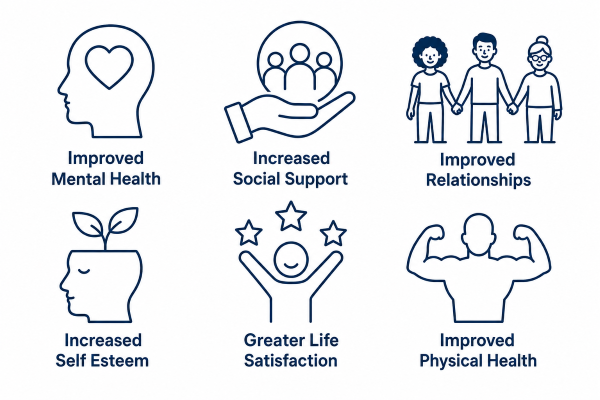
You Stay Connected to Your Life
Recovery does not happen in a bubble. Skills learned in outpatient treatment are practiced in real-time, in the actual environments where daily life takes place. This builds genuine coping capacity rather than skills that only work in a controlled setting.
Flexibility for Real-World Responsibilities
IOP and outpatient programs are specifically designed to work around work schedules, parenting responsibilities, and school commitments. Evening and daytime session options make access realistic for people who cannot step away from their lives for weeks or months.
Cost Efficiency
Outpatient treatment is significantly less expensive than residential or inpatient care. As of January 2024, Medicare expanded coverage of IOP services, and most private insurance plans cover PHP and IOP under mental health parity laws, meaning behavioral health benefits must be comparable to medical benefits.
Family Involvement
Because individuals in outpatient treatment remain at home, families are naturally more involved in the recovery process. Many outpatient programs incorporate family therapy and education sessions, which research consistently shows improves recovery outcomes.
Continuity of Progress
Moving from inpatient to PHP to IOP to outpatient is a natural and clinically supported progression. Each step represents growth and increased independence while maintaining professional support for as long as it is needed.
Outpatient Mental Health Treatment and Dual Diagnosis
One of the most important things to understand about outpatient mental health treatment is that it is fully equipped to address co-occurring disorders, not just standalone mental health conditions.
The self-medication cycle is one of the most common pathways to dual diagnosis. A person experiencing untreated anxiety or depression begins using alcohol or another substance to manage the emotional pain. Over time, the substance use worsens the underlying condition, and both disorders become entrenched. By the time someone reaches treatment, they are managing two interconnected problems that require integrated care.
Outpatient dual diagnosis treatment addresses both conditions simultaneously within the same program. This includes individual and group therapy that covers both the mental health condition and the substance use disorder, medication management for both where appropriate, and relapse prevention planning that accounts for the ways mental health and substance use trigger each other.
Outpatient vs. Inpatient Mental Health Treatment
Understanding how outpatient and inpatient treatment differ helps you choose the right starting point.
Factor | Outpatient Treatment | Inpatient or Residential Treatment |
Living situation | Return home each day | Stay at the facility overnight |
Intensity | 9 to 20+ hours per week | Structured care 24 hours a day |
Best for | Stable symptoms, safe home environment | Severe symptoms, safety concerns, or unstable environment |
Flexibility | High: fits around work and family | Low: requires stepping away from daily life |
Cost | Lower | Higher |
Dual diagnosis care | Yes, integrated programs available | Yes, typically more intensive |
Duration | Weeks to several months | Days to several weeks |
Most people who begin in inpatient treatment transition to outpatient care as part of a planned step-down process. The two levels of care are not competing options. They are part of the same continuum, used at different stages of the same recovery journey.
How to Know If You Are Ready for Outpatient Treatment
These questions can help you and your family assess whether outpatient mental health treatment is the right fit right now.
- Are your symptoms currently stable enough that you can safely return home each day?
- Do you have a supportive, drug- and alcohol-free home environment?
- Are you able to attend sessions reliably without round-the-clock supervision?
- Have you completed a higher level of care and are ready for the next step?
- Are your mental health and any substance use challenges manageable enough for outpatient-level support?
If you answered yes to most of these, outpatient mental health treatment is likely a strong fit. If you answered no to several, a clinical assessment will help determine whether a higher level of care is the safer starting point.

DeLand Treatment Solutions Outpatient Mental Health Care
If you are ready to take the next step, DeLand Treatment Solutions in DeLand, Florida offers compassionate, evidence-based outpatient mental health treatment tailored to individuals managing mental health conditions, substance use disorders, and dual diagnosis presentations.
DTS provides a full continuum of behavioral health care, including Inpatient Mental Health Rehab, Dual Diagnosis Treatment, Co-Occurring Substance Use Disorders Treatment, Medication-Assisted Treatment (MAT), and Medication Management, with structured outpatient programming designed to support individuals at every stage of recovery.
To explore options for supervised support, contact DeLand Treatment Solutions
FAQs
What is mental health treatment outpatient?
Outpatient mental health treatment is professional behavioral health care that does not require an overnight stay at a facility. Individuals attend structured therapy sessions, groups, psychiatric evaluations, and clinical programming during designated hours, then return home. It spans multiple levels of intensity, from Partial Hospitalization Programs (PHP) to Intensive Outpatient Programs (IOP) to standard outpatient therapy.
What is the difference between PHP and IOP?
PHP requires 20 or more hours of structured programming per week and provides a higher level of clinical oversight, suitable for individuals stepping down from inpatient care or managing more acute symptoms. IOP delivers 9 to 19 hours of treatment per week across three to four days, offering more flexibility for people balancing work or family alongside recovery. Both are forms of outpatient care.
Who is outpatient mental health treatment designed for?
It is designed for individuals whose symptoms are stable enough that they do not require around-the-clock supervision, who have a safe and supportive home environment, and who can reliably attend sessions. It is appropriate for people stepping down from residential treatment, those managing mild to moderate symptoms, and individuals with dual diagnosis conditions.
Can outpatient treatment address both mental health and addiction?
Yes. Integrated dual diagnosis outpatient programs treat both a mental health condition and a co-occurring substance use disorder simultaneously within the same program. Research published in Psychiatric Services found that this integrated approach results in high rates of engagement and remission for many dual diagnosis patients compared to treating each condition separately.
How long does outpatient mental health treatment last?
Duration varies based on the individual’s condition, treatment goals, and progress. PHP programs typically last two to six weeks before transitioning to IOP. IOP programs commonly run six to twelve weeks. Standard outpatient therapy may continue for several months to over a year. Treatment length is always guided by the individual’s clinical needs, not a fixed schedule.
Is outpatient mental health treatment covered by insurance?
Most private insurance plans cover PHP and IOP services under mental health parity laws, which require equivalent coverage for mental health and substance use care compared to medical care. As of January 2024, Medicare also expanded coverage to include IOP services. Coverage specifics vary by plan, so it is always worth contacting your insurance provider or asking the treatment center’s admissions team to verify benefits.
What therapies are offered in outpatient mental health treatment?
Evidence-based therapies commonly offered include Cognitive Behavioral Therapy (CBT), Dialectical Behavior Therapy (DBT), EMDR, Acceptance and Commitment Therapy (ACT), trauma-informed approaches, mindfulness-based therapy, family therapy, individual therapy, and group therapy. The specific combination of therapies depends on the individual’s diagnosis and treatment needs.
What is the difference between outpatient treatment and weekly therapy?
Standard weekly therapy involves one session per week with a therapist. Outpatient treatment at the PHP or IOP level is significantly more intensive, combining multiple types of therapy, group programming, psychiatric care, and skills training across several hours and multiple days per week. It provides a level of structure and clinical depth that individual weekly therapy is not designed to match.
Can I work or go to school while in outpatient treatment?
Many people do. IOP programs in particular are structured to allow participants to maintain employment or school commitments, with sessions offered in morning, afternoon, or evening blocks. PHP requires more hours per week and may make full-time work difficult during the active program phase, though many participants manage part-time responsibilities.
How do I know if I need outpatient or inpatient treatment?
A clinical assessment by a licensed mental health professional is the most reliable way to determine the right level of care. Generally, inpatient treatment is recommended when symptoms are severe, when there is a safety concern, or when a stable home environment is not available. Outpatient treatment is appropriate when symptoms are manageable and a safe, supportive home situation exists.
What happens after outpatient treatment ends?
Recovery does not end when formal programming concludes. Most individuals transition to aftercare support, which may include continued individual therapy, peer support groups, alumni programs, and ongoing medication management. These resources maintain the progress built during active treatment and significantly reduce the risk of relapse.
What conditions does outpatient mental health treatment address?
Outpatient programs treat a broad range of conditions including anxiety disorders, depression, bipolar disorder, PTSD, OCD, personality disorders, ADHD, thought disorders, dissociative disorders, and co-occurring substance use disorders. Integrated dual diagnosis treatment is available within the outpatient framework and addresses both mental health and addiction together.
References
- SAMHSA. Key Substance Use and Mental Health Indicators in the United States: 2024. SAMHSA.gov
- Centers for Medicare and Medicaid Services. Intensive Outpatient Program Coverage Expansion 2024. CMS.gov
- National Institute of Mental Health. Substance Use and Co-Occurring Mental Disorders. NIMH.NIH.gov
- Psychiatric Services. Integrated Outpatient Treatment for Dual Diagnosis Patients. PsychiatryOnline.org
- Journal of Clinical Medicine. Co-Occurring Substance Use and Psychiatric Disorders: A Comprehensive Review. 2024. MDPI.com
- MedlinePlus. Dual Diagnosis. MedlinePlus.gov
- Cleveland Clinic. Dual Diagnosis: Co-Occurring Disorders. ClevelandClinic.org
- SAMHSA. Co-Occurring Disorders and Other Health Conditions. SAMHSA.gov
- American Psychological Association. Cognitive Behavioral Therapy. APA.org
This content is for educational purposes only and does not constitute medical advice. If you or someone you love is struggling, please consult a qualified healthcare provider or contact DeLand Treatment Solutions for professional support.