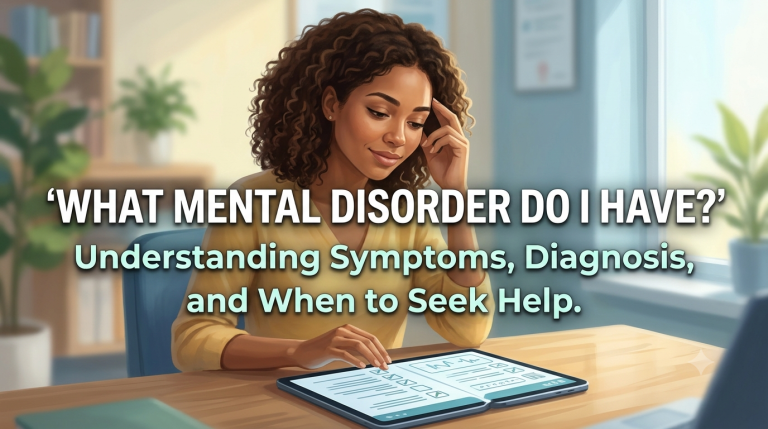
Something feels off. It is impossible to precisely label it. Sometimes it is a weight you can’t get rid of, a blankness that makes everything you have cared about seem far away and gray. Sometimes, the problem is the other way round: a tightness in the chest, a mind that can’t slow down and a sense of dread with no real focus.
Perhaps it’s been in process for some time. Perhaps you’ve begun to wonder if you are experiencing anxiety, depression or a combination of both. Perhaps the lack of knowledge is making everything difficult.
Among the most prevalent mental disorders in the world are anxiety and depression. Knowing the distinction between them and how they are linked is one of the best things you can do on your journey towards receiving the right kind of assistance.
Anxiety and Depression
Anxiety and depression are two distinct mental health disorders that have different core features, different neurobiological origins and somewhat different treatment requirements. However, they are often a combination for many people, and can have similar symptoms and be closely linked.
The National Institute of Mental Health (NIMH) identifies anxiety disorders as the most prevalent category of mental health conditions in the United States. Depression, meanwhile, is among the leading causes of disability worldwide, affecting an estimated 280 million people globally according to the World Health Organization (WHO).
Most people think of anxiety as too much: too much worry, too much fear, too much activation. And depression is too little: too little energy, too little motivation, too little feeling. That framing is a useful starting point. But the clinical reality is more nuanced and more important to understand if you are trying to figure out what is happening and what to do about it.
What is Anxiety?
Anxiety is a mental health condition characterized by persistent, excessive fear or worry that is disproportionate to the actual situation and interferes significantly with daily functioning.
Some anxiety is normal and even adaptive. Before an important presentation, a difficult conversation, or an uncertain outcome, feeling worried makes evolutionary sense. Anxiety becomes a clinical condition when it is persistent, excessive, difficult to control, and disrupts how a person lives.
The anxiety disorder category covers several distinct conditions, each with its own features:
- Generalized Anxiety Disorder (GAD) involves chronic, pervasive worry about a wide range of everyday concerns: health, finances, relationships, work, and the future. The worry is difficult to control, present most days, and accompanied by physical symptoms such as muscle tension, fatigue, difficulty concentrating, and disrupted sleep.
- Panic Disorder involves recurrent, unexpected panic attacks, sudden surges of intense fear accompanied by physical symptoms including racing heart, shortness of breath, chest tightness, dizziness, and a sense of impending doom or unreality. The attacks are followed by persistent worry about future attacks and behavioral changes to avoid triggering them.
- Social Anxiety Disorder involves intense fear of social or performance situations driven by concern about embarrassment, negative evaluation, or humiliation. It leads to significant avoidance that restricts work, relationships, and daily life.
Other anxiety disorders include specific phobias, agoraphobia, and separation anxiety disorder, each with distinct presentations but the same underlying engine: excessive, distressing fear that the person cannot reliably control.
Core Features of Anxiety
The emotional and physical experience of anxiety tends to cluster around the following:
- Persistent, excessive worry or fear about one or more concerns
- Physical arousal: elevated heart rate, chest tightness, shallow breathing, muscle tension, sweating, trembling
- Restlessness or feeling on edge, often described as an inability to relax or settle
- Difficulty sleeping, particularly falling asleep due to a racing mind
- Hypervigilance: scanning the environment for potential threats
- Avoidance of situations, people, or places associated with fear
- Concentration difficulties due to worry occupying mental space
- Fatigue, paradoxically, from the physical and cognitive effort of sustained arousal
What is Depression?
Depression is a mental health condition characterized by persistent low mood, loss of interest in activities previously enjoyed, and a range of physical and cognitive symptoms that impair daily functioning.
Like anxiety, some sadness and grief are normal parts of human experience. Clinical depression is something categorically different. It is not ordinary sadness in response to a loss or disappointment. It is a persistent, pervasive condition with measurable neurobiological underpinnings that does not lift on its own within a few days and cannot be resolved simply by deciding to feel better.
The depression treatment landscape covers several conditions:
- Major Depressive Disorder (MDD) is defined by one or more major depressive episodes lasting at least two weeks, with symptoms present nearly every day.
- Persistent Depressive Disorder (PDD, formerly dysthymia) involves chronic, lower-level depressive symptoms lasting at least two years. The symptoms may not reach the threshold for a major depressive episode, but the persistent nature creates significant long-term impairment.
- Seasonal Affective Disorder involves depressive episodes tied to seasonal changes, most commonly arriving in fall and winter as daylight decreases and lifting in spring.
- Postpartum Depression involves major depressive episodes emerging after childbirth, affecting approximately 10 to 15% of new mothers and requiring specific clinical attention.
Core Features of Depression
The emotional and physical experience of depression tends to cluster around the following:
- Persistent depressed, empty, or hopeless mood present nearly every day
- Markedly diminished interest or pleasure in almost all activities, including ones previously enjoyed (anhedonia)
- Significant changes in weight or appetite, usually unintentional
- Sleep disruption: either insomnia or sleeping excessively
- Psychomotor changes: either slowing down noticeably or feeling agitated and unable to sit still
- Profound fatigue and loss of energy even without physical exertion
- Feelings of worthlessness or excessive, inappropriate guilt
- Difficulty concentrating, thinking clearly, or making decisions
- Recurrent thoughts of death or suicide, with or without a specific plan
Research Note: The WHO estimates that 3.8% of the global population lives with depression, including 5% of adults and 5.7% of adults over 60. Globally, approximately 280 million people are affected, making depression a leading contributor to global disability burden.
Seeking help from DeLand Treatment Solutions provides essential guidance
Differences Between Anxiety and Depression
Anxiety is oriented toward the future, and depression is oriented toward the past and present, but that is only the beginning of the distinction.
Understanding the key differences between the two conditions helps clarify why accurate diagnosis is so important and why treatment is not entirely interchangeable.
Feature | Anxiety | Depression |
Core emotional experience | Excessive fear, worry, and dread | Persistent sadness, emptiness, or numbness |
Time orientation | Future-focused: what might go wrong | Past or present: what has been lost |
Energy level | Often elevated, restless, on edge | Typically depleted, exhausted, slow |
Sleep pattern | Difficulty falling asleep, mind racing | Insomnia or hypersomnia |
Motivation | Often present, but blocked by fear | Often absent; difficulty starting anything |
Pleasure | Can still experience pleasure when safe | Anhedonia: reduced capacity for pleasure |
Physical arousal | High: racing heart, muscle tension, sweating | Low: heaviness, slowing, fatigue |
Thinking style | Worry, catastrophizing, overestimating threat | Rumination, hopelessness, self-blame |
Avoidance pattern | Avoids feared situations or triggers | Withdraws from almost everything |
Outlook | “Something bad will happen.” | “Nothing will ever get better” |
Symptoms in Anxiety and Depression
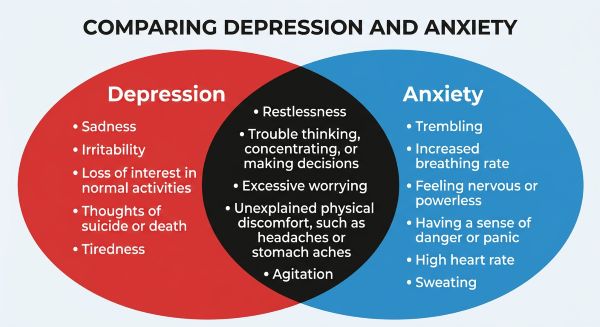
Despite their differences, anxiety and depression share a meaningful cluster of symptoms that makes them harder to distinguish than most people expect.
Overlapping symptoms that appear in both conditions include:
- Sleep disruption: Anxiety typically causes difficulty falling asleep. Depression causes difficulty getting out of bed. But both conditions consistently disrupt sleep quality and architecture.
- Concentration difficulties: Racing, worried thoughts in anxiety and slow, sluggish cognition in depression both impair the ability to focus and retain information.
- Fatigue: The sustained effort of anxiety’s hyperarousal is physically draining. Depression produces fatigue through a different mechanism, but both leave people exhausted.
- Irritability: Frequently associated with anxiety but also present in depression, particularly in men, adolescents, and people with atypical depressive presentations.
- Physical complaints: Both conditions commonly present with physical symptoms including headaches, muscle tension, gastrointestinal disturbance, and general bodily discomfort.
- Social withdrawal: Anxiety drives avoidance of feared social situations. Depression drives withdrawal from nearly all social contact. The behavioral outcome, isolation, looks similar from the outside.
- Difficulty with daily functioning: Both conditions impair work performance, relationships, and the ability to manage basic responsibilities when they are clinically significant.
This overlap is one reason that anxiety and depression are so frequently confused and also why getting a thorough, professional clinical assessment matters so much. The treatment implications differ enough that getting the diagnosis right is not a formality.
When Anxiety and Depression Occur Together
Anxiety and depression co-occur far more frequently than most people realize. For many individuals, they are not two separate problems but two aspects of the same clinical picture.
Research published in the American Journal of Psychiatry confirms that anxiety disorders and major depression are highly comorbid, together classified within the broader category of internalizing disorders. Studies consistently show that anxiety disorders generally precede major depressive disorder, meaning anxiety tends to develop first, with depression following later.
A study examining comorbidity rates found that having both conditions simultaneously was associated with more complex symptoms, greater treatment challenges, and significantly increased functional impairment compared to having either condition alone.
When anxiety and depression co-occur, several patterns are common:
- Anxious depression: Depression that presents with prominent worry, agitation, and anxiety features. Research from the STAR*D study found that anxious depression is harder to treat and associated with slower, less complete recovery than non-anxious depression.
- Depressed anxiety: Anxiety disorders complicated by secondary depression, often developing when the avoidance patterns of anxiety restrict life so significantly that hopelessness and loss of purpose follow.
- Mixed presentation: Features of both conditions present simultaneously, without a clear primary diagnosis, which requires careful clinical assessment to distinguish from conditions like bipolar disorder.
What Causes Anxiety and Depression?
Neither anxiety nor depression has a single cause. Both arise from the complex interaction of genetic vulnerability, neurobiological factors, life experiences, and environmental stressors.
Shared Risk Factors
Some risk factors increase vulnerability to both conditions:
- Genetics: Family history of either anxiety or depression significantly elevates individual risk. Genetic factors account for roughly 30 to 40% of depression risk and a similar proportion of anxiety disorder risk.
- Early adverse experiences: Childhood trauma, abuse, neglect, and attachment disruption are strongly associated with both anxiety and depressive disorders in adulthood.
- Chronic stress: Prolonged exposure to uncontrollable stressors depletes the neurobiological systems that regulate both mood and anxiety response.
- Neurobiological overlap: Both conditions involve dysregulation in serotonin, norepinephrine, and GABA systems. Both show differences in the structure and activity of the amygdala, prefrontal cortex, and hippocampus.
- Substance use: Alcohol and drug use both trigger and worsen anxiety and depressive disorders, creating self-reinforcing cycles.
Where They Diverge
While they share risk factors, anxiety and depression tend to activate different systems in different ways. Anxiety involves dysregulation in the threat-response system, hyperactivation of the amygdala, and overproduction of stress hormones, including cortisol and adrenaline. Depression involves dysregulation in the reward and motivation systems, often accompanied by blunting of the stress response over time through exhaustion of the HPA axis.
How are Anxiety and Depression Treated?
Both conditions respond to evidence-based treatment, and for people with both, integrated care that addresses each condition is essential.
Psychotherapy for Anxiety and Depression
- Cognitive Behavioral Therapy (CBT) has one of the strongest and most consistent evidence bases for both anxiety and depression. For anxiety, CBT challenges catastrophic thinking and uses exposure-based techniques to reduce avoidance. For depression, CBT restructures negative thought patterns and uses behavioral activation to break withdrawal cycles. For co-occurring presentations, CBT addresses both simultaneously.
- Dialectical Behavior Therapy (DBT) is particularly valuable for people whose anxiety or depression is driven by emotional dysregulation. Its skills in distress tolerance, emotion regulation, mindfulness, and interpersonal effectiveness build the foundational capacities that both conditions erode.
- Acceptance and Commitment Therapy (ACT) reduces the experiential avoidance that maintains both anxiety and depression and builds values-based engagement with life even in the presence of difficult internal experiences.
- Trauma Therapy and EMDR are essential when trauma history is maintaining or driving anxiety and depressive symptoms. Treating surface-level anxiety and depression without addressing underlying trauma often produces incomplete or temporary results.
- Mindfulness Meditation Therapy reduces the hyperarousal of anxiety and interrupts the ruminative thought patterns of depression, building present-moment awareness that both conditions undermine.
- Individual Therapy provides a consistent, personalized therapeutic relationship that allows deeper work with both conditions over time.
- Group Therapy reduces isolation, builds interpersonal effectiveness, and provides the peer connection that anxiety-driven withdrawal and depression-driven withdrawal both erode.
- Family Therapy is important because both anxiety and depression affect relational systems. Family members often inadvertently reinforce avoidance patterns in anxiety and withdrawal in depression, and therapy helps everyone involved respond more effectively.
Medication for Anxiety and Depression
For both anxiety disorders and depressive disorders, SSRIs (selective serotonin reuptake inhibitors) and SNRIs (serotonin-norepinephrine reuptake inhibitors) are first-line medication treatments. This shared pharmacological approach reflects the neurobiological overlap between the two conditions.
For anxiety, benzodiazepines may be used short-term for acute relief but are not recommended for long-term management due to tolerance and dependence risk. Buspirone is an alternative for GAD with less dependence potential.
Medication management by a qualified psychiatric prescriber, coordinated with psychotherapy, consistently produces better outcomes than either approach alone. Weekly psychiatric medication evaluation and management ensures medications are optimized over time as the clinical picture evolves.
Levels of Care for Anxiety and Depression
Level of Care | Best For |
Severe presentations, safety concerns, or acute destabilization requiring 24-hour support | |
Co-occurring anxiety/depression and substance use disorder | |
PTSD Treatment Program | Anxiety or depression rooted in or complicated by trauma |
Individual and Group Outpatient | Stable presentations requiring ongoing therapeutic support |
Aftercare Program | Sustained recovery maintenance after intensive treatment |
Lifestyle Factors That Support Recovery From Both Conditions
The evidence base for lifestyle interventions alongside professional treatment is consistent and meaningful for both anxiety and depression.
- Sleep: Both conditions disrupt sleep; poor sleep worsens both. Protecting sleep with consistent timing, a calming pre-sleep routine, and limiting alcohol and screen exposure before bed supports recovery across both diagnoses.
- Physical activity: Regular exercise reduces anxiety through its effect on the autonomic nervous system and reduces depression through neuroplasticity, dopamine regulation, and the behavioral activation of completing something. Even 30 minutes of moderate exercise most days produces measurable clinical benefit.
- Social connection: Both anxiety and depression promote isolation. Deliberate maintenance of social connection, even when it feels effortful, is one of the most protective behaviors available.
- Limiting alcohol and substances: Alcohol worsens depression acutely and interferes with anxiety regulation over time. Cannabis worsens anxiety in many people. Both impair the effectiveness of psychotherapy and medications.
- Nutrition: Emerging research continues to support the gut-brain connection. A diet that supports microbiome health, including whole foods, fermented foods, and adequate fiber, correlates meaningfully with mood and anxiety outcomes.
Warning Signs That Professional Help Is Needed
Both anxiety and depression respond to professional treatment, and early intervention consistently produces better outcomes than waiting. Seek professional evaluation when:
- Symptoms have persisted for two weeks or longer without improvement
- Daily functioning at work, in relationships, or in self-care is significantly impaired
- You are using alcohol or substances to manage anxiety or lift your mood
- Sleep is consistently disrupted for weeks at a time
- Thoughts of self-harm or suicide are present, even passively
- You feel unable to experience pleasure in things that used to matter to you
- Anxiety has restricted your life significantly through avoidance
- The feelings are intensifying rather than resolving over time
If thoughts of self-harm or suicide are present, call 988 (the Suicide and Crisis Lifeline) or go to the nearest emergency room immediately. Do not wait for a scheduled appointment.

Get Anxiety and Depression Treatment at DeLand Treatment Solutions
If you are trying to figure out whether you are dealing wit h anxiety, depression, or both, the most important next step is a thorough, professional clinical assessment, not a self-diagnosis from a checklist. DeLand Treatment Solutions provides exactly that, along with the comprehensive, individualized care that both conditions require.
DTS offers specialized anxiety disorder treatment, depression treatment programs, and integrated care for co-occurring presentations within a clinical program built around the specific needs of each person.
Call us or reach out online today. You deserve to know what is actually happening and to get care that is built around it.
FAQs
What is the main difference between anxiety and depression?
Anxiety is primarily characterized by excessive fear, worry, and physical tension related to future concerns. Depression involves persistent sadness, hopelessness, low energy, and loss of interest in activities. Anxiety often creates heightened activation, while depression is more commonly associated with emotional withdrawal and reduced motivation.
Can you have both anxiety and depression at the same time?
Yes. Anxiety and depression frequently occur together and can significantly affect daily functioning. When both conditions are present, symptoms are often more severe and complex. Effective treatment typically addresses both disorders simultaneously through therapy, medication management, lifestyle changes, and other evidence-based mental health interventions.
Which comes first, anxiety or depression?
Research suggests anxiety disorders often develop before depression, particularly when anxiety begins during childhood or adolescence. Ongoing worry, avoidance, and emotional distress can increase vulnerability to depression over time. However, every situation is unique, and some individuals experience depression before developing significant anxiety symptoms.
How do I know if I have anxiety or depression?
A comprehensive mental health evaluation is the most reliable way to determine whether anxiety, depression, or both are present. Anxiety commonly involves excessive worry and physical tension, while depression is marked by persistent low mood, fatigue, hopelessness, and loss of interest in previously enjoyable activities.
Do anxiety and depression have the same treatment?
They share several effective treatments, including CBT, certain medications, and other evidence-based therapies. However, treatment approaches may differ depending on the condition. Anxiety often benefits from exposure-based strategies, while depression frequently emphasizes behavioral activation and increasing engagement in meaningful daily activities and relationships.
How does anxiety cause depression?
Anxiety can lead people to avoid situations, relationships, and opportunities they perceive as stressful or threatening. Over time, this avoidance may create isolation, reduced enjoyment, and a diminished sense of purpose. These experiences can contribute to the development of depressive symptoms and long-term emotional distress.
What are the physical symptoms of anxiety and depression?
Anxiety commonly causes rapid heartbeat, muscle tension, sweating, trembling, dizziness, and digestive issues. Depression often involves fatigue, sleep disturbances, appetite changes, headaches, and feelings of physical heaviness. Both conditions can affect overall health, weaken resilience to stress, and disrupt normal daily functioning over time.
Are anxiety and depression genetic?
Both anxiety and depression have genetic components that may increase a person’s vulnerability to developing these conditions. However, genetics alone do not determine outcomes. Environmental influences, life experiences, stress levels, relationships, and coping skills all interact with inherited risk factors to influence mental health.
Is it possible to recover from both anxiety and depression?
Yes. Anxiety and depression often respond well to evidence-based treatments such as CBT, DBT, ACT, trauma-focused therapies, and medication when appropriate. Many individuals experience significant symptom improvement or remission. Early intervention, consistent treatment, and addressing co-occurring issues can greatly improve recovery outcomes.
When should someone seek professional treatment for anxiety or depression?
Professional help should be considered when symptoms last more than two weeks, interfere with daily responsibilities, worsen over time, or contribute to unhealthy coping behaviors. Immediate support is especially important when self-harm or suicidal thoughts are present. Early treatment often leads to better long-term outcomes.
Does substance use cause anxiety and depression?
Substance use can contribute to both anxiety and depression or make existing symptoms worse. Alcohol, stimulants, cannabis, and withdrawal from various substances can affect mood regulation and emotional stability. Treating both mental health and substance use conditions together generally provides the strongest foundation for recovery.
What is anxious depression?
Anxious depression is a form of depression that includes significant anxiety symptoms alongside persistent sadness, hopelessness, and loss of interest. Individuals may experience constant worry, restlessness, tension, and emotional distress. This presentation is often more severe and may require treatment strategies targeting both conditions simultaneously.
References
- National Institute of Mental Health (NIMH) — Anxiety Disorders
- National Institute of Mental Health (NIMH) — Depression
- World Health Organization (WHO) — Mental Disorders Fact Sheet
- Anxiety and Depression Association of America (ADAA) — Understand Anxiety and Depression
- American Journal of Psychiatry — The Critical Relationship Between Anxiety and Depression
- BMC Medicine — Comorbidity Between Depression and Anxiety: Bridge Mental States
- Mayo Clinic — Anxiety Disorders: Symptoms and Causes
- DeLand Treatment Solutions — Anxiety Disorder Treatment
This content is for informational purposes only and does not constitute medical advice or a clinical recommendation. For a personalized assessment, please consult a licensed mental health professional. To learn more about evidence-based mental health and addiction treatment in Florida, visit delandts.com or call (386) 866-8689.