What is a Borderline Episode?
Imagine experiencing emotions so intense that they feel like a storm inside your body, emotions you can’t control, can’t predict, and can’t escape. Imagine feeling completely fine one moment, then crushed by despair the next. Imagine intense fear that someone you care about might leave you, combined with uncontrollable anger at perceived rejection, followed by overwhelming shame about your own behavior.
This is what many people with Borderline Personality Disorder experience during an episode. A BPD episode isn’t just “having a bad day” or “being moody.” It’s a crisis of emotion so severe it overwhelms your ability to think clearly, maintain relationships, or feel safe. Understanding what a BPD episode looks like, both for those experiencing it and for those supporting them, is the first step toward compassion, appropriate help-seeking, and meaningful recovery.
What is Borderline Personality Disorder?.
Borderline Personality Disorder is a mental health condition characterized by pervasive instability. People with BPD experience extreme difficulty regulating emotions, maintaining stable relationships, controlling impulsive behaviors, and maintaining a consistent sense of self. It’s called “borderline” because historically it was thought to be on the border between psychosis and neurosis, a term no longer commonly used but which stuck as the name.
The core features of BPD include:
- An intense, all-consuming fear of abandonment, whether real or imagined. People with BPD interpret minor slights as rejection and catastrophize about being left alone.
- Unstable and intense relationships that alternate between idealizing and devaluing others. Someone might be viewed as perfect one day and completely unworthy the next.
- An unstable self-image and sense of self. People with BPD may be unclear about their values, career goals, sexual orientation, or other core aspects of identity.
- Impulsive, self-destructive behaviors, including substance abuse, binge eating, reckless spending, or self-harm.
- Difficulty regulating emotions, experiencing feelings in extremes.
- Persistent feelings of emptiness.
- Inappropriate, intense anger that’s difficult to control.
- Transient, stress-related paranoia or dissociation (feeling disconnected from reality).
BPD affects approximately 1-2 percent of the general population. It occurs twice as frequently as schizophrenia yet receives far less public awareness. It’s more commonly diagnosed in women, though this may reflect differences in presentation rather than actual prevalence.
What is a BPD Episode?
A BPD episode is a period of extreme emotional distress where symptoms intensify significantly and typically last from hours to several days.
During an episode, someone with BPD experiences emotions and impulses at an intensity most people rarely, if ever, feel. It’s as though emotional intensity has been amplified a hundredfold. What might be a minor disappointment for others becomes, for someone with BPD, a devastating rejection that feels unbearable.
Episodes are often triggered by perceived rejection, abandonment, or interpersonal conflict. However, the trigger itself often seems minor to observers, which creates a confusing dynamic where others don’t understand why someone is reacting so intensely.
During a BPD episode, a person may cycle rapidly through multiple emotional states, anger, despair, anxiety, and shame. sometimes within the same hour. They may engage in desperate actions to prevent abandonment, become verbally or physically aggressive, engage in self-harm, or make statements about wanting to die.
100% Confidential Support is Available 24/7
No matter what you’re going through, you’re not alone. Our dedicated team is here to provide a safe, judgment-free space where you can talk openly and honestly. Whether you need emotional support, resources, or just someone to listen.
We’re here for you—completely confidential and always respectful of your privacy. Call us today!
Common Triggers for BPD Episodes
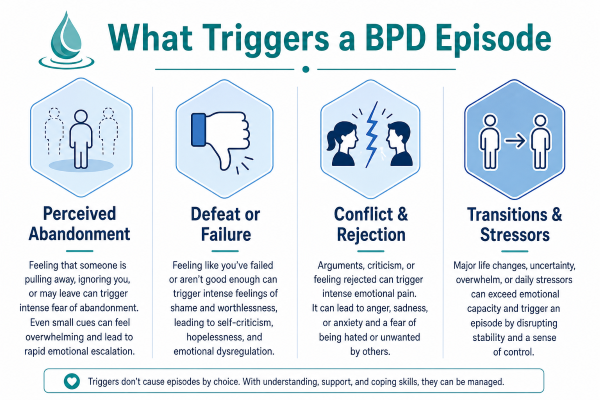
Understanding what triggers episodes helps with both prevention and response.
Perceived or Real Abandonment: This is the most common trigger. It can be something major like a breakup or something seemingly minor like a partner taking longer than usual to text back. To someone with BPD, any perceived threat to the relationship can trigger an episode.
Rejection or Criticism: Real or imagined rejection triggers intense shame and fear. Constructive criticism that someone else might take in stride can feel like proof that they’re fundamentally flawed.
Relationship Conflict: Arguments, disagreements, or tension in relationships are major triggers. The fear that conflict means the relationship will end can escalate a minor disagreement into an episode.
Reminders of Past Trauma: If someone with BPD has a trauma of abuse, abandonment, or invalidation, reminders of these events, whether direct or tangential, can trigger flashbacks and episodes.
Feeling Invalidated: When emotions are dismissed, criticized, or told they’re “overreacting,” this can intensify an episode because it confirms their fear that no one understands them.
Interpersonal Stress: Work conflicts, family tension, or social rejection can trigger episodes.
Transitions or Changes: Changes to routines, relationships, or circumstances can trigger episodes because of the underlying fear that change means loss.
Substance Use and Withdrawal: Alcohol and drugs can lower emotional regulation capacity and trigger episodes.
Sleep Deprivation and Physical Stress: Being tired, sick, or physically stressed reduces emotional regulation and can trigger episodes.
Seeking help from DeLand Treatment Solutions provides essential guidance
Deland Treatment Solutions
Battling with Drug and Alcohol Addition? Remember, you are not alone and we are here to help you!
What a BPD Episode Looks Like
While episodes vary significantly between individuals, certain patterns are commonly observed.
Emotional Signs:
- Rapid mood swings, shifting from rage to despair to fear to shame within minutes
- Extreme emotional intensity that’s disproportionate to the situation
- Overwhelming sadness or hopelessness
- Intense anxiety or panic
- Extreme anger or rage
- Overwhelming shame or humiliation
- Feelings of emptiness or numbness
- Acute suicidal ideation (80% of people with BPD experience this during episodes)
Behavioral Signs:
- Self-harm (cutting, burning, excessive scratching)
- Suicidal gestures or threats
- Substance abuse (using drugs or alcohol to numb emotions)
- Reckless behaviors (dangerous driving, excessive spending, sexual recklessness)
- Verbal outbursts or aggressive language
- Extreme clinging or demanding behaviors
- Isolation or withdrawal
- Self-sabotage (quitting a job, failing on purpose, damaging relationships)
- Disordered eating patterns
Cognitive Signs:
- Catastrophic thinking (“This is unbearable,” “Everyone hates me,” “I’m worthless”)
- All-or-nothing thinking (seeing situations and people as entirely good or entirely bad)
- Paranoid thinking (interpreting neutral actions as hostile)
- Confusion about identity or values
- Difficulty concentrating or remembering
- Racing thoughts
Dissociative Signs:
- Feeling disconnected from body or surroundings
- Feeling like watching yourself from outside your body
- Time distortion (time seeming to move slowly or quickly)
- Emotional numbness despite crisis
BPD Episode vs. Other Conditions
BPD episodes are sometimes confused with other conditions, but they have distinct characteristics.
BPD Episode vs. Bipolar Disorder: While both involve mood changes, bipolar episodes typically last days to weeks, while BPD episodes last hours to days. Bipolar episodes are triggered by internal neurochemistry, while BPD episodes are usually triggered by interpersonal stress. Bipolar disorder includes manic episodes with decreased need for sleep and grandiosity; BPD doesn’t. The fear of abandonment is central to BPD but not to bipolar disorder.
BPD Episode vs. Anxiety Attack: An anxiety attack is triggered by perceived threat and involves primarily anxiety and panic symptoms. A BPD episode involves multiple intense emotions (anger, despair, shame, fear) and includes impulsive behaviors beyond what occurs in an anxiety attack.
BPD Episode vs. Depression: While both involve sadness, a BPD episode includes rapid mood changes, relationship-focused distress, and impulsivity. Depression is a more persistent low mood without the rapid fluctuations or relationship-focused triggers.
BPD Episode vs. Anger Outburst: While anger is prominent, a BPD episode involves much more; it’s a multifaceted emotional crisis. The anger is usually reactive to perceived rejection rather than a primary mood disorder.
BPD Episode Phases and Duration
Understanding the typical progression of an episode helps with management:
Phase | Duration | Characteristics | Management |
Pre-Episode Triggers | Variable | Recognition of trigger, initial emotional response begins | Identify trigger, use coping skills early |
Escalation | 15 minutes to 2 hours | Increasing emotional intensity, racing thoughts, physical agitation | Grounding techniques, distraction, support |
Peak Crisis | 1-6 hours | Maximum emotional intensity, high impulsivity risk, possible self-harm or suicidal thoughts | Safety planning, crisis intervention, professional help |
De-escalation | 1-4 hours | Gradual decrease in emotional intensity, emerging shame or exhaustion | Validation, self-compassion, processing |
Post-Episode | Hours to days | Emotional exhaustion, shame about behavior, difficulty sleeping | Rest, reflection, relationship repair |
Getting Help During and After a BPD Episode
Managing BPD episodes requires both crisis response and long-term treatment.
During an Episode:
- Call a crisis line or emergency services if there’s risk of self-harm or suicide. Having crisis numbers available beforehand is crucial.
- Tell a trusted person you’re having an episode and ask for support (though this requires pre-established safety planning).
- Use grounding techniques to reorient yourself to reality (focusing on five things you see, four you can touch, three you hear, two you smell, one you taste).
- Engage in intense physical exercise to burn off the emotional energy.
- Use ice, cold showers, or other extreme sensations that engage the vagus nerve and interrupt the emotional escalation.
- Avoid making important decisions or engaging in relationships during the peak of the episode.
- Practice self-compassion, recognizing you’re experiencing a medical crisis, not a character flaw.
Long-Term Management:
- Dialectical Behavior Therapy (DBT) is the gold standard treatment for BPD. It teaches emotion regulation, distress tolerance, mindfulness, and interpersonal effectiveness.
- Individual psychotherapy helps process trauma and develop healthier relationship patterns.
- Medication, while not directly treating BPD, can help manage co-occurring depression or anxiety.
- Building a strong support network of understanding people.
- Developing personalized crisis plans with your treatment team.
- Identifying and managing triggers.

Getting Help at DeLand Treatment Solutions
BPD is a serious condition, but it’s highly treatable. Many people with BPD who receive specialized treatment experience significant improvement.
DeLand Treatment Solutions offers comprehensive treatment for Borderline Personality Disorder and other personality disorders. We understand that BPD episodes are frightening for both the person experiencing them and their loved ones, and we provide evidence-based care.
Our approach includes:
- Comprehensive BPD Assessment and diagnosis
- Dialectical Behavior Therapy (DBT) is specifically designed for BPD
- Individual Therapy addressing trauma and relationship patterns
- Group Therapy for peer support and skill-building
- Psychiatric Evaluation and medication management if needed
- Crisis Intervention when episodes occur
- Intensive Outpatient Programs for structured support
- Residential Treatment for severe presentations
- Family Therapy to heal relationships
With proper treatment, people with BPD develop stronger emotion regulation skills, more stable relationships, and fewer episodes.
If you or a loved one is struggling with BPD or experiencing episodes, help is available. Call us or visit our contact page to discuss treatment options. Our team understands BPD and is ready to help.
Q: Are BPD episodes dangerous?
They can be. During episodes, suicide risk is elevated. Self-harm, impulsive behavior, and poor decision-making can cause harm. Having a safety plan and crisis support is essential.
Q: How often do BPD episodes occur?
Frequency varies widely. Some people have episodes monthly, others weekly or several times daily. Triggers, stress levels, and available support all influence frequency. With treatment, episodes typically decrease in frequency and intensity.
Q: Can someone with BPD control their behavior during an episode?
This is complicated. The person is experiencing a genuine neurological and emotional crisis. While they may retain some capacity for control, emotions are so intense that control is extremely difficult. Blame is not helpful; understanding and support are.
Q: Is it the person’s fault when they have an episode?
No. While triggers are often relational, BPD episodes result from the neurobiological condition, not character flaws or manipulation (a common misunderstanding). The person is experiencing a medical crisis.
Q: What should I do if someone I care about is having a BPD episode?
Stay calm, don’t take things personally (easier said than done), validate their pain without validating distorted thinking, ask what they need, ensure safety, and encourage professional help. Setting boundaries is also important; you can’t fix the episode for them.
Q: Do BPD episodes get worse over time?
Without treatment, symptoms can worsen. With treatment, especially DBT, episodes typically improve significantly. The condition is very treatable.
Q: Can medication stop BPD episodes?
No medication specifically treats BPD. However, medications for co-occurring depression or anxiety may help reduce triggers. Therapy is the primary treatment.
Q: How do I know if I’m having a BPD episode or just having a bad day?
A BPD episode involves intense emotional distress, usually triggered by relationship stress, and includes multiple emotions, difficulty thinking clearly, and possible self-harm urges. A bad day is frustrating but you can still think rationally and function.
Q: Is it possible to recover from BPD?
People don’t outgrow BPD, but with treatment, many experience significant improvement or even remission of symptoms. Some research suggests that BPD symptoms can naturally improve with age, especially if the person is in a stable, supportive relationship.
Q: What’s the difference between a “full” episode and just having strong emotions?
An episode involves intense distress across multiple emotional and behavioral domains, usually triggered by relational stress, and involves difficulty functioning. Strong emotions might involve one intense feeling but less overall crisis.
References
- Cleveland Clinic, “Borderline Personality Disorder”
- HelpGuide, “Borderline Personality Disorder”
- Mental Health.com, “What Triggers a BPD Episode”
- First Step Behavioral Health, “What is a BPD Episode”
- Optimum Performance Institute, “BPD Triggers”
- SUN Behavioral Columbus, “BPD and Emotional Crisis”
- HHills Wellness, “What a BPD Episode Looks Like”
- Marsh Psychotherapy, “BPD Episodes”
- SAMHSA, “Personality Disorders”
- APA, “Diagnostic and Statistical Manual of Mental Disorders DSM-5-TR”
This content is for informational purposes only and does not constitute medical advice or a clinical recommendation. For a personalized assessment, please consult a licensed mental health professional. To learn more about evidence-based mental health and addiction treatment in Florida, visit delandts.com or call (386) 866-8689.