Quick Answer: Dual diagnosis means having a mental health condition and a substance use disorder at the same time, which clinicians also call co-occurring disorders. Each condition can worsen the other, so integrated treatment addresses both together with one team and one plan rather than treating them in sequence.
Key Takeaways
- Dual diagnosis means a mental health condition and a substance use disorder occurring together.
- The two conditions feed each other, so treating only one rarely holds.
- Integrated care puts both conditions with one team working from one plan.
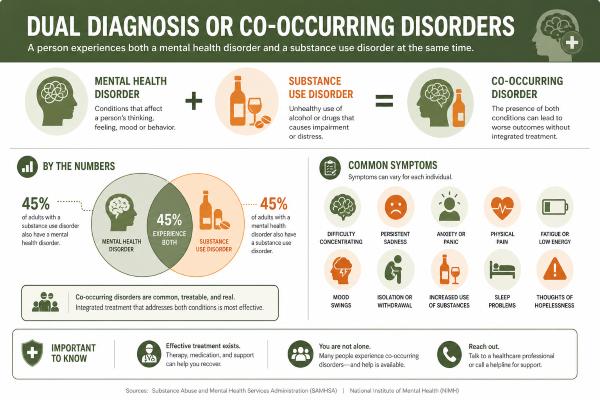
Dual diagnosis means living with a mental health condition and a substance use disorder at the same time. Clinicians more often call it co-occurring disorders. The two feed each other, so anxiety can drive drinking, and drinking can deepen depression. Treating both conditions at once beats treating either one alone.
The label is common rather than rare, and it changes what good treatment looks like. A plan built for addiction alone leaves the other half running underneath it.
Here is what the term covers, why these conditions arrive together, and what integrated treatment involves.
Dual Diagnosis vs Co-Occurring Disorders
These two terms mean the same thing in practice. The difference is mostly historical.
Term | Where you see it | What it means |
Dual diagnosis | Treatment centers, everyday conversation | A mental health condition plus a substance use disorder |
Co-occurring disorders | Clinical notes, federal agencies | The same situation, phrased more precisely |
Comorbidity | Medical journals and research | Any two conditions together, not only these two |
Clinicians prefer co-occurring disorders because “dual” implies exactly two, and some people carry three or more. If your paperwork uses one phrase and your provider another, nothing different is being described.
Common Dual Diagnosis Examples and Pairings
Certain pairings show up far more often than others.
Mental health condition | Commonly paired with | How the loop usually runs |
Anxiety disorders | Alcohol, benzodiazepines | Drinking calms it briefly, then rebounds it higher. |
Depression | Alcohol, stimulants | Alcohol deepens low mood; stimulants crash into it |
PTSD | Alcohol, opioids | Numbing intrusive memories, which prevents processing |
Bipolar disorder | Stimulants, alcohol | Use often rises sharply during manic episodes. |
ADHD | Stimulants, cannabis | Self-medicating focus problems before diagnosis |
Social anxiety | Alcohol | Drinking to manage social situations, then needing it |
MedlinePlus defines dual diagnosis plainly: two conditions together, a mental disorder and a substance use disorder, usually involving alcohol or drugs.
None of these patterns is a character failing. They are combinations clinicians see repeatedly, which is why specific treatments exist.
Fact: NIDA reports 35 percent of adults with mental disorders have substance use disorder.
Why do these two conditions occur together?
There are three accepted explanations, and often more than one will apply.
Shared risk factors. Both are increased by genetics, trauma, chronic stress, and difficult environments. NIDA reports that more than one-third of adults with a substance use disorder suffered from childhood trauma.
Symptoms that will result in drug use. An individual with an undiscovered disorder will discover that alcohol or drugs dull the signs and symptoms of anxiety or depression for a handful of hours. The relief is authentic, and that’s why it works.
Drug use alters the brain. Drugs and alcohol affect the same systems as mood, reward and impulse control do. Conditions may become worse as a result of heavy use and may eventually become severe.
Also, because substance use can alter brain regions that are also affected in other mental health disorders, this is another reason why mental illness and drug use support one another, says the National Institute on Drug Abuse.
Signs of Dual Diagnosis to Watch For
No single symptom confirms dual diagnosis. The pattern is what matters.
- Mood or behavior shifting with no clear trigger
- Leaning on alcohol or drugs to manage stress, sleep or socialising
- Pulling away from friends, family, and things they used to enjoy
- Struggling to concentrate at work, school or with daily tasks
- Mental health symptoms worsening around drinking or drug use
- Previous treatment for one condition that did not hold
- Needing more of the substance just to feel normal
Families often notice the mood changes and withdrawal first, before they know a substance is involved.
Not certain what you’re seeing? Ask DeLand Treatment Solutions
Call Now: (386) 866-8689
How Is Dual Diagnosis Diagnosed?
A dual diagnosis assessment is a structured conversation plus scored screening, not a single test. It usually includes:
- A full history. When each symptom started, and which came first
- Substance use detail. What, how much, how often, for how long
- Screening tools. Short scored questionnaires for mood, anxiety and substance use
- Medical review. Ruling out thyroid problems and medication side effects
- A period of observation. Which symptoms persist once use stops
- Family input. Relatives notice patterns you cannot, with your permission
You should leave with both conditions named. If the paperwork lists only an addiction, ask.
What Does Dual Diagnosis Treatment Involve?
Integrated treatment means one team, one plan, both conditions at once. The alternatives fail predictably.
Model | How it runs | Why it struggles |
Sequential | Treat addiction first, mental health later | Untreated symptoms drive relapse before part two starts |
Parallel | Two separate teams, two plans | Teams rarely communicate, so each blames the other condition. |
Integrated | One team, one shared plan | The recommended approach for co-occurring disorders |
What integrated care looks like:
- CBT, DBT, ACT, or trauma-focused therapy
- Medication management, often an antidepressant or mood stabilizer
- Withdrawal managed medically where stopping safely requires it
- Family involvement, so people around you understand the plan
- Relapse prevention covering mental health setbacks, not only cravings
Expert Advice: Inquire about the signs and symptoms that are due to drug or alcohol use and those that are unrelated to drug or alcohol use.
How Common Is Dual Diagnosis in Adults?
Federal data shows the scale of this, and how few people reach care.
What the data shows | The figure | Source and year |
US adults with a mental disorder who also have a substance use disorder | 35 percent | NIDA, 2023 survey data |
Adults with a substance use disorder who experienced childhood trauma | Over 30 percent | NIDA |
US adults who took medicine for mental health | 19.3 percent in the past year | CDC NCHS, 2024 data |
US adults who saw a therapist or counselor | 14.0 percent in the past year | CDC NCHS, 2024 data |
US drug overdose deaths in 2024 | 79,384, with the death rate down 26.2 percent | CDC NCHS, 2026 report |
Sources: NIDA co-occurring disorders, CDC NCHS mental health treatment, CDC NCHS overdose deaths
Far more people take medication for mental health than see a therapist. That gap matters in dual diagnosis, because medication alone rarely addresses substance use.
What Recovery With Dual Diagnosis Looks Like
Managing two conditions moves slower than managing one.
Early weeks go on stabilisation and withdrawal where needed. Mental health symptoms often look worse at first, because the substance has been masking them. Medication takes four to six weeks for full effect, and therapy skills only become reliable with practice between sessions.
Setbacks usually mean one condition has pulled on the other, which is a reason to review the plan rather than start again. The goal is not perfection in both at once, but a life where neither condition makes your decisions.

Dual Diagnosis Treatment at DeLand Treatment Solutions
DeLand Treatment Solutions opens with an assessment built to surface both conditions, rather than treating the substance use and hoping the rest settles.
Conditions treated alongside substance use:
- Anxiety disorders and depression
- Bipolar disorder and other mood disorders
- PTSD and trauma-related conditions
- OCD, ADHD, and personality disorders
- Schizophrenia and other psychotic disorders
How care is delivered:
- CBT and DBT for thinking patterns and emotional regulation
- Medication management, including antidepressants, mood stabilizers, and antipsychotics
- Daily individual sessions alongside family therapy and group work
- Inpatient mental health rehab stepping down into outpatient care and aftercare
- GeneSight testing to guide medication choices when past medicines have not fitted
The observation period described earlier benefits most from this structure. Daily sessions across the first weeks let one team watch which symptoms fade as substance levels drop and which hold steady, and that same team treats what is left rather than handing you on.
That continuity is what the sequential and parallel models cannot provide, and it is the practical answer to what dual diagnosis care actually holds. The contact page reaches the team who would build it.
Start with a dual diagnosis assessment at DeLand Treatment Solutions.
FAQs
What is dual diagnosis in simple terms?
It means having two conditions at once: a mental health disorder such as depression or anxiety, and a substance use disorder involving alcohol or drugs. The two interact and influence each other, which is why clinicians treat them together rather than one after the other.
Is dual diagnosis the same as co-occurring disorders?
Yes, in everyday practice. Co-occurring disorders is the term clinicians and federal agencies prefer, because dual implies exactly two conditions when some people have more than that. If your paperwork uses one phrase and your provider uses the other, nothing different is being described.
What are the most common dual diagnosis combinations?
Anxiety with alcohol, depression with alcohol or stimulants, PTSD with alcohol or opioids, and bipolar disorder with stimulants are the pairings clinicians see most often. ADHD alongside stimulant or cannabis use is also common, frequently starting before anyone identifies the ADHD.
Which condition gets treated first in dual diagnosis?
Neither. Integrated treatment addresses both at the same time, with one team working from one plan. Treating addiction first and mental health later tends to fail, because untreated symptoms drive people back to the substance long before the second stage ever begins.
Is dual diagnosis listed in the DSM-5?
No. The DSM-5 has no dual diagnosis. Each condition is recorded separately, so your notes might list major depressive disorder and alcohol use disorder as two entries. The phrase simply describes both conditions appearing together in the same person.
How do doctors tell the difference between depression and heavy drinking?
By timeline and persistence. A substance induced condition eases once use stops and the body stabilises. An independent condition continues regardless, and usually existed before the substance use began. Working this out takes a careful history plus a period of observation and stability.
Can dual diagnosis be treated successfully?
Yes, though it typically takes longer than treating one condition alone. Integrated care produces better outcomes than sequential or parallel approaches. Success usually means both conditions become manageable rather than disappearing entirely, with a relapse prevention plan that covers mental health setbacks too.
Does insurance cover dual diagnosis treatment?
Most private plans cover treatment for both conditions, usually requiring a diagnosis code for each. Coverage varies on level of care and network status. Verifying before admission is worth doing, because it affects which level of care is realistic for you.
What happens if only the addiction gets treated?
Relapse risk stays high. The untreated mental health condition keeps producing the symptoms that made substances appealing in the first place. Many people cycle through repeated treatment episodes this way before anyone thinks to identify and treat the second condition.
Can family members help someone with dual diagnosis?
Yes, and family involvement improves outcomes. Useful help means offering one specific next step, such as sitting with them during an assessment call. Avoid taking over the responsibilities they are avoiding, because that quietly removes the pressure to seek care.
References
- https://nida.nih.gov/research-topics/co-occurring-disorders-health-conditions
- https://www.ncbi.nlm.nih.gov/books/NBK571451/
- https://medlineplus.gov/dualdiagnosis.html
- https://www.nimh.nih.gov/health/topics/substance-use-and-mental-health
- https://www.cdc.gov/nchs/products/databriefs/db564.htm
- https://www.cdc.gov/nchs/products/databriefs/db549.htm
Medical Disclaimer: This article is for informational purposes only and is not a substitute for personalized medical advice from a licensed clinician at DeLand Treatment Solutions.