The clenching feeling in your chest after a few drinks is disturbing and should be, it’s the sign of a problem. Even if you think it may be caused by alcohol, chest pain is no joke. Knowing what is actually going on will help you determine when to unwind and when to get help quickly.
After drinking liquor, the chest pain may be a result of elevated blood pressure, alcohol-induced anxiety, acid reflux, dehydration, or, in severe cases, heart issues such as angina or heart attack. Drinking alcohol increases blood pressure and heart rate, placing additional strain on the cardiovascular system and heavy or chronic drinking may result in more severe cardiovascular disorders later in life. Chest pain can be a sign of something serious, so don’t take it lightly.
If you’re reading this because you or a loved one suffered from chest pain after drinking, then do not delay care if you think the pain is very severe. This article may help you understand some of the possible causes, but cannot replace a prompt medical assessment.
Worried about the effects of alcohol on your health? Give DeLand Treatment Solutions a call.
Can Drinking Alcohol Cause Chest Pain?
Yes, drinking alcohol can cause chest pain through several different mechanisms, ranging from relatively minor to genuinely serious. It can be difficult to know the exact cause without medical evaluation.
Chest pain after drinking should never be dismissed. Anyone experiencing serious or persistent chest pain should seek immediate medical care to rule out something life-threatening.
Causes of Chest Pain After Drinking Alcohol
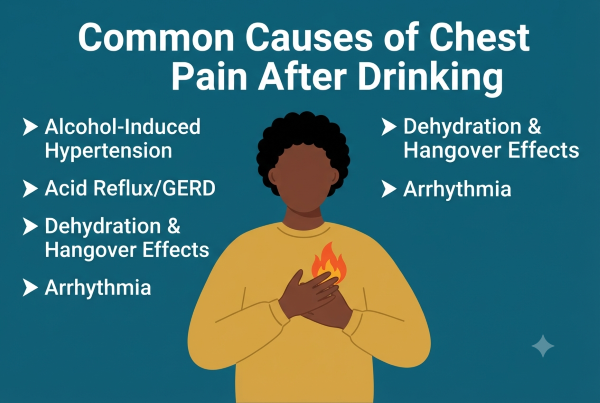
Several different factors can explain chest pain after drinking alcohol. Some are related to the heart directly, while others involve the digestive system or nervous system.
Common causes include:
- Heart attack: Alcohol raises blood pressure and can increase heart attack risk
- Angina: A warning sign that can precede a heart attack, requiring medical treatment
- Stress: Alcohol can increase stress, leading to chest tightness that mimics heart problems
- Dehydration: Alcohol-related dehydration can cause chest muscle discomfort
- Injury: Drinking increases injury risk and can make it easy to forget how you got hurt
Fact: Alcohol raises blood pressure and heart rate, straining the heart immediately.
Why Does My Chest Hurt After Drinking Liquor?
Chest pain after drinking liquor specifically often relates to how quickly and how much alcohol was consumed, since liquor tends to raise blood alcohol levels faster than beer or wine. This can intensify the cardiovascular and digestive effects that lead to chest discomfort.
Two of the most common non-emergency explanations are acid reflux and alcohol-induced anxiety, both of which can feel alarmingly similar to heart-related pain.
How Does Alcohol Affect the Heart Long Term?
Contrary to popular belief, alcohol does not improve heart health, even in moderate amounts.
The American Heart Association has clarified that any heart health benefits often attributed to red wine likely come from compounds in grapes rather than the alcohol itself, and alcohol should not be consumed for cardiovascular benefit.
In the short term, alcohol increases blood pressure and heart rate, adding stress to the heart. Over the long term, alcohol can weaken the heart muscle and cause an irregular heartbeat. Light or moderate drinking is less likely to cause harm, but heavy drinking significantly raises the risk of serious heart problems.
Not sure if your drinking has started affecting your heart health? DeLand Treatment Solutions can help you figure it out.
Alcohol and Heart Palpitations Explained
Heavy drinking can trigger a condition known as “holiday heart syndrome,” where heart palpitations occur after a period of excessive alcohol use.
Clinical research describes holiday heart syndrome as episodes of abnormal heart rhythm following heavy alcohol consumption, which in some cases can lead to lasting heart damage if it continues unaddressed.
Cause of Palpitations | What’s Happening |
Heavy drinking | Holiday heart syndrome, abnormal rhythm |
Alcohol withdrawal | Stress-related rhythm changes |
Long-term heavy use | Weakened heart muscle over time |
Alcohol Withdrawal Chest Pain: What to Know
Alcohol withdrawal can also cause chest pain, driven by both heart-related effects and the overall stress withdrawal places on the body.
Research published in Alcohol Health & Research World notes that alcohol withdrawal can lead to abnormal heart rhythms and other cardiovascular effects that may cause chest tightness or pressure resembling heart problems.
While alcohol withdrawal can, in rare cases, contribute to a heart attack, especially if not medically managed, this remains relatively uncommon. Still, the added stress of withdrawal can be significant, particularly for someone already at cardiovascular risk.
Expert Advice: Seek emergency care immediately for chest pain, pressure, or tightness after drinking.
Chest Pain and Hangover Symptoms
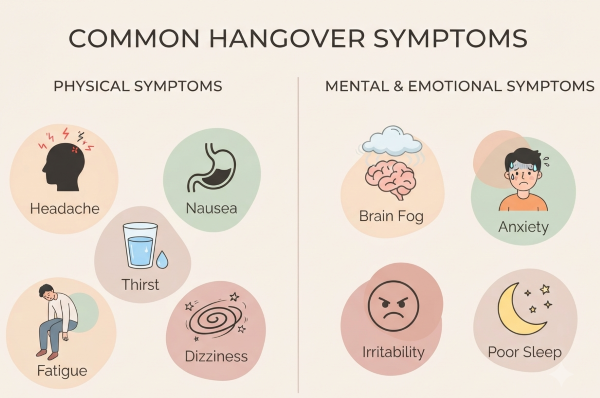
A hangover itself can involve chest discomfort layered on top of other symptoms like headache, nausea, and fatigue. Two common non-cardiac contributors are especially worth understanding.
Acid reflux: Alcohol is known to trigger reflux, where stomach contents travel back into the esophagus, causing a burning sensation often mistaken for chest pain. Dehydration from alcohol makes stomach contents more acidic, which can make reflux worse.
Alcohol-induced anxiety: While alcohol may feel relaxing in the moment, it can increase anxiety afterward.
The Anxiety and Depression Association of America notes that using alcohol to cope with anxiety can prevent people from developing healthier coping strategies, and anxiety often returns more intensely once alcohol’s effects wear off.
That returning anxiety can create real chest tightness that feels frightening, even without a cardiac cause.
When Chest Pain After Drinking Is an Emergency
Certain symptoms mean you should seek emergency medical care immediately rather than waiting to see if the pain passes.
Seek emergency help if chest pain is accompanied by:
- Pain spreading to the arm, jaw, or back
- Shortness of breath
- Sweating, nausea, or lightheadedness
- A rapid, irregular, or pounding heartbeat
- Pain that feels severe or crushing
If you’re ever unsure, it’s always safer to call 911 or go to the emergency room than to wait it out.
Reducing Your Risk of Alcohol-Related Chest Pain
Reducing alcohol intake is the most direct way to lower your risk of chest pain related to drinking. For some people, this means moderating use, while for others it means addressing a deeper pattern of alcohol dependence.
Helpful steps include:
- Limiting how much and how often you drink
- Staying hydrated while drinking
- Avoiding drinking as a way to manage anxiety or stress
- Seeking medical evaluation for recurring chest pain
- Getting professional support for alcohol withdrawal instead of quitting alone
Alcohol withdrawal carries real risks beyond chest pain, including seizures and a dangerous condition called delirium tremens, which is why medical support matters if you’re trying to stop drinking regularly.
Get Help for Alcohol Use Today
DeLand Treatment Solutions understands that chest pain, palpitations, and other physical symptoms tied to drinking are often a sign it’s time for real support, not just a scary night. Our clinical team provides medically supervised care for alcohol withdrawal and ongoing recovery.
Our DeLand, Florida facility offers a full continuum of dual-diagnosis care, including residential treatment in a private, supportive setting designed for safe, guided healing.
What makes our approach different:
- A 12-bed residential setting for personalized, focused care
- Joint Commission accredited programs and licensed clinical staff
- Integrated treatment for substance use and mental health together
- Family involvement woven into the recovery process
- A private, comfortable environment on two peaceful acres
If alcohol has started affecting your physical health, you don’t have to face it alone. Call DeLand Treatment Solutions or visit our contact page to take the next step.
FAQs
Can drinking alcohol cause chest pain?
Yes. Alcohol can contribute to chest pain in several ways, including raising blood pressure, triggering acid reflux, causing dehydration, increasing anxiety, or affecting heart rhythm. While some causes are relatively harmless, chest pain after drinking should never be ignored if it is severe or persistent.
What are common causes of chest pain after drinking alcohol?
Chest pain after drinking may result from acid reflux, dehydration, anxiety, muscle strain, or alcohol-related heart problems such as angina or abnormal heart rhythms. In some cases, alcohol may also mask injuries sustained while intoxicated, making the underlying cause harder to recognize.
Why does my chest hurt after drinking liquor specifically?
Liquor contains a higher concentration of alcohol than many other beverages, allowing blood alcohol levels to rise more quickly. This can increase heart rate, worsen dehydration, trigger acid reflux, and place greater stress on the cardiovascular system, contributing to chest discomfort.
Can alcohol cause heart palpitations?
Yes. Heavy alcohol consumption can trigger heart palpitations and irregular heart rhythms, sometimes called “holiday heart syndrome.” While these episodes often resolve after stopping alcohol, repeated occurrences may increase the risk of developing more persistent heart rhythm disorders over time.
Can alcohol withdrawal cause chest pain?
Yes. Alcohol withdrawal places significant stress on the body and can increase heart rate, blood pressure, and anxiety, all of which may contribute to chest pain. Because withdrawal can become medically serious, symptoms should be evaluated promptly by a healthcare professional.
Can alcohol withdrawal cause a heart attack?
Although uncommon, alcohol withdrawal can increase the risk of heart-related complications, especially in people with existing cardiovascular disease. The physical stress of withdrawal may contribute to heart attacks or dangerous heart rhythms, making medical supervision an important part of safe alcohol detoxification.
Is chest pain part of a hangover?
Chest discomfort can sometimes occur during a hangover due to acid reflux, dehydration, muscle tension, or anxiety. However, because chest pain may also signal a serious heart condition, new or severe symptoms should always be evaluated rather than assumed to be hangover-related.
How does alcohol affect the heart long term?
Long-term heavy drinking can weaken the heart muscle, increase blood pressure, and contribute to irregular heart rhythms and cardiomyopathy. Reducing alcohol consumption or stopping altogether may help lower these risks and improve overall cardiovascular health over time.
When is chest pain after drinking a medical emergency?
Seek emergency medical care immediately if chest pain occurs with shortness of breath, pain spreading to the arm, jaw, neck, or back, heavy sweating, nausea, fainting, or an irregular heartbeat. These symptoms may indicate a heart attack or another life-threatening medical emergency.
Can acid reflux from alcohol feel like chest pain?
Yes. Alcohol commonly relaxes the lower esophageal sphincter, allowing stomach acid to move into the esophagus. This can cause a burning chest sensation that closely resembles heart-related pain, making professional evaluation important when symptoms are severe or uncertain.
How can I reduce alcohol-related chest pain?
Limiting or avoiding alcohol, staying well hydrated, eating before drinking, and managing acid reflux can reduce alcohol-related chest discomfort. If chest pain occurs repeatedly or alcohol use has become difficult to control, seeking professional medical evaluation and treatment is strongly recommended.
Where can I get help for alcohol use in Florida?
DeLand Treatment Solutions provides dual-diagnosis residential care for individuals struggling with alcohol use and co-occurring mental health conditions in DeLand, Florida. Call (386) 866-8689 to speak confidentially with an admissions specialist and learn about personalized treatment options.
References
- Orlando Recovery Center: Chest Pain After Drinking Alcohol
- American Heart Association: Drinking Red Wine for Heart Health
- National Center for Biotechnology Information: Holiday Heart Syndrome
- NIAAA: Complications of Alcohol Withdrawal
- Anxiety and Depression Association of America: Alcohol Abuse and Anxiety
- Mayo Clinic: Alcohol Use Disorder
- Cleveland Clinic: Heart Attack Symptoms
- DeLand Treatment Solutions: Residential Treatment Program
Medical Disclaimer: This article is for informational purposes only and is not a substitute for professional medical advice, diagnosis, or treatment; please consult a qualified provider or contact DeLand Treatment Solutions for personalized guidance. If you are experiencing severe chest pain, shortness of breath, or other signs of a medical emergency, call 911 immediately.