
Two prescriptions, both opioids, can both help alleviate pain, but not the same drug at all. This is the difference between codeine and hydrocodone in a nutshell, and it’s more important than most patients are aware. One is directly from the opium poppy plant and the other is made from the plant. One is usually taken to clear up a stubborn cough, and the other is taken to ease the pain that requires real pain relief. Knowing the differences between codeine and hydrocodone can enable patients and families to identify drug misuse quickly, before either drug becomes a greater issue than it was meant to solve.
Codeine is a natural opioid that is primarily used to treat cough and mild to moderate pain, and is approximately 1/10 as potent as morphine. Hydrocodone is a partially synthetic opioid used to treat moderate to severe pain, and is just as potent as morphine. Both have the potential for dependency, addiction, and overdose.
What Is Codeine and What Is It Used For
Codeine is an opioid medication that is naturally derived from the opium poppy and is one of the oldest opioids still used in prescription drugs. Because it’s considerably weaker than morphine, it’s typically prescribed for cough suppression rather than serious pain. According to pharmacological research on opioid conversion, roughly 10 mg of codeine is equivalent to only about 1.5 mg of morphine, which explains why it’s reserved for milder symptoms.
When prescribed for cough, codeine is usually mixed with other ingredients like guaifenesin or promethazine. When prescribed for pain, it may appear alone or combined with acetaminophen. The once-familiar cough syrup brand Cheratussin AC still refers to a codeine and guaifenesin combination, even though most codeine today is dispensed generically.
Expert Advice: Never combine codeine or hydrocodone with alcohol or sedatives without medical guidance.
What Is Hydrocodone and What Is It Used For
Hydrocodone is a semi-synthetic opioid, meaning it’s chemically modified from a natural opiate rather than used in its raw form. Its potency is roughly comparable to morphine, which is why it’s the go-to choice for moderate-to-severe pain rather than cough. It’s most often combined with acetaminophen, sold historically under names like Norco, Lortab, and Vicodin, though a standalone extended-release version exists under the brand Hysingla ER.
Since 2014, hydrocodone combination products have been classified as Schedule II controlled substances, a stricter category than codeine typically falls under, reflecting federal recognition of their higher abuse potential.
Codeine and Hydrocodone Difference at a Glance
Feature | Codeine | Hydrocodone |
Source | Naturally occurring opioid | Semi-synthetic opioid |
Typical use | Cough, mild-to-moderate pain | Moderate-to-severe pain |
Relative strength | About 1/10 the strength of morphine | Roughly equal to morphine |
DEA schedule | Schedule II to V, depending on formulation | Schedule II |
Common brand history | Cheratussin AC | Norco, Lortab, Vicodin, Hysingla ER |
Metabolized into | Morphine | Norhydrocodone and hydromorphone |
The scheduling difference is one of the more overlooked points in this comparison. While hydrocodone products sit uniformly in Schedule II, codeine’s classification shifts depending on its strength and what it’s combined with, ranging anywhere from Schedule II to Schedule V.
“Hydrocodone is a Schedule II narcotic,” notes a Drug Enforcement Administration fact sheet, reflecting its high potential for abuse compared to lower-schedule opioid combinations.
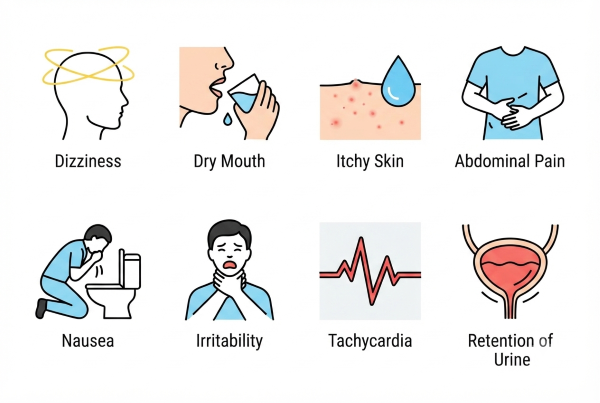
Side Effects of Codeine
Side effects of codeine overlap heavily with other opioids, since they all act on the same receptors in the brain and spinal cord. Common effects include:
- Constipation
- Sedation or drowsiness
- Nausea
- Itching
- Lightheadedness
- Dry mouth
Excessive sedation or unusually pronounced constipation and itching can also be a sign that codeine is being taken in higher amounts than prescribed. Both codeine and hydrocodone carry an FDA boxed warning for overdose risk, particularly when combined with other central nervous system depressants like benzodiazepines or alcohol.
Recognizing when a common side effect crosses into misuse isn’t always obvious. DeLand Treatment Solutions can help sort out that distinction confidentially.
Side Effects of Hydrocodone
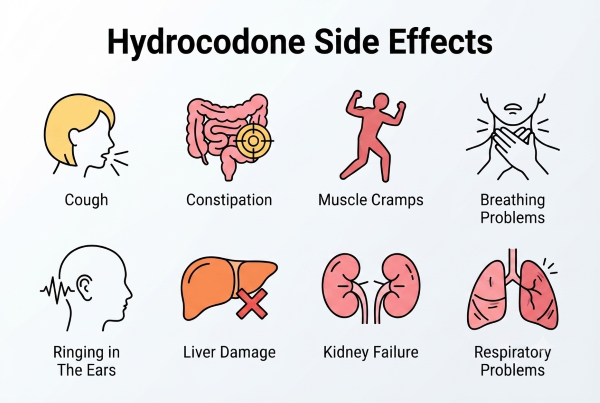
Side effects of hydrocodone closely mirror those of codeine, which makes sense given how similar the two drugs are pharmacologically. Typical effects include:
- Constipation
- Sedation
- Nausea and vomiting
- Itching
- Clouded thinking
- Slowed breathing at higher doses
Both hydrocodone and codeine are broken down by the kidneys and are metabolized differently once they reach the brain: codeine converts into morphine, while hydrocodone breaks down into norhydrocodone and hydromorphone, according to pharmacological reference data compiled by Drugs.com.
Because hydrocodone is generally more potent, its sedative and respiratory effects tend to be more pronounced than codeine’s at comparable doses, which is part of why it’s reserved for more severe pain.
Seeking help from DeLand Treatment Solutions provides essential guidance
Recognizing Signs of Opioid Misuse
Whether it’s codeine or hydrocodone, the warning signs of misuse tend to look similar. Watch for patterns like:
- Visiting multiple doctors or pharmacies to obtain extra prescriptions
- Requesting early refills before a prescription is due
- Exaggerating pain or cough symptoms to secure a stronger opioid
- Claiming a prescription was lost or destroyed to get a replacement
- Using medication prescribed to someone else
- Displaying stronger-than-expected side effects like heavy sedation or persistent constipation
Federal research summarized by the National Institute on Drug Abuse notes that prescription opioid pain relievers, including hydrocodone and codeine products, remain among the most commonly misused controlled substances in the country.
If any of these patterns sound familiar, a conversation with DeLand Treatment Solutions can help clarify what’s actually going on.
Treatment Options for Opioid Painkiller Addiction
Quitting codeine or hydrocodone abruptly isn’t usually the safest or most effective route, since withdrawal symptoms can be significant enough to trigger relapse. A more structured approach typically works better:
- Medical detox provides 24/7 support in a supervised setting where the medication is tapered under medical guidance, sometimes alongside medication-assisted treatment.
- Residential or outpatient rehab follows detox to address the underlying patterns that led to misuse, with intensity levels ranging from residential stays to structured outpatient care depending on individual needs.
Because dual diagnosis is common with opioid misuse, especially when depression, anxiety, or trauma are already present, treatment that addresses both conditions together tends to produce more lasting results than treating either one in isolation.
When to Seek Help for Codeine or Hydrocodone Use
There’s no requirement to wait until a crisis point to reach out. Any pattern of taking codeine or hydrocodone outside of how it was prescribed, or feeling unable to function without it, is reason enough for a professional evaluation. The earlier that evaluation happens, the more treatment options tend to be available.
Fact: Codeine converts to morphine in the brain; hydrocodone breaks down into hydromorphone.
How DeLand Treatment Solutions Can Help
DeLand Treatment Solutions is known across the network as the gold standard in dual diagnosis residential care, and that focus applies directly to opioid painkiller misuse involving drugs like codeine and hydrocodone. Because co-occurring conditions like anxiety, depression, PTSD, or bipolar disorder frequently accompany prescription opioid misuse, treating both together rather than sequentially tends to produce more stable, lasting recovery.
Since DeLand’s residential program addresses dual diagnosis rather than medical detox, anyone who is still physically dependent and needs supervised withdrawal management is first connected with an appropriate detox resource. From there, DeLand’s roughly 30-day structured residential stay provides daily individual therapy, group therapy, and family therapy, drawing on evidence-based approaches like cognitive behavioral therapy, Dialectical Behavior Therapy, EMDR, and the Matrix Model.
To ask questions or verify insurance, call us or visit the DeLand Treatment Solutions website.
Frequently Asked Questions
What is the main codeine and hydrocodone difference?
Codeine is a naturally occurring opioid primarily prescribed for cough suppression and mild to moderate pain, while hydrocodone is a semi-synthetic opioid used for moderate to severe pain. Hydrocodone is significantly more potent, with pain-relieving strength roughly comparable to morphine, whereas codeine is considerably weaker.
What is codeine used for?
Codeine is commonly prescribed to relieve mild to moderate pain and suppress persistent coughing. Depending on the formulation, it’s often combined with acetaminophen for pain relief or other ingredients in prescription cough syrups to reduce coughing associated with respiratory illnesses or infections.
What is hydrocodone used for?
Hydrocodone is primarily prescribed to manage moderate to severe pain that cannot be adequately controlled with non-opioid medications alone. It’s most often combined with acetaminophen in tablets and is commonly used after surgery, injuries, or dental procedures requiring stronger short-term pain management.
How is codeine different from hydrocodone in terms of strength?
Codeine is much less potent than hydrocodone, producing weaker opioid effects at equivalent doses. Hydrocodone provides pain relief approximately comparable to morphine, while codeine is roughly one-tenth as potent, making hydrocodone the preferred option for treating more severe or persistent pain conditions.
What are the most common side effects of codeine?
Common side effects of codeine include constipation, drowsiness, nausea, dizziness, itching, and lightheadedness. Like other opioids, it can also slow breathing at higher doses or when combined with alcohol or certain medications, increasing the risk of serious complications and overdose.
What are the most common side effects of hydrocodone?
Hydrocodone commonly causes constipation, drowsiness, nausea, dizziness, dry mouth, and slowed thinking. Because it’s more potent than codeine, it also carries a greater risk of significant sedation, respiratory depression, and overdose, particularly when combined with alcohol, opioids, or other sedating medications.
Which is more addictive, codeine or hydrocodone?
Both medications can cause dependence and addiction, but hydrocodone generally carries a higher misuse risk because of its greater potency. Its Schedule II classification reflects this increased abuse potential, while some lower-dose codeine formulations have historically been classified under less restrictive schedules.
Can codeine and hydrocodone be taken together?
No. Taking codeine and hydrocodone together should only occur under direct medical supervision. Combining two opioid medications significantly increases the risk of excessive sedation, dangerously slowed breathing, overdose, and other serious complications without providing meaningful additional pain relief for most individuals.
What does codeine break down into in the body?
After it’s absorbed, codeine is converted by the liver into morphine through the CYP2D6 enzyme. This conversion is responsible for much of its pain-relieving and cough-suppressing effects, though the amount converted varies considerably from person to person because of genetic differences.
What does hydrocodone break down into in the body?
Hydrocodone is metabolized in the liver into norhydrocodone and hydromorphone. These metabolites contribute to the medication’s overall effects, though hydrocodone itself provides most of the pain relief. Individual metabolism can influence both effectiveness and the likelihood of experiencing side effects.
Does DeLand Treatment Solutions offer medical detox for opioid withdrawal?
No. DeLand Treatment Solutions specializes in residential dual-diagnosis treatment rather than medical detoxification. Individuals needing medically supervised opioid withdrawal are referred to an appropriate detox provider first, then transition into residential treatment for ongoing therapy, recovery support, and relapse prevention after stabilization.
How do I know if I need help for codeine or hydrocodone use?
If you’re taking more medication than prescribed, requesting early refills, visiting multiple providers for prescriptions, or experiencing withdrawal symptoms between doses, it’s time to seek a professional assessment. Early treatment greatly improves recovery outcomes and helps prevent opioid misuse from becoming more severe.
References
- National Institute of Diabetes and Digestive and Kidney Diseases. “Opioids.”
- National Institute on Drug Abuse. “Prescription Pain Medications (Opioids).”
- U.S. Drug Enforcement Administration. “Drug Scheduling.”
- National Institutes of Health, MedlinePlus. “Hydrocodone Combination Products.”
- National Institutes of Health, MedlinePlus. “Opioid Misuse and Addiction.”
- Substance Abuse and Mental Health Services Administration. “Opioid Overdose.”
- U.S. Food and Drug Administration. “Vicodin.”
- Drugs.com. “Hydrocodone Monograph for Professionals.”
- DeLand Treatment Solutions. delandts.com
Medical Disclaimer: This article is for informational purposes only and should not replace professional medical advice, diagnosis, or treatment. If you or someone you know is struggling with substance use, contact DeLand Treatment Solutions or visit delandts.com to learn about available treatment options.