Key Takeaways
- Treatment-Resistant Depression (TRD) is not a personal failure or lack of effort
- It is typically defined after two or more antidepressants fail to work
- Symptoms often look like major depression but may last longer or feel more intense
- Many treatment options exist beyond standard antidepressants
- Specialized care can significantly improve outcomes
Treatment-Resistant Depression: What it is, Symptoms and When Meds Fail is the kind of issue that many people find after a few months (or even years) of taking the medicines and not seeing any improvement. This can be frustrating, depressing and lonely in instances where the depression is not responding satisfactorily. We understand that it is very discouraging; such experience may lead to DeLand Treatment Solutions, but we know that there may still be good solutions.
This is a guide on Treatment-Resistant Depression in simple, practical terms, meaning what it is, why it occurs, and what one should do when the medication is not effective in Treatment-Resistant Depression. This blog post is to give you or your loved one a clear picture, assurance, and true follow-up measures in case you or he feels stuck.
What is Treatment-Resistant Depression?
Treatment-Resistant Depression is a form of major depressive disorder that is not responsive to at least two different antidepressant drugs taken according to instructions. Adequate is the administered medication with the appropriate dose, an adequate period in time and a regular adherence.
This does not imply that nothing will be working. This does not mean that the brain must be provided with another methodology, mix or even type of care in order to be able to respond well.
How Common is Treatment-Resistant Depression?
Resistant to Treatment Depression is not as rare as it appears. Research has suggested that approximately 30 percent of the entire depressed population appropriately demonstrates a degree of vulnerability to the standard interventions.
This implies that there are millions of individuals who find it difficult to manage the symptoms even when they go through prescribed treatment programs. It is something that can help to prevent shame and develop a motivation to seek specialized help as early as possible.
Treatment-Resistant Depression Symptoms
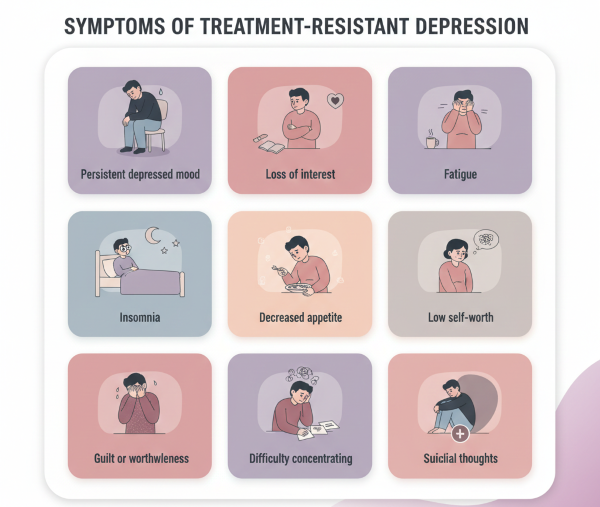
The treatment-resistant depression is seen to possess the same symptoms characterized by the major depression but is more tolerable and harder to treat, including:
- The diminishing pleasure in such activities that have previously been considered to be enjoyable.
- Fatigue or low energy
- Sleep disturbances
- Abbreviations Note: Decreased or increased weight or hunger.
- Failure to concentrate and make decisions.
- The regretfulness, the self-pity.
- Thoughts of death or suicide
The period of the condition itself is the longest duration and the unremitting nature of the symptoms in spite of all the efforts to cure the condition characterizes Treatment-Resistant Depression.
Causes of Treatment-Resistant Depression
The factors that cause Treatment-Resistant Depression are:
- Inappropriate or erroneous diagnosis (e.g. bipolar disorder or anxiety disorders)
- Comorbidities, e.g. substance use disorders or trauma or unresolved trauma.
- Biological differences that have effects on body responses to medication.
- Stress on the percussional side or the difficulties within the life.
- Frightening or swelling dissimilarity.
Very frequently, Treatment-Resistant Depression is an effect of various overlapping reasons and this is why it is necessary to evaluate it thoroughly.
Treatment-Resistant Depression Guidelines
Clinical Treatment-Resistant Depression Clinical guidelines imply that it is necessary to concentrate on:
- Obtaining the upholding of the diagnosis.
- Taking a history on medications.
- Comorbidities diagnosis and treatment.
- An integrated and evidence-based psychotherapy and medication.
- Think of elitist or interventional treatment.
Instructional usage will also assist in ensuring that the treatment is planned, purposeful and personal as opposed to a trial and error.
Treatment-Resistant Depression Medication
Possible interventions in the Treatment-Resistant Depression include:
- Replacement of antidepressants with another type.
- Treatment through a combination of antidepressants.
- Additional therapy with mood stabilizers and atypical antipsychotics.
- Newer forms of treatment, like esketamine, can be used.
Although medication is usually not adequate for treatment-resistant depression, it may have its role in cases when considered carefully as a part of an overall strategy.
Treatment-Resistant Depression ICD-10
Medical coding does not necessarily cover Treatment-Resistant Depression. It is often categorized as Major Depressive Disorder with its F32 or F33-codes of the ICD-10 code listing, where resistance to treatment is documented clinically.
Good documentation is required in order to undertake effective care planning and insurance coverage.
When Meds Fail in Treatment-Resistant Depression
When it happens that the meds are not useful in Treatment-Resistant Depression, it does not mean that they should not recover; the process should be changed to treat them.
Substitutes for non-conventional antidepressants may be:
- Complex or professional psychotherapy.
- The medication augmentation plans.
- Alexithymia Transcranial Magnetic Stimulation (TMS)
- Ketamine or esketamine Procedure.
- Partial hospitalization/residential treatment programs.
This is done with an aim of solving depression on many fronts or dimensions, instead of depending on one set of solutions.
100% Confidential Support is Available 24/7
No matter what you’re going through, you’re not alone. Our dedicated team is here to provide a safe, judgment-free space where you can talk openly and honestly. Whether you need emotional support, resources, or just someone to listen.
We’re here for you—completely confidential and always respectful of your privacy. Call us today!
How is Treatment-Resistant Depression Diagnosed?
Treatment-Resistant Depression Diagnosis It is a profound analysis that is usually composed of:
- History regarding drug use, dosage usage, and time of use.
- Consolidating the level and the severity of the symptoms.
- The history of the response and psychotherapy.
- Physical and psychological checkup.
- The lifestyle, sleeping behavior, and stress problems.
Proper diagnosis means that the future course of action in treatment will be a goal-oriented and deliberate action as opposed to repeating the same thing over and over again.

Need Help
It has a high probability response to a combination of:
- Medication optimization
- Trauma therapy or cognitive behavioral therapy (CBT).
- Positive and organizational treatment environments.
- Change in the lifestyles, sleep, and stress.
- Involvement or social support of the family when necessary.
Here, at DeLand Treatment Solutions, we are basing our attention on personalized course plans that address people where they are and not where the textbook proposes them to be.
In the event that you feel frustrated, hopeless, or depressed due to the ineffectiveness of meds in Treatment-Resistant Depression, you are not the one who does not deserve relief. Help is available.
Get in touch with DeLand Treatment Solutions by calling the phone and talk to a professional involved in mental health to know all about Treatment-Resistant Depression and have an opportunity to have an individualized, evidence-based approach. The alternative strategy can change things.
Disclaimer
This content is for informational purposes only and is not intended to replace professional medical advice, diagnosis, or treatment. Always consult a qualified mental health provider regarding any mental health concerns or treatment decisions.
Frequently Asked Questions (FAQ)
What is the best combination for treatment-resistant depression?
The best combination often includes medication adjustments alongside structured psychotherapy. Many people benefit from combining antidepressants with augmentation strategies or interventional treatments like TMS, tailored to individual symptoms and history.
When should a depressed person be hospitalized?
Hospitalization may be needed if someone is at risk of harming themselves, unable to care for basic needs, or experiencing severe symptoms that can’t be managed safely in an outpatient setting.
What if my antidepressants are not working?
If antidepressants aren’t working, it’s important to reassess diagnosis, dosage, duration, and co-occurring conditions. A mental health provider may recommend medication changes, therapy adjustments, or higher levels of care.
What is the new treatment for treatment-resistant depression?
Newer treatments include ketamine-based therapies and Transcranial Magnetic Stimulation (TMS). These options target brain pathways differently than traditional medications and have shown promising results for TRD.
What can I do if I have treatment-resistant depression?
You can seek a comprehensive evaluation from a specialized mental health provider, explore combination treatments, and consider structured programs that address biological, psychological, and lifestyle factors together.
What is the new Miracle antidepressant?
There is no single “miracle” antidepressant. However, ketamine-based treatments have gained attention for rapid symptom relief in some individuals with Treatment-Resistant Depression.
How serious is treatment-resistant depression?
Treatment-Resistant Depression is serious because symptoms can persist for years. However, with proper care and advanced treatment options, many people experience significant improvement and regain quality of life.
What is the gold standard for treatment-resistant depression?
There is no one-size-fits-all gold standard. Best practice involves individualized care using evidence-based guidelines, often combining medication strategies, psychotherapy, and interventional treatments.