Key Takeaways
- Trauma-informed care recognizes the lasting impact of trauma
- It prioritizes safety, trust, collaboration, and empowerment
- Trauma is often a root contributor to addiction and mental health challenges
- This approach improves engagement, retention, and recovery outcomes
- Healing happens best in environments that feel safe and respectful
What is Trauma-Informed Care? The question of Why Do We Use Trauma-Informed Care is posed by many people in their pursuit of effective and ethical mental health or addiction treatment. Trauma-informed care acknowledges the profound influence of previous experiences on behavior, health, and recovery and makes sure that treatment does not harm the client.
Trauma-informed care is not a smaller, more modern phenomenon at DeLand Treatment Solutions. It is a prescriptive template according to which we approach, interact with, judge, and treat the people who might bring visible or unseen trauma to the recovery process.
What is Trauma-Informed Care?
The question of Why Do We Use Trauma-Informed Care is posed by many people in their pursuit of effective and ethical mental health or addiction treatment. Trauma-informed care acknowledges the profound influence of previous experiences on behavior, health, and recovery and makes sure that treatment does not harm the client.
Trauma-informed care is not a smaller, more modern phenomenon at DeLand Treatment Solutions. It is a prescriptive template according to which we approach, interact with, judge, and treat the people who might bring visible or unseen trauma to the recovery process.
What is Trauma-Informed Care?
Trauma-informed care is a treatment approach that conceptualizes, acknowledges, and responds to the repercussions of trauma. It does not question what is wrong with you; but, what happened to you. This change reverses all regarding the way care is provided.
Trauma-informed care is the recognition of the fact that trauma is not abnormal and that its effects may affect emotions, relationships, physical health, and substance use. It focuses on the safety of emotion and trust, collaboration, and empowerment on all levels of care.
Instead of looking at individual patients with the single perspective of the symptoms or diagnosis, the background of an individual seeking help is taken into account, referring to the entire context of the human life. The strategy helps to minimize the possibility of re-traumatization and maximize engagement, level of trust, and long-term recovery.
Start your healing journey with compassionate trauma-informed care at Deland Treatment Solutions today right now.
What is Trauma-Informed Care?
Trauma-informed care is a treatment approach that conceptualizes, acknowledges, and responds to the repercussions of trauma. It does not question what is wrong with you; but, what happened to you. This change reverses all regarding the way care is provided.
Trauma-informed care is the recognition of the fact that trauma is not abnormal and that its effects may affect emotions, relationships, physical health, and substance use. It focuses on the safety of emotion and trust, collaboration, and empowerment on all levels of care.
Instead of looking at individual patients with the single perspective of the symptoms or diagnosis, the background of an individual seeking help is taken into account, referring to the entire context of the human life. The strategy helps to minimize the possibility of re-traumatization and maximize engagement, level of trust, and long-term recovery.
Why Do We Use Trauma-Informed Care?
Trauma-informed care is used since trauma is usually the cause of addiction, anxiety, depression, PTSD, and other mental disorders. Most individuals who come into treatment have encountered abuse, neglect, loss, violence, medical trauma, or long-term stress or sometimes without even realizing the extent to which these events continue to plague them.
The feelings of powerlessness, shame, and fear can be recreated inadvertently by traditional treatment models. Trauma-informed care will avoid this by focusing on choice and respect, transparency and collaboration. It makes people feel secure enough to recover rather than live in a mode of survival.
Trauma-informed care is effective at DeLand Treatment Solutions, where people are met at their level and not at the point they are supposed to be per the checklist.
How Trauma Affects Mental Health and Addiction
Trauma alters the brain to react to stress, relationships, and decision-making. Unresolved trauma will result in the nervous system being perpetually exposed to fight, flight, or freeze. This can lead to anxiety, impulsivity, numbness or drug use as a coping measure.
Addiction is not the problem for massive numbers of individuals; it is an appeal to deal with sublimating emotional pain. Trauma-informed care recognizes substance use as a survival defense mechanism or learned survival tactic and not vice versa.
Trauma-informed care helps the more lasting recovery by embracing both the symptoms of the trauma and addiction or mental health symptoms.
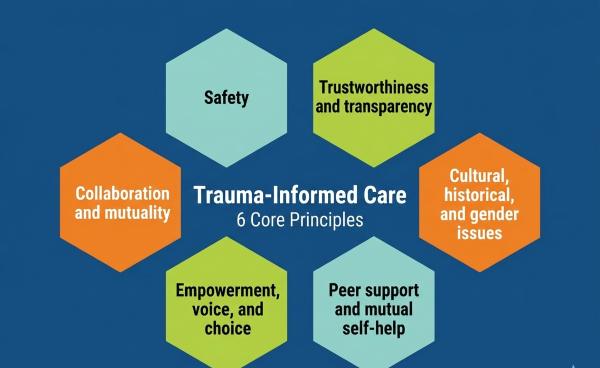
The Core Principles of Trauma-Informed Care
Trauma-informed care is developed on properly established principles according to which effective and ethical treatment should be pursued:
- Safety – Both physical and emotional, Safety is made paramount at all times.
- Honesty – Be clear and open expectations allow a person to trust.
- Peer Support – Done by Personality enhances hope and a sense of connection.
- Collaboration – It is not done upon clients but with them.
- Empowerment – Strengths, choice and autonomy are promoted.
Such values make people feel that they are respected, heard, and supported in the process of healing.
Trauma-Informed Care in Addiction Treatment
Treatment of addiction using trauma-informed care offers a different concept of relapse, resistance, and emotional response to addiction treatment. Nonetheless, failures are not taken as an indicator of a downturn, but rather they are a sign that there is a need to be lifted even higher.
This trauma-sensitive care might involve the following:
- Flexible treatment pacing
- Consent therapy methods.
- Skills in emotional control.
- Relapse reactions that are non-punitive.
- Mental health services that are sustainable.
This will help one to build toughness without putting one’s nervous system to the test.
Trauma-Informed Care in Mental Health Treatment
Mental health trauma-informed care does not pathologize or otherwise label survival responses. Indignation is not used as empathy and interest address the fear of anxiety, depression, dissociation, or mood swings.
The trained therapists in the trauma-informed care practice are based on safety creation. Once the nervous system is identified to be stable, then the more profound therapeutic process begins. This will reduce the dropout rates and improve the long-term cure.
Trauma-informed care is built into all ranks of mental care at DeLand Treatment Solutions.
How Trauma-Informed Care Supports Long-Term Recovery
The process of healing traumas does not involve forgetting or mercy-killing the past but only learning to live a safe life today. Trauma-informed care can be used in this process by providing emotional awareness, coping tactics, and good boundaries education.
People get to learn how to identify triggers, how to react to stress, and how to restore faith in themselves and other people. This, in the long run, results in increased emotional stability, decreased risk of relapse, and improved quality of life.

Get Trauma-Informed Support in DeLand, FL
You are in an addiction or mentally challenged due to the trauma you are struggling with or one of your loved ones; kind help is available. DeLand Treatment Solutions provides evidence-based over symptom-based and trauma-informed care adapted to cause real healing instead of symptom treatment.
You can use (386) 866-8689 right now and talk to our professionals who care about you and discuss the opportunity to be treated in the context of safety, self-respect, and verbal recovery, long-term signs.
Disclaimer
This content is for educational and informational purposes only and is not intended to replace professional medical, psychological, or mental health advice, diagnosis, or treatment. Always seek guidance from a qualified healthcare provider regarding individual care needs.
Frequently Asked Questions (FAQ)
Is addiction linked to autism?
Yes, addiction and autism can be linked. Autistic individuals may use substances to manage anxiety, sensory overload, or social stress. Autism treatment through trauma-informed care is especially important because autistic individuals often experience higher rates of trauma and misunderstanding in healthcare settings.
What is the definition of trauma?
Trauma is an emotional response to deeply distressing or disturbing experiences that overwhelm a person’s ability to cope. It can result from single events or prolonged exposure to stress, abuse, neglect, or loss and may affect mental, emotional, and physical well-being.
What are the 5 points of trauma-informed care?
The five points of trauma-informed care are safety, trustworthiness, peer support, collaboration, and empowerment. These principles ensure that care environments reduce harm, respect autonomy, and support healing without re-traumatizing individuals.
What is an example of a trauma-informed practice?
An example of trauma-informed care is offering choices during treatment, such as explaining procedures beforehand or allowing clients to opt out when overwhelmed. This approach helps individuals feel safe, respected, and in control of their recovery process.
What is the meaning of trauma care?
Trauma care refers to services that recognize the impact of trauma and actively work to prevent re-traumatization. It emphasizes emotional safety, compassion, and individualized support rather than punishment or rigid treatment models.
What are 5 examples of trauma?
Five examples of trauma include childhood abuse, domestic violence, sexual assault, serious accidents, and prolonged emotional neglect. Medical trauma, bullying, and sudden loss can also have lasting psychological effects.
What are the 7 signs of trauma?
Seven common signs of trauma include hypervigilance, emotional numbness, anxiety, difficulty trusting others, sleep disturbances, avoidance behaviors, and mood swings. These responses are protective mechanisms, not personal failures.