This is not a set of labels but rather describes certain patterns of alcohol use. Some individuals struggle with alcohol problems as children, and still others do not develop an addiction to alcohol until later in adulthood because stress, mental illness, and/or genetics influence their alcohol use. These patterns can alert people to possible warning signs earlier and assure them they should seek treatment from a professional before alcohol abuse begins to be harmful to physical, emotional, or social health.
Personalized care can help people recover from alcohol use disorder of any type, regardless of severity.
Types of Alcoholics
The signs of a problem with drinking differ from person to person. Learning about the types of alcoholic beverages will be useful to you in identifying problem drinking behaviors in yourself and other people you care for. Compulsory drinking may occur every day or strictly for weekends, and other individuals may seem to be successful despite having an alcohol problem. By identifying these trends, smoking issues can be addressed and regulated early on, helping you to avoid problems with health, relationships, work, and quality of life later in life.
The relationship between people and alcohol is unique for each individual, and at DeLand Treatment Solutions, we respect that. Our expert clinical practice approach helps us to create individual treatment plans, recognizing the physical, emotional, and psychological needs involved in alcohol and other substance use disorders.
Key Takeaways
- There are several types of alcoholics, and each one of them impacts alcohol usage differently.
- Alcohol dependence occurs as a result of genetic, environmental, mental health and lifestyle factors.
- Catching the early stages of alcoholism will increase the chances of good treatment results.
- There is a misconception that people with high-functioning disorders are not suffering from bad times with alcohol.
- The best chance of lasting recovery is by working with a professional.
- Continuing aftercare and family support can make a big difference in success.
What are Alcoholics?
The term “alcoholic” is a noun to describe a person in the state of alcohol use disorder (AUD). When used as an adjective, it means alcoholic, containing liquor. Alcoholism is actually the presence of an uncontrolled alcohol dependence that persists despite its adverse impact on health, work and relationships.
A person might seem to fit into one category in the beginning and another later on as the level of their alcohol consumption fluctuates. That’s why it’s so crucial to hire a professional for an assessment.
There are a number of factors that are commonly used to classify alcohol use:
- Age when heavy drinking began
- How often do you drink alcoholic beverages?
- Mental health conditions
- Addiction in the family.
- Social & work functioning
- Physical dependence
- Previous treatment history
These differences are help to reduce stigma and encourage people to seek help before alcohol causes permanent harm.
The Five Types of Alcoholics
These are the five types of alcoholics:
Each experiences it differently, but research has been undertaken to provide reference to five general (summed-up) groups of experience.
1. Young Adult Alcoholics
Young adult drinkers are typically persons in their late teens and early adult years who binge drink often. For many, it hasn’t yet had obvious medical or legal repercussions, so they aren’t sure that it’s a problem.
Characteristics may include:
- Weekend binge drinking
- Partying or drinking at social gatherings.
- Risk-taking behaviors
Driving after drinking - Little interest in treatment
Repeated alcohol abuse raises the odds of becoming alcohol-dependent later in life, although many think that such behavior is a part of college life.
2. Young Antisocial Alcoholics
This age grup might begin drinking at a younger age and may also have behavior and mental health problems.
These people might suffer from:
- Aggressive behavior
- Impulsivity
- Drug misuse
- Legal problems
- Anxiety or depression
- Family history of drug or alcohol abuse.
Alcohol often is used in conjunction with other substances, and therefore complete treatment of alcohol use disorder and mental health issues is typically the approach recommended.
3. Functional Alcoholics
Sometimes the functional alcoholic has a good job, a good family life and a nice social life, causing them to harbor alcohol dependency without people knowing.
Many people are shocked to discover that someone who is very “normal” can have manageable alcohol related issues.
Common characteristics include:
- Having a stable employment position
- Financial stability
- Drinking daily
- Hiding alcohol use
- Making excuses for drinking
- Increased alcohol tolerance
While functional alcoholics will still fulfil their responsibilities, they will often wait until health and relationship issues are at a crisis stage before they seek treatment.
4. Intermediate Familial Alcoholics
An intermediate family history of alcohol use disorder is a potent risk factor in intermediate familial alcoholics.
They may:
- Start drinking at a young age.
- Have difficulties in being sad or worry.
- Experience gloom or worry.
- Use alcohol to cope with stress
- Have relatives that are close to you who are addicted to a substance.
- Gradually build up the use of substances over time.
- Progressively increase use of substances over time.
Not everyone who has a genetic risk factor for alcohol addiction will become addicted to alcohol. But risk may be substantial when one talks about family history along with the other environmental factors.
5. Chronic Severe Alcoholics
These are the people who suffer from the most severe types of alcoholism.
Those who fall under this category tend to have:
- Long-term alcohol dependence
- Failing to quit several times.
- Serious medical complications
- Relationship breakdowns
- Employment difficulties
- Frequent hospitalizations
- Not drinking: Withdrawal symptoms
Medical detox and residential treatment, therapy, relapse plan, and continued support for many people who are severely damaged by chronic drinking.
While this addiction can be overwhelming, and recovery is possible with appropriate professional assistance.
Why These Classifications Matter
By knowing the characteristics of each type of alcoholism, individuals can gain insight into what alcoholism is and bring to their personal awareness that alcohol dependency is a medical condition, not a lack of will.
An individual who occasionally suffers from binge drinking could require an approach that is not the same as another person who has been a heavy drinker for decades. In the same way, an individual who is suffering from anxiety or depression could require a complete treatment plan for the mental health issue and addiction treatment.
These classifications do not put people in pigeonhole labels, but rather can assist the clinician in answering some pertinent questions:
- How strong is the use of alcohol?
- What influences people to want to drink?
- Do you need medical detox?
- Are mental health problems at play?
- What therapies are more likely to help patients maintain their recovery?
At DeLand Treatment Solutions, each and every client will receive a comprehensive assessment in order that treatment may be personalized around their needs, goals and recovery journey instead of around their drinking pattern.
Take the 1st Step Toward Recovery!
Staying away from alcohol is never easy; however when it comes to addiction, there is always someone to help with the issue. Our caring staff is knowledgeable and empathetic, offering non-judgmental evaluations, evidence-based treatment and individualised treatment programs tailored to each step of the recovery process from alcohol. There is no need to suffer from addiction on your own, give us a call today and start working on living a better, healthier life without alcohol.
Signs of Alcoholics
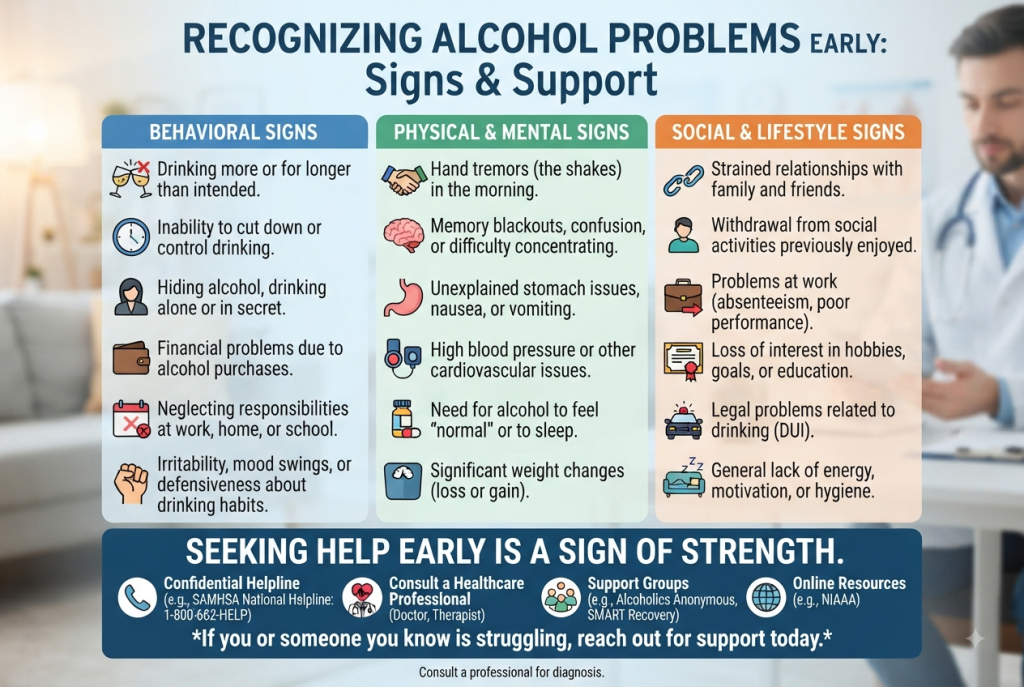
Early signs of alcoholism can make a huge difference when treating serious consequences or aiding a successful recovery. Alcohol problem usually creep up on individuals, but each person’s journey is different. Many only see the early signs and don’t realize it is a problem due to drinking and its effect on their relationships, functioning or physical health.
An individual experiencing alcohol use disorder may not exhibit all of the signs and symptoms. When you see several of these indicators, however, it may be time to obtain professional help.
Symptoms of alcohol use disorder (AUD) are:
- Drinking more than intended
- Finding it hard to hold back from drinking when tempted / into it
- Requiring increasing amounts of alcohol to get the same high (tolerance)
Withdrawal, without alcohol - Failure to perform assignments at work, school, and/or home.
- Relationship conflicts still exist, but the individual continues to drink.
- Persists in drinking despite relationship conflict
- Having a drink alone, or in secret.
- Keeping alcohol out of sight or making up for how much he drinks at home.
- Pretending or denying alcohol consumption.
- Loss of interest in activities/hobbies previously enjoyed
- Excessive efforts to reduce expenditure. Frequent failures to cut back.
People also start “scheduling” their day around their drink, rationalizing their drinking, or getting anxious when they do not have access to the drink(s).
Drinking at an early age has been associated with alcoholism later on.
Seeking help from DeLand Treatment Solutions provides essential guidance
Alcoholics’ Symptoms
The behavior is a major symptom of alcoholism, but symptoms of alcoholism can impact almost every bodily system and the mind. Over time, alcohol alters the chemistry in the brain, resulting in greater difficulty in controlling drinking urges and dependency.
Some common physical symptoms are:
- Frequent hangovers
- Poor coordination
- Slurred speech
- Bloodshot eyes
- Fatigue
- Shaking hands
- Sweating
- Sleep disturbances
- Digestive problems
- Weight changes
Emotional and psychological symptoms can include:
- Anxiety
- Depression
- Mood swings
- Irritability
- Poor concentration
- Memory problems
- Low motivation
- Increased stress
- Regretful emotions after consuming drinks
As alcoholism progresses, symptoms of blackouts, severe alcohol withdrawal symptoms, hallucinations, seizures or confusion with sudden stopping of alcohol use can occur. The signs and symptoms are life-threatening and need medical help right away.
Alcoholism Causes
No one knows the exact cause of alcohol addiction. Rather, typical causes of alcoholism usually consist of a blend of biological, psychological, environmental and social elements.
The risk factors are:
Genetics
Studies indicate that family history may be a risk for someone to develop alcohol use disorder. Genetics do not determine addiction but can increase the risk of addiction.
Mental Health Conditions
Alcohol may use to attempt to dampen emotional reactions such as anxiety, depression, PSTD, BPD, and/or trauma. This is a coping mechanism which, over time, can manifest itself in dependency.
Environmental Influences
A context of heavy drinking, the influence of peer pressure and alcohol use within the family may have a negative influence on unhealthy drinking patterns.
Chronic Stress
When coping skills are lacking, financial problems, stress, family conflicts, loss, or significant major life changes could result in drinking more than usual.
Early Alcohol Use
Drinking at an early age has been associated with alcoholism later on.
If alcoholics treatment providers can better understand these causes of Alcoholics, then they will be better at solving problems – including those directed at them in the treatment process.
Alcoholics’ Statistics
Anderson’s knowledge of the statistics of alcoholics demonstrates the prevalence of AUD and the importance of early treatment.
According to the National Institute on Alcohol Abuse and Alcoholism (NIAAA):
Alcohol Use Disorder (AUD) is a disorder that affects millions of adults in the United States.
Every year, thousands of people die as a result of alcohol abuse.
Heavy drinking can lead to liver disease, heart disease, some types of cancer, and mental illness.
Binge drinking is a heavily abused drinking style among adults.
Alcoholics statistics are a reminder that alcohol addiction is a disorder that takes anyone, regardless of age, profession or background. Going to the doctor, or any health official, to seek treatment is not a sign of weakness, it is important to move towards improving health and the quality of life.
Alcoholics’ Family Impact
Alcohol addiction seldom targets an individual doing it only to his or her own detriment. A family member’s impact levels can reach out to offspring, partner, parent, siblings and intimate friends.
Families often experience:
- Loss of trust
- Financial stress
- Communication problems
- Emotional exhaustion
- Increased conflict
- Domestic violence
- Neglect of responsibilities
- Concern and sadness of family or friends
Parental alcoholism can lead to emotional instability, learning problems and/or behavioral issues in children, which may persist into adulthood.
Sometimes members of families develop unhealthy coping strategies such as enabling, codependency, or isolation.
Addiction is a family affair in a way, so many treatment programs offer family counseling as well as individual counseling. Developing healthy communication and trust can be a significant aspect of long-term healing.
Alcoholics’ Treatment Options
Fortunately, it is highly treatable when you’re addicted to alcohol. Modern treatment solutions for alcoholics tackle both the actual dependence and the thoughts that add to alcohol consumption.
Treatment options differ with respect to individual health, drinking history, and treatment objectives.
Medical Detox
For those who suffer from moderate to severe alcohol addiction, medical detox is a safe place to detox and have healthcare professionals monitor the symptoms.
Under medical supervision, risk of serious complications is decreased and plans are made for continuing treatment.
Residential Treatment
Residential (inpatient) rehabilitation provides 24-hour-a-day care, structured support, and a place far from everyday triggers.
Programs often include:
- Individual therapy
- Group counseling
- Family therapy
- Relapse prevention planning
- Life skills training
Wellness activities
Residential treatment may be particularly helpful for individuals who have more profound alcohol addictions or have experienced repeated alcohol relapses.
Outpatient Treatment
Outpatient therapy can be used while people remain employed, attend school or are involved in a family.
These programs can contain the following:
- Individual counseling
- Group therapy
- Intensive Outpatient Programs (IOP)
- Partial Hospitalization Programs (PHP)
- Medication management
- Recovery education
Behavioral Therapy
Evidence-based treatments enable persons to recognize the unhealthy thinking patterns and to learn to replace them with healthier coping skills.
Common approaches include:
- Cognitive Behavioral Therapy (CBT)
- Motivational Interviewing (MI)
- Diabetics deliverable behavioral treatment (DBT)
- Trauma-informed therapy
Family counseling
These therapies assist people to recognise the emotional factors behind their alcohol consumption, and to develop long-term recovery skills.
Medication-Assisted Treatment
For some people, FDA-approved drugs which help diminish cravings for alcohol or make it less appealing when used along with counseling and behavioural therapy can be beneficial.
Medications work best in conjunction with other treatment methods and are not a standalone treatment.

Begin Your Recovery with DeLand Treatment Solutions
Equipping yourself with alcoholics’ knowledge is the first step. Alcohol and its effect on your health, relationships, work, and thoughts can make a difference for life if you seek professional assistance.
Prevent alcohol causing further damage. If you need to take care of creating long-term healing, feel free to reach out to DeLand Treatment Solutions today, and begin your journey toward sobriety.
Alcoholics’ Recovery Rate
Restoration is a question on many people’s minds:
Is it even possible to recover?
Certainly, yes, the answer is good.
While each success story is unique, there are certain factors that are known to accelerate the alcoholics’ recovery rate when they are in professional treatment, involved in therapy and developing positive support networks, and when they participate in aftercare.
Treatment may involve:
- Ongoing counseling
- Peer support groups
- Healthy daily routines
- Stress management
- Family involvement
- Relapse prevention planning
Recovery should not be considered as just a single moment but as a sustained journey of self-improvement and healing. Although detours do happen, many continue to maintain their sobriety when they get help.
Why Early Treatment Matters
Understanding the different alcohol types can assist people and families recognize unhealthy alcohol habits early in the process. In anyone’s life, whether he or she is a high-functioning professional, selective drinker, or alcoholic with long-term dependence, prompt intervention can have a positive impact on the person’s body, relationships and on their long term recovery.
Alcohol use disorder is a treatable medical disorder not a personal failure. The first step in recovery is to recognize the problem and make the first move toward professional help.
Recovery is a personal journey and everyone deserves compassionate, individualized care. At DeLand Treatment Solutions, we deliver that to all stages of recovery. Alcoholism is unique for each individual, and our long and skilled staff recognize this. For this reason, we make an individualized plan of each treatment that covers the physical, psychological and emotional well-being of healing.
Start Your Recovery Today
You don’t have to face addiction to alcohol alone. The staff at DeLand Treatment Solutions are knowledgeable and skilled at assessing addiction and providing evidence-based treatment in the interest of helping individuals get their lives back on track while maintaining confidentiality
Your team will help you develop healthy coping mechanisms, heal relationships and maintain long-term sobriety with individualized treatment and support.
Give DeLand Treatment Solutions a call today to talk to a compassionate admissions representative. One private conversation is the first step to recovery.
Frequently Asked Questions (FAQs)
What are the five types of alcoholics?
The five commonly recognized types of alcoholics are young adult, young antisocial, functional, intermediate familial, and chronic severe. These categories describe different drinking patterns, risk factors, and treatment needs. A professional assessment can determine the most appropriate care plan for each individual.
What are the 4 types of drinkers?
While classifications vary, four common drinking patterns include social drinkers, binge drinkers, heavy drinkers, and people with alcohol use disorder. Each pattern carries different health risks, and frequent heavy or binge drinking may increase the likelihood of developing alcohol dependence over time.
What are the 7 personality traits of an alcoholic?
There is no official list of seven personality traits that defines alcohol addiction. However, common characteristics may include impulsivity, denial, secrecy, mood swings, risk-taking, defensiveness, and difficulty managing stress. These traits alone do not diagnose alcohol use disorder but may indicate the need for professional evaluation.
Do alcoholics ever change?
Yes. Many people with alcohol use disorder achieve long-term recovery through evidence-based treatment, counseling, peer support, and healthy lifestyle changes. Recovery is an ongoing process, but with commitment and professional guidance, lasting positive change is possible.
Is Jennifer Aniston a drinker?
Jennifer Aniston has publicly shared that she significantly reduced or stopped drinking alcohol as part of prioritizing her overall health and wellness. Her personal choices should not be used to diagnose alcohol use disorder or make assumptions about anyone’s drinking habits.
What are high-functioning alcoholics?
High-functioning alcoholics are individuals who maintain careers, relationships, and daily responsibilities while struggling with alcohol dependence. Because they often appear successful, their alcohol use may go unnoticed for years, delaying treatment until more serious physical or emotional problems develop.
What are the six signs of a functioning alcoholic?
Common signs include drinking daily, hiding alcohol use, needing more alcohol to feel its effects, making excuses for drinking, experiencing cravings, and continuing to meet work or family obligations despite alcohol-related consequences. A professional assessment can help determine whether treatment is needed.
What qualifies as a heavy drinker?
According to U.S. health guidelines, heavy drinking generally means consuming more than 15 drinks per week for men or more than 8 drinks per week for women. Regular heavy drinking increases the risk of alcohol use disorder and numerous health complications.
What are the four drunk personalities?
Some popular discussions describe four “drunk personalities,” such as the happy, emotional, aggressive, and reserved drinker. These are informal behavioral descriptions rather than medical diagnoses and should not be used to assess alcohol addiction or predict treatment outcomes.
Disclaimer
This article is intended for educational and informational purposes only and should not be considered medical advice, diagnosis, or treatment. Alcohol use disorder affects each individual differently. If you believe you or someone you know is experiencing alcohol dependence or withdrawal symptoms, seek evaluation from a qualified healthcare provider or addiction treatment professional. Never stop heavy alcohol use suddenly without medical supervision, as withdrawal can be serious or life-threatening.
References
The information in this article was developed using current clinical guidance and reputable public health resources, including:
- National Institute on Alcohol Abuse and Alcoholism (NIAAA) – Alcohol Drinking Patterns
https://www.niaaa.nih.gov/alcohols-effects-health/alcohol-drinking-patterns - Substance Abuse and Mental Health Services Administration (SAMHSA) – Alcohol Use and Treatment Resources
https://www.samhsa.gov - Centers for Disease Control and Prevention (CDC) – Alcohol and Public Health
https://www.cdc.gov/alcohol - National Institute on Alcohol Abuse and Alcoholism (NIAAA) – Alcohol Use Disorder Resources
https://www.niaaa.nih.gov - Addiction Center – Educational Information on Alcohol Use Disorder
https://www.addictioncenter.com/alcohol/