Mental health counseling is a verbal treatment approach that involves a licensed professional assisting people to comprehend and cope with emotional, behavioral, and psychological issues. Through evidence-based methods such as cognitive behavioral therapy, counselors assist clients in overcoming anxiety, depression, trauma, addiction, and other challenges, striving to achieve healthier ways of thinking and everyday functioning.
When a loved one is having a tough time and a doctor or friend has referred them to counseling, then you may find yourself asking what exactly counseling really involves. Or maybe it is you that are in distress and you are quietly thinking whether you could make any difference just by talking to a stranger about your troubles.
Anyway, it is a valid question. Counseling may seem like a fuzzy term until you realize what goes on in the room, what a counselor really does, and how it is relevant to what you are doing such as addiction recovery.
This guide will take you through the understanding of what mental health counseling is, what it entails and how to know when it is time to seek help be it you or someone you are concerned about.
What Is Mental Health?
Mental health refers to your emotional, psychological, and social well-being. It shapes how you think, feel, handle stress, relate to others, and make decisions in everyday life.
Good mental health does not mean the absence of struggle. It means having the tools and support to cope with life’s challenges without those challenges taking over.
Mental health exists on a spectrum, and everyone moves along it depending on what is happening in their life. Stress, grief, trauma, substance use, and major life changes can all shift someone toward struggle, while support, treatment, and healthy coping skills can shift someone back toward stability.
What Is Mental Health Counseling?
Mental health counseling is a structured, talk-based form of treatment where a trained professional helps individuals work through emotional, behavioral, or psychological difficulties.
Unlike venting to a friend, counseling follows a clinical process built around specific goals. A counselor is trained to recognize patterns, ask the right questions, and guide clients toward healthier ways of thinking and coping using research-backed methods.
Counseling can be:
- Short-term: Focused on a specific issue, like coping with a recent loss
- Long-term: Ongoing support for chronic conditions like depression or anxiety
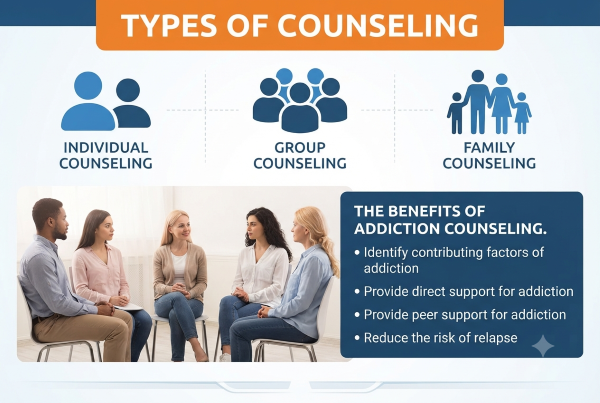
- Individual: One-on-one sessions between client and counselor
- Group-based: Sessions with others facing similar struggles
100% Confidential Support is Available 24/7
No matter what you’re going through, you’re not alone. Our dedicated team is here to provide a safe, judgment-free space where you can talk openly and honestly. Whether you need emotional support, resources, or just someone to listen.
We’re here for you—completely confidential and always respectful of your privacy. Call us today!
What Does A Mental Health Counselor Do?
A mental health counselor listens, assesses, and guides clients through structured sessions designed to build coping skills, process emotions, and work toward specific treatment goals.
A typical counselor’s role includes:
- Assessment: Understanding a client’s history, symptoms, and goals
- Diagnosis (when applicable): Identifying conditions like anxiety, depression, or PTSD
- Treatment planning: Creating a roadmap for sessions based on the client’s needs
- Active sessions: Guiding conversations using specific therapeutic techniques
- Progress tracking: Adjusting the approach as the client grows or circumstances shift
Counselors are trained to hold space without judgment. Their job is not to hand out advice like a friend would, but to help clients find their own insight and build lasting skills.
Deland Treatment Solutions
Battling with Drug and Alcohol Addition? Remember, you are not alone and we are here to help you!
What Does Mental Health Counseling Consist Of?
Mental health counseling typically consists of regular sessions using structured therapeutic techniques, tailored to the client’s specific diagnosis, history, and goals.
A session usually includes:
- Check-in: Discussing what has come up since the last session
- Focused work: Applying a specific technique, like challenging a negative thought pattern
- Skill building: Practicing coping strategies to use outside of sessions
- Homework or reflection: Tasks to continue progress between appointments
Fact: Roughly one in five adults in the United States experiences a mental illness in any given year, according to national mental health surveillance data.
If addiction and mental health struggles feel tangled together, DeLand Treatment Solutions offers integrated Dual Diagnosis Treatment.
Types Of Mental Health Counseling
There is no single approach to counseling. Different techniques work better for different people, conditions, and goals.
Type | Best For | What It Involves |
Cognitive Behavioral Therapy (CBT) | Anxiety, depression, addiction | Identifying and reframing negative thought patterns |
Dialectical Behavior Therapy (DBT) | Emotional regulation, self-harm, BPD | Mindfulness, distress tolerance, interpersonal skills |
Acceptance and Commitment Therapy (ACT) | Anxiety, chronic stress | Accepting difficult emotions while committing to values-based action |
Psychodynamic Therapy | Deep-rooted patterns, past trauma | Exploring how past experiences shape current behavior |
Family Therapy | Relationship or household conflict | Improving communication among family members |
Group Therapy | Shared struggles, addiction recovery | Peer support guided by a licensed facilitator |
Trauma Therapy (including EMDR) | PTSD, past abuse | Processing traumatic memories safely |
Many counselors blend multiple approaches depending on what a client responds to best.
Mental Health Counseling for Addiction
For individuals struggling with substance use, mental health counseling often plays a central role in recovery, not just an add-on.
Addiction rarely exists in isolation. Many people misuse substances to cope with anxiety, depression, trauma, or unresolved emotional pain. This overlap is known as a co-occurring disorder or dual diagnosis.
Counseling in an addiction treatment setting typically addresses:
- The emotional root causes behind substance use
- Coping skills to replace unhealthy habits
- Relapse prevention planning
- Rebuilding relationships strained by addiction
- Processing shame, guilt, or trauma tied to substance use
When Do I Need Mental Health Counseling?
There is no single moment that determines when counseling becomes necessary. Generally, it is worth considering when daily life starts feeling harder to manage on your own.
Signs it may be time to reach out include:
- Persistent sadness, anxiety, or numbness that will not lift
- Withdrawing from friends, family, or activities you used to enjoy
- Using alcohol or drugs to cope with difficult emotions
- Struggling to function at work, school, or home
- Experiencing a major loss, trauma, or life transition
- Having thoughts of self-harm or feeling hopeless
Counseling is not just for crisis moments. Many people benefit from talking to someone even during ordinary stress, before things escalate.
How Do I Improve My Mental Health?
Alongside professional counseling, several daily habits can support and reinforce your mental health progress.
- Move your body: Regular physical activity is linked to lower rates of anxiety and depression
- Protect your sleep: Poor sleep worsens mood regulation and stress response
- Stay connected: Isolation tends to deepen struggles, while support systems buffer against them
- Limit substance use: Alcohol and drugs often worsen underlying mental health symptoms over time
- Practice grounding techniques: Simple breathing or mindfulness exercises can calm an overwhelmed nervous system
- Be consistent with treatment: Skipping sessions or medications often undoes hard-earned progress
Expert Advice: Consistency in counseling matters more than intensity, since steady weekly sessions tend to build lasting change more effectively than sporadic, high-effort ones.
Seeking help from DeLand Treatment Solutions provides essential guidance
Benefits Of Mental Health Counseling
The benefits of mental health counseling extend far beyond simply feeling better after a session.
- Clearer self-understanding: Recognizing patterns in your thoughts and behaviors
- Stronger coping skills: Practical tools for managing stress, triggers, and setbacks
- Improved relationships: Better communication and healthier boundaries
- Reduced symptom severity: Measurable improvement in anxiety, depression, and trauma symptoms
- Lower relapse risk: For those in recovery, ongoing counseling significantly supports long-term sobriety
Progress is rarely linear, but most people see meaningful shifts within the first several weeks of consistent sessions.

Finding Mental Health Counseling At DeLand Treatment Solutions
If you or someone you love has been carrying too much alone, DeLand Treatment Solutions offers compassionate, evidence-based mental health and addiction care right here in DeLand, Florida.
Our clinical team provides individualized treatment plans built around programs like:
- Dual Diagnosis Treatment
- Cognitive Behavioral Therapy (CBT)
- Dialectical Behavior Therapy (DBT)
- Family Therapy
- Group Therapy
- Trauma and Post-Traumatic Stress Disorder Treatment
Whether you are supporting a struggling family member or seeking help for yourself, our team meets you where you are, without judgment.
Reach out through our contact page or call us to speak with someone who understands what you are going through.
FAQs
What is the difference between a mental health counselor and a therapist?
The terms are often used interchangeably, but “therapist” is a broader title that can include licensed mental health counselors, psychologists, marriage and family therapists, and clinical social workers. Both provide evidence-based talk therapy, although licensing requirements, training, and areas of specialization vary by profession and state.
How long does mental health counseling usually take?
The length of counseling varies from person to person. Some individuals notice meaningful improvement within a few sessions, while others benefit from ongoing support for several months or longer. Treatment duration depends on symptom severity, personal goals, progress, and the type of therapy being provided.
Is mental health counseling only for diagnosed conditions?
No. Mental health counseling can help with everyday stress, grief, relationship challenges, work difficulties, life transitions, and emotional struggles, even without a formal diagnosis. Many people seek counseling to improve coping skills, strengthen resilience, and support their overall emotional well-being before problems become more serious.
What happens in a first mental health counseling session?
The first counseling session usually focuses on getting to know you. Your counselor will ask about your personal history, current concerns, symptoms, and treatment goals while explaining confidentiality and the counseling process. It is also an opportunity to determine whether the therapeutic relationship feels comfortable and supportive.
Can mental health counseling help with addiction recovery?
Yes. Mental health counseling plays an important role in addiction recovery by helping individuals understand emotional triggers, develop healthier coping skills, address underlying trauma or mental health conditions, and strengthen relapse prevention strategies. Counseling is often most effective when combined with a comprehensive addiction treatment plan.
How do I know if I need mental health counseling or addiction treatment?
If emotional challenges and substance use are occurring together, integrated treatment addressing both conditions is often the most effective approach. A professional clinical assessment can determine whether counseling alone, addiction treatment, or a dual diagnosis program best fits your individual needs and recovery goals.
Does insurance cover mental health counseling?
Many private insurance plans provide coverage for mental health counseling because of mental health parity laws, although benefits vary by provider, network status, deductible, and specific policy. Verifying your insurance coverage before scheduling appointments can help you understand expected out-of-pocket costs and available services.
What if I do not know what is wrong? I just feel off.
You do not need a diagnosis or clear explanation to begin counseling. Many people seek help simply because they feel overwhelmed, emotionally disconnected, anxious, or unlike themselves. A counselor can help identify underlying concerns and develop practical strategies to improve emotional well-being and daily functioning.
Can family members attend mental health counseling sessions?
Yes. Family members may participate in counseling when appropriate, particularly if communication problems, relationship challenges, addiction, or mental health conditions affect the entire household. Family therapy can improve understanding, strengthen support systems, and help everyone develop healthier ways of communicating and resolving conflict together.
Is online mental health counseling as effective as in-person sessions?
Research shows online mental health counseling is generally as effective as in-person therapy for many common conditions, including anxiety and depression. However, individuals experiencing severe psychiatric symptoms, safety concerns, or crisis situations may benefit more from in-person treatment or a higher level of clinical care.
References
- Substance Abuse and Mental Health Services Administration – Co-Occurring Disorders
- National Institute of Mental Health – Mental Illness Statistics
- American Psychological Association – Counseling Psychology
- American Mental Health Counselors Association
- National Alliance on Mental Illness
- DeLand Treatment Solutions – Dual Diagnosis Treatment
Disclaimer: This information is for educational purposes only and should not replace professional medical or psychological advice. If you or someone you know is in crisis, please contact 988 (Suicide and Crisis Lifeline) or seek immediate emergency care. For more information, visit DeLand Treatment Solutions.