Key Takeaways
- Substance Use Disorder is a medical condition involving the inability to control drug or alcohol use despite negative consequences.
- It can affect behavior, relationships, physical health, and mental well-being.
- Symptoms often include cravings, loss of control, and continued use despite harm.
- Professional treatment programs can help individuals recover and rebuild healthy lives.
- Early recognition and treatment significantly improve recovery outcomes.
Drug abuse is an increasing problem in societies, cutting across all individuals irrespective of social class and age. The given issue is the same question presented to many people and families: What is substance use disorder (SUD) and how can it impact a human body and life? The awareness of this condition is the starting point of realizing the signs, finding support and effective treatment.
Substance use disorder is a health issue that alters the brain functioning pattern and influences the possibility of an individual regulating their use of alcohol or drugs. It has the potential to affect emotional health, physical health, relationships and quality of life. It may be so overwhelming but the good thing is that through proper treatment and support, one can recover.
Substance Use Disorder What is it?
If you have ever wondered what substance use disorder (SUD), it will be useful to consider it more than the case of substance abuse used occasionally. Substance use disorder is a chronic disease that involves the individual consuming alcohol or drugs repeatedly despite the terrible consequences on their lives.
The condition interferes with the functioning of the reward system of the brain. Alcohol, opioids, stimulants or sedatives induce extreme and intense feelings of pleasure because they release high levels of dopamine into the brain.
In the long run, the brain will come to rely on these substances to perceive normalcy. Consequently, individuals with substance use disorder have difficulties trying to regulate their consumption, even when they have a real desire to quit. Personal relationships, employers, and emotional and physical health usually suffer as the illness advances.
What should not be forgotten is that substance use disorder can be treated. Through expert treatment, counseling, and favorable conditions, one can take control and develop better habits that are healthy to promote recovery in the long term.
Start your recovery today with compassionate, evidence-based care at DeLand Treatment Solutions—call now for help
Types of Substance Use Disorder
Substance use disorder is a condition that can result due to various substances, each alone having a different impact on the body and the brain. Among the most typical ones are the following:
- Alcohol use disorder
- Opioid use disorder
- Disorder utilization stimulants (Methamphetamine or cocaine)
- Cannabis use disorder
- Addiction or benzodiazepine disease.
- Nicotine use disorder
Although the substances may be varied, the pattern in most cases may be similar. Individuals with substance use disorder usually develop cravings, tolerance, and an inability to quit the use without professional assistance.
Substance Use Disorder DSM 5
Substance use disorder is diagnosed by healthcare professionals according to the principles of the Diagnostic and Statistical Manual of Mental Disorders (DSM-5), which was published by the American Psychiatric Association.
Substance use disorder is a spectrum on which there are mild to severe in accordance with DSM-5 criteria. The severity is determined by the number of diagnostic criteria that are found during 12 months.
Such categorizing enables clinicians to have a more accurate picture of the scope of the condition and create a personalized treatment program focused on defining the needs of the individual.
Criteria of Substance Use Disorder
The DSM-5 contains a few criteria that are applied to diagnose substance use disorder. An individual can qualify under the criteria based on experiencing the following patterns:
- Consuming more quantities of substances than expected.
- Ongoing seduction or failure to quit.
- Using, acquiring or retrieving substances takes a large amount of time.
- Irresistible desires to use drugs or alcohol.
- Perspectives of using even when there are social or relationship issues.
- Lack of responsibility, whether at work, school or with family.
- Defiance by taking drugs in hazardous conditions.
- Finding a level of tolerance or withdrawal symptoms.
In the case that multiple of these criteria exist in one year, a medical worker can diagnose substance use disorder.
Symptoms and Causes
Knowledge of the symptoms and causes can make individuals and families identify substance use disorder before it worsens and get the proper assistance.
The condition develops at a slow pace. Starting as a simple, occasional or leisurely activity, it might gradually develop into a habit of addiction and powerlessness.
Substance Use Disorder Symptoms
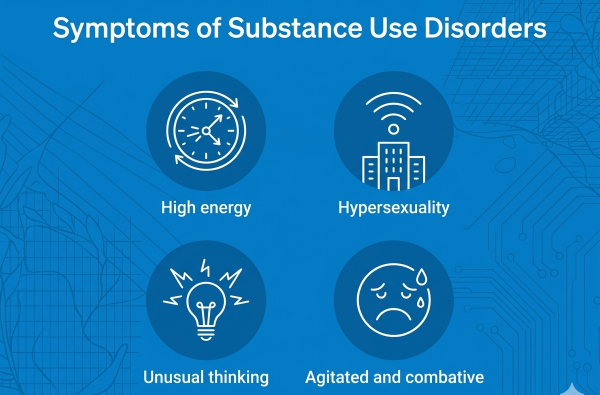
The typical symptoms of the substance use disorder are:
- Powerful desires towards substances.
- Will need greater quantities of tolerance.
- Withdrawal symptoms under non-use.
- Grasping at the problem to minimize/quit drug use
- Wasting too much time on cogitating or acquiring substances.
Such symptoms tend to deteriorate with time unless the disorder is dealt with by professional care and assistance.
Evidence of Substance Use Disorder
Substance use disorder has warning signs that can be observed by friends and family members before the person realizes that there is a problem on his or her side. These signs may include:
- Impulsive change in behavior or mood.
- Reduction in work/academic performance.
- Friendship and family alienation.
- Substance use financial concerns.
- Lack of interest in activities that used to be enjoyable.
Early detection of these red flags is capable of rendering a substantial difference to the recovery results.
Break free from addiction with personalized programs at DeLand Treatment Solutions and reclaim your life
Substance Use disorder Causes
The cause of substance use disorder is not single. Rather, it usually comes as a result of both biological, psychological and environmental factors.
Common contributing factors comprise the following:
- Genetics and family history of addiction.
- Mental disorders, which can include the following:
- Anxiety, depression or PTSD.
- Interpretation: Stressful life events or trauma
- Free drugs or alcohol are accessible.
- Social or peer influences
These do not ensure that a person will be susceptible to the development of substance use disorder, although this can augment the weakness.
Development of a Substance Use Disorder?
substance use disorder normally occurs progressively via continuous exposure to substances. First, the drugs can cause a feeling of a high mood, emotional warmth or temporary stress relief.
After some time the brain becomes accustomed to this substance and is less stimulated by natural pleasures, such as relationships, hobbies, or accomplishments. This tends to predispose people to more consumption of the substances as a way of obtaining the same.
With increasing dependence, individuals with substance use disorder can enter into persistent use of substances merely due to withdrawal effects or emotional distress.
Risk Factors of a Substance Use Disorder?
There are a number of risk factors that make one more likely to develop the substance use disorder. These include:
- Family history of addiction
- Exposure to drugs or alcohol at an early age.
- Mental illnesses without treatment.
- Trauma or stress level is also high.
- Substance use is socially promoted or peers.
Even though the two risk factors may predispose someone to be susceptible, early intervention, education and supportive environments can also play a major role in bringing down the risk level.
What are the Complications of Substance Use Disorder?
Substance use disorder may cause severe complications in almost all spheres of life in case it is not treated.
The most frequent complications include some of the following:
- Liver disease or heart issues are chronic health conditions.
- Certain mental illnesses such as anxiety, depression or psychosis.
- Family strain and conflict in relationships.
- Monetary crisis and job issues.
- Legal matters Substance use.
- Possibility of greater risk of overdose and accidental injury.
The results of these complications underscore the importance of professional assistance in dealing with substance use disorder.
Diagnosis of Substance Use Disorder How?
Physicians diagnose substance use disorder by carrying out a thorough assessment.
Commonly involved in this process are the following:
- An elaborate physical and mental examination.
- This also discusses the substance use patterns and history.
- Symptom and behavior analysis.
- Questionnaire screening and DSM-5 criteria of diagnosis.
Diagnosis should not aim at judging people but it should know what its own needs are and develop a proper treatment program to address the substance use disorder.
Treatment of Substance Use Disorder
Substance use disorder Treatment is a personal exercise and, in most cases, combines several methods.
Treatment that is usually employed includes:
- Medical detox in order to cope with withdrawal symptoms safely.
- Some of the behavioral therapies include Cognitive Behavioral Therapy (CBT).
- Where possible, medication-assisted treatment (MAT).
- Personal therapy and couple counseling.
- Family support programs and family therapy.
- Resilience to relapse strategies.
Proper treatment programs are focused on both the physical and emotional components of the substance use disorder, and they assist people to be more effective in coping and to restructure their lives.
Take the first step toward sobriety with DeLand Treatment Solutions—confidential support is available right now
Prevention of Substance Use Disorder?
Although not all cases may be avoided, numerous measures may help lessen the threat of substance use disorder.
The prevention efforts can typically be described as including the following:
- Substance misuse education.
- Good family support and free communication.
- Early mental health services and counseling.
- Learning beneficial coping mechanisms to stress.
- Education and prevention activities at the community level.
Substance use disorder can be reduced by establishing conducive settings and reducing the risk factors when they are young.
How and when ought I see a treatment of a Substance Use Disorder?
Perhaps it is time to consult professionals when the use of substances starts to influence everyday life, relationships, or health.
The symptoms that signal that treatment might be required include:
- Lack of ability to quit use of substances.
- Repeat cravings or withdrawal symptoms.
- Failure to care about duties at home, in school or at the workplace.
- Using it regardless of the negative effects.
Substance use disorder is something that can be combated with help early in the process and stop severe complications and make recovery more attainable.
A Process to Start Your Healing
There is no need to struggle with substance use disorder. The caring staff at DeLand Treatment Solutions is on hand to take you through all the processes of recovery.
Make a call (386) 866-8689 today to see what is available in the personalized treatment programs and make the first step towards living a healthier, drug-free life.
Disclaimer
This content is for informational and educational purposes only and should not be considered medical or mental health advice. substance use disorder is a complex medical condition that requires professional evaluation and treatment. If you or someone you know is struggling with substance use, please seek guidance from a qualified healthcare professional or licensed treatment provider.
FAQs
How is SUD treated?
SUD treatment typically combines medical care, therapy, and support programs. Approaches may include detox, counseling, behavioral therapies, and medication-assisted treatment. Effective treatment focuses on both physical dependence and the emotional factors contributing to substance use, often within a dual diagnosis framework.
What are the 4 categories of SUD?
The four general categories include alcohol use disorder, opioid use disorder, stimulant use disorder, and sedative or depressant use disorder. Each type involves different substances but shares similar patterns of dependence, cravings, and difficulty controlling use, which can be addressed in a specialized outpatient program.
What is recovery from SUD?
Recovery from SUD means learning to live a healthy, balanced life without harmful substance use. It often involves therapy, lifestyle changes, support groups, and ongoing care to maintain sobriety and improve mental and physical well-being, which is the focus of our aftercare program.
What is the meaning of SUD?
SUD stands for substance use disorder. It refers to a medical condition in which a person cannot control their use of alcohol or drugs despite negative consequences affecting their health, relationships, and daily responsibilities, often requiring comprehensive addiction treatment.
What are SUD behaviors?
Common SUD behaviors include compulsive substance use, strong cravings, hiding or lying about use, neglecting responsibilities, and continuing to use substances despite serious personal, social, or health problems. These behaviors are often addressed in group therapy.
How does SUD affect the brain?
SUD changes how the brain’s reward system functions. Substances trigger large releases of dopamine, reinforcing repeated use. Over time, the brain adapts, making it harder to feel pleasure without substances and increasing cravings and dependence. This neurological impact is a key reason why professional inpatient mental health rehab can be beneficial.
Sources
- American Psychiatric Association. Diagnostic and Statistical Manual of Mental Disorders (DSM-5-TR).
- National Institute on Drug Abuse (NIDA)
- Substance Abuse and Mental Health Services Administration (SAMHSA)
- Centers for Disease Control and Prevention (CDC)
- National Institute on Alcohol Abuse and Alcoholism (NIAAA)