
Quick Answer: Postpartum psychosis is the rarest and most severe psychiatric emergency and can occur very quickly following childbirth, sometimes within the first few weeks. Can result in confusion, hallucinations, delusions, insomnia, changes in mood and a loss of reality. DeLand Treatment Solutions wants families to know that when these warning signs arise, it’s time to get urgent professional help.
Why is Postpartum Psychosis Getting Attention?
The issue of maternal mental health has been thrust back into the public limelight by well-known trials where mothers were found guilty for committing acts of violence against their children. One recent case is that of Lindsay Clancy, the Massachusetts mother whose defense lawyers argued she was in the grip of postpartum psychosis when she killed her three young children.
The information she provided should not be interpreted to be an example of postpartum psychosis. Experts stress that it is very unusual and that most mothers with mental health issues after giving birth do not inflict harm on their children. The more critical teaching is knowing when one of the mothers may be having a psychiatric crisis.
According to Dr. Constance Guille, of the Medical University at South Carolina, postpartum psychosis usually occurs shortly after birth, one to four weeks after delivery; it can occur later as well.
Knowing the signs can help families to prevent a crisis from escalating.
What is Postpartum Psychosis?
Postpartum psychosis is a rare, serious mental health disorder which develops following childbirth. It can result in the sufferer losing touch with reality and it may include hallucinations, disorganized thinking, agitation, extreme mood swings and unusual behavior.
It is generally assumed that postpartum psychosis occurs in approximately 1-2 women per 1000 births.Beliefs/Delusions
But postpartum psychosis is not a condition to be prepared to wait out, as is the case with the common “baby blues.
This is regarded as a psychiatric emergency as symptoms can become serious in a short space of time. Evaluation is a key step if the person is experiencing any of the following: Hallucinations or delusions, severe confusion, suicidal or aggressive thoughts toward babies, or significant loss of contact with reality.
A confusion is the fact that symptoms can be variable. One minute a mother might look organized and calm and the next not know what is going on, be paranoid, or seemingly out of touch with reality. This waxing and waning cycle can make it hard to identify the disease for loved ones.
100% Confidential Support is Available 24/7
No matter what you’re going through, you’re not alone. Our dedicated team is here to provide a safe, judgment-free space where you can talk openly and honestly. Whether you need emotional support, resources, or just someone to listen.
We’re here for you—completely confidential and always respectful of your privacy. Call us today!
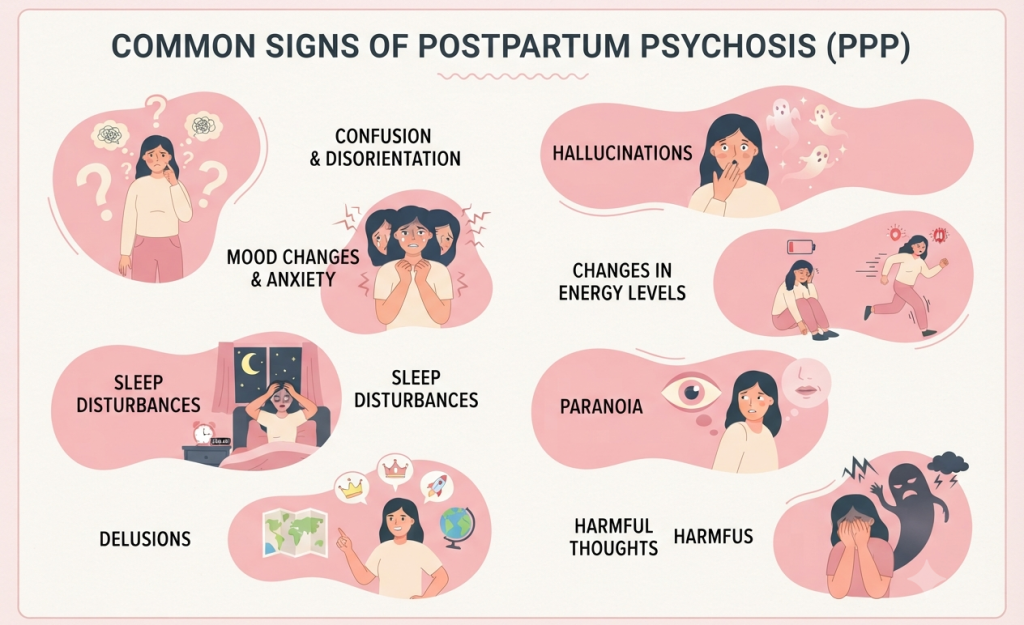
Postpartum Psychosis Symptoms: What Should Families Watch For?
First signs may be very low energy levels or an unusually difficult transition to motherhood. But symptoms may rapidly escalate.
Some symptoms to look out for are
Severe and/or Unusual Insomnia
A mother might be very awake or wake up when the baby does, or she may not be able to fall asleep. Braden, psychiatric symptoms can be exacerbated by severe sleep disruption.
Confusion and Disorientation
She might not comprehend her place, what is going on or why others are worried.
Hallucinations
She might hear, see, smell or feel something others do not.
Fixed False Beliefs/ Delusions
A mother’s beliefs may be obviously delusional: she might think someone is spying on you or that your baby is on a mission or that something bad is going on, but for which she can’t find any evidence.
Paranoia
Trust may become so lacking that a partner, a member of the family, a health care worker or others are suspected.
Rapid Mood Changes
A change of mood, mania, depression, irritability, agitation, anxiety are possible.
Disorganized Speech or Behavior
She/he might be hard to follow and/or might say things or do things that are opposite to the way she/he normally is.
Fits of False Reality
This is one of the most critical indicators. The individual’s thinking or perceptions may morph into something that doesn’t fit reality.
Postpartum psychosis has the potential to mimic delirium, as there may be some variation in level of consciousness and symptoms.
After childbirth, if these symptoms occur, do not leave the mother to “sleep it off. Go directly for psychiatric or emergency medical help.
Deland Treatment Solutions
Battling with Drug and Alcohol Addition? Remember, you are not alone and we are here to help you!
What Causes Postpartum Psychosis?
No one reason can account for all of them.
There is strong evidence for an association between postpartum psychosis (PPS) and bipolar-spectrum illness. For some women, it can be the initial noticeable expression of bipolar disorder. Some of them may experience a return of a previously existing ailment during childbirth.
There are several factors which may play a role, including:
- Previous postpartum psychosis
- History of BD.
- History of bipolar disorder or postpartum psychosis in the family.
- Considerable hormonal fluctuation after birth of baby
- Severe sleep disruption
- Psychological stress
- Other biological and/or psychiatric vulnerabilities
One of the best indicators of postpartum psychosis following a subsequent pregnancy is a history of postpartum psychosis.
Important to note is that postpartum psychosis doesn’t make an individual a bad mother. A serious condition that requires medical attention.
Seeking help from DeLand Treatment Solutions provides essential guidance
Who Is at Highest Risk for Postpartum Psychosis?
When women experience postpartum psychosis once, there is an increased chance that they will experience it again.
Another big risk factor is bipolar disorder. Additionally, research indicates that for some women, postpartum psychosis becomes the initial presentation of BD, and in this instance, psychiatric assessment proves important.
But a person who has not been diagnosed by a psychiatrist does not rule out the danger. Sometimes, postpartum psychosis is seen in women with no prior severe mental disorder.
Relatives or families should then pay attention to the ongoing symptoms and not take for granted that the person is safe simply because they have not had mental health issues in their past.
How is Postpartum Psychosis Diagnosed?
There is no specific blood test to establish the diagnosis of postpartum psychosis.
Consulting with a psychiatrist or other well-trained health care provider to assess symptom findings, timing of symptoms, medical and psychiatric history, medications, sleep patterns, substance use, and safety issues.
Evaluation would also include physical illnesses that could lead to confusion or psychotic symptoms. This is significant, as complications from the maternal birth can influence mental status.
The performance can be a study of:
- When symptoms began
- Changes in sleep
- Mood changes
- Hallucinations
- Delusional beliefs
- Confusion or disorientation
- Previous psychiatric episodes
- Bipolar disorder
- Family psychiatric history
- Drugs and medication (general)
- Thoughts of suicide or harm.
Postpartum psychosis can deteriorate very quickly, so if there is a suspicion that the condition exists, it is urgent to see the woman, not weeks down the line.
What’s the Treatment for Postpartum Psychosis?
A high level of psychiatric support is typically used in the treatment, and it may be necessary to hospitalize the mother and baby until the symptoms become stable. Postpartum psychosis is in most cases described in the clinical literature as an emergency, warranting inpatient psychiatric treatment.
Treatment may include:
Medication
Antipsychotics can be used to decrease disorganized thinking, agitation, delusions, and hallucinations.
Mood stabilizers like lithium can also be very important, especially when bipolar-spectrum features are present. Sometimes benzodiazepines are prescribed for severe agitation or insomnia.
Hospital-Based Stabilization
By providing a safe treatment setting, clinicians can observe symptoms, sleep patterns, response to medication, physical well-being, and safety.
Ongoing Psychiatric Care
The solution shouldn’t stop once the crisis is over. A follow-up psychiatric evaluation might be useful to determine if the episode was related to BD or another underlying disorder.
Family Support
Family and friends can help with talking, driving, meds, babies and appointments.
What Does Research Say About Recovery?
As postpartum psychosis is treatable, the prospects of a woman’s recovery after the condition can be favorable if therapy is initiated early. There are studies which have shown that women see a significant improvement in their symptoms, although recovery is a long process and some people may require ongoing psychiatric care.
It is also a condition for which long-term attention is warranted, as postpartum psychosis has been linked to bipolar-spectrum illness. There has been expert consensus research in recent years that has helped to explain the bipolar nature of postpartum psychosis while providing some recognition that postpartum psychosis is clinically unique.
More than symptom control is the key word for recovery. The mother may also require assistance in reviving her confidence, handling what has occurred, regaining a normal sleep routine, handling anxiety, reconnecting with her family, and comprehending her diagnosis.
Perhaps most crucial is that a woman who suffers from postpartum psychosis is not “broken” for life.
Can Postpartum Psychosis Be Prevented?
Although there is no way to enjoy a “free of incident” environment, the practice of risk management can make a huge difference.
If mothers have previously had postpartum psychosis and/or bipolar disorder, they should consult with their psychiatrist and obstetric care provider prior to becoming pregnant and when planning for their postpartum period.
Some helpful steps are to:
Creating a “Postpartum Mental Health Plan.
The ability to identify warning signals of an imminent threat.
Contacts were made to prevent the disruption of sleep as far as was possible.
Setting up practical family assistance
Planning psychiatric follow-up before delivery.
Consult with a licensed health professional about pharmaceuticals.
Developing an emergency plan
Ensuring they have trusted persons who are familiar with sign/symptom that would need flagging as well as immediate assistance.
Close observation after the delivery is especially recommended for women who have suffered from PPC.
What Can Families Do When They Notice Warning Signs?
If your child is acting in a way that is unusual, play it safe and take this act seriously.
Never dispute if she or he believes something is “real” or “not real” when the person is experiencing hallucinations or delusions. Rather, be calm, decrease stimulation, consult trusted supports, and seek professional help.
Seek medical attention right away if she’s extremely agitated, hallucinating, severely confused, unable to sleep for a long time, suicide-prone, threatening to harm herself, or seems disassociative.
In case of an immediate danger to the mother and baby, call 911 or proceed to the closest emergency department.
For maternal mental health support in the United States, there is a National Maternal Mental Health Hotline that offers confidential support, information, and referrals by phone and text at 1-833-TLC-MAMA (1-833-852-6262) for free. It provides services round the clock.
A Note About High-Profile Cases
Where the case is resonating broadly, there is more appetite to discuss postpartum psychosis, but misconceptions can follow.
Postpartum psychosis, criminal responsibility, maternal mental health, and child safety have been put on the public agenda through the Lindsay Clancy trial. Those legal questions are for the courts to answer, and should not be used to assume about people with postpartum psychosis.
The experts quoted by MUSC emphasize that postpartum psychosis is rare, and that it is highly unlikely to lead to the death of an infant or child.
A broader message may have greater staying power: Moms are not alone in experiencing mental illness; mental illness is a treatable disorder; and mental illness should not be ignored.
The need of the hour is to realize that postpartum psychosis is not for judging but an urgent need for care and treatment.
Postpartum Psychosis Requires Urgent Care, Not Judgment
Although it’s not common, postpartum psychosis is indeed serious. When they do happen, symptoms can occur rapidly after delivering a child and may consist of hallucinations, delusions, paranoia, confusion, severe insomnia, temper modifications, and a lack of contact with reality.
There is a strong association with bipolar-spectrum illnesses, and previous postpartum psychosis is an important risk factor. Treatment at an early stage can make a world of difference in recovery.
Most importantly, moms with psychiatric symptoms need compassion, safety, and professional care, and not shame.
Anything that seems massively different after birth is normal to feel this way. Help can be offered, and early help can save both mother and baby.
Call DeLand Treatment Solutions today. Our team can support you in trying to understand your options when it comes to finding behavioral health resources and what kind of professionals you can turn to for help.
Medical Disclaimer: This article is for educational purposes only and is not a substitute for diagnosis, treatment, or emergency medical care. If someone who recently gave birth is confused, hallucinating, severely agitated, detached from reality, or at risk of harming herself or someone else, seek emergency psychiatric care immediately.
Frequently Asked Questions About Postpartum Psychosis
Is postpartum psychosis real?
Yes. Postpartum psychosis is a recognized psychiatric emergency that can occur after childbirth. It may cause hallucinations, delusions, paranoia, severe confusion, mood changes, and loss of contact with reality. Immediate professional evaluation is important.
Is postpartum psychosis in the DSM-5?
Postpartum psychosis is recognized clinically, but it is not a standalone DSM-5 diagnosis. Psychotic symptoms occurring around childbirth may receive a relevant psychiatric diagnosis with a peripartum onset specifier. Experts continue discussing its classification within bipolar-spectrum disorders.
How many cases of postpartum psychosis are there?
Postpartum psychosis affects approximately 1 to 2 women per 1,000 deliveries. That makes it rare compared with postpartum depression and anxiety, but its severity means symptoms should always be taken seriously.
What are the warning signs of postpartum psychosis?
Warning signs include severe insomnia, confusion, disorientation, hallucinations, delusions, paranoia, rapid mood changes, agitation, disorganized behavior, and losing contact with reality. Symptoms can fluctuate, so sudden changes should receive urgent professional attention.
Is postpartum psychosis a form of bipolar disorder?
Postpartum psychosis is strongly associated with bipolar-spectrum illness and may be the first presentation of bipolar disorder. However, not every woman with postpartum psychosis has an established bipolar diagnosis. Professional assessment is needed to clarify the underlying condition.
How long does it take a woman to recover mentally after giving birth?
There is no universal recovery timeline. Baby blues often resolve within days, while depression, anxiety, or psychosis may require weeks or longer of treatment. Recovery depends on diagnosis, severity, treatment, sleep, support, and individual circumstances.
Who is at highest risk for postpartum psychosis?
Women with a previous episode of postpartum psychosis have particularly high risk. Bipolar disorder and a family history of bipolar disorder or postpartum psychosis are also important risk factors. However, first episodes can occur without a previous diagnosis.
What famous people had psychosis?
Public figures have discussed psychosis or related mental health conditions, but postpartum psychosis should not be assumed from a person’s public story. Diagnoses are personal medical information, and each individual’s symptoms and circumstances are different.
Can you recover fully from postpartum psychosis?
Yes, many women experience significant recovery with appropriate treatment. However, some need ongoing psychiatric monitoring because postpartum psychosis can be associated with bipolar-spectrum illness or future episodes. Early treatment and continued follow-up can support long-term recovery.
References and Content Sources
- Medical University of South Carolina: Understanding Postpartum Psychosis
- HealthCentral: What Every Woman Should Know About Postpartum Psychosis
- PubMed: Recognizing and Managing Postpartum Psychosis
- PubMed: Postpartum Psychosis and Bipolar Disorder: Expert Consensus Statement
- National Library of Medicine: Postpartum Psychosis Clinical Evidence
Editorial and Safety Note: The Lindsay Clancy case is referenced only as a public example of why postpartum psychosis has entered public discussion. Allegations, defense arguments, prosecution arguments, and questions of criminal responsibility are matters for the legal system. This article does not make a clinical or legal determination about any individual.