Perhaps it began at a party or the two, something that seemed harmless and occasional. However, in recent months, it’s becoming more common and you are beginning to wonder if this is something that you cannot walk away from. That’s one reason to take the question seriously.
Yes, ketamine can be addictive and the common signs of ketamine addiction involve the need for increasing amounts to get the desired effect, repeated and unsuccessful attempts to reduce use, time devoted to obtaining or recovering from use, and continued use despite its negative consequences on work, relationships, or safety. Ketamine has been known to cause both physical and psychological dependence and the short duration of action and euphoric effects can make it very hard to stop using when a dependence pattern has formed.
Being able to identify these signs early, in yourself or another loved one can make a huge difference in the experience of recovery.
Read on to learn what Ketamine is, what Ketamine addiction is, and how to tell if you have a problem with Ketamine use before it becomes more difficult to deal with.
Recognizing these patterns in yourself or someone you love? Call DeLand Treatment Solutions.
What Is Ketamine?
Ketamine is a dissociative anesthetic approved by the FDA in 1970, used in both human and veterinary medicine, and more recently applied to treatment-resistant depression.
Ketamine became a Schedule III controlled substance under the Controlled Substances Act in 1999, reflecting recognized therapeutic value alongside a real potential for misuse and dependence.
Known by street names like K, Special K, Vitamin K, and cat tranquilizer, ketamine produces hallucinogenic and dissociative effects that make it a popular recreational drug, sold as a powder or liquid and typically snorted, smoked, injected, or mixed into drinks.
Is Ketamine Addictive?
Yes, ketamine is addictive. It’s legally recognized as having potential for both psychological and physical dependence, even though its physical withdrawal symptoms tend to be milder than those of alcohol or opioids.
Fact: Only about 0.7 percent of the U.S. population misuses ketamine illegally.
What Is Ketamine Addiction?
Ketamine addiction, clinically referred to as ketamine use disorder, is a diagnosable condition marked by compulsive use despite negative consequences to health, relationships, or daily functioning.
People who use ketamine often describe the short-lasting, highly euphoric effects, along with its role in social settings, as part of what makes it particularly difficult to stop using once a pattern takes hold.
Unlike substances with more visible physical warning signs, ketamine addiction can develop quietly, since its effects wear off quickly and don’t always leave obvious traces the next day. This is exactly why the pattern of use matters more than any single episode when it comes to recognizing a real problem.
Signs of Ketamine Addiction to Recognize
Recognizing ketamine addiction involves looking at a consistent pattern of behavior rather than a single instance of use.
According to the DSM-5, signs of ketamine use disorder can include:
- Taking larger amounts or using for longer than intended
- Ongoing desire or failed attempts to cut back
- Spending significant time obtaining, using, or recovering from ketamine
- Strong cravings for the drug
- Failing to meet work, school, or household responsibilities
- Continuing use despite social or relationship problems
- Giving up important activities in favor of using
- Using in hazardous situations, like driving
- Continuing use despite physical or psychological harm
- Developing tolerance, needing more for the same effect
Not sure how many of these apply to your situation? DeLand Treatment Solutions can help you sort it out.
Delayed Effects of Ketamine Use
Some effects of ketamine use don’t appear immediately, showing up instead after repeated or prolonged use.
Delayed effects can include:
- Bladder pain and ulcers
- Kidney issues
- Chronic stomach pain
- Depression
- Longer-term memory deficits
These delayed effects are part of why regular ketamine use can feel deceptively manageable at first, only for real consequences to surface later.
How to Identify a Problem With Ketamine Use
Identifying a problem with ketamine use often means noticing changes beyond the drug itself, in mood, relationships, and daily functioning.
Warning signs to watch for include:
- Needing ketamine to feel normal or relaxed in social settings
- Prioritizing ketamine use over responsibilities
- Noticeable changes in memory, mood, or physical health
- Defensiveness when use is questioned
- Combining ketamine with alcohol or other substances
Expert Advice: Track tolerance changes; needing more ketamine signals growing dependence over time.
Ketamine Withdrawal
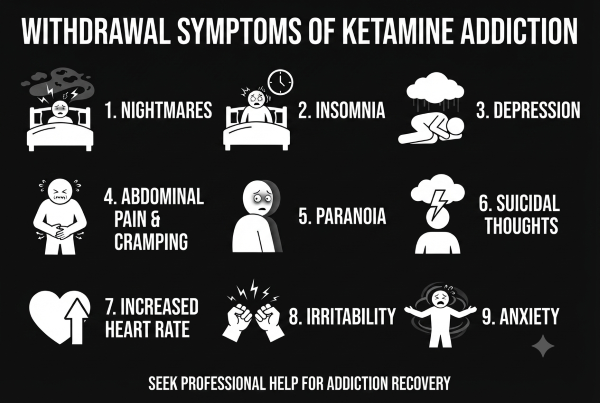
Ketamine withdrawal tends to involve psychological symptoms more than the physical symptoms typically seen with substances like alcohol or opioids.
Once ketamine use stops, individuals may experience anxiety, depression, and cravings, though physical withdrawal symptoms like shaking or sweating are less common compared to withdrawal from alcohol or opioids.
There are currently no FDA-approved medications specifically for ketamine withdrawal, though supportive care can help manage related psychological symptoms.
Because the pull to use again often comes from emotional discomfort rather than physical illness, withdrawal can be easy to underestimate. Cravings and low mood can linger quietly for days or weeks, which is exactly why having support in place during this stretch matters just as much as it would for a substance with more obvious physical symptoms.
Ketamine Overdose Risks
Ketamine overdose is relatively rare, though it can still be serious, particularly when combined with alcohol or other substances.
Ketamine has a considerably low rate of serious complications compared to many other mind-altering substances, though overdose can still cause dangerously slowed breathing, low blood pressure, seizures, or unconsciousness, especially with rapid administration or drug combinations.
If you suspect a ketamine overdose, call 911 immediately.
Treatment for Ketamine Addiction
Treatment for ketamine addiction typically combines behavioral therapy with individualized psychosocial support, since no medication is currently approved specifically for ketamine use disorder.
Helpful treatment approaches include:
- Individual and group counseling
- Cognitive behavioral therapy (CBT)
- Treatment for co-occurring mental health conditions
- Structured relapse prevention planning
- Family therapy for ongoing support
Effective treatment is tailored to each person’s specific needs, since matching the right level of care and support significantly improves outcomes.
Get Help Today at DeLand Treatment Solutions
DeLand Treatment Solutions understands how ketamine’s short-lasting, intensely social effects can make it uniquely difficult to recognize when use has become a problem. Our clinical team treats ketamine use alongside any co-occurring mental health conditions, with individualized, compassionate care.
Our DeLand, Florida facility offers a full continuum of dual-diagnosis care, including residential treatment in a private, supportive setting designed for real healing.
What makes our approach different:
- A 12-bed residential setting for personalized, focused care
- Joint Commission accredited programs and licensed clinical staff
- Integrated treatment for substance use and mental health together
- Family involvement woven into the recovery process
- A private, comfortable environment on two peaceful acres
If ketamine use has become harder to manage than it used to be, you don’t have to sort it out alone. Call DeLand Treatment Solutions or visit our contact page to take the next step.
FAQs
What is ketamine?
Ketamine is a dissociative anesthetic used in medical settings for anesthesia, sedation, pain management, and certain cases of treatment-resistant depression. Although it has important therapeutic uses under medical supervision, ketamine also carries a risk of misuse, dependence, and addiction when used improperly.
Is ketamine addictive?
Yes. Ketamine has the potential to cause both psychological and physical dependence, particularly with frequent or high-dose use. While physical withdrawal is generally milder than with alcohol or opioids, cravings and compulsive use can still make quitting difficult without professional treatment.
What is ketamine addiction?
Ketamine addiction, also called ketamine use disorder, is a diagnosable medical condition characterized by compulsive ketamine use despite harmful consequences. People may continue using despite problems affecting their health, relationships, work, finances, or overall quality of life and daily functioning.
What are common signs of ketamine addiction?
Common signs include needing increasingly larger doses to achieve the same effects, strong cravings, unsuccessful attempts to quit, neglecting responsibilities, spending excessive time obtaining or using ketamine, and continuing use despite physical, emotional, or social consequences caused by the drug.
How to identify a problem with ketamine use?
Warning signs include relying on ketamine in social situations, prioritizing use over work or family obligations, becoming defensive when questioned about use, hiding drug use, or regularly combining ketamine with alcohol or other substances despite known health and safety risks.
What are delayed effects of ketamine use?
Long-term ketamine misuse can contribute to bladder inflammation, urinary tract damage, kidney problems, chronic abdominal pain, memory impairment, difficulty concentrating, depression, and persistent cognitive changes. Early treatment may help reduce further harm and improve long-term recovery outcomes for many individuals.
What does ketamine withdrawal feel like?
Ketamine withdrawal is usually dominated by psychological symptoms rather than severe physical illness. People commonly experience anxiety, depression, irritability, fatigue, cravings, difficulty sleeping, and reduced motivation, making professional support helpful for managing symptoms and maintaining long-term recovery successfully.
Is ketamine overdose common?
Ketamine overdose is relatively uncommon compared with some other drugs, but it can still be life-threatening. High doses or combining ketamine with alcohol or other depressants may cause unconsciousness, slowed breathing, dangerously impaired coordination, or other medical emergencies requiring immediate treatment.
How is ketamine addiction treated?
Treatment typically combines behavioral therapies, individual counseling, group therapy, relapse prevention planning, and treatment for co-occurring mental health conditions. Depending on individual needs, treatment may also include residential care, outpatient services, family therapy, and ongoing aftercare to support lasting recovery.
Can ketamine addiction be treated successfully?
Yes. Many people recover successfully from ketamine addiction with individualized, evidence-based treatment and ongoing support. Consistent therapy, healthy coping strategies, relapse prevention planning, and continued recovery engagement can help individuals achieve long-term stability and improve their overall quality of life.
Where can I get help for ketamine addiction in Florida?
DeLand Treatment Solutions provides dual-diagnosis residential treatment for individuals experiencing ketamine addiction and co-occurring mental health conditions in DeLand, Florida. Call (386) 866-8689 to learn more about available treatment programs, admissions, insurance options, and personalized recovery support.
References
- American Addiction Centers: Ketamine Abuse, Addiction, Effects, and Treatment
- The Priory Group: Ketamine Addiction Symptoms
- National Institute on Drug Abuse: Ketamine
- DEA: Ketamine Drug Fact Sheet
- American Psychiatric Association: Substance-Related Disorders
- SAMHSA: Substance Use Treatment Resources
- Cleveland Clinic: Ketamine Therapy
- DeLand Treatment Solutions: Residential Treatment Program
Medical Disclaimer: This article is for informational purposes only and is not a substitute for professional medical or mental health advice; please consult a qualified provider or contact DeLand Treatment Solutions for personalized guidance. If you suspect an overdose, call 911 immediately.