Dual Diagnosis (Co-Occurring Disorders) is a condition which affects millions of people, who end up being affected by a substance use disorder and a mental disorder in one. Symptoms are likely to interact in the overlap and go so far as to help one another complicating the recovery, yet it is easily accomplished through the help of an integrated approach.
The co-occurring disorders construction and the treatment process can help individuals/families to make well-informed, self-confident decisions towards reaching long-term stability. An excellent practical overview of what dual diagnosis (Co-Occurring Disorders), why it occurs, and how effectively it can be treated is given in a form that a layman can easily understand and yet this does not in any way devalue the gravity of the situation.
What is a Dual Diagnosis?
Dual diagnosis is a disorder that manifests itself when a substance use disorder exists together with another non-psychiatric disorder. These conditions can be developed initially or affect each other in the long-term, but when they are combined, each might strengthen the symptoms of the other.
As an illustration, a person can use substances to relieve anxiety or depression whereas the continued use of substances can aggravate mood and impairs judgment and heightens emotional instability. In Dual Diagnosis (Co-Occurring Disorders ), when the person took the prescribed medication to treat one of the disorders, the probability of the person lapsing and experiencing more distress is very high.
Which Disorder Comes First in a Dual Diagnosis?
It does not possess a distinct and unchanging pattern. In other cases, mental health symptoms precede and drug abuse is a lifestyle. The consumption of substances in other cases begins at an earlier age and causes emotional or psychological problematic circumstances in the long run.
The most important thing when working in Dual Diagnosis (Co-Occurring Disorders) is not what condition was the first one to develop, but the fact that both disorders are present and need to be treated as one to achieve a long-term lasting recovery.
What is the Best Example of a Dual Diagnosis?
Depression with alcohol use disorder is one of the most widespread. A person can consume alcohol to make their feelings less painful, yet alcohol contributes to a person becoming more depressed, sleeping less well, and being less motivated.
In other instances of Dual Diagnosis (Co-Occurring Disorders), there is the occurrence of anxiety and stimulant misuse, post-traumatic stress disorder and opioid dependence case, bipolar disorder and substance use issues case. These two conversations possess their own risks and require a certain treatment strategy.
100% Confidential Support is Available 24/7
No matter what you’re going through, you’re not alone. Our dedicated team is here to provide a safe, judgment-free space where you can talk openly and honestly. Whether you need emotional support, resources, or just someone to listen.
We’re here for you—completely confidential and always respectful of your privacy. Call us today!
Causes of a Dual Diagnosis
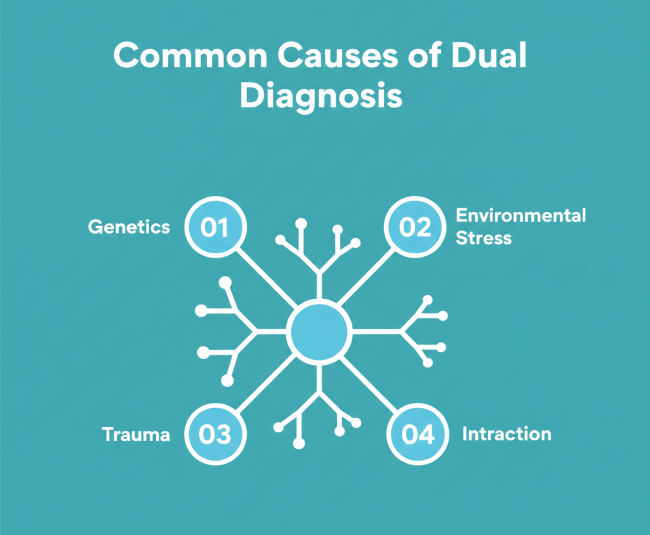
No linear cause of Dual Diagnosis (Co-Occurring Disorders) exists. Rather, several contributing factors tend to intersect and they include:
- Identical risk factors: Family ties or personal life stress and traumas, which make one more likely to develop both diseases.
- Alterations in the brain chemistry: Substance use can alter the mood, impulse control and stress response.
- Coping patterns: With the help of substances, it is possible to overcome the unpleasant or overwhelming emotions or annoying thoughts.
- Environmental: Stressful incidents (because of a chronic stress state) or dysfunctional relationships, or a lesser support network.The knowledge of these predisposing factors contributes to the necessity of integrated care to successfully conduct treatment.
Diagnosing Co-Occurring Disorders
Dual Diagnosis (Co-Occurring Disorders) can only be accurately revealed after a detailed and continuous assessment. The signs of substance use and mental disorders can sometimes be confusing, and it requires keen evaluation to differentiate one facility.
None of these aspects are ignored in a thorough evaluation:
Emotional health, substance use patterns, personal history, and contemporary stressors. When diagnosed properly, it is more likely that the treatment will be directed at the individual as a whole and not on a specific symptom or condition.
Risk Factors for Co-Occurring Disorders
Development of Dual Diagnosis (Co-Occurring Disorders) can be aggravated by some factors, which are:
- History of mental growth or medical usage disorders within a family.
- Patients of a traumatic event or chronic stress or imbalance.
- Early use of alcohol or drugs
- Inadequate access to health coping and emotion.
Existence of risk factors does not entail an individual contracting a dual diagnosis but knowing them can help them undertake the intervention and support earlier.
What are the Types of Dual Diagnosis Treatment?
Dual Diagnosis (Co-Occurring Disorders) is best cured when it is integrated treatment i.e. the two conditions are treated simultaneously. These are common components of treatment include:
- Individual and group therapy for mental health and drug use.
- Skilled training on stress, craving and emotional management, pro-social.
- Clinical assistance with drugs.
- Constant support and relapse prophylaxis.
The goal is balance, emotional well-being maintenance and the creation of substance addictive liberty.
Treating Co-Occurring Disorders
Effective therapy understands that there is no universal solution to recovery. Patients having Dual Diagnosis (Co-Occurring Disorders) enjoy the benefit of having individual treatment plans that are tailored to suit their progress.
This is usually preliminary with stabilization, then more personal work and skill extension. Combining the consideration of both conditions will help cut the setbacks and help obtain the more sustainable recovery.
How Is Dual Diagnosis Treated?
Dual Diagnosis (Co-Occurring Disorders) is treated as a harmonious therapy of an individual. This includes therapeutic aid, behavioral therapy and lifestyle change that enable healthy living.
The individual achievement of the long-term care is rooted in the protracted duration of care, support, and practical objects that make people manage the symptoms of the mental disorder and substance-related triggers in their everyday life.
Why Integrated Care Matters
When there is success in one condition and treatment, the other issue will not be successful. The integrated care improves care by:
- Reducing the risk of relapse
- The increment of emotional stability.
- Coping and problem-solving skills empowerment.
- Improving the general quality of life.
In the case of people with Dual Diagnosis (Co-Occurring Disorders), combined therapy is a better and more viable way to go.

Take the Next Step Toward Recovery
Having a co-occurring disorder is not easy to live with, yet there is no need to go through the process alone. Recovery can be managed and sustainable with the necessary support.
DeLand Treatment Solutions provides comprehensive, patient-centered care to people in need, especially patients struggling to handle their mental health and substance use issues. Every minute spent on the phone at (386) 866-8689 signifies the first move in a smoother and healthier future with a caring professional.
Disclaimer
This content is for informational purposes only and is not a substitute for professional medical, psychological, or psychiatric advice. Always seek the guidance of a qualified healthcare provider with any questions regarding mental health or substance use treatment.
Sources
- Substance Abuse and Mental Health Services Administration (SAMHSA)
- National Institute on Drug Abuse (NIDA)
- National Alliance on Mental Illness (NAMI)
- American Psychiatric Association (APA)
Frequently Asked Questions
What is a co-occurring disorder dual diagnosis?
A co-occurring disorder dual diagnosis means an individual is experiencing both a mental health condition and a substance use disorder at the same time. Each condition can affect the other, which is why they are treated together rather than separately.
What is the most common co-occurring disorder?
Depression combined with alcohol use disorder is one of the most common forms of co-occurring disorders. Anxiety disorders paired with substance use challenges are also frequently seen.
What does co-occurring or dual disorders mean that an individual has?
It means the person has two interconnected conditions one related to mental health and one related to substance use. Both conditions influence daily functioning and recovery outcomes.
What is the new term for dual diagnosis and co-occurring?
The terms “dual diagnosis” and “co-occurring disorders” are often used interchangeably. Today, “co-occurring disorders” is more commonly used to emphasize integrated treatment.
What is the best example of dual diagnosis?
A clear example is anxiety paired with prescription medication misuse. The anxiety may drive misuse, while misuse can worsen anxiety symptoms over time.
What is the hardest mental illness to live with?
There is no single answer, as challenges vary by person. Conditions involving intense mood shifts or persistent distress can be especially difficult, particularly when combined with substance use.