Key Takeaways
- Substance-induced psychosis is caused by drugs or alcohol affecting brain chemistry
- Symptoms may include hallucinations, paranoia, confusion, and agitation
- The condition can be temporary, but risk increases with heavy or repeated use
- Treatment focuses on safety, stabilization, and addressing substance use
- Early support improves outcomes and reduces the chance of recurrence
Substance-Induced Psychosis: Symptoms, Signs and Treatment is a topic that raises questions and tends to leave a lot of confusion for people who live with it, the people who engage themselves in helping them and those who want to know what is happening. drug-use psychosis can be frightening, but it can be treated and described as well. Recovery is possible by having adequate information and support at the right time.
This is a plain language guide to substance-induced psychosis. We will discuss what it is, substances that are involved as a rule, how long it may take, and what good treatment and recovery should look like at DeLand Treatment Solutions.
Psychoactive-induced psychosis involves substances interfering with the brain to a point of distorting reality. This may include hallucinations and paranoia or very untidy thinking. These psychotic symptoms are also different in that after usage, they are more readily triggered by the substances as opposed to primary psychotic disorders, and they usually dissolve upon discontinuation of the usage and time to stabilize.
The timely detection of the signs would assist individuals to deal with distress, prevent long-term harm, and direct them to the necessary form of help.
Substance-Induced Psychosis
Substance-induced psychosis is the psychotic symptoms that occur during or soon after substance consumption, withdrawal or intoxication. These symptoms are not ascribed to another mental health condition and normally cease as the substance is cleared from the human body and the healing process requires some time.
The difference between substance-induced psychosis and schizophrenia is time. The symptoms are closely related to substance use and are usually relieved when the use is ceased. Nevertheless, a recurring episode can make the possibility of permanent psychological problems.
100% Confidential Support is Available 24/7
No matter what you’re going through, you’re not alone. Our dedicated team is here to provide a safe, judgment-free space where you can talk openly and honestly. Whether you need emotional support, resources, or just someone to listen.
We’re here for you—completely confidential and always respectful of your privacy. Call us today!
100% Confidential Support is Available 24/7
No matter what you’re going through, you’re not alone. Our dedicated team is here to provide a safe, judgment-free space where you can talk openly and honestly. Whether you need emotional support, resources, or just someone to listen.
We’re here for you—completely confidential and always respectful of your privacy. Call us today!
What is Drug-Induced Psychosis?
The psychosis due to drugs is a substance-induced psychosis that weakened by drugs on their own and not alcohol on its own. It occurs when chemicals mediate the process of information, emotions and perception of the brain.
Individuals under the psychotropic influence of drugs might assume things to be that are not there, hear or see things which are not seen by others, or be highly suspicious or afraid. Even when they are not reflected in reality, these experiences are actually very real to a person experiencing them.
Deland Treatment Solutions
Battling with Drug and Alcohol Addition? Remember, you are not alone and we are here to help you!
Which Drugs Can Cause Drug-Induced Psychosis?
A number of substances have been known to be dangerous to cause psychosis, especially when they are used in large doses or in case they are used in large doses. These include:
The addictive drugs are the methamphetamine and cocaine.
- PCP and LSD, which are hallucinogenic drugs.
- Use of cannabis and particularly the excessive use of cannabis or high dosages of cannabis.
- There is abuse of medical stimulants.
- Whenever in the withdrawal, especially of alcohol.
- The danger increases when it is combined with other drugs and when it is consumed extensively and without rest or food.
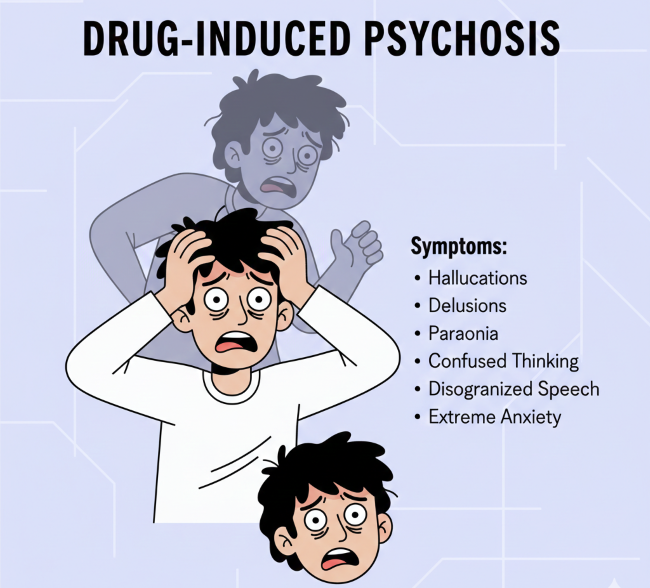
Signs and Symptoms of Drug-Induced Psychosis
The symptoms can be of various types, but such typical symptoms can be:
- Hearing things and seeing images that are not present.
- Shy or powerfully paranoid.
- Poor speech or disordered thoughts.
- everal agitations or confusions.
- Shock condition is impactful or rapid mood alterations.
The symptoms may at times emerge immediately and may turn out to be a nuisance to the victim and people around him/her.
Risk Factors for Drug-Induced Psychosis
All substance consumers will experience psychosis. Such factors can be used to improve the vulnerability:
- Overconsumption or high consumption of drugs.
- Psychosis, personal or family history.
- Early exposure to drugs
- High stress or lack of sleep
- It is more than one substance ingestion.
- The toleration of risk factors will aid in prevention and early intervention.
How Long Can Drug-Induced Psychosis Last?
The use of drugs in psychosis takes a certain duration, but it all depends on the drug, quantity, and the health of an individual. There are instances when some episodes take a few hours or days or some can extend to weeks.
Symptoms in most instances are alleviated and recovery assistance is initiated when the use of the substances is terminated. There may however be prolonged or progressive worsening of psychosis as a result of continued use and may complicate treatment.
Getting Help for Substance Use
It may seem overwhelming when in the state of substance-induced psychosis but help is there. The interventions are aimed at the development of a safe environment, emotional stability, and treatment of underlying substance use, which caused symptoms.
The care is guided by the experience, caring and trust in DeLand Treatment Solutions. The support plans are built according to the needs of a person; they help him/her to locate his/her clarity, steadiness, and courage to move on with the progress.

Treatment Approaches for Substance-Induced Psychosis
- Typical elements of a successful treatment encompass
- Protective and conducive environment in case of acute symptoms.
- Time to cleanse the brain against substance effects.
- Emotional support and behavioral support.
- The management of substance use recovery.
- Relapse prevention techniques.
Through proper support, most of them return to the acceptable functioning level and eventually live healthy and quality lives.
You do not have to improvise on your own in the event you or a loved one is under the influence of psychosis caused by substance use or you are under substance use. DeLand Treatment Solutions is a reputable, caring center that is supposed to contribute to stability and help people progress in the long-term recovery process. Contact today and see the beginning of clarity and repair.
Frequently Asked Questions
What causes drug-induced psychosis?
Drug-induced psychosis is caused by substances altering brain chemistry and disrupting perception, thinking, and emotional regulation. High doses, repeated use, or combining substances can overwhelm the brain, leading to hallucinations, paranoia, and confusion.
How long does drug-induced psychosis last?
Duration varies depending on the substance, frequency of use, and individual health. Some episodes resolve within days, while others may last weeks. Stopping substance use and receiving support often shortens recovery time.
What is the difference between schizophrenia and substance-induced psychosis?
Substance-induced psychosis is triggered by drugs or alcohol and often improves with abstinence. Schizophrenia is a long-term mental health condition not caused by substances, though substance use can worsen its symptoms.
How do you treat drug-induced psychosis?
Treatment focuses on safety, emotional stabilization, and stopping substance use. Supportive care, structured recovery planning, and relapse prevention help the brain recover and reduce the chance of future episodes.
Can you fully recover from drug-induced psychosis?
Yes, many people fully recover, especially when they stop using substances and receive timely support. Ongoing recovery efforts lower the risk of recurrence and help maintain long-term mental well-being.
What drug has the highest rate of psychosis?
Stimulants such as methamphetamine are strongly linked to higher rates of psychosis, especially with heavy or long-term use. High-potency cannabis and certain hallucinogens also carry increased risk, particularly for vulnerable individuals.