In This Blog
- What is supervised withdrawal management?
- How detox centers promote safe withdrawal
- Key services and structured monitoring approaches
- Professional roles of supervision during detox
- Safety measures involved in a monitored treatment environment
- Why detox is only one step in the continuation of recovery
- Commonly asked questions about detox centre services
Detox centers help people utilize structured environments during the early phase of an addiction withdrawal period. When an individual is off or begins to decrease their consumption of a substance, their body will react in unpredictable ways.
These reactions can range from minor discomfort to much more serious, physical and neurological symptoms, depending on a number of factors.
Supervised withdrawal management means the provision of structured professional supervision and set protocols in this phase.
The objective is to see the symptoms to minimize the preventable risks and maintain physical stability when the substances are leaving the body.
Detox centers that offer this level of support have safety guidelines in place, and they are present for responsible care and not rushed care.
Importantly, though, detox centers have never placed withdrawal management into a position of total recovery.
Instead, detox is seen as a period of stabilization at the beginning to help the individual figure out a safe transition into the longer-term recovery services.
Learning about what detox centers may or may not offer you is important to understand that, so that you can make an educated decision.
FACT: Withdrawal severity varies widely based on substance type, duration, and individual health factors.
Understanding Supervised Withdrawal Management
Supervised withdrawal management offers a structured approach that is used during detox to deal with the physical and psychological consequences of stopping substance use.
This emphasizes observation, early response and stabilization instead of the long-term treatment goals.
Withdrawal symptoms may change rapidly – especially in the first several days after withdrawal of a substance.
In supervised environments, such changes are watched with a close eye on trying to minimize the possibility of unmanaged complications.
What Supervision Involves
Supervision does not mean intervention. Instead, it involves:
- Scheduled observations
- Symptom tracking over time
- Documentation around physical and behavioral change
- Access to professional support when escalation is needed
In this way, the detox centers can make an appropriate response and neither go overboard nor underboard.
Who May Benefit from Supervised Withdrawal
Withdrawing from substances is associated with unpredictable symptoms or even potentially severe ones, and they may be reduced if supervised at the right time. Some of these substances include:
However, supervision is also the right thing to do for other substances based upon patterns of use, length of use and general health issues.
Expert Advice: Supervised withdrawal requires trained oversight to reduce preventable health risks.
Core Services Offered by Detox Centers
Detox centers offer stability and safety. While the services vary from one facility to another, there are a number of basic components that can be found in supervised withdrawal environments.
Intake and Initial Assessment
Upon entry into the detox centers, they normally gather some background data in detail. This may include:
- Substance use history
- Frequency and duration of use
- Experience in getting withdrawal
- Observed physical or cognitive concerns
This information helps as guidance for structuring and the level of monitoring.
Symptom Observation and Tracking
Constant observation enables the staff to observe the trends in the withdrawal symptoms. The following observations can be focused upon:
- Physical discomfort levels
- Sleep patterns
- Orientation and alertness
- Changes in mood or behavior
Tracking helps to make sure that responses are on time and accurate.
Structured Daily Support
Detox centers often have very predictable everyday schedules. These kinds of schedules provide consistency, which helps to remove the stress of withdrawal. Daily routines may include:
- Regular check-ins
- Rest periods
- Hydration reminders
- Quiet activities
The emphasis is on stability and not productivity.
For structured withdrawal support information, contact DeLand Treatment Solutions
Role of Professional Oversight in Detox Centers
Supervised withdrawal management is essential, and trained members of staff are important for the supervision of symptoms, making observations and facilitating the appropriate responses according to set protocols.
Multidisciplinary Oversight Models
Detox centers may be based on teams that include different professional roles, including:
- Licensed practitioners
- Professionals who specialize in behavioral health
- Support staff who are educated in the observation of withdrawal
Each of the roles helps to ensure a safe and organised environment.
Decision-Making Processes
When the symptoms worsen and change unexpectedly, then the oversight teams follow defined procedures and or take necessary steps. These procedures outline:
- Thresholds for a more intense kind of monitoring
- When additional support is required
- Referral or transition steps if stabilization cannot be maintained
This decision-making process is structured, which enables the reduction of dependency on assumptions as well as promotes consistent decisions.
Oversight Limitations
While professional oversight ensures that risks stay down, there is no way to eliminate uncertainty. Withdrawal is a process, and detox centers acknowledge such limitations by focusing on monitoring and responsiveness rather than guarantees.
Safety Protocols and Monitored Treatment Environments
Safety protocols are a method to guide daily operations inside the detox centers. These protocols are meant to support observation, consistency and accountability throughout the withdrawal process.
Monitoring Frequency and Documentation
Regular monitoring helps the staff to identify the progression of the symptoms. Documentation is good for several reasons:
- Creating a clear documentation of the changes
- Education for future care planning
- Supporting continuity between shifts
Accurate documentation is essential for responsible oversight.
Environmental Controls
Treatment environments are arranged in such a way as to limit outside stressors. Common features include:
- Quiet spaces
- Restricted stimulation of the environment
- Controlled influence from the outside
These elements in the design help to observe and control emotions during withdrawal.
Emergency Preparedness
Detox centers have protocols in place for the possibility of something unexpected happening. The basic level of preparedness includes:
- Clear escalation pathways
- Staff training on response procedures
- Access to other support resources from the outside, if necessary
Preparedness does not mean inevitability, though it is a sign of responsible planning.
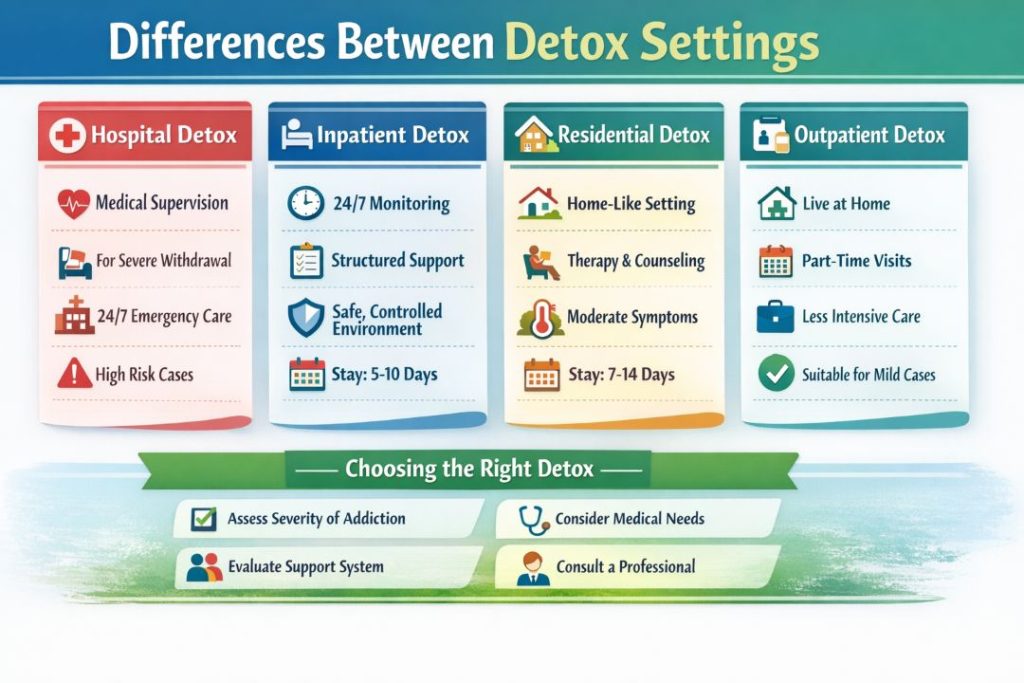
Differences Between Detox Settings
Not all detox centers work similarly. There may be variations in staffing models, intensity in monitoring and the available services.
Residential Detox Environments
There are some detox centers that have overnight stays to make constant observation possible. These environments may be suitable when symptoms fluctuate greatly.
Non-Residential Detox Options
Other settings offer more of a structured support to those who attend for scheduled hours with no overnights.
These choices may be suitable in situations where the withdrawal symptoms are likely to be mild to moderate and if there are supportive systems available from other external sources.
The proper setting is not a matter of preferences, but a matter of individual situation.
Limits of Detox and the Importance of Continued Care
Detox treats the acute physiological effects of substance withdrawal but does not treat basic behavioral, psychological or social issues related to substance use.
Detox Is Not Recovery
There is a long list of evidence to confirm that detox is not enough to carry on recovery. Without concerted efforts to participate in recovery services, individuals are always at risk of relapse.
Transition and Continuity Planning
Many detox centers are helpful in transition planning by:
- Discussing next-step options
- Arranging referrals to the recovery programmes
- Encouraging engagement with ongoing support services
These efforts are for continuity and not completion.
To discuss detox services and next-step planning, contact DeLand Treatment Solutions
It is important to make the right choice on which detox center to opt for during withdrawal. DeLand Treatment Solutions offers structured, supervised withdrawal support in a monitored environment for the benefit of safety, stability, and continuity of care. Their team focuses on responsible oversight with open communication and transition planning so that the individuals can take a step forward in an informed direction to continue to receive their recovery services.
Medical Disclaimer: This blog is for informational purposes only and is not a substitute for professional medical advice.
Key Takeaways
- Detox centers are focused on stabilization at the onset of withdrawal
- Supervised withdrawal management emphasizes monitoring and safety
- Professional supervision helps prompt the response to symptom change
- Detox is unconcerned with long-term recovery needs
- Continued recovery services encourage continued stability
FAQs
What is supervised withdrawal management?
Supervised withdrawal management is a structured approach to observing and supporting individuals during substance withdrawal. It emphasizes monitoring symptoms, responding to changes, and maintaining stability in a controlled environment. The goal is safety and preparation for continued recovery services, not long-term treatment.
Which substances often require detox supervision?
Alcohol, opioids, and benzodiazepines are commonly associated with withdrawal symptoms that benefit from structured oversight. Other substances may also require supervision depending on usage history and observed responses. Professional assessment helps determine appropriate levels of monitoring during detox.
How long does supervised detox usually last?
Detox duration varies depending on substance type, frequency of use, and individual response. Some withdrawal phases last several days, while others extend longer. Supervised settings focus on stabilization rather than fixed timelines or outcome expectations.
Is detox considered a full recovery treatment?
Detox is not a comprehensive recovery approach. It addresses physical withdrawal symptoms but does not resolve behavioral or psychological factors. Continued recovery services are typically recommended to support longer-term stability and address underlying contributors to substance use.
What happens after detox is completed?
After detox, individuals may transition into counseling, residential programs, or outpatient recovery services. Transition planning helps maintain continuity of care. Engagement in follow-up support can reduce relapse risk, though outcomes vary and depend on ongoing participation.
References
- National Institute on Drug Abuse
- Substance Abuse and Mental Health Services Administration
- National Institutes of Health –
- Centers for Disease Control and Prevention
- PubMed