
In This Blog
- How anxiety commonly appears during recovery
- Why recovery can intensify anxious feelings
- Emotional, physical, and situational triggers
- Practical coping strategies that support stability
- The role of routine, structure, and support
- How recovery milestones may trigger anxiety
- Using journaling and reflection to manage feelings
- Mindfulness and awareness practices
- Understanding anxiety fluctuations
- When additional guidance may be helpful
- How structured programs support emotional regulation
- How support systems reduce anxiety
Anxiety is one of the most frequent phenomena during the recovery process and may be caused by new schedules, emotions, and self-examination. There are some who feel restless, worried, or lack concentration, and others who feel tense or suffer from insomnia. These experiences are not easy to foresee, and sometimes they may turn out to transform over time.
The transformations that occur in the recovery process are the ones that can make one more emotionally sensitive. Anxiety does not mean failure or stagnation; it is, in most instances, a constituent of getting accustomed to new rhythms, new expectations, and coping mechanisms. When people get to know about such patterns, they can do more things ahead of time, rather than responding to the circumstance.
FACT: Anxiety commonly occurs during recovery as individuals adapt to new routines.
How Anxiety Can Present During Recovery
Anxiety may appear in mental, physical, or behavioral forms.
Common signs include:
- Racing thoughts or persistent worry
- Difficulty concentrating or relaxing
- Sleep disturbances or fatigue
- Physical tension, restlessness, or irritability
These experiences may fluctuate depending on daily routines, environment, and personal circumstances.
Why Recovery Can Intensify Anxiety
Recovery often involves unfamiliar routines, self-reflection, and behavioral adjustments. These changes can temporarily increase anxious feelings.
Key contributors:
- Transitioning to structured programs
- Reducing reliance on previous coping methods
- Adjusting to social and personal expectations
- Increased self-awareness
Anxiety in this context is part of the adjustment process rather than regression.
100% Confidential Support is Available 24/7
No matter what you’re going through, you’re not alone. Our dedicated team is here to provide a safe, judgment-free space where you can talk openly and honestly. Whether you need emotional support, resources, or just someone to listen.
We’re here for you—completely confidential and always respectful of your privacy. Call us today!
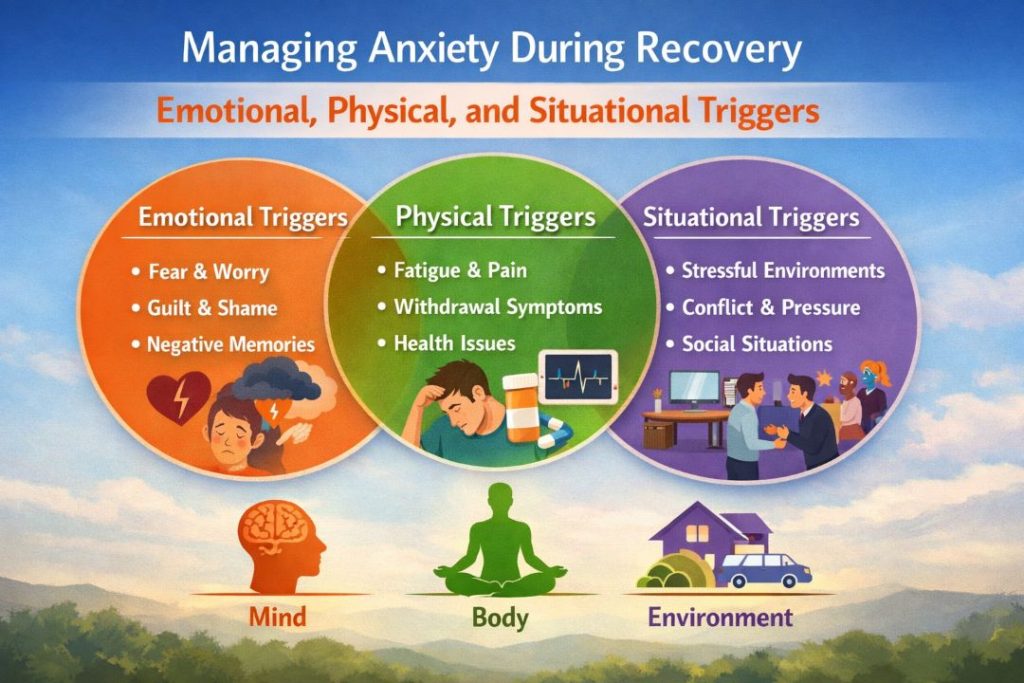
Emotional, Physical, and Situational Triggers
Anxiety can be influenced by multiple triggers:
Emotional: Fear of uncertainty, self-doubt, vulnerability, or emotional reflection
Physical: Sleep disruption, fatigue, low energy, appetite changes
Situational: Environmental noise, social interactions, new routines, or transitional periods
Recognizing triggers supports proactive management and self-awareness.
Practical Coping Strategies
Managing anxiety often involves combining multiple strategies rather than relying on one approach.
Effective strategies include:
- Maintaining predictable daily routines
- Practicing paced breathing and relaxation exercises
- Journaling thoughts to reduce mental overload
- Engaging in light physical activity
Consistency helps reinforce emotional steadiness.
The Role of Routine and Structure
Structured routines provide predictability, reducing uncertainty and mental fatigue.
Benefits include:
- Clear daily expectations
- Reduced decision fatigue
- Greater sense of stability
- Support for emotional regulation
Routine does not eliminate anxiety but helps manage its impact.
How Recovery Milestones Can Trigger Anxiety
Achievements or transitions in recovery may temporarily increase anxiety. Examples include:
- Completing a program phase
- Reintegrating into daily life
- Shifts in personal responsibilities
Recognizing these triggers allows individuals to anticipate and manage anxiety during significant transitions.
DeLand Treatment Solutions can explain anxiety management options
Using Journaling and Reflection to Manage Feelings
Writing or reflecting helps process anxious thoughts without becoming overwhelmed.
Recommended approaches:
- Daily journaling of emotions and triggers
- Reflecting on coping successes
- Recording progress toward goals
- Identifying patterns that provoke stress
These practices provide perspective and enhance self-awareness.
Mindfulness and Awareness Practices
Mindfulness encourages observation of anxious thoughts without reacting to them.
Practices include:
- Breath awareness
- Sensory grounding exercises
- Body scans
Mindfulness fosters calm attention, reducing emotional reactivity over time.
Contact DeLand Treatment Solutions for Personalised Guidance
Understanding Anxiety Fluctuations
Anxiety is rarely constant. Levels can rise and fall due to internal and external factors.
Recognizing patterns over time helps distinguish temporary increases from ongoing concerns. Awareness reduces alarm and encourages adaptive coping rather than avoidance.
When Additional Guidance May Be Helpful
Persistent or overwhelming anxiety may indicate the need for additional support. Indicators include:
- Interference with daily participation
- Difficulty concentrating
- Prolonged emotional distress
Seeking guidance reflects awareness and proactive self-care.
How Structured Programs Support Emotional Regulation
Programs with defined schedules and consistent support help manage anxiety.
Key elements include:
- Predictable routines
- Emotional support from staff and peers
- Opportunities to practice coping skills
Structure complements individual strategies for steady emotional progress.
How Support Systems Reduce Anxiety
Support systems provide reassurance and perspective.
Examples:
- Peer groups
- Counselors or mentors
- Family or trusted individuals
Connection reduces isolation and enhances coping effectiveness.
Expert Advice: Structured routines and support networks help reduce anxiety during recovery.
Anxiety is a natural part of recovery, but it can be managed effectively with structured routines, support systems, and proactive strategies. Guidance from experienced professionals helps individuals identify triggers, implement coping techniques, and navigate transitional periods confidently. Consistent application of these practices enhances emotional resilience throughout recovery.
Contact DeLand Treatment Solutions for Personalised Guidance
Medical Disclaimer: This blog is for informational purposes only and is not a substitute for professional medical advice.
Key Takeaways
- Anxiety is a common experience during recovery
- Emotional, physical, and situational factors all contribute
- Practical strategies support emotional steadiness
- Routine and structure reduce uncertainty
- Support systems provide perspective and reassurance
FAQs
Is anxiety normal during recovery?
Yes, anxiety often arises due to changes in routine, coping methods, and increased self-awareness. It fluctuates over time and does not indicate regression. Understanding it as part of the adjustment process allows individuals to respond proactively and implement coping strategies.
Can milestones in recovery trigger anxiety?
Significant milestones, such as completing a program phase or reintegrating into daily life, can temporarily increase anxiety. Recognizing this helps individuals anticipate emotional shifts and use coping strategies proactively.
Do coping strategies work immediately for anxiety?
Coping strategies generally support anxiety gradually. Consistent use of routines, mindfulness, journaling, and supportive communication enhances effectiveness over time. Experimentation and patience are essential to identify which strategies work best for each individual.
How does routine help reduce anxiety?
Routines reduce uncertainty by creating predictable patterns, limiting decision fatigue, and promoting stability. Over time, structured schedules help individuals maintain emotional balance and reduce the intensity of anxious episodes.
When should someone seek additional support for anxiety?
Additional support is recommended if anxiety interferes with daily participation, focus, or emotional well-being. Seeking guidance reflects proactive care, not inability, and helps individuals access strategies tailored to their specific needs.