Quick Answer: How to Recognize and Treat Alcohol Overdose begins with understanding the signs and symptoms of potentially dangerous conditions, like confusion, unarousability, vomiting, convulsions, slow or irregular breathing, clammy skin, and bluish or pallid skin. If you suspect an overdose, reach 911 immediately and don’t leave the person alone.
When a person consumes too much alcohol in too short amount of time, he or she may experience an alcohol overdose, which can be fatal. Understanding the signs and what to do to help clean up an overdose of alcohol can make all the difference when every minute counts. During an overdose, also known as “alcohol poisoning,” a person’s reflexes, breathing, heart rate, and temperature regulation may be impaired.
What Is an Alcohol Overdose?
Alcohol overdose happens when there is sufficient alcohol in the bloodstream to start shutting down the areas of the brain responsible for breathing, body temperature regulation, and heart rate. It’s not just that the person has had a very drunk night or is sleeping off the effects of being extremely intoxicated.
The risk lasts even after people stop drinking. Traces of alcohol can still be absorbed in the stomach and intestines, and BAC may continue to increase during unconsciousness.
This is why it is important to learn how to respond if you are in a position to be around someone who is drinking heavily, or if you are a friend, a family member, a parent, or a partner, in know how to recognize and treat an alcohol overdose.
Key Takeaways
- An alcohol overdose can be fatal and requires urgent treatment.
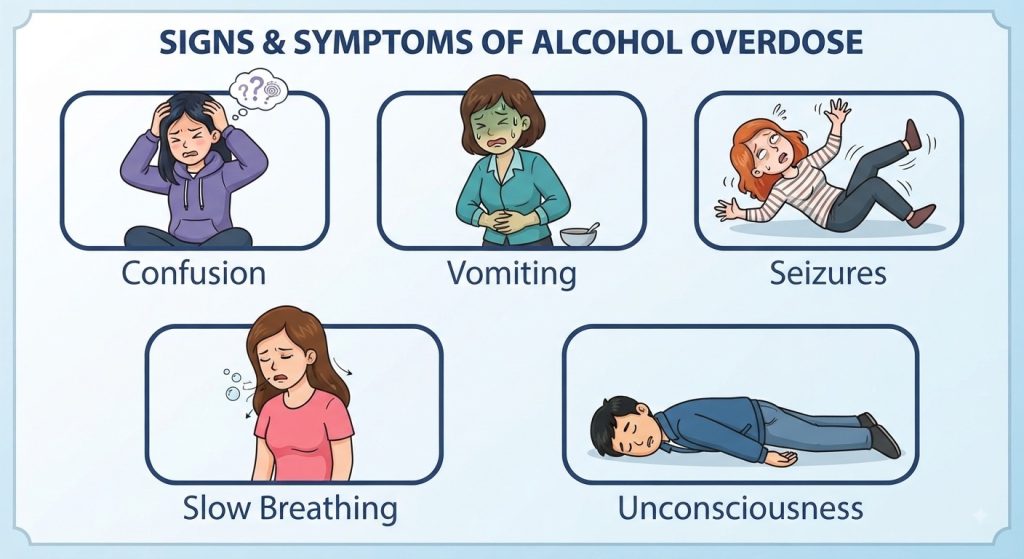
- Signs are confusion, not waking, vomiting, seizures, slow or irregular breathing, clammy skin, and pale or blue skin.
- An unconscious person should NOT be left to “sleep it off.”
- If you think someone is suffering from alcohol overdose, dial 911. Don’t wait until all the symptoms occur.
- Never attempt home remedies, such as coffee, cold showers, or walking to try to reverse an overdose.
- Don’t leave the victim and don’t allow the victim to choke until emergency personnel arrive.
- Taking other drugs, such as alcohol, antibiotics, sedatives, sleep medications, or opioids, with the medicine could put the person at risk of overdose.
100% Confidential Support is Available 24/7
No matter what you’re going through, you’re not alone. Our dedicated team is here to provide a safe, judgment-free space where you can talk openly and honestly. Whether you need emotional support, resources, or just someone to listen.
We’re here for you—completely confidential and always respectful of your privacy. Call us today!
How to Recognize and Treat Alcohol Overdose: Signs to Watch For
Stocking the essential gear required to treat an alcohol overdose is the initial step in knowing how to recognize and treat an alcohol overdose. The person may seem very muddled, sleepy, or hard to wake up.
The National Institute on Alcohol Abuse and Alcoholism (NIAAA) says that key signs of an issue are:
- Loss of awareness, fumbling answers
- Difficulty remaining conscious
- Inability to wake up
- Vomiting
- Seizures
- Breathing less than 8 times per minute
- Apneas (pauses in breathing that last for 10 seconds or more)
- Slow heart rate
- Clammy skin
- A decreased or absent (swallow) reflex.
- Hypothermia (very low body temperature)
- Pale or bluish skin
You don’t have to have all symptoms to take action. If any overdose is suspected, contact the police (911) immediately.
Deland Treatment Solutions
Battling with Drug and Alcohol Addition? Remember, you are not alone and we are here to help you!
Why Alcohol Overdose Can Be So Dangerous
Alcohol has an effect on the central nervous system. In high concentrations, it can be responsible for the suppression of basic survival brain functions.
Choking is a serious concern, especially. An unconscious person may vomit without a normal gag reflex to keep their airways clear of the vomit. This can lead to choking and may lead to a dangerous lack of oxygen.
Another issue is that alcohol concentrations can actually rise even after quitting. When someone seems to be “sleeping,” they could be having some sort of medical emergency.
So how to recognize and treat alcohol overdose should never be a wait-and-see situation.
What to Do During a Suspected Alcohol Overdose
When one thinks of alcohol poisoning, dial 911 immediately. Don’t wait until the person has lost total consciousness or all of the following symptoms.
While waiting for emergency medical help:
- Remain with the individual. Never leave them unattended.
- Protect them from falling or being hurt.
- Help them to lean forward if they are conscious and vomiting, to make it easier for the child to breathe and prevent choking.
- If unconscious or down, turn them onto their side with their head to the floor to minimize choking.
- Always inform emergency personnel of what you know, such as the type and the quantity of alcohol consumed.
- If known, list other substances or medications.
- Include any health information: e.g. medicines, allergies, illnesses, etc.
Make sure not to leave the person alone in an attempt to “sleep it off.
What Not to Do for Alcohol Poisoning
Finally, knowing how to recognize and treat alcohol overdose also requires an awareness of common responses, which can be dangerous.
Never attempt to ‘sober’ an intoxicated individual by administering:
- Cold showers
- Hot coffee
- Naloxone (Narcan®) is a drug that can be administered as an injection to reverse an overdose.
- Walking or exercising to “work off” the alcohol
NIAAA specifically cautions that cold showering, hot coffee, and walking not only are inappropriate for alcohol overdose but can also worsen the situation.
The best action is to call for help from experienced emergency professionals.
Seeking help from DeLand Treatment Solutions provides essential guidance
Who is at Risk of Alcohol Overdose?
People who binge drink (drink too much, too fast) can be at risk. The risk may be different depending, for example, on the age of the person or their own sensitivity or tolerance, sex, rate of drinking, drugs or medication, and the quantity of food consumed.
Excessive alcohol consumption (binge drinking or high-intensity drinking) can increase risk as high levels of alcohol can reach the bloodstream faster than the body can handle it.
The issue of combination with other drugs is another one of the big concern. When alcohol is used in addition to opioids or sedative drugs, the combined actions of the substances may be additive or synergistic, and each one may be toxic at certain doses, such as causing breathing to stop.
What Happens After an Alcohol Overdose?
If it is survived, that does not mean that there is no problem. While it can be a one-time emergency situation, an alcohol overdose can also be a red flag that their drinking is no longer safe or manageable.
For those who repeatedly drink more than they can or would like to, don’t seem to be able to cut down or experience other alcohol-related issues, it may be time for a professional assessment.
According to NIAAA, alcohol use disorder isn’t a character flaw; it’s a medical condition, and people can decrease alcohol-related problems in their lives and live a healthier one after treatment.
How to Recognize and Treat Alcohol Overdose should be followed by an understanding of when professional addiction treatment takes the place of someone else’s support after an alcohol-related crisis.

Get Help After an Alcohol-Related Emergency.
If you have had an alcohol overdose before, you might need to move beyond the crisis. It’s not necessary to wait until another crisis before seeking assistance.
If you’re thinking about treatment for alcohol addiction and/or recovery support, DeLand Treatment Solutions can assist you in your decision-making process. When it’s become challenging to control your drinking, contact us today to learn about treatment options to get your life back.
When Alcohol Use Becomes a Bigger Concern
Alcohol overdose can be a scary situation, and it can lead to a pivotal moment. When it leads to blackouts, dangerous moments, losing control of drinking or health, and relationship issues, then it might be time to try professional help.
There is no need to start treatment with a sense of judgment and shame. The person may be able to talk with a trusted treatment provider to review drinking habits, consider options, and decide on an appropriate level of treatment.
Knowing what to do and how to treat an alcohol overdose can save a life in an emergency. By learning how to identify an existing alcohol problem, this life can be preserved well after the emergency.
DeLand Treatment Solutions can help if you or your loved one is experiencing problems with alcohol.
Call today to find out about treatment and support for recovery. You don’t have to have all the answers in order to take that first step. Just means to select not to handle the problem alone.
Alcohol Overdose FAQs
What are the key signs of an alcohol overdose?
Key signs include confusion, inability to remain conscious or wake up, vomiting, seizures, slow or irregular breathing, slow heart rate, clammy skin, a reduced gag reflex, and pale or bluish skin. Call 911 immediately if overdose is suspected.
How do doctors treat alcohol overdose?
Alcohol overdose is a medical emergency requiring professional evaluation and supportive emergency care. The exact approach depends on the person’s condition and symptoms. Call 911 rather than attempting to manage a suspected overdose at home.
What is the best way to treat alcohol poisoning?
The safest response to suspected alcohol poisoning is immediate emergency medical attention. Call 911, stay with the person, prevent choking, and provide responders with information about alcohol, other substances, medications, and relevant health conditions.
What are the three stages of alcohol poisoning?
Alcohol poisoning does not have a universally defined three-stage system in the NIAAA guidance. Instead, it emphasizes specific danger signs, including confusion, unconsciousness, vomiting, seizures, breathing problems, slow heart rate, clammy skin, and low body temperature.
How long after drinking does alcohol poisoning set in?
There is no single timeline because risk varies between people and drinking situations. Alcohol levels can continue rising even after someone stops drinking or becomes unconscious because alcohol can keep entering the bloodstream.
What can be mistaken for alcohol poisoning?
Severe intoxication can look similar to an alcohol overdose, but inability to wake, seizures, breathing problems, and other critical signs require emergency attention. Never assume an unconscious person is simply sleeping off alcohol. Call 911 when an overdose is suspected.
What to do after a drinking overdose?
After emergency care, consider whether the incident reflects a broader pattern of risky drinking. Professional assessment can help identify alcohol-related problems and appropriate treatment options. Recovery support can be especially important after repeated alcohol-related emergencies.
What is the ER protocol for alcohol poisoning?
Emergency departments assess the person’s immediate condition and provide medical care based on the symptoms and risks present. Because alcohol overdose can affect breathing, heart rate, temperature, and consciousness, suspected cases require prompt professional evaluation.
What are the symptoms of mild alcohol poisoning?
There is no reliable “mild alcohol poisoning” category in the NIAAA emergency guidance. Vomiting, confusion, or increasing difficulty staying conscious should be taken seriously, particularly when symptoms are worsening. Seek emergency help if overdose is suspected.
Disclaimer
This article is for general educational and informational purposes only. It is not a substitute for emergency medical care, diagnosis, or individualized medical advice. An alcohol overdose can be life-threatening. If you suspect that someone is experiencing an alcohol overdose, call 911 immediately. Do not delay emergency care while reading or following information from this article.
References and Authoritative Sources
- National Institute on Alcohol Abuse and Alcoholism (NIAAA): Understanding the Dangers of Alcohol Overdose
- NIAAA: Treatment for Alcohol Problems: Finding and Getting Help
- National Institutes of Health (NIH)
Information about alcohol overdose symptoms, risk factors, emergency response, and danger signs in this article is based primarily on the NIAAA alcohol overdose guidance.