Quick Answer: Kratom can be detected in urine for a longer time if someone uses it frequently or for a very long time; however, it’s different for each person. Most standard drug testing panels do not test for kratom, but specialized testing may detect kratom or its metabolites.
So how long does kratom stay in your urine, you ask? Truthfully, it’s variable. The specific alkaloid in kratom that is being taken is called mitragynine, and the following factors determine the duration of its appearance in your system: doses and frequency of use, age, body weight, metabolism, and overall health. While not part of most common drug panels, according to American Addiction Centers, it is possible to test for another drug that can also be metabolized to kratom.
What is Kratom?
Kratom is derived from the leaves of Mitragyna speciosa, a tree that grows in Southeast Asia. Its leaves can be used in various ways, such as in drinks or made into other products.
Mitragynine is the main compound in kratom. Depending on the quantity consumed, it has different effects. Lower doses may have stimulant effects, and higher doses can lead to sedation, euphoria, and pain relief.
Some people say that kratom is a natural substance with no risk, but “natural” does not necessarily mean “safe.” Physical dependence is possible with long-term or frequent use and some discover withdrawal symptoms upon discontinuing or reducing use.
How Long Does Kratom Stay in Urine?
So, what is the kratom half-life in the urine? There is no fixed number of hours or days for which everyone can be accurately predicted.
For one, the testing done on kratom differs from the testing carried out on the drugs usually tested in standard drug checks. American Addiction Centers says that while most of the drug testing panels don’t test for kratom, there are actually special drug tests available that can determine whether someone has ingested kratom or its metabolites.
It is also the pattern of use that a person has. If you use kratom frequently, then it may take longer to be detected than if you use it rarely. Higher doses may also alter the duration of the effect and the effect of the compounds present after the initial effect.
This means a search for an exact answer to how long kratom stays in urine?. can be misleading. A detection window is not a hard and fast setting for a countdown clock. This is dependent upon the substance being taken and the person who will do the test.
100% Confidential Support is Available 24/7
No matter what you’re going through, you’re not alone. Our dedicated team is here to provide a safe, judgment-free space where you can talk openly and honestly. Whether you need emotional support, resources, or just someone to listen.
We’re here for you—completely confidential and always respectful of your privacy. Call us today!
What Factors Affect How Long Kratom Stays in the Body?
Kratom urine detection may be impacted by one or more individual factors.
Amount Used
How much kratom is taken may affect the length of time that the compounds in the drug stay in the body. Greater doses might take a longer time to be processed and eliminated.
Frequency of Use
It may be detectable longer after frequent or chronic use. That is especially paramount if the individual has recently had kratom daily as opposed to sporadically.
Body Composition
Mitragynine is fat-soluble. Body weight and body fat may therefore influence the time that it remains in the system, according to American Addiction Centers.
Age and Metabolism
How substances are metabolized in the body may be different based on age. Some chemicals may have a slower effect in older people than in younger people. There is a wide variation in individual metabolism from person to person.
Overall Health
Diseases or illnesses can affect the way drugs are metabolized. Liver health is significant in particular, as the liver is very important to the body’s metabolism.
Other Substances
When two substances are combined, the effects can be on how the body metabolizes the substances. Also, because the liver always favors alcohol, other drugs such as chemicals may be metabolized at different rates when alcohol is present.
Due to these factors, it’s not possible to predict how many hours a specific dose of kratom will stay detectable in the urine for any given person.
Seeking help from DeLand Treatment Solutions provides essential guidance
Deland Treatment Solutions
Battling with Drug and Alcohol Addition? Remember, you are not alone and we are here to help you!
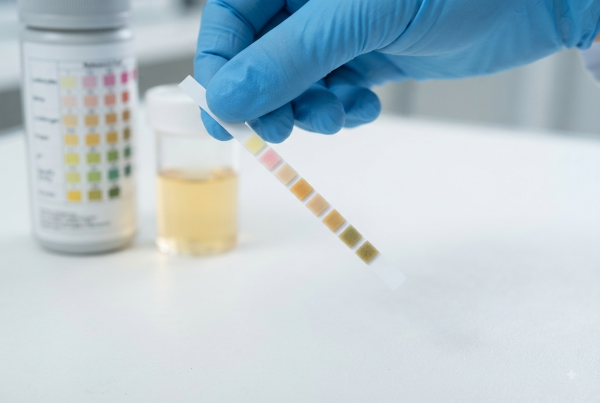
Does a Standard Urine Drug Test Detect Kratom?
Typically, drug screenings do not include a test for kratom. This is one of the most important considerations to make when pondering the question of how long kratom stays in urine?.
Testing can be administered to test for the presence of kratom and its metabolites. Depending on the laboratory’s specific testing panel and the tests requested by the buyer, the results of a particular test may or may not contain results for kratom.
That means if a person tests negative on a routine drug test, this doesn’t always indicate that they haven’t used kratom. The test has to be designed to detect the substance in question.
If you’re interested in learning more about drug-testing programs, the Substance Abuse and Mental Health Services Administration offers federal resources on testing panels and urine testing.
Why the Detection Window Is Different for Everyone
The removal of a drug from the body sounds like a straightforward affair: take in a drug, allow a crudely estimated number of days, and it’s gone. Metabolism in humans is not so straightforward.
Kratom is a drug where the duration of the drug’s presence in the body can vary because of things like dose, frequency, body composition, use of other drugs, age, health, and metabolism.
That is why two people using the same amount can cause two different results.
There is a generic answer about how long kratom stays in the system in urine out there, but if you want to know how long kratom stays in urine? Due to your own consumption, a health care specialist can provide more suitable guidance according to your situation.
Can You Quickly Remove Kratom From Urine?
There’s no reliable at-home approach that can guarantee the demands and time specifications when it comes to the elimination of kratom or its metabolites from urine.
Attempting to alter the urine sample by using extra fluids, supplements or other means can result in added health dangers and can affect the test results. It also doesn’t target the real reason that an individual is concerned with their loved one using kratom.
While the question, “how long does kratom stay in urine?” may be helpful, it may be more useful to ask, if you are using kratom, do you have a problem with it, or are you experiencing craving, tolerance, dependence, or withdrawal issues?
When Kratom Use Becomes a Problem
When kratom use begins to interfere with daily living, it can begin to become a concern. Warning signs can include taking more than you should, continuing to do it despite having negative effects, craving, losing tolerance, or getting withdrawal symptoms upon stopping. The U.S. Food and Drug Administration (FDA) has issued warnings regarding any risk that might be linked to kratom products and the focused strength of 7-hydroxymitragynine products.
Don’t assume that someone is weak if they are in withdrawal or have become dependent. It indicates a possible tolerance to the source, which may be due to repeated exposure to it. Having professional help can help make sense of this and help determine the type of assistance that is suitable.
Need Help With Kratom or Substance Use?
You don’t have to struggle through dealing with your kratom addiction all by yourself. At DeLand Treatment Solutions, you can discuss treatment options, learn about your substance use, and take the next step to recovery in a supportive environment.
Call DeLand Treatment Solutions today to talk about your worries and get information on addiction treatment support options. Seeking assistance is a good first step.
Key Takeaways
- There is no single answer to how long kratom stays in urine.
- Most typical drug screens won’t screen for kratom.
- Kratom and its metabolites can be detected by specialized labs.
- The more frequent or chronic the use, the longer the detectability.
- Elimination can be influenced by dose, age, body composition, metabolism, health, and other factors.
- No home testing process for the detection of kratom can be depended upon or safely used.
- Repeatedly using kratom can lead to physical dependence and withdrawal.
- If using kratom isn’t going the way you’d like, a healthcare provider may be able to offer you personalized instruction.
A Note About Kratom and Drug Testing
It is important to note differences between the effect of a substance, its presence in the body, and whether or not a specific test can detect it. Here are three different questions.
A regular drug test will not detect the presence of kratom compounds in someone’s system, but it doesn’t mean compounds are not there. On the other hand, the phenomenon is that a test for a specific substance may have a detection window that is different from a broad screening panel.
This is why there’s no clear-cut timeline for how long kratom remains in urine and why the best results for individual testing questions can be attained by the lab conducting the urine test or another trained healthcare provider.
When to Consider Professional Support
If you are using kratom more and more throughout the day, if you feel irritable when you stop or if you try and try to cut back but can’t, you might want to speak to an expert in addiction specialties.
There is no need to wait until things are really bad. Learning about the pattern of use, steps in managing your concern about dependency, and identifying treatment options can help you do so early on.
If you are someone seeking help in figuring out how to deal with drugs and alcohol, DeLand Treatment Solutions will offer you a place to start.
Call DeLand Treatment Solutions today if you are worried about your kratom use or another substance. A conversation with a confidential person can help inform you about your choices and your recovery.
Key Takeaways
- Co-occurring disorder involve a mental health condition and substance use disorder appearing together.
- It is through following integrated care plans that the conditions are treated simultaneously.
- CBT, as a behavioral therapy is critical in finding out what are the triggers and the building of resiliency.
- Professional oversight ensures that medication and therapy work together safely and effectively.
- Long-term stability is achieved through a combination of structured support and aftercare.
Frequently Asked Questions
How far back can a lab urine test for opiates?
Urine detection depends on the specific substance, testing method, cutoff, and individual factors. Kratom should not automatically be equated with conventional opiates, and specialized testing may be required to identify kratom or its metabolites.
What is the fastest way to clean urine?
There is no reliable or safe method for rapidly “cleaning” urine of a substance. Trying to alter a specimen with chemicals, excessive fluids, or other products can be unsafe and may interfere with laboratory testing.
Why did my urine test positive for opiates?
A positive opiate result can have several explanations, including exposure to an opioid or opiate detected by the specific test. Unexpected results should be discussed with the healthcare provider or laboratory for appropriate confirmation.
Does vinegar clean human urine?
Vinegar may be used as a household cleaning product for urine stains or odors, but it does not remove substances from urine inside the human body. Drinking vinegar to influence a drug test is unsafe and is not a reliable approach.
Does hydrogen peroxide break down urine?
Hydrogen peroxide can be used for certain household cleaning purposes, but it does not safely eliminate substances from urine inside the body. It should never be consumed or added to a urine specimen to manipulate a drug test.
Is vinegar or hydrogen peroxide better for urine?
For household cleaning, the appropriate product depends on the surface, stain, and manufacturer’s instructions. Neither vinegar nor hydrogen peroxide should be used internally or added to a urine sample to attempt to alter drug-testing results.
What should you not do before a urine test?
Do not intentionally manipulate a urine sample, consume excessive amounts of water, or use household chemicals or unverified products to change test results. Follow the testing instructions and disclose relevant medications or substances to the appropriate professional.
How long does opioid show up in urine?
Opioid detection varies by the specific opioid, dose, frequency of use, metabolism, and testing method. A routine “opiate” screen may not detect every opioid, so the exact test panel matters when interpreting results.
Will tramadol show up as an opioid in a urine test?
Tramadol may not appear on a standard opiate screen because testing panels differ. Specific testing can be ordered when appropriate. If a result is unexpected, discuss it with the laboratory or healthcare professional rather than assuming the result.
Disclaimer
This article is provided for general educational purposes and is not a substitute for medical advice, diagnosis, or individualized treatment. Drug-testing results and detection windows vary by substance, testing method, laboratory cutoff, dose, frequency of use, metabolism, and other individual factors. Do not attempt to alter or manipulate a urine specimen. If you have concerns about kratom use, withdrawal, drug testing, or your health, speak with a qualified healthcare professional.
Reviewed for clarity and readability: This article has been written in plain language to help readers understand kratom, urine testing, detection variability, and when professional addiction support may be appropriate. It does not provide instructions for evading or manipulating drug tests.
References and Content Sources
- American Addiction Centers. “How Long Does Kratom Stay in Your System?” Updated October 15, 2024. The article discusses kratom use, mitragynine, detection testing, half-life considerations, and factors that may influence how long kratom remains detectable.
- Substance Abuse and Mental Health Services Administration (SAMHSA). Drug Testing Resources. Federal resources covering urine drug testing and testing panels.
- U.S. Food and Drug Administration (FDA). FDA and Kratom. Information regarding kratom-related safety concerns, dependence, withdrawal, and adverse effects.
- U.S. Food and Drug Administration (FDA). Products Containing 7-OH Can Cause Serious Harm. Current information concerning concentrated 7-hydroxymitragynine products.