One of the most common and important questions a person asks themselves when contemplating addiction treatment is, “What level of drug therapy does the concept of detox entail?” This is because detox is commonly referred to as the beginning of recovery yet many individuals have no idea of where it is placed in the larger treatment system or even the grade of care it truly is. This relatively slight difference can make the difference between effective and empowered treatment choices on your part or on the part of a loved one.
We are convinced that transparency is a recipe for achieving greater results in DeLand Treatment Solutions. This guide describes the place of detox in drug therapy care, the definitions of levels of care and the subsequent event of detox, which is most often followed up with the use of simple language, medical accuracy and a caring viewpoint.
Understanding Different Levels of Care
Treatment of addiction is not universal. Individuals come to care with a variety of substance of use, healthcare history, psychological requirements, and personal obligations. That is why the treatment is organized into the level of care, including medically intensive services and flexible outpatient assistance.
Each of the levels should fit a person in terms of withdrawal risk and symptom severity, mental health stability, and independent functioning ability. Detox is on the one end of this continuum and, although it is not the entire solution, is just part of the overall recovery plan.
Drug Therapy Care and Detox: Where It Fits in Treatment
Detox is deemed to be the initial and the most medically concentrated stage of the drug therapy care. Its main role is to assist the body in the safe clearance of the substances and the management of withdrawal symptoms. The process can take a couple of weeks or several days, depending on the substance to be used, the time taken, the dosage, and the general health.
Inquiring what level of drug therapy care detox is, one can straightaway say that this is a stabilization level rather than an entire treatment program. It does not treat psychological, emotional, and behavioral aspects of addiction but only the physical ones.
At DeLand Treatment Solutions, detox is
- Medically supervised
- Individually monitored
- Concerned with stability, comfort, and safety.
After a period of detox, it is necessary to continue the treatment to resolve the underlying factors of substance use and develop the skills to maintain long-term recovery.
100% Confidential Support is Available 24/7
No matter what you’re going through, you’re not alone. Our dedicated team is here to provide a safe, judgment-free space where you can talk openly and honestly. Whether you need emotional support, resources, or just someone to listen.
We’re here for you—completely confidential and always respectful of your privacy. Call us today!
100% Confidential Support is Available 24/7
No matter what you’re going through, you’re not alone. Our dedicated team is here to provide a safe, judgment-free space where you can talk openly and honestly. Whether you need emotional support, resources, or just someone to listen.
We’re here for you—completely confidential and always respectful of your privacy. Call us today!
What are the 5 Levels of Care from ASAM?
The American Society of Addiction Medicine (ASAM) determines nationally acclaimed guidelines on the treatment of addiction. These levels assist in maintaining the uniformity of care, which is evidence-based and matches neighborhood requirements.
There are five ASAM levels of care that include:
Level 0.5 – Early Intervention
- Prevention and education services for high-risk individuals.
Level 1 – Outpatient Services
- Therapy sessions are regular and with complete independence.
Level 2 Intensive Outpatient (IOP) / Partial Hospitalization (PHP).
- Formal treatment multiple days per week with more professional supervision. You can learn more about our Intensive Outpatient Program in Deland.
Level 3 – Residential or Inpatient Treatment.
- Full day and night nursing in a structured therapeutic setting. Explore our residential treatment options.
Level 4- Intensive Inpatient Care that is Medically Managed.
- The most intensive care, which in many cases comprises detox in the case of those who have high chances of withdrawal or complex medical requirements.
Detox is usually classified as Level 3 or Level 4 based on the level of the medical complexity of an individual and his/her risk of withdrawal.
Deland Treatment Solutions
Battling with Drug and Alcohol Addition? Remember, you are not alone and we are here to help you!
How Does the Continuum of Care Work?
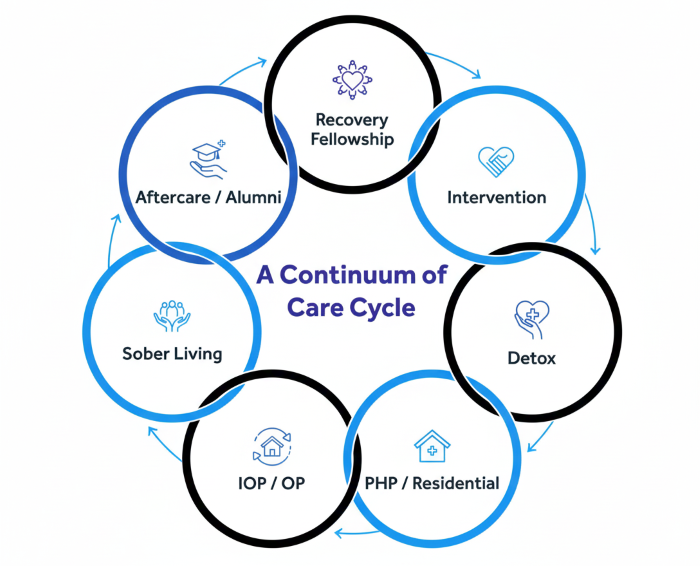
Treating patients in the case of addiction treatment can never be viewed as just a one-step affair. Detox stabilizes the body. Thoughts, behavior, and emotional patterns are handled using residential or outpatient treatment. A long-term recovery and relapse prevention is supported by aftercare.
Aspects that individuals can do with the continuum of care are:
- Get the necessary level of assistance.
- When stability is reached, transition slowly progresses.
- Reduce the risk of relapse due to the abrupt loss of the structure.
This will enhance long-term outcomes and avoidance of recurrent manifestations of treatment.
How Providers Determine the Appropriate Level of Care
Experts do extensive evaluations, which are not limited to the use of substances. Key considerations include:
- Kind, intensity and period of drug use.
- Medical history and withdrawal risk.
- Mental comorbid disorders.
- Again, the level of environment and assistance.
- Previous experiences of treatment.
At DeLand Treatment Solutions, this is used to determine whether or not detox should be used alone or whether an immediate onward treatment should commence once the detox is completed.
Levels of Care at DeLand Treatment Solutions
DeLand Treatment Solutions provides admission to a coordinated continuum of care to facilitate recovery at each level. The album starts with detox but it never ends.
Our standards of service can be:
- Medical detoxification
- Residential or inpatient treatment
- Partial hospitalization programs (PHP)
- Intensive outpatient programs (IOP)
- Outpatient therapy and aftercare services
Every person develops through these levels according to expert necessity, personal situation and progressions, not a set schedule.
Ready to Enter Treatment?
The detox process is an effective starting point, but it cannot end at that point. When you or anyone close to you is grappling with substance use, then the greatest choice to make is to begin with the right degree of treatment and a clear strategy as to the next step.
No one should hesitate to call DeLand Treatment Solutions to connect with a caring admissions specialist. We will make you realise your choices, check insurance, and take the next step of a long-term recovery with trust, integrity, and encouragement. Learn more about our approach to personalized therapy options or explore how we support young adults through tailored programming.
Frequently Asked Questions (FAQs)
What level of care is detox?
Detox is typically provided at ASAM Level 3 or Level 4, depending on medical complexity. It involves 24-hour monitoring to manage withdrawal safely and stabilize physical health before transitioning into ongoing treatment.
Is detox considered acute care?
Yes, detox is considered a form of acute care because it addresses immediate medical risks associated with withdrawal. It focuses on short-term stabilization rather than long-term recovery or behavioral therapy.
What is the difference between level 3.1 and 3.5 of care?
Level 3.1 offers low-intensity residential support, often for individuals with stable health. Level 3.5 provides high-intensity residential treatment with structured therapy for those with more severe substance use disorders.
What is level 2 rehabilitation?
Level 2 rehabilitation includes intensive outpatient programs and partial hospitalization. Clients attend structured therapy multiple days per week while living at home, making it suitable after detox or residential care.
What is detox care?
Detox care focuses on managing withdrawal symptoms safely under medical supervision. It helps clear substances from the body and prepares individuals for continued addiction treatment and therapy.
What is a 2.1 level of care?
ASAM Level 2.1 is intensive outpatient treatment. Clients receive several hours of therapy per week while maintaining work or family responsibilities, often as a step-down from higher levels of care.
What are the 5 levels of care for substance abuse?
The five levels include early intervention, outpatient services, intensive outpatient/partial hospitalization, residential treatment, and medically managed inpatient care, which often includes detox services.
What is a 4.0 level of care?
Level 4.0 is medically managed intensive inpatient treatment. It provides 24/7 medical supervision and is commonly used for detox when withdrawal symptoms pose significant health risks.
What is a 3.2 level of care?
Level 3.2 involves professionally managed residential detox services. It offers structured support and monitoring but with less medical intensity than Level 4 inpatient detox.
What is a 3.3 level of care?
Level 3.3 is designed for individuals with cognitive or emotional challenges. It provides long-term residential care with a slower pace and supportive therapeutic environment.
What are the 4 levels of health care?
The four levels include primary, secondary, tertiary, and quaternary care. Detox typically falls under tertiary care due to its specialized and intensive medical nature.
What is ASAM Level 4 detox?
ASAM Level 4 detox is medically managed inpatient detoxification. It offers continuous medical care, making it appropriate for severe withdrawal, co-occurring disorders, or high-risk substance use.