In This Blog
- Defining Mental Health Risks
- Genetic and Biological Factors
- Environmental and Social Triggers
- The Role of Life Experiences and Trauma
- Lifestyle and Physical Health Connections
- Recognizing Early Warning Signs
- Professional Support in Monitored Settings
- Strategies for Risk Mitigation
Mental health represents a complex combination of biological, environmental, and psychological components. Although the emergence of a mental health condition is not predetermined by one factor, it is necessary to learn about all the risk factors and intervene at the initial stages to manage the disease. They are not certainties of sickness, but they are signs that may make a person susceptible to some of the difficulties.
The term “mental health risk may be described as any characteristic, quality, or exposure that may predispose somebody to develop a mental disorder. These forces tend to intertwine and interact in complicated ways. An example is when a person has a genetic predisposition that is not activated until they experience a major life stressor. Through the detection of these variables, people will be able to advance to a more knowledgeable decision-making concerning their wellness.
The navigation of mental health issues involves a delicate vision and expert management. Instead of looking at one particular cause, the holistic approach considers the entire individual.
Expert Advice: Professional guidance helps individuals identify personal risk factors and develop effective resilience strategies.
Genetic and Biological Factors
Research suggests that many mental health conditions have a hereditary component. If a close relative has been diagnosed with a specific disorder, such as depression or bipolar disorder, other family members may have an increased statistical risk. This is not due to a single “gene” but rather a combination of multiple genetic variations that influence how the brain processes information and regulates mood.
Beyond genetics, biological factors such as brain chemistry play a significant role. Neurotransmitters are naturally occurring brain chemicals that carry signals to other parts of the brain and body. When the neural networks involving these chemicals are impaired, the function of nerve receptors and nerve systems changes, leading to shifts in mood and behavior.
- Hormonal Imbalances: Shifts in hormones, such as those related to thyroid function or reproductive health, can impact mental clarity and emotional stability.
- Brain Injury: Physical trauma to the brain, such as a concussion, can alter cognitive function and increase the risk of mood disorders.
- Prenatal Exposure: Exposure to environmental stressors, toxins, or alcohol while in the womb can sometimes influence long-term mental health outcomes.
100% Confidential Support is Available 24/7
No matter what you’re going through, you’re not alone. Our dedicated team is here to provide a safe, judgment-free space where you can talk openly and honestly. Whether you need emotional support, resources, or just someone to listen.
We’re here for you—completely confidential and always respectful of your privacy. Call us today!
Environmental and Social Triggers
The environment in which a person lives, works, and socializes significantly impacts their mental well-being. Chronic stress resulting from external circumstances can wear down an individual’s natural coping mechanisms over time.
Living in a high-stress environment, such as one characterized by poverty, violence, or unstable housing, creates a constant state of “fight or flight” in the nervous system. This prolonged activation of the stress response is a major risk factor for anxiety and stress-related conditions. Social isolation, a lack of meaningful connection with others, also correlates strongly with declining mental health.
Conversely, a supportive and stable environment acts as a protective factor. When individuals have access to safe housing, nutritious food, and a reliable social network, their resilience against other risk factors increases. In a treatment environment, creating a stable and supportive atmosphere is a primary goal of recovery services.
Risk Category | Examples | Potential Impact |
Biological | Neurochemical shifts, genetics | Mood instability, cognitive changes |
Environmental | Urban stress, isolation | Heightened anxiety, depression |
Social | Lack of support, discrimination | Reduced resilience, chronic stress |
DeLand Treatment Solutions provides structured care to help individuals navigate complex mental health challenges
Deland Treatment Solutions
Battling with Drug and Alcohol Addition? Remember, you are not alone and we are here to help you!
The Role of Life Experiences and Trauma
Life experiences, particularly those that occur during formative years, have a lasting impact on mental health. Adverse Childhood Experiences (ACEs), such as neglect, abuse, or the loss of a parent, are among the most significant risk factors for developing mental health disorders later in life.
Trauma is not limited to childhood. Adults may experience traumatic events such as natural disasters, military combat, or serious accidents. These events can overwhelm the brain’s ability to process stress, leading to conditions like Post-Traumatic Stress Disorder (PTSD). Trauma often changes how the brain perceives threat, making an individual more reactive to everyday stressors.
The Impact of Chronic Stress
While a single traumatic event is impactful, chronic stress, such as ongoing workplace bullying or long-term caregiving, can be equally damaging. It leads to emotional exhaustion and a diminished sense of self-efficacy. Recognizing these patterns is a key component of professional oversight in a monitored setting, where individuals can safely process these experiences.
FACT: An estimated one in five adults lives with a mental health condition annually.
Lifestyle and Physical Health Connections
The connection between physical and mental health is inseparable. Lifestyle choices can either serve as protective factors or increase the risk of mental health struggles. For example, chronic sleep deprivation is both a symptom and a risk factor for various disorders, as it impairs the brain’s ability to regulate emotion.
- Substance Use: Using alcohol or other substances as a coping mechanism can alter brain chemistry and exacerbate underlying mental health issues.
- Nutrition and Exercise: A lack of physical activity and poor nutrition can lead to systemic inflammation, which is increasingly linked to mood disorders.
- Chronic Physical Illness: Managing long-term conditions like diabetes or heart disease can lead to significant psychological distress and “caregiver burnout.”
Addressing these lifestyle factors is often a core part of recovery services. By improving physical wellness, individuals can create a stronger physiological foundation for mental stability. This holistic approach is most effective when managed within a treatment environment that prioritizes all aspects of a person’s health.
Recognizing Early Warning Signs
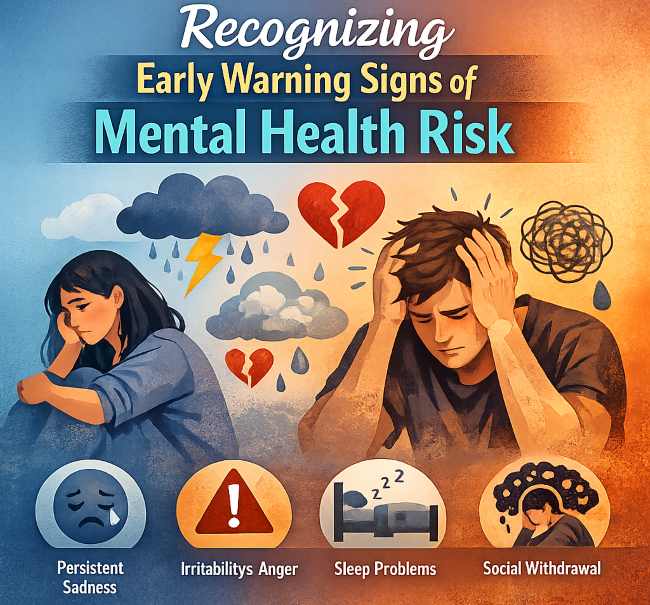
Identifying the signs that a risk factor has transitioned into a mental health concern is critical for seeking timely help. Warning signs are often subtle at first and may be dismissed as “just a bad week.”
Common early indicators include:
- Significant changes in eating or sleeping patterns.
- Withdrawing from social circles and activities once enjoyed.
- Having low or no energy consistently.
- Feeling unusually confused, forgetful, on edge, or worried.
- Experiencing severe mood swings that cause problems in relationships.
When these signs persist for more than a few weeks, it is often a signal that professional oversight is needed. A monitored setting allows for a comprehensive assessment to determine the best path forward. Early intervention can prevent symptoms from becoming more severe and improve the overall outlook for recovery.
Sign | Description | Action |
Social Withdrawal | Avoiding friends and family | Monitor for persistent patterns |
Cognitive Shifts | Difficulty focusing or memory gaps | Seek professional assessment |
Emotional Volatility | Intense anger or sadness | Consult structured care services |
For professional oversight and structured care, contact DeLand Treatment Solutions
Professional Support in Monitored Settings
Navigating multiple risk factors can feel overwhelming for an individual. Professional recovery services provide a structured care framework that takes the guesswork out of the process. In a monitored setting, the focus is on creating a personalized strategy that addresses the specific biological, environmental, and psychological risks an individual faces.
A treatment environment offers a level of supervised support that is difficult to find elsewhere. This includes:
- Safe Stabilization: Providing a secure space to manage acute symptoms or the initial phases of lifestyle changes.
- Holistic Support: Addressing physical health, nutrition, and social skills alongside emotional wellness.
- Accountability: Helping individuals stay committed to their wellness goals through regular check-ins and professional oversight.
By removing the individual from their usual high-stress environment, a monitored setting allows the nervous system to rest and reset. This space is essential for developing new, healthier coping mechanisms that can be maintained long after the initial period of structured care.
Strategies for Risk Mitigation
While some risk factors, like genetics, cannot be changed, many others can be managed through proactive strategies. Mitigation involves building resilience and reducing exposure to known triggers.
- Establishing Routine: A consistent daily schedule for sleep, meals, and activity provides a sense of predictability that calms the nervous system.
- Building a Support Network: Actively cultivating relationships with supportive friends, family, or peer groups reduces the risk associated with isolation.
- Learning Coping Skills: Techniques such as mindfulness, deep breathing, and cognitive reframing help manage the brain’s response to stress.
- Seeking Early Oversight: Engaging with recovery services at the first sign of struggle prevents the escalation of symptoms.

These strategies are most effective when they are integrated into a person’s lifestyle with the help of professional guidance. A treatment environment serves as the practice ground for these skills, ensuring that individuals feel confident in their ability to manage their mental health risks in the real world.
DeLand Treatment Solutions provides accessible, high-quality recovery services within a monitored setting to help individuals manage diverse mental health risks. Our approach focuses on evidence-informed strategies and compassionate professional oversight to ensure a stable transition toward long-term wellness.
Medical Disclaimer: This blog is for informational purposes only and is not a substitute for professional medical advice.
Key Takeaways
- Mental health risks are a combination of biological, genetic, environmental, and lifestyle factors.
- Genetics may predispose an individual to certain conditions, but the environment often acts as a trigger.
- Life experiences and trauma significantly influence how the brain manages stress and emotion.
- Physical health, including sleep and nutrition, is directly linked to mental stability.
- Early warning signs, such as social withdrawal or mood shifts, indicate a need for professional oversight.
- Monitored settings and structured care provide the safest and most effective foundation for managing mental health.
FAQs
What is the most significant risk for mental illness?
There is no single “most significant” risk; rather, it is usually a combination of factors. However, a family history of mental health conditions and experiencing significant trauma are two of the most documented risk factors that may lead an individual to seek a monitored setting for care.
Can mental health risks be completely avoided?
While you cannot change factors like genetics or past experiences, you can manage many environmental and lifestyle risks. Building resilience through healthy habits and seeking professional oversight early can significantly reduce the impact of these risks on your overall quality of life and stability.
How does stress contribute to mental health risks?
Chronic stress keeps the body in a constant state of high alert, which can eventually exhaust the brain’s ability to regulate mood and anxiety. Over time, this increases the risk of developing a disorder. A treatment environment often focuses on reducing this stress to allow for healing.
Are children at higher risk for mental health issues?
Children are in a critical stage of brain development, making them more sensitive to environmental risks like neglect or instability. Early intervention and a stable, supervised support system are vital for children facing these risks to ensure healthy emotional development and long-term mental wellness.
Why is professional oversight important for managing risks?
Mental health is complex, and it can be difficult to identify which factors are most impacting your well-being. Professional oversight provides an objective, evidence-informed perspective. In a monitored setting, experts can help you create a structured care plan tailored to your unique biological and environmental needs.
References
- National Institute of Mental Health (NIMH)
- Mayo Clinic
- Substance Abuse and Mental Health Services Administration (SAMHSA)
- World Health Organization (WHO)
- Centers for Disease Control and Prevention (CDC)
- American Psychiatric Association (APA)
- PubMed