Anyone experiencing poverty of emotion or diminished capacity for joy, sadness, excitement, or feeling sympathy would find Emotional Blunting: Symptoms and Treatment to be an important topic. Relationships, work, recovery, and mental health can all be impacted by emotional blunting. This can be overwhelming, but with a proper combination of professional care, therapy, lifestyle changes and, if needed, medication adjustments, emotional blunting can be treated.
At DeLand Treatment Solutions, we work to educate individuals about the causes of emotional blunting and develop customized treatment programs to ensure the individual achieves emotional wellness for life.
Key Takeaways
- Mental health treatment is personalized in a private and comfortable environment at Florida Atlantic Coast Treatment Solutions.
- A luxury mental health treatment center provides extra privacy, amenities, and personalized treatment.
- Treatment plans are personalized to each client’s individual mental health needs.
- A combination of evidence-based therapies, medication management, and holistic wellness services contributes to recovery.
- Family involvement and aftercare planning are beneficial for long-term outcomes.
- Serving Melbourne, FL and the surrounding Brevard County.
What is emotional blunting?
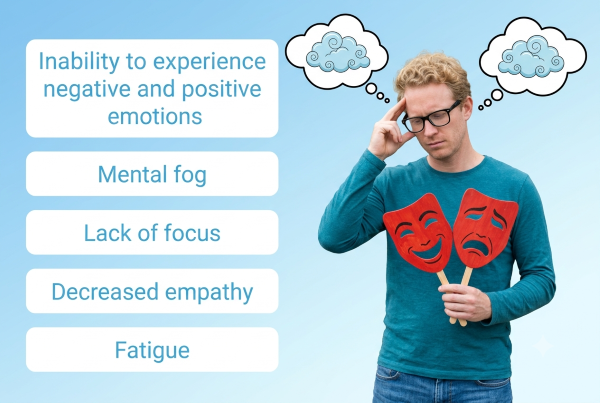
A condition that causes the person to feel less emotional or more numb is called emotional blunting. Emotions may appear withdrawn or subdued without responses to positive or negative life events.
Emotional blunting is sometimes called “disconnect from oneself” or “disconnect from others. They might feel happy, sad, excited, or worried, but they don’t seem to feel them.
It’s not just one of those days! Emotional blunting can negatively affect relationships, work, addiction recovery, and daily life.
Causes of emotional blunting
Emotional blunting can be caused by multiple factors, such as:
- Depression
- Anxiety disorders
- Post-traumatic stress disorder (PTSD)
- Bipolar disorder
- Chronic stress
- Burnout
- Substance use disorders
- Alcohol misuse
- Drug addiction
- Some antidepressant medications, especially SSRIs
- Neurological conditions
- Trauma and negative childhood experiences
In some instances, more than one issue can cause a blunting of emotions, and your emotions must be professionally evaluated.
100% Confidential Support is Available 24/7
No matter what you’re going through, you’re not alone. Our dedicated team is here to provide a safe, judgment-free space where you can talk openly and honestly. Whether you need emotional support, resources, or just someone to listen.
We’re here for you—completely confidential and always respectful of your privacy. Call us today!
What are the symptoms of emotional blunting?
It can affect different people in different ways, and typical symptoms are:
- Feeling emotionally numb
- Difficulty experiencing happiness
- Experiencing less distress even in the presence of negative events
- Lack of excitement
- Having a lack of social support
- Reduced empathy
- Limited facial expressions
- Difficulty crying
- Feeling emotionally “flat”
- Loss of motivation
- Loss of interest in playful hobbies
- Social withdrawal
Some people find that they can work as usual on the outside and are still feeling emotionally disassociated on the inside.
Deland Treatment Solutions
Battling with Drug and Alcohol Addition? Remember, you are not alone and we are here to help you!
How is emotional blunting diagnosed?
No specific test for emotional blunting is available.
Rather, a mental health expert conducts a thorough evaluation, which would encompass:
- Medical history
- Mental health history
- Medication review
- Substance use assessment
- Discussion of symptoms
Testing used to detect depression and other disorders such as anxiety, PTSD
Lifestyle and stress level assessment
DeLand Treatment Solutions clinicians also look for co-occurring mental health issues and addiction and trauma as contributing factors.
Seeking help from DeLand Treatment Solutions provides essential guidance
What causes emotional blunting?
Everyone has a different underlying cause for their symptoms, but they range from the following:
Mental health disorders
Symptoms of depression can cause you to be less sensitive to and empathic with others. But anxiety can overpower the emotional processing, too.
Trauma
The brain may dial down emotions when there has been traumatic input as a protective coping mechanism.
Medication side effects
Some antidepressant medications may lower emotional intensity and alleviate depression or anxiety.
Substance use
Over time, alcohol and drugs alter the behavior of the brain and can lead to a greater sense of emotional numbness and a loss of control over emotions.
Chronic stress
When stress lasts a long time, emotional resources run low and you feel detached.
What are common risk factors for developing emotional blunting?
Risk factors include:
- Previous trauma
- Major depressive disorder
- Anxiety disorders
- PTSD
- Bipolar disorder
- Long-term antidepressant use
- Alcohol dependence
- Drug addiction
- High-stress occupations
- Chronic illness
- Past history of mental illness in the family
- Poor sleep
- Social isolation
Although the presence of one or more risk factors does not necessarily mean that the person will develop emotional blunting, knowledge facilitates proper early interventions.
How is emotional blunting treated?
Treatment will be determined by the etiological factor.
Individual therapy
Evidence-based therapies such as:
- Cognitive Behavioral therapy (CBT)
- Dialectical Behavior Therapy (DBT)
- Trauma-informed therapy
- Acceptance and Commitment Therapy (ACT)
can be used to help people safely re-establish contact with their emotions.
Medication review
If medication causes emotional flatness, doctors can make changes in the dosage of the medication:
- Dosage
- Medication type
- Treatment plan
- Do not stop taking any medicine because of their own doctor’s advice.
Treatment for addiction
A thorough addiction treatment plan restores emotional wellness when alcohol and drugs dull sensations.
Services may include:
- Medical detox
- Residential treatment
- Partial Hospitalization Program (PHP)
- Intensive Outpatient Program (IOP)
- Individual counseling
- Family therapy
- Relapse prevention
Lifestyle improvements
Good habits are also conducive to recovery:
- Regular exercise
- Better sleep
- Balanced nutrition
- Mindfulness
- Stress management
- Healthy social connections
Ready to Feel Like Yourself Again?
When you or someone you love faces emotional blunting, depression, trauma, or substance use, DeLand Treatment Solutions is ready to help. Our caring staff delivers treatment specific to each person, incorporating emotional care and addiction rehabilitation.
Contact DeLand Treatment Solutions today to get a free and confidential evaluation and get started with your emotional healing process.
Does emotional blunting go away?
Yes, blunted emotions may improve when the condition is addressed.
Recovery involves determining other factors, including:
Cause of symptoms
- Duration
- Overall physical health
- Mental health condition
- Treatment participation
- Substance use recovery
While some people find that they start to get better within a few weeks, others may need to get several months of therapy and comprehensive care before they feel the effects.
How can a professional help you?
Valuable supports from mental health professionals are provided by:
- Identifying underlying causes
- Diagnosing co-occurring disorders
- Creating individual treatment options
- Providing evidence-based therapy
- Monitoring medication effects
- Instruction on healthy coping skills
- Supporting long-term recovery
Integrated treatment is shown to be extremely effective for people with substance-use disorders.
What can you do about it?
There are times when professional care is needed; however, self-care helps, too.
Helpful strategies include:
- Go to sleep and get up at the same times.
- Stay physically active.
- Eat balanced meals.
- Reduce intake of alcohol and drugs.
- Practice mindfulness.
- Journal your thoughts.
- Stay socially connected.
- Spend time outdoors.
- Continue therapy appointments.
- Be patient with yourself!
Though it’s on a day-to-day basis, little by little, that adds up to emotional recovery.
What’s the outlook for people with emotional blunting?
With recognition and early intervention for emotional blunting, prognosis is generally good.
After this, many can respond emotionally again:
- Treating depression
- Recovering from addiction
- Adjusting medications
- Processing trauma
- Reducing stress
- Participating in therapy
Continued mental health care and healthy living practices may be needed for long-term recovery.
Finding care for emotional blunting
One of the most crucial steps in the journey is determining treatment providers.
We help people with emotional blunting, depression, anxiety, trauma and substance use issues at DeLand Treatment Solutions with evidence-based compassionate care. Our skilled doctors can tailor treatment to each person rather than their symptoms.
No matter the source of your emotional numbness, mental health issues, side effects of medications, or addiction, our staff is dedicated to helping you tap into your feelings and begin to see them as vehicles for increasing your well-being.
Contact DeLand Treatment Solutions today to begin on your path to recovery with a caring admissions specialist who will speak with you privately.
Frequently Asked Questions
How do you fix emotional blunting?
Treatment focuses on identifying the underlying cause. Therapy, medication adjustments, healthy lifestyle changes, and treatment for depression, trauma, or substance use disorders often help restore emotional responsiveness and improve overall mental health.
Why can’t I cry when I’m sad?
Difficulty crying may occur because emotional blunting, depression, trauma, chronic stress, or certain medications reduce emotional expression. A mental health evaluation can identify contributing factors and recommend appropriate treatment.
How to fix an emotional shutdown?
Recovering from emotional shutdown often involves therapy, stress reduction, emotional awareness exercises, healthy routines, and addressing underlying mental health or addiction concerns with professional guidance.
How long can emotional blunting last?
The duration varies. Some people improve within weeks after treatment changes, while others require several months of therapy, recovery, and lifestyle improvements depending on the underlying cause.
Can you cry with emotional blunting?
Some individuals can cry occasionally, while others find it very difficult. The ability to express emotions often improves as the underlying condition is successfully treated.
What triggers emotional blunting?
Common triggers include depression, anxiety, PTSD, trauma, chronic stress, burnout, substance misuse, certain antidepressants, and neurological conditions affecting emotional regulation.
Can emotional numbness be permanent?
Permanent emotional numbness is uncommon. Most people experience improvement when underlying medical, psychological, or substance-related causes receive appropriate treatment and ongoing support.
What is the difference between flat affect and blunting?
Flat affect describes little or no outward emotional expression, while emotional blunting refers to reduced internal emotional experience. Some people experience both, but they are not identical conditions.
What causes a person to shut down emotionally?
Emotional shutdown may result from overwhelming stress, trauma, anxiety, depression, unresolved grief, substance use, or learned coping strategies developed to protect against emotional pain.
Disclaimer
This article is intended for educational purposes only and should not replace professional medical advice, diagnosis, or treatment. If you are experiencing persistent emotional blunting, emotional distress, or symptoms of a mental health or substance use disorder, seek evaluation from a qualified healthcare provider. If you are in immediate danger or experiencing a mental health emergency, call 911 or go to your nearest emergency department.
References
- Healthline. Emotional Blunting: Symptoms, Causes, and Treatment. https://www.healthline.com/health/mental-health/emotional-blunting
- National Institute of Mental Health (NIMH). https://www.nimh.nih.gov
- Substance Abuse and Mental Health Services Administration (SAMHSA). https://www.samhsa.gov
- National Alliance on Mental Illness (NAMI). https://www.nami.org