You can’t remember the last time you felt like yourself. Some days, the thought of getting out of bed is overwhelming, and sometimes even the smallest of tasks seems too much. If you’re not sure if what you’re facing is a “mental breakdown” and how long it will last, you deserve a straightforward and honest answer.
Most mental breakdowns last between a few days and a few weeks, although occasionally the symptoms may disappear within 1 to 6 months with the correct treatment. Duration will vary based on trigger, severity and support. Grief-related and/or chronic stress breakdown may be a much longer process to resolve.
This six-month figure is not a guarantee, and it is not a panic time. It’s just a general pattern that can help you realize that you’re not in this feeling forever.
What Is a Mental Breakdown?
A mental breakdown refers to the feeling of being physically, mentally, and emotionally overwhelmed by the stress of life to the point where you can no longer function normally. It’s not a specific diagnosis your provider will write down, but the distress behind it is very real.
A mental health crisis happens when intense physical and emotional stress makes it difficult to cope, often sharing features with conditions like depression, anxiety, or adjustment disorder, which your provider will explore to understand what’s driving your distress.
Understanding it this way, as a crisis point rather than a diagnosis, can make it feel less like something is permanently “wrong” with you and more like something you’re moving through.
Signs of a Mental Breakdown to Recognize
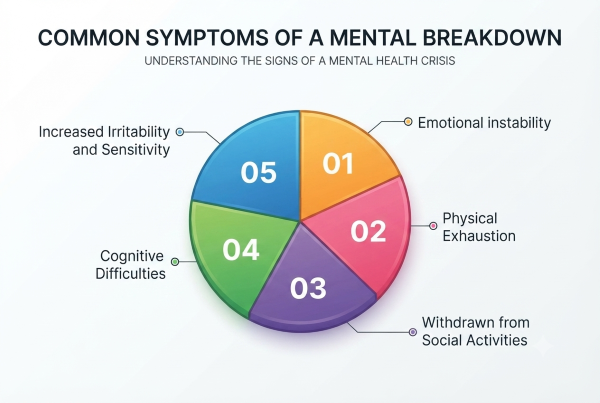
Signs of a mental breakdown vary from person to person, but they often cluster around withdrawal, depression, and anxiety symptoms happening together.
Common signs include:
- Missing work, appointments, or social plans repeatedly
- Withdrawing from people and activities you used to enjoy
- Feeling hopeless, helpless, or persistently sad
- Irritability or sudden emotional outbursts
- Trouble concentrating or making decisions
- Physical symptoms like nausea, trembling, or trouble breathing
Feeling overwhelmed and unsure where to turn? Call DeLand Treatment Solutions .
What Do Mental Breakdowns Feel Like?
Mental breakdowns often feel like a loss of control, where ordinary tasks suddenly feel impossible and emotions feel too big to manage. People frequently describe feeling “stuck” or incapacitated.
Common physical and emotional sensations include:
Symptom Category | What It Can Feel Like |
Anxiety | Racing heart, tight chest, restlessness |
Depression | Heaviness, hopelessness, numbness |
Panic | Sudden fear, dizziness, trouble breathing |
Cognitive | Trouble focusing, confusion, indecision |
Importantly, a mental breakdown is different from losing touch with reality. If you’re experiencing hallucinations or delusions, that reflects a different condition and warrants immediate professional evaluation.
What Triggers a Mental Breakdown?
A mental breakdown is typically triggered by intense stress that builds beyond what someone can currently cope with, often from one major event or several stressors piling up at once.
Common triggers include:
- Loss of a loved one, divorce, or major life change
- Ongoing family conflict or relationship strain
- Work burnout or chronic school-related stress
- A worsening chronic medical condition
- Prolonged sleep loss or inability to relax
Fact: With treatment, symptoms of a mental breakdown often ease within six months.
Everyone has a different “set point” for how much stress they can absorb before reaching a breaking point, which is why the same situation can affect two people very differently.
How Is a Mental Breakdown Diagnosed?
A mental breakdown itself isn’t diagnosed directly, since it isn’t a formal medical condition, but your provider will work to identify what’s actually driving your symptoms.
The evaluation process typically includes:
- Reviewing your medical and family history
- Discussing current medications, supplements, and substance use
- A physical exam to rule out other contributing conditions
- A detailed conversation about your symptoms and current stressors
- Referral to a psychologist or psychiatrist when appropriate
Mental Breakdown Treatment Options
Mental breakdown treatment typically centers on psychotherapy, most often cognitive behavioral therapy, to help you manage stress and change unhelpful thought patterns.
During cognitive behavioral therapy, you’ll work through your symptoms, explore your stress more deeply, and learn to recognize and reevaluate the thoughts and behaviors keeping you stuck, along with practical tools to keep your mind and body calm.
Treatment may also include:
- Medication for anxiety, depression, or sleep difficulties
- Individual counseling to process specific stressors
- Support groups for shared understanding
- Lifestyle changes that support ongoing stability
Not sure if what you’re experiencing fits this pattern? DeLand Treatment Solutions can help you figure it out.
Call Now: (386) 866-8689
How to Pull Yourself Out of a Mental Breakdown
If you feel like you’re on the verge of a mental breakdown, stepping away from the stressful situation, even briefly, can help interrupt the spiral before it intensifies.
Expert Advice: Step away from the stressful situation and practice slow, deep breathing.
Helpful in-the-moment steps include:
- Physically remove yourself from the overwhelming situation if possible
- Practice slow belly breathing, in through the nose and out through pursed lips
- Permit yourself to take a genuine timeout
- Reach out to your healthcare provider if you feel you’re in crisis
- Lean on a trusted person for support rather than isolating
Preventing Future Mental Breakdowns
While you can’t eliminate every stressor, certain habits can reduce how often and how intensely these episodes happen.
Helpful prevention strategies include:
- Practicing relaxation techniques like deep breathing or mindfulness
- Maintaining a balanced diet, consistent sleep, and regular exercise
- Limiting alcohol, recreational drugs, and excess caffeine
- Getting organized with to-do lists and regular breaks
- Working with a mental health professional proactively, not just in crisis
When a Mental Breakdown Becomes an Emergency
Most mental breakdowns, while distressing, aren’t medical emergencies on their own. But certain signs mean it’s time to get help immediately.
Seek emergency help right away if you or someone you love:
- Can no longer perform basic daily tasks like eating or bathing
- Has thoughts of harming themselves or others
- Shows signs of losing touch with reality, like hallucinations
- Feels unable to keep themselves safe
If there are any thoughts of self-harm or suicide, call 911, go to the nearest emergency room, or call or text 988 to reach the Suicide & Crisis Lifeline, available 24 hours a day.
Get Support for Mental Health Today
DeLand Treatment Solutions understands that reaching a breaking point doesn’t mean something is permanently wrong with you; it means you need real support right now. Our clinical team provides structured, compassionate care for individuals navigating overwhelming mental health crises, often alongside substance use concerns.
Our DeLand, Florida facility offers a full continuum of dual-diagnosis care, including residential treatment in a private, supportive setting designed for genuine stabilization and healing.
What makes our approach different:
- A 12-bed residential setting for personalized, focused care
- Joint Commission-accredited programs and licensed clinical staff
- Integrated treatment for mental health and substance use together
- Family involvement woven into the recovery process
- A private, comfortable environment on two peaceful acres
If you’re struggling to cope and don’t know where else to turn, you don’t have to face it alone. Call DeLand Treatment Solutions or visit our contact page to take the next step.
FAQs
How long does a mental breakdown last?
A mental breakdown isn’t a medical diagnosis, so recovery varies depending on the underlying cause and treatment. Many people notice significant improvement within several months with appropriate care, while grief, trauma, or untreated mental health conditions can make recovery take considerably longer.
What is a mental breakdown exactly?
A mental breakdown is a non-medical term describing a period of overwhelming emotional or psychological distress that interferes with daily functioning. During this time, coping with work, relationships, or basic responsibilities may become extremely difficult, often signaling the need for professional mental health support.
What are common mental breakdown symptoms?
Common symptoms include intense sadness or anxiety, emotional overwhelm, withdrawal from friends or activities, irritability, difficulty concentrating, disrupted sleep, fatigue, and physical symptoms such as nausea, trembling, headaches, or changes in appetite that interfere with normal daily functioning.
What do mental breakdowns feel like?
Many people describe a mental breakdown as feeling emotionally overwhelmed, mentally exhausted, and unable to cope with everyday responsibilities. Routine tasks may seem impossible, emotions can feel uncontrollable, and it may become difficult to think clearly or make even simple decisions.
What triggers a mental breakdown?
Mental breakdowns are often triggered by prolonged stress, major life changes, relationship difficulties, financial problems, grief, workplace burnout, chronic illness, traumatic experiences, or ongoing sleep deprivation. Multiple stressors occurring together can significantly increase the likelihood of reaching a crisis point.
How is a mental breakdown treated?
Treatment depends on the underlying cause but commonly includes psychotherapy, particularly cognitive behavioral therapy (CBT), stress management techniques, and lifestyle changes. When appropriate, healthcare providers may also prescribe medication to help manage anxiety, depression, or significant sleep disturbances.
How do you pull yourself out of a mental breakdown?
Recovery often begins by reducing immediate stress, getting adequate rest, practicing slow breathing or grounding techniques, and reaching out to a trusted friend or healthcare professional. Early professional support can help identify underlying causes and develop effective coping strategies for recovery.
What are signs of a mental breakdown in someone else?
Warning signs include withdrawing from family or friends, neglecting work or personal responsibilities, dramatic mood changes, persistent sadness or anxiety, trouble concentrating, changes in sleep or appetite, and difficulty managing everyday tasks they previously handled without problems.
Is a mental breakdown the same as a psychotic break?
No. A mental breakdown refers to overwhelming emotional distress that disrupts daily functioning, while a psychotic break involves losing touch with reality through symptoms such as hallucinations, delusions, or severely disorganized thinking, requiring prompt psychiatric evaluation and treatment.
Can a mental breakdown happen more than once?
Yes. Mental breakdowns can recur if underlying stress, mental health conditions, or unhealthy coping patterns remain untreated. Ongoing therapy, healthy stress management, and early intervention when symptoms return can help reduce the likelihood of future emotional crises.
When is a mental breakdown a medical emergency?
Seek immediate medical attention if someone cannot care for themselves, loses touch with reality, experiences hallucinations or delusions, becomes violent, or has thoughts of self-harm or suicide. These situations require urgent evaluation and professional mental health intervention.
Where can I get help for a mental health crisis in Florida?
DeLand Treatment Solutions provides dual-diagnosis residential treatment for individuals experiencing mental health crises and co-occurring substance use disorders in DeLand, Florida. Call (386) 866-8689 to speak confidentially with an admissions specialist about available treatment and support options.
References
- Cleveland Clinic: Nervous Breakdown (Mental Health Crisis)
- National Institute of Mental Health: Anxiety Disorders
- American Psychiatric Association: What Are Anxiety Disorders?
- Anxiety and Depression Association of America: Understand the Facts
- SAMHSA: National Helpline
- 988 Suicide & Crisis Lifeline
- Mayo Clinic: Cognitive Behavioral Therapy
- DeLand Treatment Solutions: Residential Treatment Program
Medical Disclaimer: This article is for informational purposes only and is not a substitute for professional medical or mental health advice; please consult a qualified provider or contact DeLand Treatment Solutions for personalized guidance.