Quick Answer: When it comes to learning to avoid relapse, the first step is to become familiar with your triggers, to maintain contact with positive individuals, to adhere to an aftercare plan, and to address cravings early. Improving sleep habits, exercising, seeking treatment, attending recovery meetings, and seeking help can help to support recovery and prevent relapse.
Recovery is not over when treatment is over! Knowing how not to relapse in addiction is an ever-evolving process, where one will find out about warning signs, learn to deal with stress, and learn how to create a way of life that supports sobriety. A relapse can happen over time, so it will be important for you to notice changes in your thinking, feeling, behavior, and relationships so you can intervene before you use drugs.
DeLand Treatment Solutions, DeLand, FL, offers recovery care that incorporates substance use and mental health care. Possible services provided may be residential care, outpatient care, therapy, relapse prevention, and/or aftercare plans based on the individual’s needs.
Key Takeaways
- The first step to preventing relapse is learning about the person’s triggers and early warning signs.
- Stress, anxiety, depression, loneliness, lack of sleep, anger, and visiting people or places associated with the use of drugs and alcohol can be risk factors for a relapse.
- Through a written relapse prevention and aftercare plan, you can choose an action plan ahead of time before a situation arises that presents difficulties.
- Long term recovery can be sustained with regular therapy sessions, attending recovery meetings, healthy relationships, physical activity, ample rest, and regular and honest self-check-ins.
- A lapse or relapse does not indicate that the recovery is over. It can require a treatment or support change or an increase.
How to Avoid Relapse in Addiction?
Understanding how to avoid relapse in addiction is as useful as one might think; however, it’s important to not view relapse as something that happens without warning. It is a common condition that may take time to occur.
According to American Addiction Centers, there are three general stages: emotional, mental, and physical relapse. A person might feel isolated, not take care of him- or herself, or have trouble sleeping or eating during emotional relapse. A mental relapse may mean cravings, thoughts of substance use, or ambivalence about using or not using. Physical relapse is when a person uses or resumes using a substance.
It’s important to know what these stages are, as it gives opportunities for earlier response.
For instance, if you find that you’re not going to therapy, not spending time with friends that support you, and haven’t had a good night’s sleep for a few nights, make sure you don’t wait long before you feel like you need to do it. Use those changes as a red flag and a warning to get more support.
This is a fundamental component of understanding how to avoid relapse in addiction: reacting to the triggers, not necessarily to the actual behavior.
Know Your Relapse Triggers
Everyone is unique in what triggers their symptoms. Some stressors include stressors, anxiety, depression, anger, loneliness, tiredness and fatigue, insomnia, relationship issues, peer pressure, withdrawal symptoms, and places and objects associated with past drug or alcohol abuse.
List your major triggers and develop a strategy for each one. When loneliness is the trigger, make choices about whom to call. If payday is a time when your urge to spend is stronger, make a strategy of how you will handle your finances. Avoid a social situation when recovery may be jeopardized, or come with a sober buddy.
The ability to avoid relapse in addiction involves making these decisions when cravings aren’t strong.
How to Avoid Relapse in Recovery With a Daily Routine
An ordinance may assist you in not feeling so “crazy” about healing. During stressful times, the idea is to “re-recruit” healthy behaviors such as exercise, emotional regulation, social opportunities, and building a support network with friends and family that is needed at that time, says Harvard Health.
One to consider using is HALT: hungry, angry, lonely, and tired. These simple physical and emotional conditions may lead to hasty decisions.
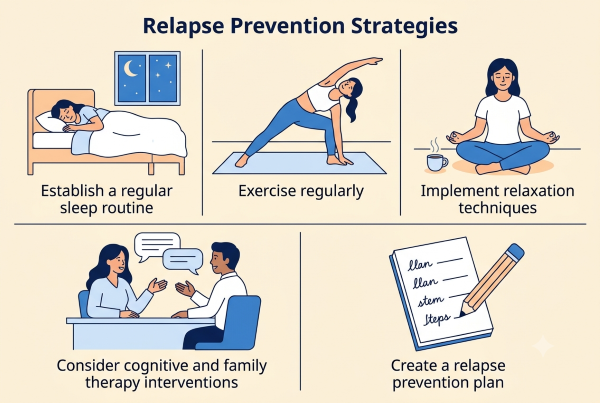
Focus on these essentials: eat on schedule, go to sleep, work out, go to treatment or meetings, and have a support system.
While many of these factors might seem like a no-brainer, it is a matter of repetition. It can be more effective to take recovery steps every day rather than waiting for a big occurrence and trying to do everything yourself.
Create a Relapse Prevention Plan
A relapse prevention plan is a plan of action for “difficult situations.” It should identify your “triggers” and early warning signs, coping mechanisms, contacts helping you, professional supports, and what to do if your craving is too difficult to handle.
According to American Addiction Centers, good programs are unique to each individual. Support systems, mental health, addiction severity, and the person’s motivation and environment are some of the factors that can help to determine the plan.
Possible strategies in this plan include calling a sponsor (or therapist), getting yourself out of a high-risk situation, attending a meeting, exercising, practicing mindfulness, or staying with a trusted person.
Store the plan somewhere that you can easily find it. You can more easily avoid relapse in addiction when you know what you are going to do next.
Seeking help from DeLand Treatment Solutions provides essential guidance
Build a Strong Support System
If you are attempting to address all your cravings by yourself, then it may be more difficult to stay recovered. Support can come in the form of family, friends, therapists, recovery peers, sponsors, support groups, or treatment professionals.
As Harvard Health reminds us, it’s important to stay connected and ask for assistance at all times. American Addiction Centers also lists continued treatment, support groups, sober living, and relationships as potential parts of an aftercare program.
Let trusted folks know what your warning signs are. Let them check in on your absence as you begin to skip or cut back on essential recovery activities.
Need More Support Protecting Your Recovery
You don’t need to let the situation deteriorate if cravings are becoming so intense, you’ve recently hit rock bottom and have begun using again, or you just feel like you need to step up your game in recovery.
How to Avoid Relapse with Alcohol?
When looking for how to avoid relapse from alcohol use, avoid exposure to situations that are very closely related to consuming alcohol. That may include canceling all plans that involve going to bars, not having alcohol in your house, making different friends, or restricting alcohol-related friendships.
If you feel an impulse to do something, try to slow down your decision-making. Call Someone, Change Settings, Eat, Go For A Walk, Meet, or Use A Coping Strategy You Practiced At Treatment.
How to avoid relapse in addiction for alcohol recovery is also to take withdrawal seriously. Sometimes, the process of alcohol withdrawal may become medically dangerous. For those who have recently consumed a lot of or regularly drink alcohol, consult with a supported wellbeing service before the abrupt withdrawal of alcohol. Do not stop without professional guidance.
How to Avoid Relapse of Depression?
There can be a relationship between substance use and mental health. An individual’s character and emotional reactions, such as depression and anxiety, can predispose them to relapse into drug and/or alcohol use.
Be aware of the signs of sleep, appetite, energy, motivation, isolation, and mood change if unsure about how to avoid relapsing into depression. Adhere to prescribed treatments, keep therapy appointments, maintain healthy relationships, and contact a mental health provider early in the re-emergence of symptoms.

What to Do If You Slip
If you slip:
A lapse is time to take action (but NOT time to give up recovery).
Get in touch with various individuals as soon as possible, including your therapist, treatment provider, sponsor, or someone else you know and trust. Remove the substance and check out the “before” before the relapse. Were you stressed? Isolated? Sleeping poorly? Skipping meetings?
When a person relapses, they may be showing that the treatment is no longer working, that there are aspects that cannot be worked with or that there is a need for greater support, according to American Addiction Centers.
Staying in Recovery One Day at a Time
There’s a saying that goes along the lines of ‘Recovering one day at a time.’
No one way to do it is going to be equally effective for all. Repeated decisions towards maintaining physical health, mental health, relationships, and connection can lead towards long-term recovery.
Continue to perform a self-check. Don’t ignore cravings. Follow-up treatment as recommended. Protect your sleep. Avoid known triggers. Maintain close association with supportive individuals.
The most important thing: ask for assistance in the beginning. One of the most practical lessons in avoiding a further lapse in addiction!
If anyone you know or you are finding it hard to stay sober in DeLand or Central Florida, call DeLand Treatment Solutions for help.
Frequently Asked Questions About Relapse and Sobriety
What is the most successful way to stay sober?
There is no single method that works for everyone. Long-term sobriety is often supported by ongoing treatment, a relapse prevention plan, supportive relationships, recovery meetings, healthy routines, and early action when cravings or warning signs appear.
How many days sober to feel better?
There is no fixed number of days. Recovery varies by substance, health, withdrawal severity, sleep, mental health, and treatment. Some people notice improvements early, while physical and emotional recovery may continue for weeks or months.
What happens after 72 hours of sobriety?
What happens depends heavily on the substance and level of dependence. Some withdrawal symptoms may improve, while others can remain or become serious. Alcohol withdrawal can be dangerous, so medical guidance is important for people with significant dependence.
How long is sober living after rehab?
There is no universal length of stay. American Addiction Centers notes that sober living arrangements vary, and residents may sometimes remain as long as they follow program rules and meet financial requirements. Individual recovery needs should guide the decision.
Does staying sober ever get easier?
For many people, recovery becomes more manageable as healthy routines, coping skills, and supportive relationships grow stronger. Difficult days can still happen. Continuing to practice recovery skills can make cravings and stressful situations easier to handle.
What kills the urge to drink alcohol?
No single method instantly removes every alcohol craving. Leaving the triggering situation, contacting a supportive person, eating, exercising, using relaxation skills, attending a recovery meeting, or speaking with a treatment professional can help you manage urges safely.
What are the Three C’s of sobriety?
The phrase can have different meanings across recovery programs, so there is no universally accepted clinical set of “Three C’s.” More important principles include making healthy choices, maintaining supportive connections, and using effective coping strategies when triggers occur.
Why is it hard to stay sober?
Addiction can affect reward, memory, decision-making, and responses to stress. Cravings, mental health symptoms, environmental cues, relationship problems, poor sleep, and exposure to substances can also challenge recovery, which is why continuing support is valuable.
Disclaimer
This article is for general educational purposes and is not a substitute for medical advice, diagnosis, detoxification, psychotherapy, or individualized addiction treatment. Withdrawal from alcohol and certain drugs can be medically dangerous. Seek professional medical care when withdrawal or relapse poses an immediate health risk.
References
This article was developed using the two requested clinical and educational references: