You are not alone if you or someone you know has been suffering from episodes of feeling down or low that appear seemingly out of nowhere and persist for longer than they should, and that are then followed at times by periods of unusual energy, racing thoughts or decisions which, in retrospect, make no sense. Nor is that a hallucination.
Bipolar depression is one of the most misunderstood and misdiagnosed mental health issues. Research in the Journal of Clinical Psychiatry indicates that the average time between seeking help for the first time and eventual diagnosis of BD (whether correctly or incorrectly) is six to ten years. That’s years of life with something treatable without the right treatment.
What Is Bipolar Depression?
Bipolar depression is a specific type of depression that involves the depressive/low mood component of bipolar disorder, a mood disorder that has manic (high mood) and depressive (low mood) periods.
According to the NIMH, bipolar disorder is a disorder which results in noticeable changes in mood, energy, activity and concentration. Episodes of “highs” (mania or hypomania) and “lows” (depressive episodes) occur in people with BD.
Most people with bipolar disorder spend far more time in depressive episodes than in manic ones. Research consistently shows that bipolar depression accounts for a much larger proportion of a person’s life with the illness than mania does.
Bipolar disorder is more common than many people realize. According to NAMI, approximately 2.8% of U.S. adults have a diagnosis of bipolar disorder, with nearly 83% of cases classified as severe. The average age of onset is around 25, though it can begin in adolescence and, more rarely, in childhood.
Types of Bipolar Disorder
- Bipolar I Disorder Bipolar I is defined by at least one full manic episode that lasts seven or more days or requires hospitalization. Depressive episodes are common but not required for diagnosis. When depressive episodes occur in Bipolar I, they are often severe, long-lasting, and can include psychotic features such as delusions or hallucinations consistent with the low mood.
- Bipolar II Disorder Bipolar II involves hypomanic episodes (less intense than full mania, lasting at least four days) and major depressive episodes. People with Bipolar II tend to experience significantly more time in depression than hypomania. Because hypomania is often subtle or even experienced as a welcome period of productivity and energy, Bipolar II is particularly prone to misdiagnosis as unipolar depression.
- Cyclothymic Disorder Cyclothymia involves chronic, fluctuating mood instability with hypomanic and depressive symptoms that do not meet full diagnostic criteria for either. It is a milder but persistent form of bipolar spectrum disorder that can go unrecognized for years.
Clinical Note: Research via the NIH National Library of Medicine confirms that most people with bipolar disorder are not correctly diagnosed until approximately 6 to 10 years after their first contact with a healthcare provider, largely because depressive episodes are the most common presenting feature and the history of hypomania or mania is often missed, minimized, or not asked about.
Bipolar Depression vs. Regular Depression
Bipolar depression and unipolar major depressive disorder share many surface features: persistent low mood, loss of interest, fatigue, changes in sleep and appetite, difficulty concentrating, and thoughts of death or suicide. But there are meaningful differences that an experienced clinician looks for.
Feature | Bipolar Depression | Unipolar Depression |
History of mania or hypomania | Yes | No |
Age of onset | Typically younger, often teens to mid-20s | Broader range |
Sleep pattern | Often hypersomnia (sleeping too much) | More commonly insomnia |
Onset speed | Often abrupt | More often gradual |
Psychomotor changes | Marked slowing or leaden paralysis | Variable |
Psychotic features | More common | Less common |
Response to antidepressants alone | Can trigger mania or rapid cycling | Often effective |
Mood cycling history | Present | Absent |
Family history of bipolar | More likely | Variable |
The treatment implications of this distinction are enormous. Antidepressants prescribed without a mood stabilizer in someone with undiagnosed bipolar disorder can trigger manic episodes, accelerate mood cycling, or worsen the overall course of illness. This is why accurate diagnosis is foundational before any treatment begins.
Seeking help from DeLand Treatment Solutions provides essential guidance
Symptoms of Bipolar Depression
Bipolar depression shares many symptoms with other forms of depression but has several features that tend to appear more prominently.
Core depressive symptoms in bipolar disorder include:
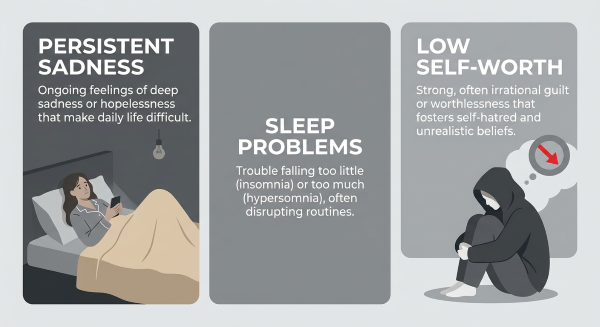
- Persistent depressed, empty, or hopeless mood, present nearly every day
- Profound loss of interest or pleasure in activities that were previously enjoyed
- Significant changes in sleep, typically sleeping too much (hypersomnia) or profound fatigue even after excessive sleep
- Psychomotor retardation: moving, speaking, and thinking noticeably more slowly than usual, sometimes described as feeling “waded through concrete”
- Extreme fatigue and loss of energy that feels physical as well as emotional
- Difficulty concentrating, making decisions, or retaining information
- Feelings of worthlessness or excessive, inappropriate guilt
- Weight changes, usually gain, often linked to increased appetite during depressive phases
- Recurrent thoughts of death, passive suicidal ideation, or active suicidal planning
Features more specific to bipolar depression than unipolar depression:
- Mixed features: periods where depressive and hypomanic or manic symptoms occur simultaneously. A person may feel deeply sad and hopeless while also feeling restless, racing in thought, or irritable, a combination that significantly elevates suicide risk
- Psychotic features: delusions or hallucinations that align with the depressed mood
- Pronounced leaden paralysis: a heavy, immovable physical feeling in the limbs
- Irritability as a prominent feature of the low mood, rather than sadness alone
- Abrupt onset and offset of episodes compared to the more gradual arc of unipolar depression
Suicidality in bipolar depression:
The suicide risk associated with bipolar disorder is significantly higher than in the general population. Research indicates that individuals with bipolar disorder are approximately 20 to 30 times more likely to die by suicide than the general population, with the highest risk occurring during depressive and mixed episodes.
If you or someone you love is expressing thoughts of suicide, call 988 (the Suicide and Crisis Lifeline) or go to the nearest emergency room immediately.
What Causes Bipolar Depression?
Bipolar disorder does not have a single, identifiable cause. Like most serious mental health conditions, it emerges from the interaction of multiple biological, genetic, and environmental factors.
Genetic Factors
Bipolar disorder has one of the strongest genetic components of any psychiatric condition. The Depression and Bipolar Support Alliance reports that more than two-thirds of people with bipolar disorder have at least one close relative with bipolar illness or unipolar major depression. Twin studies estimate heritability between 70 and 80%.
Having a first-degree relative with bipolar disorder does not mean you will develop it. But it does represent a meaningful vulnerability that, combined with other factors, significantly raises risk.
Neurobiological Factors
Neuroimaging studies have identified structural and functional differences in the brains of people with bipolar disorder, particularly in the prefrontal cortex, amygdala, and hippocampus, regions involved in emotion regulation, impulse control, and memory. Disruptions in dopamine, serotonin, glutamate, and GABA neurotransmitter systems are strongly implicated in both the depressive and manic phases of the disorder.
Environmental and Psychological Triggers
Genetic vulnerability interacts with environmental triggers to initiate and sustain bipolar episodes. Commonly identified triggers for depressive episodes include:
- Sleep disruption, which can both trigger and worsen episodes
- Psychosocial stress, including major life changes, loss, or sustained conflict
- Substance use, particularly alcohol and stimulants
- Seasonal changes, with depressive episodes occurring more frequently in fall and winter for many people
- Hormonal changes, including those associated with menstruation, pregnancy, and postpartum
- Stopping or changing medications without clinical supervision
How To Deal With Bipolar Depression
Bipolar depression is a treatable condition. The most effective management combines medication, evidence-based psychotherapy, lifestyle structure, and ongoing clinical support.
Medication for Bipolar Depression
Pharmacotherapy is the foundation of bipolar disorder management. The WHO confirms that medicines are considered essential for treatment of bipolar disorder, though they are usually insufficient alone to achieve full recovery.
Key medication classes used in bipolar depression include:
Mood stabilizers: Lithium remains one of the most effective long-term treatments for bipolar disorder, with particular evidence for reducing suicide risk. Valproate and lamotrigine are also widely used. Lamotrigine has the strongest evidence specifically for preventing bipolar depressive episodes.
Atypical antipsychotics: Several atypical antipsychotics have FDA approval specifically for bipolar depression, including quetiapine and the combination of olanzapine and fluoxetine. These are often used when depressive episodes are severe or when a faster response is needed.
A critical caution about antidepressants: Standard antidepressants should never be the first-line or sole treatment for bipolar depression. Without a mood stabilizer in place, antidepressants can trigger manic episodes or accelerate mood cycling. If an antidepressant is used at all, it should be in combination with a mood stabilizer and under close clinical supervision.
Medication management and weekly psychiatric medication evaluation and management by a qualified psychiatric prescriber are essential components of bipolar disorder care, not optional additions.
Psychotherapy for Bipolar Depression
Evidence-based psychotherapy is a critical complement to medication for bipolar depression. Research from the NIMH’s Systematic Treatment Enhancement Program for Bipolar Disorder (STEP-BD) showed that patients taking medications are more likely to get well faster and stay well longer when they also receive intensive psychotherapy focused on cognitive strategies, family involvement, and stress regulation.
Research Insight: The 2025 updated clinical practice guidelines for bipolar disorder management, published via PMC, confirm that adjunctive psychosocial interventions can help alleviate acute depressive symptoms in bipolar disorder and contribute to relapse prevention, maintenance of treatment adherence, improved functioning, and enhanced quality of life when given alongside pharmacotherapy.
Cognitive Behavioral Therapy (CBT) is among the most widely studied psychotherapies for bipolar depression. CBT helps identify the thought patterns that worsen depressive episodes, builds skills for challenging and restructuring those patterns, and develops practical tools for recognizing early warning signs of both depressive and manic episodes before they escalate.
Dialectical Behavior Therapy (DBT) is particularly valuable for the emotional dysregulation and intense mood states that characterize bipolar disorder. Its four core skills modules, mindfulness, distress tolerance, emotion regulation, and interpersonal effectiveness, directly address the areas of greatest functional challenge in bipolar depression.
Acceptance and Commitment Therapy (ACT) builds psychological flexibility and values-based engagement with life, helping people with bipolar depression stay connected to what matters to them even during difficult episodes.
Trauma Therapy is often essential because trauma history is common in people with bipolar disorder and significantly complicates both the depressive and manic phases. EMDR can process traumatic memories that are maintaining emotional instability or triggering episodes.
Behavioral therapy incorporates behavioral activation during depressive episodes, helping counter the withdrawal and inactivity that maintain low mood.
Family Therapy is strongly supported by research. The AAFP confirms that patients with social support in recognizing early warning signs of recurrence have less risk of relapse and better functioning overall. Family therapy educates loved ones, improves communication, and reduces the relational strain that bipolar depression creates in even the strongest families.
Lifestyle That Support Bipolar Depression Management
The evidence for lifestyle interventions alongside medication and therapy is clear and consistent. These are not alternatives to professional treatment. They are meaningful complements that reduce episode frequency and severity.
Protect sleep above almost everything else
Sleep disruption is both a trigger and a symptom of bipolar episodes. Protecting sleep with strict regularity is one of the highest-impact lifestyle changes a person with bipolar disorder can make. Even one or two nights of significant sleep disruption can trigger hypomanic or manic symptoms, which may then be followed by a depressive crash.
Establish a daily routine
A structured, consistent daily routine; regular mealtimes; exercise; social contact; and waking and sleeping at the same time provide the environmental stability the brain needs to maintain equilibrium.
Limit or eliminate alcohol and substance use
For someone already in a depressive phase of bipolar disorder, alcohol reliably worsens the depth and duration of that depression. It also interferes with the efficacy of mood stabilizers and other psychiatric medications.
Exercise regularly
Physical activity has measurable antidepressant effects that are well-supported by research. Even moderate exercise, 30 minutes most days, reduces depressive symptoms, stabilizes mood, improves sleep, and supports the neuroplasticity changes that underpin recovery.
Build an early warning system
Keeping a mood journal or using a mood-tracking app creates a personal record of patterns, triggers, and early warning signs that is invaluable for both the individual and their treatment team.
Reduce and manage stress
Psychosocial stress is a documented trigger for both depressive and manic bipolar episodes. Identifying chronic stressors, whether relational, occupational, financial, or environmental, and actively working to reduce them is not a luxury.
Stay connected to support
Isolation deepens bipolar depression and removes the social safety net that can catch a person when an episode begins escalating. Maintaining connection with trusted people, whether friends, family, peer support groups, or a therapist, provides both emotional regulation support and practical early warning when others notice changes the person themselves may not yet see.
When Bipolar Depression Requires a Higher Level of Care
Some episodes of bipolar depression cross a threshold where outpatient support is not sufficient to keep someone safe and to move toward recovery. A higher level of care should be considered when:
- Suicidal thoughts are present or intensifying
- The person is unable to maintain basic self-care, including eating, sleeping, and personal hygiene
- Depressive symptoms are severe enough to significantly impair functioning for an extended period
- Mixed features are present, which carry an elevated suicide risk
- Psychotic features accompany the depressive episode
- Previous outpatient treatment has not produced an adequate response
- Safety concerns are present at home
Inpatient mental health rehab provides 24-hour clinical support in a structured environment that allows for medication stabilization, intensive therapeutic work, and safety monitoring during a severe episode. For many people with bipolar depression, a residential or inpatient level of care at a critical point in their illness prevents hospitalization in a crisis setting and produces more rapid, stable recovery.
Bipolar Depression and Substance Use Disorder
The co-occurrence of bipolar disorder and substance use disorder is strikingly common and bidirectionally reinforcing. Research shows that individuals with bipolar disorder have significantly elevated rates of alcohol use disorder and other substance use disorders compared to the general population.
Substances are frequently used to manage the extremes of both poles: alcohol to come down from hypomania or mania, stimulants to escape the depth of depression. Both strategies worsen the underlying disorder and create an additional medical condition that needs its own treatment.
Dual diagnosis treatment that addresses both bipolar disorder and co-occurring substance use simultaneously within the same clinical program and team is essential for people navigating both. Treating one in isolation almost always leads to relapse in the untreated condition.
Co-occurring substance use disorder treatment at DTS is built around this clinical reality, integrating medication-assisted treatment (MAT) where appropriate alongside psychiatric care and evidence-based psychotherapy.
How to Help Someone with Bipolar Depression
If someone you love is in a bipolar depressive episode, your instinct to help is one of the most valuable things they have. Here is how to translate that into something genuinely supportive.
- Stay present without pressure: People in bipolar depression often withdraw. Let them know you are there without requiring them to perform an engagement they cannot access right now. Your consistent presence matters even when they cannot respond to it fully.
- Learning the difference between support and enabling: Supporting someone with bipolar depression does not mean removing all consequences or covering for behaviors that damage their recovery. Healthy support includes honest, compassionate conversations about treatment adherence and lifestyle choices that affect their mood stability.
- Know their warning signs: Work with your loved one and their treatment team (with appropriate consent) to understand what the early warning signs of a depressive or manic episode look like for them specifically. Early recognition and early intervention consistently reduce the severity of episodes.
- Encourage treatment, consistently: Treatment adherence is one of the strongest predictors of long-term outcome in bipolar disorder. Gently, consistently encouraging medication adherence and therapy attendance, without ultimatums or shame, is one of the most important things a family member can do.
- Take care of yourself: Supporting someone with bipolar disorder is emotionally demanding. Family therapy provides a space where your experience is addressed alongside your loved one’s, because your well-being matters too.

Get Bipolar Depression Treatment at DeLand Treatment Solutions
If you or someone you love is living with bipolar depression, DeLand Treatment Solutions (DTS) provides specialized, evidence-based bipolar disorder treatment and mood disorder treatment built around each person’s individual clinical picture.
DTS delivers care across the full continuum, from inpatient mental health rehab for those who need intensive, structured support, to outpatient therapy for those building and maintaining stability
For those with co-occurring substance use, dual diagnosis treatment and MAT address both conditions simultaneously.
Most major insurance plans are accepted.
Call (386) 866-8689 or reach out online today. Bipolar depression is one of the most treatable conditions in mental health when the right care is in place. DTS is ready to help you find it.
FAQs
What is bipolar depression?
Bipolar depression is the depressive phase of bipolar disorder, a condition involving cycles of depression and mania or hypomania. Unlike major depression, it occurs within a broader pattern of mood changes. People with bipolar disorder often spend more time experiencing depressive symptoms than elevated mood episodes.
How is bipolar depression different from regular depression?
Bipolar depression occurs alongside a history of manic or hypomanic episodes, while regular depression does not. It may involve greater fatigue, hypersomnia, mood instability, and psychotic symptoms. Treatment also differs because antidepressants alone can sometimes trigger mania or worsen bipolar disorder symptoms.
What triggers bipolar depressive episodes?
Common triggers include sleep disruption, chronic stress, substance use, seasonal changes, hormonal fluctuations, and medication changes. Identifying personal triggers can help individuals reduce relapse risk and maintain stability. Consistent routines, healthy sleep habits, and ongoing treatment are important components of long-term bipolar disorder management.
How long do bipolar depressive episodes last?
Without treatment, bipolar depressive episodes can last for weeks or months and significantly affect daily functioning. Appropriate treatment often reduces both severity and duration. Long-term management focuses on preventing future episodes, improving mood stability, and extending periods of emotional wellness between depressive and manic symptoms.
Can bipolar depression be treated without medication?
For most people, medication is a key component of effective bipolar disorder treatment. Therapy, lifestyle changes, and social support are valuable but usually work best alongside prescribed medications. Attempting to manage significant bipolar depression without medical treatment may increase the risk of prolonged or severe episodes.
What medications are used for bipolar depression?
Common medications include mood stabilizers such as lithium and lamotrigine, along with certain atypical antipsychotics approved for bipolar depression. Antidepressants may sometimes be used but typically require close monitoring and combination with mood stabilizers due to the potential risk of triggering manic symptoms.
What therapies work best for bipolar depression?
Evidence-based therapies for bipolar depression include CBT, DBT, ACT, and family-focused therapy. These approaches help individuals manage negative thinking patterns, regulate emotions, improve coping skills, strengthen relationships, and reduce relapse risk. Therapy is generally most effective when combined with appropriate psychiatric medication management.
Is bipolar depression related to substance use?
Yes. People with bipolar disorder have higher rates of alcohol and substance use disorders than the general population. Substance use may temporarily relieve symptoms but often worsens mood instability and interferes with treatment. Integrated care addressing both conditions together typically produces better long-term recovery outcomes.
What is the suicide risk in bipolar depression?
Bipolar disorder is associated with a significantly elevated risk of suicide, particularly during depressive or mixed episodes. Warning signs should always be taken seriously and addressed immediately. Early intervention, ongoing treatment, strong support systems, and appropriate medication management can help reduce risk and improve safety.
How do I know if a loved one’s depression is actually bipolar disorder?
Look for periods of unusually elevated mood, increased energy, reduced need for sleep, impulsive behavior, racing thoughts, or excessive confidence. Family history may also increase risk. Because symptoms can overlap with depression, a comprehensive psychiatric evaluation is necessary to establish an accurate diagnosis.
Does bipolar depression improve with treatment?
Yes. With accurate diagnosis and appropriate treatment, many individuals experience significant improvement in mood stability, symptom severity, and overall quality of life. Effective care can reduce the frequency and duration of depressive episodes while helping people maintain meaningful relationships, employment, and daily functioning.
What level of care does bipolar depression treatment require?
The appropriate level of care depends on symptom severity, safety concerns, and daily functioning. Severe episodes involving suicidality, psychosis, or major impairment may require inpatient or residential treatment. Less severe cases may be managed through outpatient therapy, psychiatric care, or intensive outpatient treatment programs.
References
- National Institute of Mental Health (NIMH) — Bipolar Disorder
- National Alliance on Mental Illness (NAMI) — Bipolar Disorder
- World Health Organization (WHO) — Bipolar Disorder Fact Sheet
- Depression and Bipolar Support Alliance (DBSA) — Bipolar Disorder Statistics
- National Institutes of Health — Bipolar Disorder: StatPearls
- American Family Physician (AAFP) — Bipolar Disorders: Evaluation and Treatment (2021)
- PMC — 2025 Clinical Practice Guidelines for the Management of Bipolar Disorder
- PMC — Quality of Life Among Bipolar Disorder Patients Misdiagnosed With Major Depressive Disorder
- Mayo Clinic — Bipolar Disorder: Symptoms and Causes
- DeLand Treatment Solutions — Bipolar Disorder Treatment
This content is for informational purposes only and does not constitute medical advice or a clinical recommendation. For a personalized assessment, please consult a licensed mental health professional. To learn more about evidence-based mental health and addiction treatment in Florida, visit delandts.com or call (386) 866-8689.