There’s a high chance that you have spent hours searching. You need an establishment that’s going to assist you for real. Somewhere that is safe, private and human. The checklist is not only about the place of healing but also a place where the environment also contributes to healing.
That’s what the best mental health treatment centers in Florida offer. More than anywhere else in the US, Florida is now home to those who are committed to improving.
In this article, you will figure out what luxury mental health care actually is, how to compare good centers with those that do shiny marketing, which conditions they can treat and the best choice of center that fits you.
Why Florida for Mental Health Treatment Centers?
Florida is the best location in the country to offer the best mental health care and that comes with concrete evidence of support.
The perfect thing is the climate. Florida has warm temperatures, plenty of sunshine and natural outdoor environments at all times of the year. It’s not only aesthetically pleasing. It is noticeable and has an impact on the recovery.
Research in environmental psychology, cited by the American Psychological Association, consistently shows that time spent in natural settings demonstrates a decrease in cortisol levels and even reduced physiological stress markers and improved emotional regulation.
Top 5 Luxury Mental Health Treatment Centers in Florida
1. DeLand Treatment Solutions – DeLand, FL
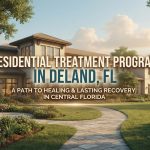
DeLand Treatment Solutions (DTS) is a Joint Commission-accredited residential treatment center set on two private acres in Central Florida. The intimate 12-bed facility offers a full clinical toolkit including ACT, CBT, DBT, EMDR, trauma-focused therapy, and on-site psychiatric support, with a continuum spanning residential treatment through PHP and IOP.
DTS integrates dual diagnosis care from day one, treating co-occurring mental health and substance use disorders within the same program. Clients benefit from nutritious daily meals, outdoor spaces, yoga, meditation, and a robust aftercare and alumni program. Most major private insurance plans are accepted.
Phone: (386) 866-8689 | Website: delandts.com
2. Futures Recovery Healthcare — Tequesta, FL
Futures Recovery Healthcare is a family-owned, Joint Commission-accredited luxury center established in 2012 on a gated nine-acre campus in Tequesta. It offers a dedicated RESET Mental Health Program for primary mental health conditions and a CORE dual diagnosis program, with all psychiatric care, psychotherapy, detox, and wellness services provided on-site.
Specialty programs include HEROES for first responders, veterans, and healthcare professionals, and ORENDA for high-demand professionals requiring privacy and scheduling flexibility. The full continuum spans detox through residential, PHP, IOP, and outpatient care.
Phone: (561) 475-1804 | Website: futuresrecoveryhealthcare.com
3. HEAL Behavioral Health — West Palm Beach, FL
HEAL Behavioral Health is a Joint Commission-accredited luxury center in West Palm Beach, set on a five-acre property and housed in a Florida-style mansion with private bedrooms, a pool, and outdoor lounge areas. A full-time board-certified psychiatrist, psychiatric nurse practitioner, and registered nurse are on staff, supporting a highly individualized, concierge-style model of care.
Treatment may include CBT, DBT, EMDR, and medication-assisted treatment where appropriate, across residential, PHP, and IOP levels. Primary mental health conditions, substance use disorders, and co-occurring diagnoses are all treated. Private insurance and self-pay are accepted.
Website: healtreatmentcenters.com
4. Beachside Rehab — West Palm Beach, FL
Beachside Rehab is a Joint Commission-accredited inpatient treatment center on a private five-acre campus in West Palm Beach. With a board-certified psychiatrist on staff, on-site medical detox, and a 5:1 patient-to-staff ratio, it is well-suited for those who need clinical intensity in a retreat-like setting.
The program addresses depression, anxiety, PTSD, trauma, bipolar disorder, and co-occurring conditions through individualized plans incorporating CBT, DBT, and trauma-focused modalities. Aetna, Blue Cross Blue Shield, Humana, and Cigna are among the accepted carriers.
Phone: (866) 349-1770 | Website: beachsiderehab.com
5. Behavioral Health of the Palm Beaches — Lake Worth, FL
Behavioral Health of the Palm Beaches (BHOPB) is a Joint Commission-accredited organization with more than 20 years of operation in South Florida and part of the Banyan Treatment Centers network. Inpatient and outpatient care is available for adults with mood disorders, thought disorders, substance use disorders, and co-occurring conditions, with 24-hour supervision and medical staff on-site.
The clinical program covers depression, bipolar disorder, anxiety, PTSD, schizophrenia, dual diagnosis, and more, with a dedicated Professionals Program for healthcare workers, executives, and first responders. BHOPB also conducts its own clinical research. Most major insurance plans are accepted.
Phone: (561) 556-9847 | Website: behavioralhealth.banyantreatmentcenter.com
What Makes a Mental Health Treatment Center “Luxury”?
Comfort isn’t the only definition of luxury mental health treatment. If you want to know what is most important about quality care, take a look at what is taking place clinically, not the decor.
Real luxury Florida mental health treatment centers provide a mix of:
- High staff-to-client ratios: The smaller the ratio, the more individualized recovery gets. Good care in a residential setting includes sessions on a daily 1-to-1 basis and not once a week sessions.
- Fully individualized treatment plans: Rather than a one-size-fits-all, a luxury treatment plan takes into account the diagnosis, history, co-occurring conditions, trauma and goal of the individual.
- Evidence-based therapeutic modalities: Genuine luxury is within the clinical toolkit. CBT, DBT, EMDR, trauma-focused therapies, ACT and dual diagnosis are all indicators of clinically serious care that brings benefits.
- Dual diagnosis integration: About 42% of those with a substance use disorder (SUD) have a co-occurring mental health disorder. Treatment in the best Florida centers focuses on both disorders in the same treatment program, instead of treating them separately.
- Privacy and discretion: For many who seek mental health treatment, the concept of confidentiality is not an option, especially for those who are in professional, executive or public positions. These quality centers have in place very strong privacy guidelines and remove clients from their usual social environment.
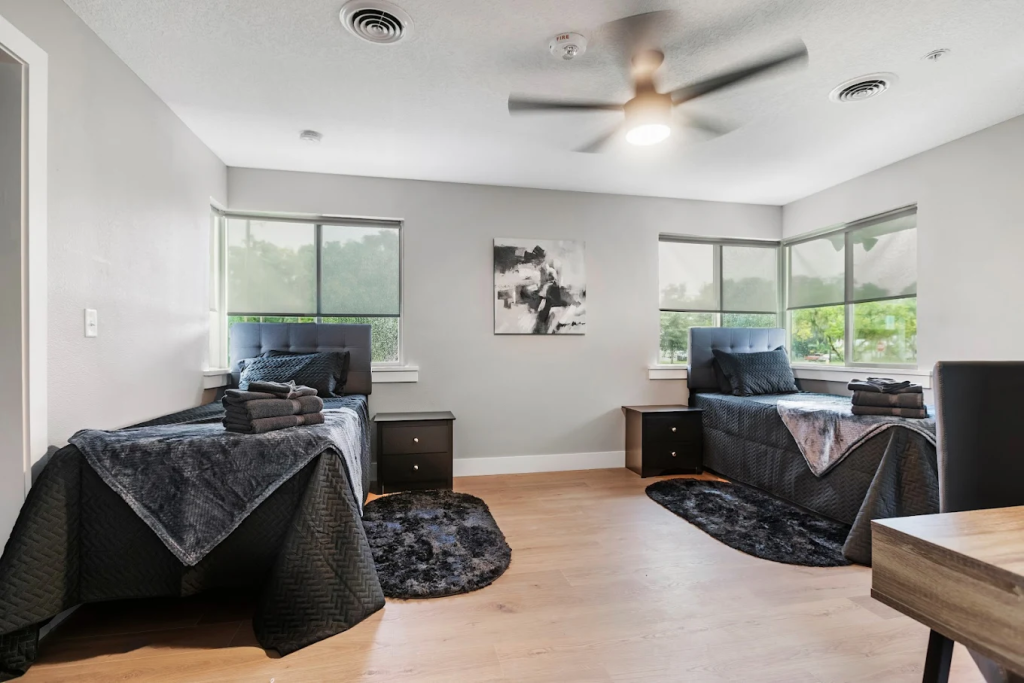
- Aspects of the physical environment: Some elements that may lead to stress are reduced and healthy physical environments, single rooms, healthy diets, access to the external environment, gyms, no-noise areas and physical spaces created by a professionally trained environment, providing a deeper sense of disposition to the therapeutic work.
- Comprehensive aftercare planning: The transition out of residential treatment is one of the highest-risk periods in recovery. A quality center invests in detailed aftercare planning and maintains connection with clients after discharge.
Seeking help from DeLand Treatment Solutions provides essential guidance
Mental Health Conditions Treated at Florida Centers
The top mental health treatment facilities in Florida can help treat all the known or correlated problems that accompany serious mental health issues and treat co-occurring substance use as well.
Depression and Mood Disorders
One of the most common reasons for which people seek residential or intensive care treatment is major depressive disorder. When the depression is not resolving, recurring, or treatment-resistant, a higher intensity treatment is required as compared to weekly outpatient treatment.
Depression treatment programs in the top treatment centers in Florida combine individual and group intensive therapy sessions, trauma treatment (when necessary), and general support of sleep, nutrition and physical health.
Special expertise is required to treat bipolar disorder such as Mood Stabilization, Medications and Relapse Prevention, and more. Regular systematic care, in the residential or PHP management, is effective with mood disorders.
Mood program treatment programs have the capacity to treat all manners of mood disorder- such as cyclothymic disorder and persistent depressive disorder with individualized clinical plans.
Anxiety Disorders
Anxiety disorder treatment at a residential or intensive outpatient level is suggested when the level of the problem is significantly impacting daily life. This includes generalized anxiety disorder, panic anxiety, social anxiety disorder and anxiety that cannot be treated by an outpatient treatment.
The different components, such as CBT, exposure-based therapy, distress tolerance skills DBT and mindfulness exercises, are successfully integrated into anxiety therapy so as to reach the root of the cause of anxiety instead of just the superficial symptoms.
Social anxiety treatment and panic disorder treatment are specific programs within DTS’s care continuum, designed for the distinct presentations these conditions bring.
Trauma and PTSD
PTSD and trauma treatment are challenging and one of the most gratifying aspects of mental health care. The majority of serious mental illness symptoms are the result of trauma and often are accompanied by depression, anxiety, substance use disorder and personality disorders.
Instead, Florida mental health treatment centers that provide quality care will identify the issues of trauma-type within the framework of their overall care, instead of as a separate module.
Currently, the strongest evidence for the treatment of PTSD is EMDR, ART and trauma-focused CBT. A trauma-informed environment that consistently prioritizes safety, choice, and dignity makes deeper processing possible.
At DTS, the treatment programs to deal with PTSD are based on evidence-based treatment modalities (particularly individual therapy).
Personality Disorders
Borderline personality disorder needs a specialized approach. DBT is the conventional method that was specifically designed to deal with emotional control and fundamental features of BPD. Quality treatment facilities provide DBT treatment as the complete package instead of just an “adaptation.”
Personality disorders as a group, including narcissistic personality disorder, histrionic personality disorder, and others, require sustained therapeutic relationships, consistency of care, and clinicians experienced in these complex presentations.
Psychotic Disorders
Having psychiatric expertise in schizophrenia treatment and treatment of schizoaffective disorder depends on medication management and therapeutic support.
Schizophrenia and other psychotic disorder treatment at a quality residential level involves an intensive level of care that will offer structure and is necessary for the purpose of stabilization and skills development.
The treatment of thought disorder focuses on the disorganization of thought which can be observed in several severe mental health conditions where individual and group modalities have been adjusted to such presentations.
OCD and Related Conditions
Evidence-based Exposure and Response Prevention (ERP) therapy is the ‘gold standard’ treatment program for OCD and therapists should be trained to do ERP therapy. CBT (without ERP) is not sufficient for treatment of OCD.
In the event in which OCD proves to be highly disabling, failure to respond to the treatment or cannot be controlled on a daily basis indicates that residential or intensive treatment is necessary.
Co-Occurring Disorders and Dual Diagnosis
Everyone that is grappling with both the mental issue and the substance use disorder, has to be dual-diagnosed through a program. Both are often so interwoven that either disease when treated alone always results in relapse in the other.
A co-occurring substance use disorder treatment at DTS is the treatment that treats both the conditions and addiction together starting on the first day and assists people in improving with treatment staff that specializes in substance use disorders and mental health.
Levels of Care at Florida Mental Health Treatment Centers
In reality, there is no one-size-fits-all in terms of quality treatment. An appropriate amount of care is provided based on how serious the condition is, and the requirements of the person.
Inpatient Mental Health Rehab
Inpatient mental health rehab provides round-the-clock treatment in a residential facility. It is appropriate to begin the recovery process when the symptoms are severe and the individual is not capable of living his or her life the way he would normally live it or when outpatient treatment is not benefiting the individual.
Residential treatment doesn’t mean it’s the end of the road. It is the most appropriate first step to appropriate recovery or long-term high-level care improvement rather than starting a low-level care.
Intensive Outpatient Programs (IOP)
Intensive outpatient includes multi-day per week structured therapeutic programs where the person lives in his/her own home or in supportive housing. It’s appropriate for the individual who is stable but needs greater care than once a week outpatient treatment.
IOP is also the most common step-down level after residential treatment, providing continuity of care during the highest-risk period of early recovery.
Medication Management and Psychiatric Support
Medication management and psychiatric evaluation are vital for healing for most severe mental health problems. Quality centers also have their own psychiatrists who evaluate, prescribe and modify medication upon the coordination of the therapeutic team rather than relying on external prescribers who are not even involved in the treatment process.
Medication-Assisted Treatment (MAT) is available for those with co-occurring substance use disorders, supporting the physiological dimension of addiction treatment alongside the psychological work.
Aftercare and Alumni Programs
Patients are most vulnerable to the temptations of relapse following formal treatment. Other key elements that are highlighted in the quality mental health treatment centers in Florida are the robust aftercare program and alumni program that ensure that clients remain connected and responsible in order to reintegrate into their lives.
Therapies That Define Quality Mental Health Treatment
Clinical tool kits are more important than any other aspect of quality treatment. The best Florida mental health treatment centers can provide the following elements of care:
Therapy | What It Treats Best |
Cognitive Behavioral Therapy (CBT) | Depression, anxiety, OCD, addiction, most co-occurring conditions |
Dialectical Behavior Therapy (DBT) | BPD, suicidality, emotional dysregulation, bipolar disorder |
EMDR | PTSD, trauma-rooted depression and anxiety |
Trauma Therapy Program | All presentations with significant trauma history |
Acceptance and Commitment Therapy (ACT) | Depression, anxiety, avoidance behaviors, chronic conditions |
Mindfulness Meditation Therapy | Nervous system regulation, mood stabilization, stress reduction |
Family Therapy | Relational repair, family system education, caregiver support |
Group Therapy | Peer connection, shared accountability, interpersonal skill-building |
Individual Therapy | Personalized processing, tailored skill development |
Daily Individual Therapy Sessions | Intensive, accelerated progress in residential settings |
Holistic Therapy | Whole-person well-being, stress reduction, nervous system support |
Recreational Therapy | Engagement, motivation, physical well-being |
Motivational Enhancement Therapy | Ambivalence, treatment resistance, readiness building |
Relapse Prevention Therapy | Long-term recovery maintenance, trigger identification |
What to Look for When Choosing a Florida Center
Not all treatment centers that use luxury are created equally. What you receive can be checked out by the following:
- Ask about accreditation: Joint Commission and CARF accreditation shows that both groups have evaluated the facility independently and determined whether it was good or not, based on stringent guidelines.
- Look at the clinical team: Who are the therapists? What sort of qualifications do they have and in what specific areas? Does the facility have a psychiatrist or are they referred off-site? Is there a medical director who becomes actively involved in the process of treatment planning at this facility?
- Understand the therapy schedule: What is the weekly amount of 1:1 therapy that a resident is provided? Group therapy is valuable, yet individual sessions are where personalised processing happens. Individual therapy is done every day is an important quality marker.
- Ask about dual diagnosis capabilities: An integrated workforce where a combination of mental health care and substance use professionals should be employed in the centre whenever a co-occurring mental health and substance use is a possibility.
- Inquire about aftercare: What happens after discharge? Does it have an Alumni Program? Does the center refer the clients to the outpatient treatment centers within the area?
- Evaluate communication with families: Whole family systems are impacted by mental health disorders. Is there family therapy at the center? Do they also involve the family members to educate them about the problems and the rehabilitative process? Are they able to communicate with families appropriately with regard to treatment?
- Verify insurance coverage before committing: Most insurance deals compel the treatment of mental health care with equal coverage as offered to physical health care treatment as per Mental Health Parity and Addiction Equity Act (MHPAEA).
Begin Your Recovery at DeLand Treatment Solutions
Provided that you consider mental health issues seriously, DeLand Treatment Solutions (DTS) will provide you with the in-depth and quality care that can lead you to recovery and a bright future.
DTS is part of a system of treatment facilities throughout Central Florida offering a range of care and levels of services so that you can have comprehensive individualized behavioral healthcare.
The treatment of depression, anxiety/PTSD, Bipolar disorder, Borderline personality disorder, OCD, Schizophrenia, dual diagnosis, or anything in between; the approach of DTS is that the treatment plan arises out of the state of things in your clinical picture, rather than a standard treatment plan.
They provide evidence-based treatments such as CBT, DBT, EMDR, trauma, ACT, family therapy, holistic therapy and mindfulness meditation therapy and have weekly psychiatric assessments along with medication management.
Ready to take the next step toward healing? Contact DeLand Treatment Solutions today to explore your options for supervised care and professional support.
FAQs
What makes Florida a good state for mental health treatment?
Florida offers a combination of year-round warm climate, abundant sunlight, natural outdoor environments, and one of the most established recovery and mental health care communities in the United States. Research consistently shows that the environment affects treatment engagement and outcomes.
What is the difference between luxury and standard mental health treatment?
Luxury mental health treatment typically features higher staff-to-client ratios, more individualized care, more daily individual therapy hours, more comprehensive evidence-based modalities, greater privacy, and more comfortable physical environments. The most important luxury is clinical quality, not just the facility.
What mental health conditions do Florida treatment centers treat?
Quality Florida mental health treatment centers treat the full spectrum of serious mental illnesses, including depression, bipolar disorder, anxiety disorders, PTSD, borderline personality disorder, schizophrenia, schizoaffective disorder, OCD, ADHD, dissociative disorders, and personality disorders.
Does insurance cover mental health treatment centers in Florida?
Yes. The Mental Health Parity and Addiction Equity Act (MHPAEA) legally requires most insurance plans to cover mental health treatment at the same level as physical health conditions. This includes inpatient, residential, intensive outpatient, partial hospitalization, and outpatient levels of care.
How do I choose the right mental health treatment center in Florida?
Evaluate the clinical team’s credentials and specific areas of expertise, the range of evidence-based therapies offered, the staff-to-client ratio, the availability of daily individual therapy, dual diagnosis capabilities, the quality of aftercare planning, and family involvement in the treatment process.
What level of care is right for me or my loved one?
Level of care is determined by the severity of symptoms, the degree of functional impairment, safety considerations, and prior treatment history. Inpatient or residential treatment is appropriate for severe presentations requiring around-the-clock support.
Can mental health conditions be treated without residential care?
For mild to moderate presentations, intensive outpatient care may be sufficient. For serious mental illness, particularly when symptoms are significantly impairing daily functioning or prior outpatient treatment has not produced adequate results, residential or inpatient care typically produces better outcomes.
How long does residential mental health treatment in Florida last?
Length of stay varies by condition severity, treatment response, and clinical judgment. Most residential mental health programs range from 30 to 90 days. Step-down to PHP or IOP typically follows residential treatment to maintain continuity of care during the transition period. A quality center will never discharge someone before they are clinically ready.
Is Florida mental health treatment available for families?
Yes. Family involvement in mental health treatment consistently improves outcomes. Quality Florida centers offer family therapy, family education, and family workshops as part of their programs. Family members learn about the specific condition, healthy communication strategies, how to set limits that support rather than enable, and how to take care of their own well-being during a loved one’s recovery.
What is dual diagnosis treatment and does DeLand Treatment Solutions offer it?
Dual diagnosis treatment refers to integrated care for co-occurring mental health and substance use disorders. Because the two conditions are so frequently present together and each makes the other harder to manage, treating both simultaneously within the same clinical program produces substantially better outcomes than treating them separately.
How quickly can someone be admitted to a Florida mental health treatment center?
Many quality Florida centers, including DeLand Treatment Solutions, can complete an admissions assessment and begin the intake process quickly, often within 24 to 48 hours of initial contact. Insurance verification can typically be completed in the same initial call. The admissions team is there to help you move as quickly as the situation requires.
What happens after residential mental health treatment ends?
Discharge does not mean the end of support. Quality centers provide detailed aftercare planning that connects the client to appropriate outpatient or IOP care, community support resources, and ongoing psychiatric management.
References
- National Institute of Mental Health (NIMH) — Mental Illness Statistics
- National Alliance on Mental Illness (NAMI) — Mental Health by the Numbers
- American Psychological Association — The Health Benefits of Nature (2019)
- SAMHSA — Co-Occurring Disorders
- National Institute of Mental Health — Light Therapy and Mood Disorders
- Mayo Clinic — Mental Illness: Symptoms and Causes
- NIMH — Borderline Personality Disorder
- NIMH — Post-Traumatic Stress Disorder
- DeLand Treatment Solutions — Mental Health Treatments