Individuals can learn healthier coping strategies and strategies for emotional regulation and enhancing relationship skills by taking advantage of structured psychotherapy called “Dialectical Behavior Therapy.” How many people are there who need DBT’s 6 core skills? They want to find an opportunity to expand their knowledge of the general scope of tasks performed by mental health and addictions service organizations at work with DBT and why they might use it.
We know that DBT can be a great treatment. We’re DeLand Treatment Solutions and we’re seeing how DBT can be used to treat someone who is struggling with emotional dysregulation, substance abuse, anxiety, depression, trauma, and self-destructive behaviors.
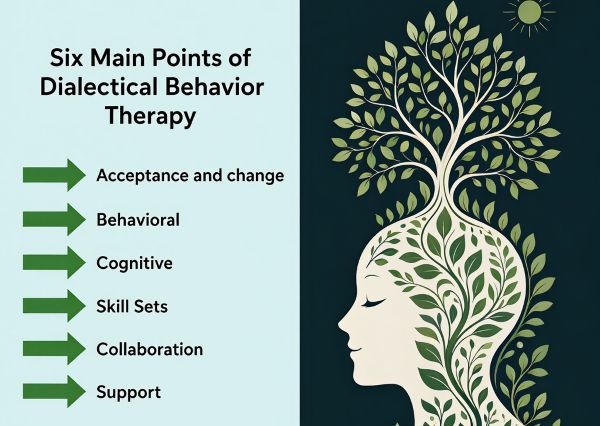
DBT is a combination of cognitive-behavioral and mindfulness-based techniques, developed by Marsha Linehan, Ph.D., a psychologist. Rather than seeking to “fix” a person, work toward a more stable, meaningful, and manageable life. The six points of DBT provide more information on which people and families can gain insight and opinion as to if they feel right for them.
Key Takeaways
- In essence, DBT is about regulating emotions, coping skills, or behavior.
- DBT has 6 key points: DBT comes with 6 key points of DBT: Mindfulness, Distress tolerance, Emotional regulation, Interpersonal effectiveness, Acceptance, and behavior change.
- In the field of addiction rehabilitation and mental health care, used in addiction and mental health treatment.
- The therapy will help patients reach a balance between getting help for acceptance and growth.
- A sense of connection, blocking out impulsive thoughts, and nurturing emotional ‘resilience’ are all skills that DBT can help build that will benefit relationships.
Understanding Dialectical Behavior Therapy
DBT (Dialectical Behavior Therapy) is a particular kind of cognitive-behavioral therapy designed for individuals with dysregulated emotions those with strong and vivid feelings who have difficulties regulating their emotions. It focuses mainly on teaching hands-on techniques to handle challenging emotions, minimize self-destructive behaviors, and create a meaningful life.
The six main points of the dialectical approach follow the reasoning but first, some of the definitions of what DBT is. There is a dialectic, which is a balance of two seemingly contradictory ideas at the same time: two ideas of acceptance and change. Some of the things people learn with DBT are responsibility and acceptance: to own themselves, to look after themselves and to find healthy ways of reacting to situations.
What are the Six Main Points of Dialectical Behavior Therapy?
DBT treatment is based on the 6 main points of dialectical behavior therapy. These skills are all taught in each point and relate to emotional health and healthier decision-making.
Mindfulness
One of the most essential aspects is the ability to be mindful of DBT. It assists in teaching non-judgmental moment-to-moment presence to people. People with addictions and mental health issues are often preoccupied with their future and the past, caused by their pain. Many people struggling with addictions and mental health problems find themselves concerned over the future or reliving traumatic moments of the past.
Mindfulness offers an invitation to show up rather than not. A person is learning to notice thoughts, feelings, and sensations and not act on them at that time. This skill can help to decrease impulsive behaviors and improve emotional control.
When stress arises, for instance, mindful people can stop to pay attention to the need to use drugs or alcohol and opt for more positive actions.
Distress Tolerance
Distress tolerance is the ability to get through challenging times and maintain a level of calm. Discomfort, sadness, and pain are factors of life. With the introduction of a means to safely endure those experiences without turning to harmful behaviors, people learned how to do so with DBT.
This is especially significant in addiction therapy, since a large number of people experiencing addiction typically take drugs or drink alcohol to mask their emotions. You may be using distress tolerance skills like the following:
- Deep breathing
- Grounding exercises
- Self-soothing activities
- Healthy distractions
- Crisis survival strategies
The intent here isn’t to take the feeling out of their pain but to assist people in experiencing the pain without being destructive.
Emotional Regulation
Emotional Regulation will help to educate individuals in understanding, regulating, and reacting to feelings. When people first start treatment, they often become filled with anger, sadness, fear, guilt, or even shame.
Using DBT, individuals can more easily identify patterns and/or triggers that might be leading to emotional responses and seek out other ways to manage the experiences.
Emotional regulation can be the following:
- Recognizing emotional patterns
- Improving sleep and well-being.
- Encouraging rest and health through physical exercise.
- Building positive experiences
- Making it normal for people to be less emotionally vulnerable. Making it commonplace for people to be less emotionally vulnerable.
Emotional regulation skills over the course of time enable individuals to feel balanced and more in control with their reactions.
Seeking help from DeLand Treatment Solutions provides essential guidance
Interpersonal Effectiveness
Great relationships are a crucial part of emotional health and sustained recovery. Interpersonal effectiveness refers to a communication skill area focusing on issues of expressing needs, setting boundaries, and effectively communicating conflict(s).
Various drug addiction or mental illness issues and the subsequent stressed relationships, mistrust or fear of rejection by others may lead to this result.
Here are some of the ways that people benefit from studying DBT:
- Communicate clearly
- Be assertive and refuse requests that may be inappropriate.
- Maintain self-respect
- Listen actively
- Build healthier connections
These skills may aid in family, partner(s), employee and friend relationships.
Acceptance
Acceptance is one of the key elements of dialectical behavior therapy, also known as the “6 main points,” of DBT. Don’t think acceptance is a blessing and is not related to face-planting your dreams of a change. Instead, it is a matter of taking things as they come, but not trying to alter things.
Many people suffer because they reject or numb out negative emotions or emotions that involve them or simply avoid reality. With radical acceptance, people can no longer fight reality but focus on healing and change.
This can be a beneficial method for those who are recovering to do this without feeling guilty and ashamed.
Behavioral Change
The last thing in the way of DBT is behavior change. Therapy is geared towards recognizing destructive behaviors and changing them with healthier actions.
Behavioral change may be:
- Reducing substance use
- Improving coping skills
- Following treatment plans
- Anger Management: dealing with anger better.
- Creating more healthy reminders for the day!
DBT is a gradual process, rather than a path to perfection. Minor behavior changes and emotional success can provide long-term emotional stability and success in recovery.
Why DBT is Effective for Addiction Recovery
DBT is especially useful in addiction treatment as substance use and emotional dysregulation have a close relationship. Some people use it to help them to get rid of bad feelings, trauma, anxiousness or relationship problems with others.
DBT aims at six key areas that can help people develop a certain skill set that helps them deal with situations that induce stress without resorting to drugs or alcohol. You can use DBT to teach people some strategies to prevent relapse, including managing cravings and tolerating discomfort and to boost their emotional awareness.
Therapy programs at DeLand Treatment Solutions could include DBT techniques to aid in the healing and recovery process.
Signs Someone May Benefit From DBT
The following would be good use cases for DBT:
- Intense mood swings
- Impulsive behavior
- Self-harm urges
- Substance abuse problems
- Relationship instability
- Difficulty controlling anger
- Anxiety or depression
- Chronic emotional distress
A mental health service provider will need to make a judgment based on the specific situation as to whether or not DBT is a suitable treatment.

How DBT Sessions Typically Work
There are several components to a DBT treatment, and these include:
- Individual therapy
- Group skills training
- Phone coaching
- Therapist consultation teams
Sessions focus on the practice of skills to cope in the real world of emotion rather than discussing emotions. Homework and skill work is also regularly done.
This systematic process enables people to practice DBT skills on their own within the framework of therapy sessions and ultimately develop better skills.
Get Support at DeLand Treatment Solutions
Different people need and want help, but sometimes it may be needed by others within the family and there’s a difference in getting such help from professionals. Caring staff at DeLand Treatment Solutions, we provide evidence-based treatments based on the principles of treating for long-term recovery and healing.
Call DeLand Treatment Solutions in Florida today to learn more about treatment options and how DBT treatments can help improve your life.
Key Takeaways
- Co-occurring disorder involve a mental health condition and substance use disorder appearing together.
- It is through following integrated care plans that the conditions are treated simultaneously.
- CBT, as a behavioral therapy is critical in finding out what are the triggers and the building of resiliency.
- Professional oversight ensures that medication and therapy work together safely and effectively.
- Long-term stability is achieved through a combination of structured support and aftercare.
Frequently Asked Questions
What are the 4 core principles of DBT?
The four core principles of DBT are mindfulness, distress tolerance, emotional regulation, and interpersonal effectiveness. These skills help individuals manage emotions, improve relationships, tolerate stress, and make healthier decisions in daily life.
Which are the 7 crucial DBT strategies?
The seven common DBT strategies include validation, problem-solving, mindfulness, dialectics, behavioral analysis, distress tolerance, and emotional regulation. Therapists use these approaches to help individuals balance acceptance with positive behavioral change.
Can DBT help schizophrenia?
DBT may help individuals with schizophrenia manage emotional distress, improve coping skills, and reduce impulsive behaviors. However, it is usually combined with medication management and other specialized mental health treatments for comprehensive support.
What is the 24 hour rule in DBT?
The 24 hour rule in DBT generally means clients agree not to contact therapists about self-harm behaviors for 24 hours after an incident. This encourages responsibility, skill use, and healthier coping strategies during emotional crises.
What is DBT in a nutshell?
DBT is a structured therapy that teaches people how to regulate emotions, improve relationships, tolerate distress, and replace unhealthy behaviors with healthier coping strategies while balancing self-acceptance and personal growth.
Who is DBT not recommended for?
DBT may not be suitable for individuals unwilling to participate actively in therapy or practice skills consistently. Some people may require different therapeutic approaches depending on cognitive limitations or severe psychiatric instability.
What are the 7 assumptions of DBT?
DBT assumptions include believing people are doing the best they can, want to improve, and need new skills. The therapy also assumes meaningful change requires effort, support, accountability, and emotional validation.
Disclaimer
This article is for informational and educational purposes only and should not replace professional medical advice, diagnosis, or treatment. Always seek guidance from qualified mental health professionals regarding personal mental health or substance use concerns.