Many people don’t fully understand mental health issues and one prevalent type that baffles them is Obsessive-Compulsive Personality Disorder (OCPD). You may have wondered, “what is OCPD?” Naturally, many people regard OCPD and OCD as being the same thing but, in fact, they are very different. The knowledge of what it is, the causes and how it can be treated helps an individual and the family to recognize when they may need help.
At DeLand Treatment Solutions, we understand how personality disorders and mental health issues can impact an individual’s relationships, career, emotional health and daily living. A caring and evidence-informed approach can impact recovery and healthier coping.
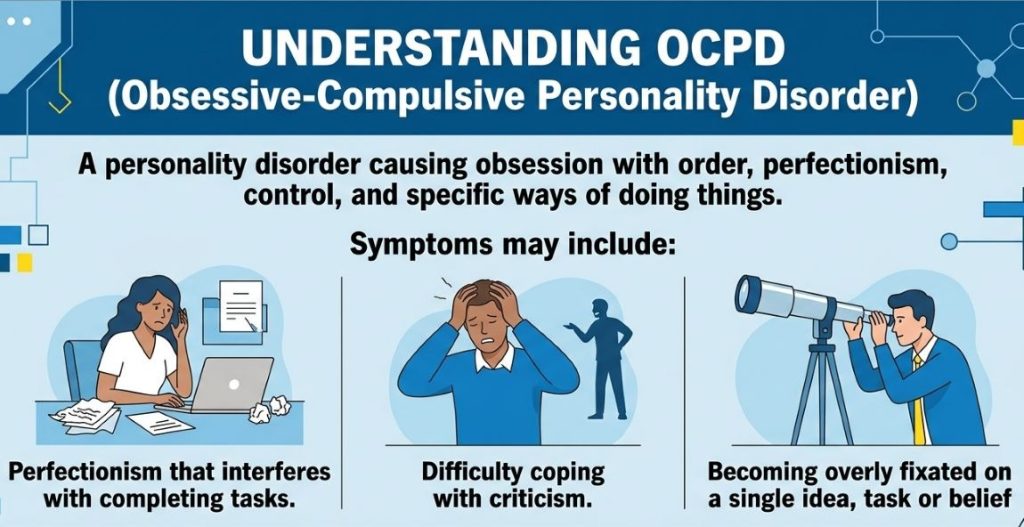
Obsessive Compulsive Personality Disorder (OCPD) is a personality disorder that involves wanting to take charge, wanting things to be perfect, wanting things to be in order, and wanting to follow rules. While OCD tends to demonstrate itself as a more anxious state, OCPD many times substantiates their actions and thinking as right or essential.
Perhaps they are thinking of doing something in a specific manner, don’t wish to give it away, have to make something, and get upset if it doesn’t go their way. Cognitive behavioral therapy (CBT) is a type of therapy that can help individuals achieve flexibility and relationships as well as emotional balance.
Key Takeaways
- OCPD is a personality disorder marked by perfectionism, stubbornness and being controlling.
- Although the names are similar, OCPD is different than OCD.
- Many people suffering with OCPD experience the following challenges: managing stress, managing relationships and flexibility.
- Working too hard, compulsive rule following, and failure to take breaks.
- Emotional well-being is improved and life experiences can be better using therapy and mental health treatment.
- By intervening early, it’s possible to support individuals to develop healthy coping habits and relationships.
Understanding Obsessive-Compulsive Personality Disorder
So, what is OCPD? This mental health disorder causes a person to be very absorbed in order, perfection and control. Those suffering from this disorder can be vulnerable to expecting a great deal from themselves and others. Can become overreactive when others do not respond in ways that are predictable to him/her and in unpredictable situations.
OCPD is sometimes mistakenly used in place of OCPD, which is the correct abbreviation for OCPD.
The person with OCPD tends to not recognize that there is a problem with his or her behaviors, whereas those with obsessive-compulsive disorder (OCD) typically do. They often assume that their course of action is “right,” whether they are causing themselves stress or conflicts.
This situation can involve a number of aspects of life, such as:
- Personal relationships
- Working life, jobs and employment
- Emotional regulation
- Decision-making
- Daily routines
Personality characteristics evolve through a process over time, so OCPD symptoms tend to be chronic and enduring.
100% Confidential Support is Available 24/7
No matter what you’re going through, you’re not alone. Our dedicated team is here to provide a safe, judgment-free space where you can talk openly and honestly. Whether you need emotional support, resources, or just someone to listen.
We’re here for you—completely confidential and always respectful of your privacy. Call us today!
What Does an OCPD Person Act Like?
OCPD people are perfectionists, pay attention to details and are highly organized. These traits are seemingly good, but can be unhealthy if taken to extremes.
An individual with OCPD might:
Create senseless lists and plan Always seem to procrastinate on work and projects for fear of failure Easily thwarted by unexpected changes in plans
May struggle to accept others’ ability to perform by themselves
Be productive, at the cost of relationships Oppose moralities, rules or routines with rigor.
Come across cold or judgmental
Many times, family members and co-workers will first recognize the symptoms prior to the individual. This ongoing need for control can cause strain, stress and burnout.
Deland Treatment Solutions
Battling with Drug and Alcohol Addition? Remember, you are not alone and we are here to help you!
OCPD vs OCD: What’s the Difference?
One of the common misconceptions is to have OCPD confused with OCD. They both have the same names but are two distinct conditions.
Individuals with OCDs have obsessions and compulsions that are usually disturbing to themselves and others, and may be thought of as interfering or silly. An individual with OCD, for instance, might wash their hands over and again as a result of the worry of contamination.
People with OCPD, by contrast, might think that they are perfect or that control isn’t that bad. Often they do not realize that they feel distressed due to their behavior, but they storm when other people don’t meet their expectations.
It’s important to recognize this distinction, as treatment strategies may vary.
Key Differences
OCPD | OCD |
Personality disorder | Anxiety disorder |
Need for control and perfection | Intrusive thoughts and compulsions |
Behaviors often feel justified | Behaviors feel unwanted or distressing |
Long-term personality pattern | Symptoms may come and go |
Understanding this distinction is important because treatment approaches can differ.
Seeking help from DeLand Treatment Solutions provides essential guidance
What Causes OCPD?
The underlying cause of OCPD is not well understood, but there can be several causes for OCPD.
Genetics
Sometimes mental health problems can occur within a family. Genes would be passed on if they are associated with perfectionism, anxiety or emotional rigidity.
Childhood Environment
Experiences of experiencing discipline, criticism, perfectionism or controlling environments can increase the risks of personality tendencies related to OCPD.
Trauma and Emotional Experiences
It is a coping strategy to establish controlling behaviors, for some of them, as a result of emotional stress or uncertainty. Other factors that may contribute to needing order and predictability may include trauma experiences in childhood.
Personality and Temperament
Those with naturally cautious and detail-oriented personalities may be more prone to developing symptoms of OCPD over time.
Common Signs and Symptoms of OCPD
If you are not yet one of the few who know what ocpd is, the symptoms may clear up your thinking.
Common signs include:
- Extreme perfectionism
- Overemphasis on scheduling and rules
- Difficulty expressing emotions
- Hardworking; dogged work
- Spirit of intolerance on arguments of ethics or values
- Failure to empower others to do activities
- Difficulty with change
- Searching out-of-date/useless content.
Wants to be in charge of relationships or work
Symptoms can vary between individuals, but will affect them emotionally and their interactions with people.
How OCPD Affects Relationships
It can be challenging for a relationship when constantly seeking to control situations or perfection. Family members may feel judged and may feel cut off and overwhelmed by demands that they can’t possibly meet.
Individuals with OCPD may also have trouble with:
- Compromise
- Emotional vulnerability
- Accepting mistakes
- Relaxation and spontaneity
- Allowing others to take charge of doing things
These can lead to a refusal to accept the person over time and/or fighting or dysfunction within the family.
Can OCPD Co-Occur With Addiction or Mental Health Disorders?
Yes. OCPD may be associated with anxiety disorders, depression, eating disorders or substance abuse disorders. Some people use alcohol and drugs to cope with stress, frustration or emotional tension because of their operational (logical, rational) thinking.
Here at DeLand Treatment Solutions, we recognize that mental health, addiction and substance use issues have to be treated together. Integrated treatment can aid individuals in learning to recognize and figure out the triggers behind a person’s destructive habits, as well as show healthier ways to cope with urges.
Effective Treatment Options for OCPD
The good news is that by using treatment, an individual with OCPD can improve their relationships, reduce stress, and acquire additional flexible thinking styles.
Therapy
In many cases, the treatment of choice is psychotherapy. CBT can help people to Recognize cognitive processes that are unhelpful and fixate on the issue:
- Know about healthier coping and alternative ways to cope
- Improve emotional awareness
- Reduce perfectionistic behaviors
- Build healthier relationships
Therapy can also be utilized to uncover and also resolve any type of underlying fears, anxiety or any kind of emotional problems.
Medication
There are no specific medications approved for OCPD but some may be prescribed to help address some of the symptoms that might be present (like depression/anxiety). Medication management can be a vital component of this support.
Stress Management
Practices like mindfulness, relaxation, practicing healthy habits and self care are all ways to release emotional stress and allow for greater flexibility in life.

When to Seek Professional Help
There are a lot of people who delay taking action for things that they do not comprehend and how far-reaching OCPD is in their life. When symptoms begin to interfere with the quality of relationships, emotional regulation, and/or functioning, it is important to seek help.
If you have an individual experiencing or close to someone experiencing the following:
- Professional treatment might help.
- Has trouble getting along with others.
- “Burnout” or long-term stress
- Difficulty maintaining relationships
- Control/anxiety for perfection
- Emotional isolation
- There appears to be a co-occurrence of substance use problems.
To explore options for supervised support, contact DeLand Treatment Solutions
Compassionate Support is Available
If not, and you are a perfectionist, have anxiety or another co-occurring mental health disorder that has been or is interfering with your thoughts, then you can educate yourself about the mind and your situation with professional assistance.
Emotional wellness and long-term recovery are our goals in caring for each person in our care compassionately and individually at DeLand Treatment Solutions. For more information on treatment options, call (386) 866-8689 today.
Key Takeaways
- Co-occurring disorder involve a mental health condition and substance use disorder appearing together.
- It is through following integrated care plans that the conditions are treated simultaneously.
- CBT, as a behavioral therapy is critical in finding out what are the triggers and the building of resiliency.
- Professional oversight ensures that medication and therapy work together safely and effectively.
- Long-term stability is achieved through a combination of structured support and aftercare.
Frequently Asked Questions
What is an OCPD person like?
A person with OCPD is often highly perfectionistic, organized, and focused on control. They may struggle with flexibility, become frustrated by mistakes, and expect others to follow strict standards or routines in daily life.
Is OCPD a form of autism?
No. OCPD and autism are separate conditions. While some behaviors may overlap, OCPD centers on perfectionism and control, whereas autism involves differences in communication, social interaction, and sensory processing.
What kind of trauma causes OCPD?
There is no single cause, but childhood criticism, strict parenting, emotional neglect, or environments focused heavily on rules and achievement may contribute to the development of OCPD traits over time.
Is OCPD like narcissism?
OCPD and narcissistic personality disorder are different conditions. However, both may involve rigid thinking and interpersonal difficulties. People with OCPD are more focused on rules, order, and perfection rather than admiration or status.
What are the first signs of OCPD?
Early signs often include excessive perfectionism, strict routines, difficulty delegating tasks, fear of mistakes, and becoming upset when things feel out of control or unpredictable.
Do people with OCPD get angry?
Yes. Individuals with OCPD may become frustrated or angry when plans change, rules are not followed, or situations feel disorganized. Their strong need for control can make stress management difficult.
Disclaimer
This article is for informational and educational purposes only and should not replace professional medical advice, diagnosis, or treatment. Always seek guidance from a qualified healthcare or mental health professional regarding any medical or psychological concerns.