Watching someone you love tell repeated, unnecessary lies raises an obvious question: is this a mental illness? The short answer is no, not on its own. Compulsive lying isn’t recognized as a standalone diagnosis in the DSM-5-TR, but it frequently shows up alongside personality disorders, trauma, substance use, or other mental health conditions. Identifying that underlying cause, rather than the lying itself, is what effective treatment actually targets.
Compulsive lying is a pattern, not a diagnosis. It often develops as a coping strategy tied to trauma, addiction, anxiety, or a personality disorder, and treatment works by addressing that underlying condition rather than trying to confront the lying directly.
Key Takeaways:
- Compulsive lying isn’t classified as a standalone mental illness in the DSM-5-TR. It frequently occurs alongside personality disorders, trauma-related disorders, substance use disorders, and other mental health conditions.
- Effective treatment addresses the underlying issue driving the behavior, not just the lying itself.
- A licensed mental health evaluation is the right first step when lying becomes frequent, distressing, or damaging to relationships.
- Therapy, family support, and treatment for co-occurring conditions all play a role in recovery.
What Is Compulsive Lying?
Compulsive lying is a repeated pattern of telling falsehoods, often without a clear or logical benefit. Unlike ordinary occasional dishonesty, it can become habitual and genuinely difficult for the person to control. People who lie compulsively often do it to avoid uncomfortable emotions, gain approval, protect themselves from rejection, or manage psychological distress they haven’t otherwise resolved.
Researchers distinguish compulsive lying from pathological lying, though the two terms get used interchangeably in casual conversation. Pathological lying tends to involve more elaborate stories built for a specific gain or manipulation, while compulsive lying is more often driven by an internal urge than a calculated goal.
So, Is It a Mental Illness?
No, not according to current psychiatric standards. Compulsive lying isn’t listed as its own diagnosis in the DSM-5-TR. That doesn’t mean it should be dismissed. Repeated dishonesty can signal an underlying condition that genuinely deserves professional attention, and mental health professionals typically look past the lying itself to understand what’s driving it. In many cases, it functions as a coping strategy rather than a deliberate attempt to deceive for personal gain.
Underlying conditions that commonly show up alongside compulsive lying include personality disorders, trauma-related disorders, anxiety disorders, depression, substance use disorders, and, less commonly, neurological conditions that affect impulse control. Someone struggling with addiction, for instance, may lie specifically to hide substance use or protect continued access to it.
Unresolved childhood trauma can drive a similar pattern rooted in fear, shame, or low self-esteem. Rather than labeling someone “a liar,” experienced clinicians focus on the emotional and psychological factors behind the behavior, which opens the door to actual recovery instead of just judgment.
At DeLand Treatment Solutions, evaluating co-occurring mental health conditions is a standard part of building an individualized treatment plan for anyone facing addiction alongside behavioral health challenges.
You don’t have to let repeated dishonesty destroy your relationships, contact DeLand Treatment Solutions today to discover our evidence-based family and individual care plans.
Conditions Commonly Associated With Compulsive Lying
Condition | How Common | Why It May Occur |
Personality disorders | Frequent | Difficulty regulating emotions, unstable identity, manipulation patterns |
Substance use disorders | Common | Hiding use, avoiding consequences, protecting continued access |
Trauma-related disorders | Possible | Fear, shame, self-protection, survival behaviors |
Anxiety disorders | Possible | Avoiding perceived conflict or criticism |
Depression | Less common | Feelings of worthlessness, avoidance of hard conversations |
Neurological conditions | Occasional | Impaired impulse control or executive functioning |
Not everyone who lies has a mental illness, and not everyone with a mental health condition lies compulsively. Every case still needs its own individual assessment rather than a generic label.
Researchers Curtis and Hart, who’ve published some of the most detailed empirical work on this topic, note that pathological and compulsive lying remain absent from official diagnostic systems despite causing real distress and impairment for many of the people who experience it, and that more research is still needed to formalize assessment and treatment.
1 That gap is exactly why clinicians focus on the underlying condition rather than treating the lying as a diagnosis in itself.
What Causes Compulsive Lying?
Compulsive lying rarely develops without a reason behind it. A few factors show up often. Childhood trauma or adverse experiences, including neglect, abuse, or an unstable home environment, can leave lying as a survival mechanism that persists into adulthood.
Low self-esteem can drive exaggeration or fabrication aimed at gaining acceptance or avoiding feelings of inadequacy. For some, lying becomes a habitual way to avoid punishment, conflict, or disappointment, essentially fear of consequences turned into a reflex.
Substance use disorders frequently involve hiding behavior, finances, or whereabouts to protect continued use. Certain personality disorders can involve chronic dishonesty or manipulation as part of the broader pattern. Neurological factors are less common, but brain injuries or conditions affecting impulse control can occasionally play a role.
Signs That Professional Help May Be Needed
Not every lie is cause for concern; occasional white lies are a normal part of social life. It’s worth taking more seriously when someone lies even in situations where the truth would clearly be easier; builds elaborate stories that become hard to maintain, seems unable to stop despite real negative consequences; has damaged relationships through repeated dishonesty; lies specifically to hide substance use or risky behavior; or experiences noticeable anxiety, shame, or distress connected to their own lying.
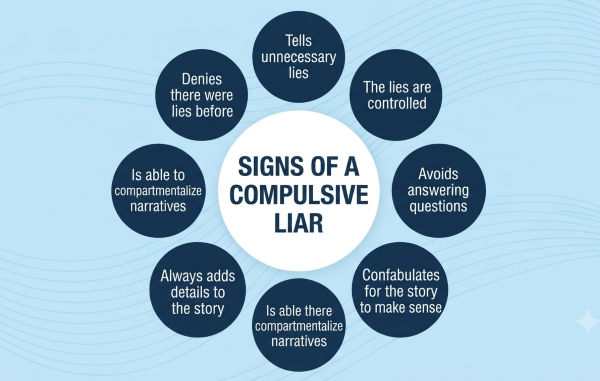
When any of these shows up alongside depression, anxiety, trauma, or addiction, a full mental health evaluation is the right next step. Concerned about a loved one, or yourself? DeLand Treatment Solutions offers confidential evaluations to help identify what’s actually driving the behavior.
Can Compulsive Lying Be Treated?
Yes, though there’s no single medication or protocol built specifically for lying itself. Addressing the underlying condition is what tends to produce real, lasting change. Depending on what that evaluation finds, treatment might include individual psychotherapy, cognitive behavioral therapy, trauma-informed therapy, family counseling, addiction treatment for a co-occurring substance use disorder, or medication when another diagnosed condition is present.
Clinicians generally agree that lasting behavioral change comes from building emotional regulation and healthier coping skills, paired with accountability, rather than from confrontation or punishment alone.
Behind every lie is an underlying issue waiting to be healed—contact DeLand Treatment Solutions today to identify the real cause and start recovering.
How to Help Someone Who Lies Compulsively
Step 1: Skip the immediate judgment. Approach the conversation calmly instead of accusing or shaming. Defensive reactions tend to increase dishonesty, not reduce it.
Step 2: Make honesty feel safe. An environment built on positive reinforcement tends to work better than one built on criticism.
Step 3: Suggest a professional evaluation. If the lying has become persistent or is affecting daily life, a licensed mental health professional can help identify what’s underneath it.
Step 4: Treat what’s co-occurring. Addiction, anxiety, depression, or trauma running alongside the lying often need their own treatment before the lying itself improves.
Step 5: Keep real boundaries. Supporting someone doesn’t mean enabling harmful behavior. Clear boundaries protect everyone involved while still encouraging accountability.
Compulsive lying shouldn’t be ignored when it consistently disrupts relationships, employment, finances, or emotional well-being, and it deserves particular attention when it shows up alongside substance misuse, depression, anxiety, trauma, or suicidal thoughts.
Earlier intervention tends to improve outcomes and make rebuilding trust more realistic before the pattern becomes even more deeply set.
Understanding why someone lies matters far more than simply labeling the behavior. When the real driver, whether that’s trauma, addiction, anxiety, or a personality-related condition, gets identified and treated, lasting change becomes genuinely possible.

Ready to Find Help
If someone you love struggles with compulsive lying alongside substance use or a mental health condition, you don’t have to figure it out alone.
DeLand Treatment Solutions provides evidence-based behavioral health care that addresses both addiction and mental health treatment, built around each person’s specific history and goals. Contact DeLand Treatment Solutions today to learn how a professional evaluation can help you or your loved one take the next step.
Frequently Asked Questions
Is compulsive lying considered a mental illness?
No. Compulsive lying is not recognized as an independent mental illness in the DSM-5-TR. However, it may occur alongside personality disorders, trauma, substance use disorders, or other mental health conditions.
What causes someone to become a compulsive liar?
There is no single cause. Trauma, low self-esteem, fear of rejection, learned behaviors, addiction, and certain mental health conditions may all contribute.
Can therapy help compulsive lying?
Yes. Therapy often helps individuals understand why they lie, develop healthier coping skills, improve communication, and address underlying emotional issues.
Is compulsive lying the same as pathological lying?
The terms are often used interchangeably, but some experts describe pathological lying as more deliberate and elaborate, while compulsive lying is driven by an internal urge or habit.
Can addiction cause compulsive lying?
Yes. People living with substance use disorders often lie to hide their addiction, avoid consequences, or maintain access to drugs or alcohol.
Is compulsive lying treatable?
Yes. Although there is no treatment designed specifically for compulsive lying, addressing underlying mental health or substance use disorders often improves the behavior significantly.
Should families confront someone about compulsive lying?
Families should communicate with empathy, establish healthy boundaries, and encourage professional support rather than relying on confrontation or blame.
When should I seek professional help?
If compulsive lying is damaging relationships, affecting work, contributing to addiction, or causing significant emotional distress, professional evaluation is recommended.
Author Bio
Dr. Zach Miller, Ph.D., LMHC, MCAP, CRRA is the Chief Clinical Officer and Co-Founder of Solutions Healthcare. With more than 15 years of experience in addiction treatment, behavioral health, and co-occurring mental health disorders, Dr. Miller specializes in evidence-based care that supports long-term recovery.
His clinical work focuses on trauma-informed treatment, substance use disorders, relapse prevention, and integrated mental health services. Learn more about Dr. Miller through the Solutions Healthcare leadership team.
Medical Disclaimer
This blog is intended for educational purposes only and should not be considered medical advice, diagnosis, or treatment. If you or someone you know is experiencing a mental health crisis or substance use disorder, seek immediate assistance from a qualified healthcare professional or call emergency services if necessary.
References
- Dike CC, Hart CL, et al. Pathological Lying Revisited. Frontiers in Psychiatry. 2022. https://pmc.ncbi.nlm.nih.gov/articles/PMC9176035/
- Mental Health Hotline. Is Compulsive Lying a Mental Illness? https://mentalhealthhotline.org/compulsive-lying-mental-health/
- American Psychiatric Association. Diagnostic and Statistical Manual of Mental Disorders (DSM-5-TR). American Psychiatric Association Publishing.
- National Institute of Mental Health. Mental Health Information. https://www.nimh.nih.gov