If you’re just tossing and turning, counting the days since your baby was born and wondering when this feeling of heaviness will pass, you are not alone in asking yourself that question. One of the most common questions new mothers ask themselves at 3 a.m. with a sleeping baby in one arm is: How long can postpartum depression last?
Maybe someone told you it would pass by six weeks. Perhaps you still aren’t feeling like you did 6 months ago. Or perhaps you are a partner, parent or sibling who’s watching a loved one sink into someone you don’t know; you need to understand what you’re seeing.
The answer is different for people, and anyone who says otherwise hasn’t paid close attention to the studies. What we can say is what the facts are, what the timeline is and what happens if postpartum depression is left unaddressed for too long.
What Is Postpartum Depression?
Postpartum depression is a clinical depression that occurs after birth and includes feelings of sadness, fatigue, emotional numbness and more that is beyond normal post-baby fatigue.
It is different from the “baby blues,” which affect most new mothers in the first two weeks after delivery and usually fade on their own. Postpartum depression sticks around longer, hits harder, and does not resolve without support.
“Left untreated, postpartum depression can last for months or years. The potential long-term complications are the same as in major depression.” (MedlinePlus, National Library of Medicine)
Postpartum depression can also affect non-birthing partners and can follow miscarriage or pregnancy loss, not just live birth. It is far more common than most families realize, and it is not a reflection of anyone’s strength or love for their child.
Experts Advice: Seek professional evaluation if depressive symptoms persist beyond two weeks after childbirth.
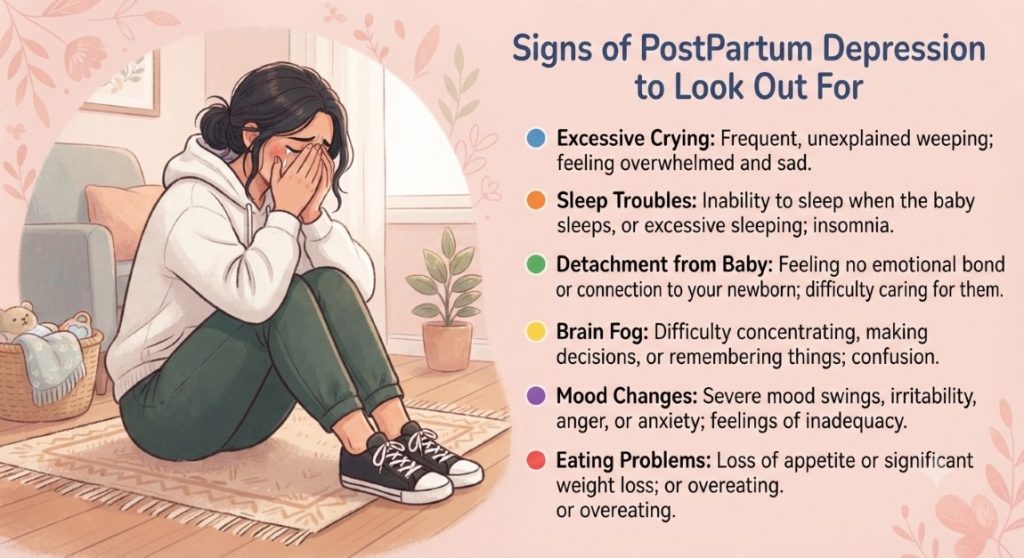
Signs Of Postpartum Depression
The clearest sign of postpartum depression is sadness, anxiety, or emotional flatness that lasts longer than two weeks after delivery and does not improve.
Watch for these signs in yourself or someone you love:
- Persistent sadness, hopelessness, or crying that does not seem tied to anything specific
- Loss of interest in the baby, or difficulty bonding
- Intense irritability, anger, or feeling “on edge” constantly
- Withdrawing from family, friends, or activities once enjoyed
- Trouble sleeping even when the baby is sleeping
- Changes in appetite, either eating far more or far less than usual
- Overwhelming guilt or feeling like a failure as a parent
- Thoughts of harming yourself or the baby
Any thoughts of self-harm or harming the baby require immediate medical attention. This is not something to wait out.
Struggling with postpartum depression symptoms? Contact DeLand Treatment Solutions at (386) 866-8689 for compassionate, evidence-based support today
Postpartum Depression Symptoms
Postpartum depression symptoms go beyond mood and often show up physically, cognitively, and behaviorally all at once.
Many women describe it less as sadness and more as a heavy fog or a disconnect from their own lives. Common symptom clusters include:
- Emotional: hopelessness, numbness, excessive worry, panic attacks
- Physical: fatigue that sleep does not fix, appetite changes, headaches
- Cognitive: trouble concentrating, indecisiveness, racing or intrusive thoughts
- Behavioral: avoiding the baby or over-monitoring the baby out of anxiety
Symptoms typically begin within the first few weeks after birth, though they can also appear months later, sometimes not surfacing until the return to work or a major life change.
How Long Can Postpartum Depression Last With Treatment
With proper treatment, most women see meaningful improvement within 3 to 6 months, and many notice relief within just a few weeks of starting care.
Treatment shortens the timeline dramatically. A combination of therapy, medication, or both tends to produce the fastest and most lasting results.
Here is a general recovery pattern for treated postpartum depression:
Time in Treatment | What Often Happens |
1 to 2 weeks | Sleep and appetite may start to stabilize |
3 to 4 weeks | Mood often begins lifting, especially with medication |
6 to 8 weeks | Noticeable improvement in daily functioning |
3 to 6 months | Significant symptom relief for most women |
6 months plus | Continued therapy often focuses on relapse prevention |
Mild to moderate cases tend to respond faster than severe postpartum depression, which is one reason early intervention matters so much.
If postpartum depression is affecting your daily life, call DeLand Treatment Solutions at (386) 866-8689 to explore personalized care.
How Long Can Postpartum Depression Last if Untreated
Untreated postpartum depression can last months or even years, and it does not reliably improve on its own the way the baby blues do.
Research backs this up in ways that should change how families think about “waiting it out.”
“About 5 percent of women reported persistently high levels of postpartum depression symptoms for three years after giving birth.” (Dr. Diane Putnick, NICHD, National Institutes of Health)
A separate CDC-published study found that a meaningful share of women who appeared symptom-free early on later developed depressive symptoms at 9 to 10 months postpartum, meaning the risk window is longer than most people assume.
Without treatment, postpartum depression tends to do one of three things:
- Gradually improve on its own, though this is the least common outcome
- Stay roughly the same for an extended period, sometimes years
- Worsen over time, especially without any support system in place
FACT: Postpartum depression can develop weeks or even months after childbirth, not immediately.
What Postpartum Depression Does to the Mind and Body
Postpartum depression affects far more than mood. It changes sleep architecture, stress hormone regulation, and the ability to bond with a newborn.
Some effects ease naturally once treatment begins and hormone levels stabilize. Others, particularly the strain on the parent-child bond and the family system, need active repair through therapy.
“Without treatment, postpartum depression can interfere with a mother’s ability to connect with and care for her baby, and may cause the baby to have problems with sleeping, eating, and behavior.” (Eunice Kennedy Shriver National Institute of Child Health and Human Development)
This is not a guilt trip. It is exactly why getting support early matters both for the parent and for the baby’s development.
Postpartum Depression Treatments
The most effective postpartum depression treatments combine talk therapy, medication management, and consistent follow-up care, not just one of these alone.
Evidence-based options include:
- Cognitive Behavioral Therapy (CBT), which helps identify and reshape the thought patterns fueling depression
- Medication management, often SSRIs that are considered safe alternatives for postpartum and, when needed, breastfeeding mothers
- Support groups, connecting new parents with others who understand exactly what they are experiencing
- Family therapy, since postpartum depression affects the whole household, not just the parent
- Psychiatric evaluation, especially for moderate to severe symptoms that need closer monitoring
When Postpartum Depression Overlaps With Substance Use
Postpartum depression raises the risk of self-medicating with alcohol or drugs, particularly when untreated symptoms stretch on for months without relief.
Exhaustion, isolation, and unrelenting emotional pain push some new parents toward substances as a coping mechanism, even when they know the risks. This is not a character flaw. It is a predictable response to unmanaged suffering.
Warning signs that postpartum depression may be overlapping with substance use include:
- Increased alcohol use to fall asleep or calm anxiety
- Misuse of prescribed medications like anti-anxiety drugs
- Secretive behavior around drinking or drug use
- Worsening mood despite substance use, not improvement
When depression and substance use occur together, treating only one rarely works. Both need to be addressed at the same time by a team trained in dual diagnosis care.

Finding Help, However Long PPD Has Lasted
Whether this has been going on for six weeks or two years, it is not too late to get real relief, and you should not have to carry it alone any longer.
At DeLand Treatment Solutions, our clinical team understands how postpartum depression can quietly take over a person’s life, and how it sometimes brings substance use along with it. We treat the whole picture, not just a symptom checklist.
Depending on your needs, our team may recommend the following:
- Depression treatment program built around evidence-based therapy and, when appropriate, medication management
- Dual Diagnosis Treatment for parents managing both depression and substance use at the same time
- Women’s Rehab Program offering a supportive, understanding environment designed around women’s specific needs
- Family Therapy to help partners and loved ones understand what is happening and how to support recovery
- Medication Management with ongoing psychiatric oversight, not a one-time prescription and goodbye
You do not have to keep waiting to see if it gets better on its own. Call us or reach out through our contact page to talk with someone who understands, confidentially and without judgment.
Key Takeaways
- Co-occurring disorder involve a mental health condition and substance use disorder appearing together.
- It is through following integrated care plans that the conditions are treated simultaneously.
- CBT, as a behavioral therapy is critical in finding out what are the triggers and the building of resiliency.
- Professional oversight ensures that medication and therapy work together safely and effectively.
- Long-term stability is achieved through a combination of structured support and aftercare.
FAQs
Q: How long can postpartum depression last if untreated?
Untreated postpartum depression can persist for months or even years. Research shows that some women continue experiencing significant symptoms three years after childbirth. Without treatment, symptoms may worsen over time, affecting maternal health, relationships, and child development, making early intervention important for long-term recovery.
Q: What is postpartum depression exactly?
Postpartum depression is a clinical mood disorder that develops after childbirth and extends beyond the normal “baby blues.” It involves persistent sadness, hopelessness, fatigue, anxiety, and difficulty bonding with a baby. These symptoms interfere with daily functioning and typically require professional evaluation and evidence-based treatment.
Q: What are the earliest postpartum depression signs?
Early signs commonly include persistent sadness, excessive crying, irritability, anxiety, overwhelming guilt, fatigue, and sleep problems that continue beyond two weeks after delivery. Difficulty bonding with the baby or losing interest in daily activities may also signal postpartum depression and warrant professional evaluation.
Q: How long does postpartum depression last with treatment?
With appropriate treatment, many women notice improvement within several weeks, while significant recovery often occurs within three to six months. The timeline varies based on symptom severity, treatment consistency, and individual factors. Continuing therapy and follow-up care helps support long-term recovery and reduce relapse risk.
Q: Can postpartum depression start months after birth?
Yes. Postpartum depression can begin weeks or even several months after childbirth rather than immediately after delivery. Because symptoms may emerge later, healthcare providers recommend ongoing mental health screening throughout the first year after birth to identify concerns as early as possible.
Q: Is postpartum depression the same as the baby blues?
No. Baby blues usually resolve within one to two weeks after delivery and involve mild mood changes. Postpartum depression is more severe, lasts longer, and significantly affects daily functioning, relationships, and caregiving. Unlike baby blues, postpartum depression typically requires professional treatment and ongoing support.
Q: What postpartum depression symptoms should never be ignored?
Thoughts of self-harm, harming the baby, hallucinations, delusions, severe confusion, or being unable to care for yourself or your child require immediate medical attention. These symptoms may indicate postpartum psychosis or severe depression and should be treated as medical emergencies requiring urgent professional care.
Q: Can postpartum depression lead to substance use?
Yes. Some individuals attempt to cope with untreated postpartum depression by using alcohol or drugs to manage emotional distress or sleep difficulties. This increases the risk of substance use disorders, making integrated treatment for both mental health and substance use especially important when both conditions coexist.
Q: Do postpartum depression treatments include medication?
Yes. Treatment often includes psychotherapy, medication, or both depending on symptom severity. Selective serotonin reuptake inhibitors (SSRIs) are commonly prescribed and are considered appropriate for many breastfeeding mothers under medical supervision. A healthcare provider can recommend the safest treatment approach for each individual.
Q: Can fathers or partners get postpartum depression?
Yes. Fathers and non-birthing partners can also experience postpartum depression. Hormonal changes, sleep deprivation, stress, and major life adjustments contribute to symptoms including depression, anxiety, irritability, and emotional withdrawal. Professional support and treatment can significantly improve recovery and family wellbeing.
Q: How soon after birth can postpartum depression treatment start?
Treatment should begin as soon as symptoms are recognized. Early intervention consistently leads to faster improvement, better parent-child bonding, and a lower risk of long-term complications. Seeking help promptly allows healthcare providers to create an individualized treatment plan before symptoms become more severe.
Q: When should someone seek professional help for postpartum depression?
Seek professional help if symptoms last longer than two weeks, worsen over time, interfere with caring for yourself or your baby, or include thoughts of self-harm. Early assessment and treatment improve recovery outcomes and help protect both the parents and the child’s long-term health.
References
- MedlinePlus Medical Encyclopedia: Postpartum Depression
- NIH Research Matters: Postpartum Depression May Last for Years
- CDC Preventing Chronic Disease: Timing of Postpartum Depressive Symptoms
- Cleveland Clinic: Postpartum Depression
- Mayo Clinic: Postpartum Depression Symptoms and Causes
- SAMHSA: Maternal Depression
- National Institute of Mental Health: Perinatal Depression
- ClinicalTrials.gov: Reducing Maternal Depression and Promoting Infant Social-Emotional Health
- DeLand Treatment Solutions: Depression Treatment Program
- DeLand Treatment Solutions: Dual Diagnosis Treatment
This article is for informational purposes only and is not a substitute for professional medical advice. If you or a loved one needs support, DeLand Treatment Solutions is available to help.