Whether you’re tracking hours since your last dose or watching someone you love do it, you know this isn’t an easy or fast process. Fentanyl withdrawal is a well-known phenomenon and, sadly, it has earned a bad reputation.
You may be wondering whether what you’re feeling is normal or whether you should try to do this alone. Or you are a parent, partner or sibling who is standing outside the locked bathroom door and wondering why this stage doesn’t end soon.
Withdrawal from Fentanyl is severe, but it is also predictable in certain aspects and can be used to help you prepare for what is to come. Understanding the general time frame and knowing that there is medical support is available, simply because the process is difficult, can make a huge difference in the way that it unfolds.
What is Fentanyl Withdrawal
Fentanyl withdrawal refers to the physical and psychiatric symptoms that occur when a person physically dependent upon fentanyl discontinues their use of or reduces their dose of fentanyl.
Because fentanyl is a synthetic opioid, the body adapts to its constant presence over time. Once that presence is removed, the nervous system reacts, often intensely, as it works to recalibrate.
“Fentanyl’s high potency and short duration of action can contribute to a withdrawal syndrome that some clinicians describe as more abrupt and intense than withdrawal from longer-acting opioids.” (PMC, National Library of Medicine)
This is not a matter of willpower. It is a physiological response, and it is one of the reasons medical support matters so much during this process.
Experts Advice: Never attempt fentanyl detox alone, since relapse risk carries overdose danger
How Long Does Fentanyl Withdrawal Last
Acute fentanyl withdrawal generally lasts about 7 to 10 days, though some symptoms can linger for several weeks and certain psychological effects may persist even longer.
Here is the general shape of the timeline:
- Early symptoms: begin 6 to 12 hours after the last dose
- Peak intensity: typically hits between 24 and 72 hours
- Acute phase resolution: most physical symptoms ease significantly by day 7 to 10
- Lingering symptoms: some people experience mild symptoms for several weeks
- Post acute effects: psychological symptoms can continue for months in some cases
No two timelines look exactly alike. How long someone used, how much, and their overall health all shape the experience.
FACT: Acute fentanyl withdrawal generally lasts about seven to ten days
100% Confidential Support is Available 24/7
No matter what you’re going through, you’re not alone. Our dedicated team is here to provide a safe, judgment-free space where you can talk openly and honestly. Whether you need emotional support, resources, or just someone to listen.
We’re here for you—completely confidential and always respectful of your privacy. Call us today!
Fentanyl Withdrawal Timeline Day by Day
Fentanyl withdrawal tends to follow a recognizable pattern, even though intensity and duration vary from person to person.
Timeframe | What Typically Happens |
6 to 12 hours after last dose | Early symptoms begin, including anxiety, sweating, and muscle aches |
24 to 72 hours | Peak intensity, with nausea, vomiting, chills, and intense cravings |
Days 4 to 7 | Physical symptoms gradually start to ease |
Days 7 to 10 | The acute withdrawal phase largely resolves for most people |
Weeks 2 to 4 | Milder physical symptoms may linger, and sleep often remains disrupted |
Months 1 to 6 | Post-acute withdrawal symptoms, such as low mood and anxiety, can persist |
Attempting to stop fentanyl abruptly without support, sometimes called quitting cold turkey, can make this timeline significantly harder and increase the risk of relapse.
Deland Treatment Solutions
Battling with Drug and Alcohol Addition? Remember, you are not alone and we are here to help you!
Common Fentanyl Withdrawal Symptoms
Fentanyl withdrawal symptoms affect both the body and the mind, often at the same time.
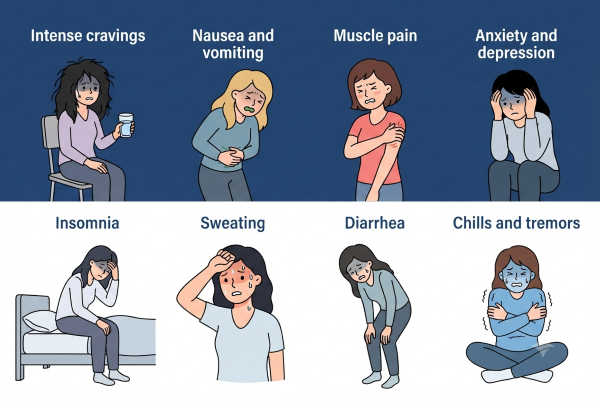
Physical symptoms commonly include:
- Muscle and bone aches
- Nausea, vomiting, and diarrhea
- Sweating and chills
- Runny nose and watery eyes
- Rapid heartbeat
- Uncontrollable leg movements
- Enlarged pupils
Psychological symptoms commonly include:
- Intense cravings
- Anxiety and agitation
- Insomnia
- Depression
- Irritability
How Long Does Fentanyl Stay in Your System
Fentanyl itself clears the bloodstream relatively quickly, but detectable traces can remain in urine, blood, hair, and saliva for varying lengths of time.
- Blood: typically detectable for up to 12 hours
- Saliva: typically detectable for 1 to 3 days
- Urine: typically detectable for 1 to 3 days, longer with heavy or prolonged use
- Hair: can be detected for up to 90 days
Because illicit fentanyl varies so widely in purity and potency, these windows can shift more than they would with a pharmaceutical-grade opioid. This is one more reason self-managed withdrawal carries real uncertainty.
What Makes Fentanyl Withdrawal Last Longer
Several factors influence how intense and how long fentanyl withdrawal lasts for any given person.
- Duration of use: Longer-term use generally leads to a longer, more intense withdrawal process.
- Amount used: Higher daily use tends to extend both the timeline and the severity of symptoms.
- Method of use: How fentanyl was used can affect how quickly the body has adapted to its presence.
- Polysubstance use: Combining fentanyl with other substances, including benzodiazepines or alcohol, often complicates and extends withdrawal.
- Overall health: Liver and kidney function, along with general physical health, affect how the body processes and recovers from withdrawal.
Post-Acute Withdrawal Syndrome After Fentanyl
Post acute withdrawal syndrome, often called PAWS, refers to the lingering psychological symptoms that can continue for weeks or months after the acute physical withdrawal phase ends.
“It is estimated that a large majority of people recovering from opioid use will experience some degree of post-acute withdrawal syndrome as the brain gradually recalibrates after the discontinuation of use.” (Clinical addiction treatment literature)
Common PAWS symptoms include:
- Persistent low mood or depression
- Anxiety that comes and goes unpredictably
- Trouble sleeping
- Difficulty concentrating
- Reduced ability to handle stress
PAWS is a major reason relapse risk stays elevated well after the physical symptoms fade, and it is exactly why ongoing support matters long after detox ends.
Still struggling with cravings or low mood weeks after detox? DeLand Treatment Solutions provides ongoing support through recovery’s next stage
Fentanyl Withdrawal Treatment Options
Fentanyl withdrawal treatment typically combines medical supervision, supportive medications, and a plan for continued care once the acute phase resolves.
Options a medical provider may consider include the following:
- Medically supervised detox, providing 24-hour monitoring during the most intense phase
- Medication-assisted treatment (MAT), using medications like buprenorphine to ease withdrawal and reduce cravings
- Comfort medications, addressing specific symptoms such as nausea, anxiety, or sleep disruption
- A structured taper, when appropriate, is guided entirely by a medical provider rather than attempted independently
- Transition planning, moving from detox into ongoing therapy and support once the acute phase passes
“Medical detox significantly increases both safety and long-term success rates compared to attempting withdrawal without professional support.” (Clinical treatment research)

Why Medical Detox Matters for Fentanyl
Attempting fentanyl withdrawal without medical support is not just uncomfortable; it carries real safety risks, including a heightened risk of relapse and overdose.
This risk exists because tolerance drops quickly during withdrawal. If someone relapses after even a short period of abstinence, using their previous dose can be far more dangerous than it was before, since the body is no longer adapted to that amount. This is one of the most important and least talked about dangers of trying to detox alone.
Medical detox exists specifically to reduce this risk, manage symptoms safely, and create a stable bridge into ongoing treatment.
Thinking about stopping fentanyl on your own? DeLand Treatment Solutions offers medically supervised detox that lowers relapse and overdose risk.
Starting Recovery at DeLand Treatment Solutions
If you have read this far because the timeline above sounds like exactly where you or someone you love is standing right now, please know that this process is genuinely easier and safer with the right support in place.
At DeLand Treatment Solutions, our clinical team specializes in guiding individuals through fentanyl withdrawal safely, with medical supervision every step of the way.
Depending on your needs, our team may recommend the following:
- Fentanyl Addiction Treatment designed around the specific challenges of synthetic opioid dependence
- Medication-Assisted Treatment (MAT) to ease withdrawal and support long-term recovery
- Residential Treatment for 24-hour structured care during and after detox
- Dual Diagnosis Program for co-occurring anxiety, depression, or trauma that often accompanies opioid dependence
- Family Therapy to help loved ones understand the process and support recovery from the outside
We are accredited by The Joint Commission, licensed by the Florida Association of Recovery Residences, and recognized by the National Association of Addiction Treatment Providers. Every plan begins with an honest, judgment-free conversation about where things stand right now.
You do not have to face fentanyl withdrawal alone, and you should not have to. Call us or reach out through our contact page any time, day or night.
FAQs
Q: How long does fentanyl withdrawal last?
Acute fentanyl withdrawal typically lasts 7 to 10 days, with symptoms gradually improving after the first several days. However, some physical discomfort and psychological symptoms, including anxiety and sleep disturbances, may continue for weeks or even months during the recovery process.
Q: How long can fentanyl withdrawal last for heavy or long-term users?
People who have used fentanyl heavily or for an extended period often experience longer and more intense withdrawal. While acute symptoms usually resolve within about 10 days, lingering fatigue, cravings, anxiety, and sleep problems may persist for several weeks or longer.
Q: What are the first signs of fentanyl withdrawal?
Early withdrawal symptoms commonly begin 6 to 12 hours after the last dose. Initial signs include anxiety, sweating, muscle aches, runny nose, yawning, restlessness, watery eyes, and increasing drug cravings as the body begins adjusting to the absence of fentanyl.
Q: When does fentanyl withdrawal peak?
Withdrawal symptoms usually reach their highest intensity between 24 and 72 hours after the last dose. During this period, individuals often experience severe muscle pain, nausea, vomiting, diarrhea, insomnia, anxiety, and intense cravings that can make relapse more likely without support.
Q: How long does fentanyl stay in your system?
Fentanyl is generally detectable in urine and saliva for one to three days, in blood for up to 12 hours, and in hair for as long as 90 days. Detection times vary depending on dose, frequency of use, and individual metabolism.
Q: What is fentanyl detox and how does it work?
Fentanyl detox is the medically supervised process of managing withdrawal while the body clears the drug. Treatment often includes 24-hour monitoring, medications to ease symptoms, hydration, and preparation for ongoing addiction treatment to support long-term recovery after detox.
Q: Is fentanyl withdrawal dangerous?
Although fentanyl withdrawal is rarely life-threatening by itself, it can lead to dehydration, severe discomfort, relapse, and overdose because tolerance drops quickly. Medical supervision improves safety, manages symptoms effectively, and helps reduce the risk of serious complications during the withdrawal process.
Q: What is post-acute withdrawal syndrome after fentanyl?
Post-acute withdrawal syndrome (PAWS) refers to lingering symptoms that continue after acute withdrawal ends. Common symptoms include anxiety, depression, mood swings, sleep disturbances, low energy, and cravings, which may persist for weeks or months while the brain gradually recovers.
Q: What fentanyl withdrawal treatment options are available?
Treatment options include medically supervised detox, medication-assisted treatment with medications such as buprenorphine or methadone, comfort medications for specific symptoms, behavioral therapy, and ongoing recovery planning. Combining medication with counseling provides the strongest evidence for successful long-term recovery.
Q: Why is quitting fentanyl cold turkey risky?
Stopping fentanyl abruptly can cause severe withdrawal symptoms that increase the likelihood of relapse. Because opioid tolerance declines rapidly during withdrawal, returning to previous doses greatly raises the risk of accidental overdose, making medically supervised withdrawal the safer approach.
Q: Can fentanyl withdrawal symptoms come back after they seem to be over?
Yes. Even after acute withdrawal resolves, milder physical symptoms and psychological challenges such as anxiety, insomnia, depression, and cravings may return during post-acute withdrawal syndrome. Continued treatment and support help manage these symptoms and reduce the risk of relapse.
Q: When should someone seek professional help for fentanyl withdrawal?
Professional help should ideally be arranged before withdrawal begins. Starting detox under medical supervision allows healthcare providers to manage symptoms safely, reduce discomfort, initiate appropriate medications when needed, and create a treatment plan that supports long-term recovery and prevents relapse.
References
- National Library of Medicine, PMC: Fentanyl Use and Withdrawal
- National Institute on Drug Abuse: Fentanyl DrugFacts
- SAMHSA: Medications for Opioid Use Disorder
- CDC: Fentanyl Facts
- MedlinePlus: Opiate and Opioid Withdrawal
- Mayo Clinic: Opioid Use Disorder
- National Institute on Drug Abuse: Medications to Treat Opioid Use Disorder
- Cleveland Clinic: Opioid Withdrawal
- DeLand Treatment Solutions: Fentanyl Addiction Treatment
- DeLand Treatment Solutions: Medication-Assisted Treatment
This article is for informational purposes only and is not a substitute for professional medical advice. If you or a loved one needs support, DeLand Treatment Solutions is available to help.