You would drink a glass of wine without any trouble at all. Now, your face is red, your heart is pounding, or your tummy is saying “no” after just a few swigs. Well, it’s confusing, a bit alarming and you’re wondering if something happened in your body or if your body is giving you a message.
Yes, it is possible to become suddenly intolerant of alcohol, when you never had any trouble with it before. Historically, your body’s ability to metabolize alcohol (enzyme ALDH2) may become less effective, which makes it easier to get intoxicated, over time because of genetics, aging, liver damage, or new medicines. For some people, who were able to drink comfortably for years, symptoms can suddenly appear, including flushing, nausea and racing heart.
These are both legitimate questions that should have real answers. Now let’s examine what is happening inside your body, what may be considered an early warning sign, and when this may be a sign of something more serious than a food sensitivity.
What Is Alcohol Intolerance, Really
Alcohol intolerance is a physical reaction that happens when your body can’t efficiently break down alcohol or its byproducts. It is not the same thing as getting drunk faster or having a low tolerance.
Mayo Clinic describes alcohol intolerance as a genetic condition in which the body lacks the proper enzymes to break down alcohol, most often causing immediate reactions like facial flushing and a stuffy nose.
The reaction usually shows up within minutes of drinking and is caused by a buildup of acetaldehyde, a toxic byproduct your body normally clears quickly. When the enzyme responsible for that job doesn’t work well, acetaldehyde lingers and causes symptoms.
Can You Develop Alcohol Intolerance Over Time
Yes, alcohol intolerance can absolutely develop later in life, even in people who drank without issue for decades.
This happens for a few reasons:
- Aging. Enzyme activity naturally slows down as the body ages, which changes how efficiently alcohol gets processed.
- Liver changes. Fatty liver, hepatitis, or long-term heavy drinking can damage the organ responsible for metabolizing alcohol.
- New medications. Certain antibiotics, antifungals, and antidepressants interfere with alcohol metabolism.
- Hormonal shifts. Changes tied to menopause, thyroid conditions, or other hormonal shifts can alter how the body handles alcohol.
100% Confidential Support is Available 24/7
No matter what you’re going through, you’re not alone. Our dedicated team is here to provide a safe, judgment-free space where you can talk openly and honestly. Whether you need emotional support, resources, or just someone to listen.
We’re here for you—completely confidential and always respectful of your privacy. Call us today!
Early Signs of Alcohol Intolerance to Watch
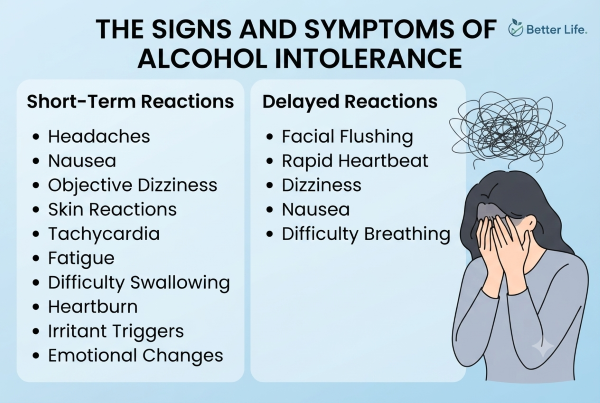
The early signs of alcohol intolerance are usually physical and show up fast, often within 30 minutes of the first drink.
Watch for:
- Facial flushing or redness, especially in the cheeks and neck
- A stuffy or runny nose
- A noticeably faster heartbeat
- Mild nausea after just one drink
- Headache that starts during or shortly after drinking
Fact: ALDH2 enzyme deficiency affects roughly 8 percent of people worldwide.
These signs can be easy to brush off as “just a bad night,” especially if they only happen occasionally at first. Pay attention if the pattern repeats.
Wondering what changed in your body? DeLand Treatment Solutions can help you find out.
Deland Treatment Solutions
Battling with Drug and Alcohol Addition? Remember, you are not alone and we are here to help you!
Symptoms of Alcohol Intolerance
Symptoms of alcohol intolerance range from mildly uncomfortable to genuinely concerning, and severity often depends on how much was consumed and what type of alcohol.
Common symptoms include:
Symptom | How It Typically Feels |
Flushing | Warm, red skin on the face, neck, or chest |
Nasal congestion | Stuffy or runny nose during or after drinking |
Rapid heartbeat | Noticeable pounding or racing pulse |
Nausea | Stomach upset, sometimes with vomiting |
Headache | Dull to throbbing pain, often within an hour |
Low blood pressure | Lightheadedness or dizziness |
Expert Advice: Track which drinks trigger symptoms; patterns often reveal the true underlying cause.
Rarely, symptoms escalate to hives, difficulty breathing, or a severe reaction. Those signs need immediate medical attention.
Symptoms getting worse instead of better? Call DeLand Treatment Solutions.
Sudden Onset Alcohol Intolerance: What Changed
Sudden onset alcohol intolerance means a reaction that wasn’t there before shows up abruptly, sometimes after years of drinking without any issue at all.
Research on ALDH2 genetic variants published in the Journal of Translational Medicine found that reduced enzyme activity leads to acetaldehyde buildup and flushing reactions, and that this susceptibility isn’t limited to people of East Asian descent.
Common triggers for sudden onset include a new medication, an illness affecting the liver or gut, significant weight changes, or simply the body’s gradual response to years of alcohol exposure. Sometimes there’s no clear single cause at all.
Alcohol Intolerance vs Alcohol Allergy vs Alcohol Use Disorder
These three terms get confused constantly, but they describe very different things.
- Alcohol intolerance is a metabolic issue, usually enzyme-related, causing physical symptoms like flushing and nausea shortly after drinking.
- Alcohol allergy is a true immune response, often triggered by an ingredient like sulfites or grains rather than the alcohol itself, and can be more dangerous.
- Alcohol use disorder is a pattern of drinking that’s difficult to control despite negative consequences, and it’s not defined by physical symptoms at all.
Some people confuse a new alcohol intolerance with a growing dependence, or vice versa. If drinking continues despite clear physical warning signs, that’s worth examining honestly.
Not sure which one applies to you? DeLand Treatment Solutions offers confidential assessments.
Is There a Test for Alcohol Intolerance
Yes, there is a test for alcohol intolerance, though it typically starts with a conversation rather than a lab.
Options include:
- Clinical history review. A doctor asks about symptom timing, triggers, and family history.
- Genetic testing. Panels can identify the ALDH2 variant linked to alcohol flushing.
- Allergy testing. Skin or blood tests can rule out a true allergy to an ingredient rather than alcohol itself.
- Elimination trials. Avoiding specific drink types can help pinpoint whether sulfites, histamines, or grains are the trigger.
There isn’t one single definitive blood test for classic alcohol intolerance, which is why a thorough history often matters more than any single lab result.
What Causes Alcohol Intolerance to Develop
Alcohol intolerance develops when the body’s enzyme system for breaking down alcohol becomes less efficient, whether that’s inherited or acquired.
Acquired causes, meaning intolerance that develops rather than being present from birth, include liver disease, chronic sinus inflammation, autoimmune conditions, and long-term heavy alcohol use that gradually damages the organs responsible for processing it.
Living With and Managing Alcohol Intolerance
Managing alcohol intolerance mostly comes down to avoidance, since there’s no cure for the underlying enzyme issue.
Helpful strategies include:
- Avoiding the specific alcohol type that triggers symptoms
- Reading labels for sulfites or other known triggers
- Reviewing medications with a doctor or pharmacist for interactions
- Simply choosing not to drink, which remains the only guaranteed prevention
For some people, an honest look at why they’re still drinking despite clear physical discomfort opens up a bigger, more important conversation.
When Alcohol Intolerance Signals a Bigger Problem
Sometimes a new alcohol intolerance is just biology changing with age. Other times, it’s the body’s way of flagging liver damage from years of heavy drinking.
Watch for these warning signs alongside intolerance symptoms:
- Yellowing of the skin or eyes
- Persistent fatigue or abdominal pain
- Difficulty cutting back despite wanting to
- Drinking to cope with stress, anxiety, or sadness
If any of these sound familiar, the conversation is no longer just about intolerance. It may be time to talk to a professional about the bigger picture.

Alcohol Intolerance Support at DeLand Treatment Solutions
DeLand Treatment Solutions understands that a new alcohol intolerance can sometimes be the first sign of a deeper concern, especially when someone continues drinking despite clear physical discomfort. Our alcohol addiction treatment program offers a confidential, judgment-free assessment to help sort out where a person’s relationship with alcohol actually stands.
Our clinical team includes providers who understand the medical side of alcohol use, including medication management for anyone navigating medication interactions or underlying health conditions tied to their symptoms. When anxiety, depression, or another condition is part of the picture, our Dual Diagnosis Program treats both together.
Whether someone simply needs education about a new physical reaction or is ready to talk about a harder pattern with alcohol, our team meets people exactly where they are. DeLand Treatment Solutions is accredited by The Joint Commission and licensed in Florida
If something about your relationship with alcohol feels different lately, contact us.
FAQs
Can you develop alcohol intolerance?
Yes. Alcohol intolerance can develop at any age, even after years of drinking without noticeable problems. Aging, certain medications, underlying health conditions, liver changes, or genetic factors can all contribute to a reduced ability to process alcohol and trigger uncomfortable physical reactions.
What is alcohol intolerance?
Alcohol intolerance is a condition in which the body has difficulty breaking down alcohol or its byproducts, most commonly because of reduced ALDH2 enzyme activity. This leads to unpleasant symptoms shortly after drinking and differs from alcohol dependence or alcohol use disorder.
What are the early signs of alcohol intolerance?
Early signs of alcohol intolerance often appear within 30 minutes of drinking and may include facial flushing, nasal congestion, rapid heartbeat, nausea, headache, dizziness, or warmth. Symptoms usually develop quickly and become more noticeable with even small amounts of alcohol.
Can you develop a sudden intolerance to alcohol?
Yes. Sudden alcohol intolerance can develop even after years without problems. It may be triggered by new medications, illness, hormonal changes, aging, or liver-related changes. Because the cause is not always obvious, a medical evaluation is recommended if symptoms appear unexpectedly.
Is there a test for alcohol intolerance?
There is no single definitive test for alcohol intolerance. Healthcare providers may use a detailed medical history, symptom review, allergy testing, or genetic testing for ALDH2 variants to determine whether symptoms are caused by intolerance, allergy, or another medical condition.
What are the symptoms of alcohol intolerance?
Common alcohol intolerance symptoms include facial flushing, nasal congestion, rapid heartbeat, headache, nausea, dizziness, and occasionally low blood pressure after drinking. Symptoms typically begin shortly after alcohol consumption and vary depending on the amount consumed and the underlying cause.
Is alcohol intolerance the same as an alcohol allergy?
No. Alcohol intolerance is usually caused by difficulty metabolizing alcohol, whereas an alcohol allergy involves the immune system reacting to alcohol or ingredients such as sulfites, grains, or yeast. Although symptoms can overlap, the underlying causes and treatments are different.
Can alcohol intolerance be cured?
There is currently no cure for alcohol intolerance. The most effective way to prevent symptoms is avoiding alcohol or identifying and avoiding the specific ingredient responsible for triggering reactions. A healthcare provider can help determine the safest long-term approach based on your symptoms.
Should I stop drinking if I have alcohol intolerance?
Yes. Avoiding alcohol is generally the safest recommendation because continued drinking may worsen symptoms and increase discomfort. If intolerance develops unexpectedly or reactions become severe, seeking medical advice can help determine whether additional evaluation or treatment is necessary.
When should I see a professional about alcohol intolerance?
You should seek medical evaluation if reactions become severe, symptoms suddenly appear after years of drinking without problems, signs of liver disease develop, or you find yourself continuing to drink despite uncomfortable physical reactions. Early assessment helps identify the underlying cause and appropriate treatment.
References
- Mayo Clinic – Alcohol Intolerance: Symptoms & Causes
- NIAAA – Molecule Hijacks Enzyme to Boost Alcohol Metabolism
- NIH/PMC – Uncovering ALDH2 Genetic Variants That Lead to Acetaldehyde Accumulation
- SAMHSA National Helpline
- Mayo Clinic – Allergy Testing
- DeLand Treatment Solutions – Alcohol Addiction Treatment
- DeLand Treatment Solutions – Medication Management
- DeLand Treatment Solutions – Dual Diagnosis Program
Medical Disclaimer: This article is for informational purposes only and is not a substitute for professional medical advice, diagnosis, or treatment; please consult a qualified healthcare provider or visit DeLand Treatment Solutions for personalized guidance.