You’ve discovered that you no longer feel the same about alcohol and you’re now left with the question of what actually works. With all the bits of information on the internet and half-remembered comments from a friend, it can be difficult to distinguish what to try and what to disregard.
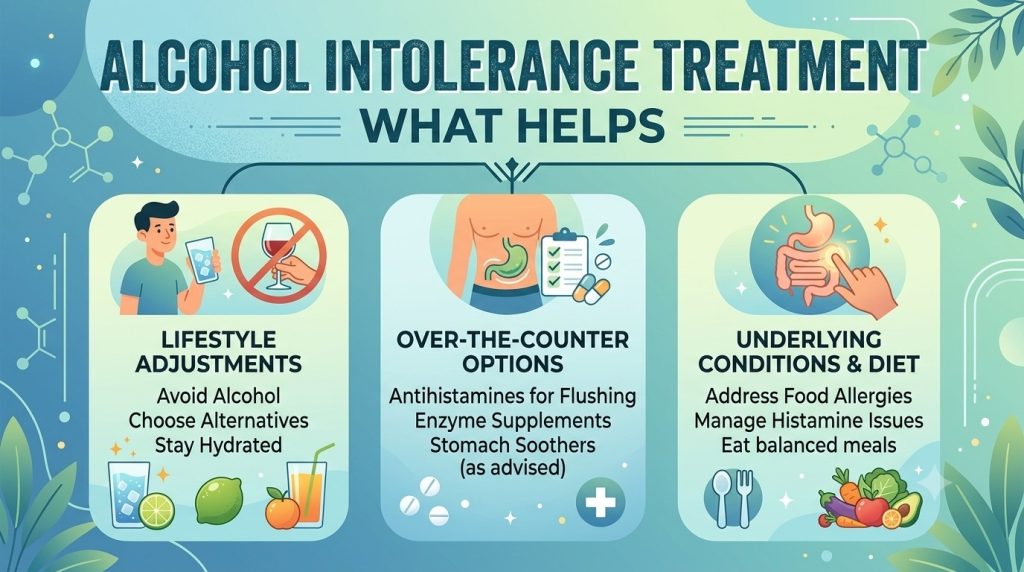
As there is no treatment for the underlying enzyme problem, alcohol intolerance treatment is mostly about avoidance. Antihistamines may help with mild symptoms such as flushing or a blocked nose, and knowing the exact cause of the reaction, such as a specific type of alcohol or alcohol additive such as sulfites, will make it easier to manage. There’s no cure, but there is true relief.
Perhaps you’re wondering if you can just deal with it silently, or if it’s time to have a serious discussion with a doctor. Perhaps your family member is suffering from this and you want to do something about it but aren’t quite sure.
Let’s explore what testing entails, which treatments actually do work, and what to do if this is more than just intolerance.
What Is Alcohol Intolerance in Simple Terms
Alcohol intolerance is your body’s inability to efficiently break down alcohol, usually due to reduced activity in an enzyme called ALDH2.
When that enzyme doesn’t work well, a byproduct called acetaldehyde builds up in your system and triggers the uncomfortable reactions you’ve probably noticed. It’s a metabolic issue, not a willpower issue, and it’s more common than most people realize.
Mayo Clinic notes that alcohol intolerance symptoms typically appear immediately after drinking, most commonly involving facial flushing and nasal congestion.
Looking for real answers about your symptoms? Call DeLand Treatment Solutions today.
Alcohol Intolerance Symptoms at a Glance
Alcohol intolerance symptoms tend to show up fast, often within minutes of the first sip.
The most common ones include:
- Facial or upper body flushing
- Stuffy or runny nose
- Rapid heartbeat
- Nausea or stomach discomfort
- Headache
Fact: Alcohol intolerance symptoms typically begin within minutes of drinking, not hours later.
Severe reactions like hives, swelling, or trouble breathing are less common and point toward a true allergy rather than simple intolerance. Those symptoms need urgent medical attention.
Causes of Alcohol Intolerance Worth Knowing
The causes of alcohol intolerance range from genetics you were born with to changes that build up gradually over time.
Common causes include:
- Genetic ALDH2 variants, which reduce your body’s ability to break down acetaldehyde
- Liver changes, including fatty liver or damage from long-term heavy drinking
- New medications, particularly certain antibiotics, antifungals, and antidepressants
- Aging, which naturally slows enzyme activity over time
Knowing which cause applies to you shapes which treatment approach actually makes sense.
Getting an Alcohol Intolerance Test
Getting an alcohol intolerance test usually starts with a conversation about your symptoms, not a single definitive lab result.
According to Mayo Clinic, a healthcare provider may use a skin test or blood test to check for allergy-type antibodies, since these results can help distinguish a true allergy from straightforward intolerance.
Common testing steps:
- A detailed symptom history, including timing and specific triggers
- A skin test to rule out an ingredient-based allergy
- A blood test checking for immune system markers
- Occasionally, genetic testing for the ALDH2 variant
Expert Advice: Keep a simple drink and symptom log before your appointment.
Testing can bring real clarity. Reach DeLand Treatment Solutions to learn more.
Can I Cure Alcohol Intolerance
No, alcohol intolerance can’t currently be cured, but that doesn’t mean you’re without options.
Because the root issue is enzyme function, no treatment permanently restores that enzyme’s activity. The realistic goal isn’t a cure; it’s effective management: avoiding triggers, reducing symptom severity when they occur, and understanding your own specific pattern well enough to make informed choices.
Alcohol Intolerance Treatment Options That Work
Alcohol intolerance treatment options are limited but genuinely effective when matched to your specific triggers.
Approach | What It Helps With |
Avoiding the trigger beverage | The most reliable way to prevent symptoms entirely |
Over-the-counter antihistamines | Mild flushing, itching, or nasal symptoms |
Prescription-strength antihistamines | More persistent or bothersome reactions |
Medication review with a doctor | Identifying and adjusting drug interactions |
Full avoidance of alcohol | Eliminating symptoms and any related health risk |
For a minor reaction, over-the-counter antihistamines can genuinely reduce discomfort. For anything more severe, a healthcare provider can prescribe something stronger or investigate other contributing factors.
Managing Alcohol Intolerance Symptoms
Managing alcohol intolerance day to day is mostly about pattern recognition and planning ahead, especially in social situations.
Practical strategies include:
- Identifying your exact trigger, whether it’s wine, beer, or a specific ingredient
- Reading labels for sulfites or other known allergens
- Carrying antihistamines if reactions are mild but recurring
- Reviewing new medications with a pharmacist before mixing them with alcohol
- Simply opting out of alcohol at social events without over-explaining
When Alcohol Intolerance Signals Something More
Sometimes new alcohol intolerance is purely genetic or age-related. Other times, it’s your liver flagging damage from years of heavy drinking.
Pay attention if intolerance symptoms show up alongside:
- Yellowing skin or eyes
- Persistent fatigue or abdominal discomfort
- Difficulty cutting back despite wanting to
- Drinking to manage stress, anxiety, or sadness
If any of that sounds familiar, the conversation is bigger than intolerance alone, and it’s worth having with someone who understands both the medical and behavioral sides.
Preparing for a Doctor’s Appointment
Preparing for your appointment ahead of time helps your provider get to an accurate answer faster.
Before you go, gather:
- A list of your symptoms and when they typically start
- Which specific drinks or ingredients seem to trigger reactions
- Any medications, vitamins, or supplements you currently take
- Questions you want answered, including whether you need to stop drinking entirely
Bringing this information in writing makes the appointment far more productive than trying to recall it all on the spot.
Alcohol Intolerance vs a Growing Dependence
It’s worth being honest with yourself about whether physical intolerance and a harder relationship with alcohol are tangled together.
Alcohol intolerance is a physical reaction. It doesn’t involve cravings, loss of control, or drinking despite consequences. If those elements are present alongside the physical symptoms, that’s a different, and more urgent, conversation to have.
Alcohol Intolerance Care at DeLand Treatment Solutions
DeLand Treatment Solutions offers confidential support for anyone sorting out where their symptoms end and a harder relationship with alcohol might begin. Our alcohol addiction treatment program provides an honest, judgment-free assessment for people who aren’t sure which category their drinking falls into.
Our clinical team includes providers who offer medication management for anyone navigating medication interactions tied to their symptoms, along with our dual diagnosis program for clients managing a mental health condition alongside their relationship with alcohol.
Whether you just need clarity about a physical reaction or you’re ready for a deeper conversation, our team meets you exactly where you are. DeLand Treatment Solutions is accredited by The Joint Commission and licensed in Florida.
If something about your drinking feels harder to explain than simple intolerance, contact us.
FAQs
What is alcohol intolerance?
Alcohol intolerance is a condition where the body cannot efficiently break down alcohol, most commonly because of a less active ALDH2 enzyme. This causes uncomfortable symptoms such as facial flushing, nausea, and a rapid heartbeat shortly after drinking, even after small amounts of alcohol.
What are the symptoms of alcohol intolerance?
Common symptoms include facial flushing, nasal congestion, headache, nausea, rapid heartbeat, and sometimes low blood pressure that develop within minutes of drinking alcohol. Symptoms vary in severity depending on the underlying cause and the amount or type of alcohol consumed.
What is the treatment for alcohol intolerance?
There is no cure for alcohol intolerance, so treatment focuses on preventing symptoms by avoiding alcohol or specific triggering beverages. For mild reactions, healthcare providers may recommend antihistamines, though these only reduce symptoms and do not correct the underlying metabolic problem.
Is there a test for alcohol intolerance?
There is no single definitive test for alcohol intolerance. Healthcare providers may recommend genetic testing for ALDH2 variants, allergy testing when an allergy is suspected, and a detailed review of symptoms, medical history, and alcohol consumption patterns to identify the underlying cause.
Can I cure alcohol intolerance?
No, alcohol intolerance cannot currently be cured because the underlying enzyme deficiency or genetic variation cannot be reversed. The most effective way to prevent symptoms is avoiding alcohol or the specific ingredient responsible for triggering the reaction whenever possible.
What causes alcohol intolerance?
Alcohol intolerance is commonly caused by inherited ALDH2 enzyme deficiency, but it may also develop because of certain medications, liver disease, aging, or sensitivity to ingredients such as sulfites or histamines found in some alcoholic beverages.
Do antihistamines actually help with alcohol intolerance?
Yes, antihistamines may reduce mild symptoms such as flushing, itching, or nasal congestion in some people. However, they do not improve alcohol metabolism or prevent the underlying reaction, so they should not be relied upon as a long-term solution.
Is alcohol intolerance dangerous?
Most cases cause uncomfortable but non-life-threatening symptoms. However, severe reactions such as difficulty breathing, significant swelling, or widespread hives may indicate an allergic reaction rather than intolerance and require immediate emergency medical evaluation and treatment.
How is alcohol intolerance different from an alcohol allergy?
Alcohol intolerance is usually caused by difficulty metabolizing alcohol or its ingredients, while an alcohol allergy involves the immune system reacting to alcohol or another component of the beverage. Allergic reactions can be significantly more severe and potentially life-threatening.
Can medications cause alcohol intolerance?
Yes. Certain antibiotics, antifungal medications, antidepressants, and other drugs can interfere with alcohol metabolism or increase sensitivity, causing new or worsening intolerance symptoms. Always ask your healthcare provider or pharmacist whether alcohol should be avoided while taking medication.
Should I stop drinking completely if I have alcohol intolerance?
For many people, avoiding alcohol completely is the most reliable way to prevent symptoms and reduce potential health risks. If reactions occur consistently or become more severe over time, it’s important to discuss them with a healthcare professional.
When should I talk to a professional about my drinking, not just my symptoms?
Consider speaking with a healthcare professional if drinking has become difficult to control, you frequently drink to cope with stress or emotions, or alcohol continues causing problems despite physical reactions. Early support can address both alcohol use and any underlying health concerns.
References
- Mayo Clinic – Alcohol Intolerance: Diagnosis & Treatment
- Mayo Clinic – Alcohol Intolerance: Symptoms & Causes
- NIAAA – Molecule Hijacks Enzyme to Boost Alcohol Metabolism
- Mayo Clinic – Allergy Testing
- SAMHSA National Helpline
- DeLand Treatment Solutions – Alcohol Addiction Treatment
- DeLand Treatment Solutions – Medication Management
- DeLand Treatment Solutions – Dual Diagnosis Program
Medical Disclaimer: This article is for informational purposes only and is not a substitute for professional medical advice, diagnosis, or treatment; please consult a qualified healthcare provider or visit DeLand Treatment Solutions for personalized guidance.