If you have a bottle of Benadryl in your medicine cabinet, you may be surprised to find yourself asking whether or not this medication can be addictive. But if you or a member of your family began using it on a nightly basis only to get to sleep, that’s a question that needs to be answered.
Yes, Benadryl is addictive, particularly when taken in large doses or frequently. The active ingredient, diphenhydramine, produces sedation and has an impact on dopamine activity in the brain’s reward system. Although Benadryl does not require a prescription, over time it can cause tolerance and physical dependence, as well as psychological cravings.
It is easy to purchase and seems safe, so Benadryl abuse is often not noted until it becomes a habit. When a family member is supporting a loved one in addiction recovery, they may not realize the issue or think that an allergy medication can’t be the cause.
At the end of this article, you will know what Benadryl is used for, what Benadryl is great for and when it may become dangerous, and exactly what the real signs of dependency appear like.
Worried about Benadryl use in your family? Call DeLand Treatment Solutions for confidential guidance.
Is Benadryl Addictive?
Benadryl is not addictive in the same way opioids or benzodiazepines are, but it absolutely can lead to dependence with regular use. The sedative effects trigger dopamine activity that reinforces continued use.
A published case review in Neurology: Clinical Practice documented chronic diphenhydramine abuse and withdrawal, confirming that long-term misuse of this common antihistamine can produce genuine physical dependence.
People often start using Benadryl innocently for allergies or occasional sleeplessness, then gradually increase their dose without realizing tolerance has developed.
What Is Benadryl Used For?
Benadryl is an antihistamine most commonly used to treat allergy symptoms, cold symptoms, and occasional sleeplessness. Its generic name is diphenhydramine, and it works by blocking histamine receptors in the body.
Typical uses include:
- Seasonal or environmental allergies
- Hives, itching, and mild allergic reactions
- Motion sickness prevention
- Short-term insomnia relief
- Cold symptom relief in combination products
It’s meant for short-term, occasional use rather than a nightly routine.
What Is Benadryl Good For Exactly?
Benadryl is genuinely useful for fast relief of allergic reactions and occasional sleep trouble when used as directed. The problem starts when people rely on it beyond its intended purpose.
It works well for:
- Sudden allergic reactions requiring quick relief
- Reducing itching from insect bites or rashes
- Helping with sleep during a single rough night
- Managing motion sickness during travel
Used sparingly, Benadryl is safe and effective. Used constantly, it becomes a different story.
Not sure if your Benadryl use has become a habit? DeLand Treatment Solutions can help.
Side Effects of Benadryl to Know
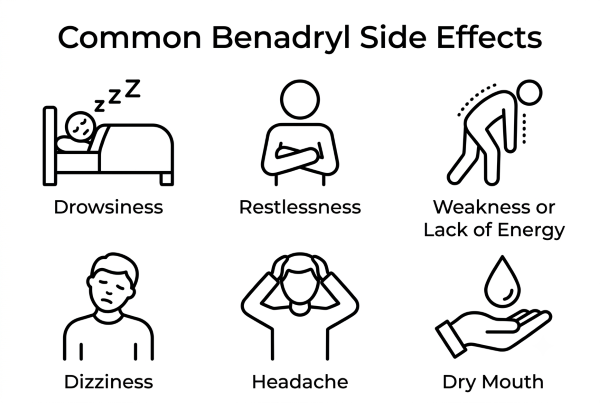
Common side effects of Benadryl include drowsiness, dry mouth, dizziness, and blurred vision, even at recommended doses. These effects intensify significantly with higher or more frequent use.
Common side effects include:
Mild Effects | Serious Effects |
Drowsiness, dry mouth | Rapid heart rate |
Blurred vision | Confusion or hallucinations |
Dizziness | Seizures |
Constipation | Difficulty urinating |
Older adults are especially sensitive to these effects, including confusion and increased fall risk.
Risks of Using Benadryl Long-Term
The risk of using Benadryl long-term goes beyond simple drowsiness. Chronic use has been linked to cognitive decline, cardiovascular strain, and a genuine risk of dependence.
Clinical research on anticholinergic medications has associated prolonged use, particularly in older adults, with cognitive impairment and an increased risk of long-term memory problems.
Fact: Physical dependence on Benadryl can develop within just a few weeks.
Other long-term risks include:
- Increased tolerance requiring higher doses
- Withdrawal symptoms when stopping suddenly
- Heightened risk when combined with alcohol or opioids
- Masking underlying anxiety or sleep disorders instead of treating them
Signs You May Be Addicted to Benadryl
Recognizing Benadryl dependence early makes recovery much easier. The signs are often subtle because the medication is legal and widely available.
Watch for these warning signs:
- Needing Benadryl to fall asleep every single night
- Taking higher doses than the label recommends
- Feeling anxious or unable to cope without it
- Hiding or minimizing how much you’re using
- Continuing use despite side effects like confusion or fatigue
Benadryl Withdrawal Symptoms
Benadryl withdrawal can include insomnia, irritability, nausea, and flu-like symptoms once regular use stops. Symptoms typically peak within the first few days.
Addiction researchers note that diphenhydramine withdrawal often mirrors symptoms seen with other sedative medications, including rebound insomnia and heightened anxiety during the first week of cessation.
Expert Advice: Doctors recommend using Benadryl short term only, never nightly for sleep.
Experiencing withdrawal after stopping Benadryl? DeLand Treatment Solutions offers medical support.
Is Benadryl Addictive for Teens Too?
Yes, Benadryl misuse is a genuine concern among teens and young adults, partly due to social media trends encouraging high-dose use. This population is particularly vulnerable to serious side effects.
Families should watch for:
- Empty or hidden Benadryl packaging
- Requests to purchase Benadryl frequently
- Reports of dizziness, confusion, or hallucinations
- Combining Benadryl with alcohol or other substances
Early conversations about OTC medication misuse can prevent more serious substance use down the road.
Treatment Options for Benadryl Dependence
Effective treatment for Benadryl dependence typically involves medical supervision during withdrawal followed by therapy to address the underlying cause of use. Simply stopping cold turkey isn’t always safe.
Helpful treatment options include:
- Medically supervised detox for safe withdrawal
- Cognitive behavioral therapy (CBT) to address root causes
- Treatment for co-occurring anxiety or sleep disorders
- Residential care when dependence is combined with other substance use
- Aftercare planning to prevent relapse
Get Help for Benadryl Addiction Today
DeLand Treatment Solutions understands that dependence doesn’t always start with an illegal drug. Many clients arrive after years of relying on over-the-counter medications like Benadryl to cope with anxiety, insomnia, or untreated stress.
Our DeLand, Florida facility offers a full continuum of dual-diagnosis care, including residential treatment, medically supervised detox, and personalized aftercare planning built around each client’s needs.
What makes our approach different:
- A 12-bed residential setting for personalized, focused care
- Joint Commission-accredited programs and licensed clinical staff
- Integrated treatment for substance use and mental health together
- Family involvement woven into the recovery process
- A private, comfortable environment on two peaceful acres
If Benadryl use has quietly become something more, you don’t have to untangle it alone. Call DeLand Treatment Solutions or visit our contact page to get started.
FAQs
Is Benadryl addictive if taken every night?
Yes. Taking Benadryl every night for sleep can lead to tolerance, meaning higher doses may eventually be needed to achieve the same effect. Some people also develop physical dependence after regular use. Because of these risks, Benadryl is intended for short-term or occasional use rather than nightly sleep support.
What is Benadryl used for besides allergies?
Besides treating allergy symptoms, Benadryl is commonly used for occasional insomnia, motion sickness, itching from insect bites, and mild cold symptoms. It may also help relieve allergic skin reactions. However, it is not recommended as a long-term treatment for sleep difficulties or chronic medical conditions.
What is Benadryl good for in emergencies?
Benadryl can provide quick relief for mild allergic reactions, including hives, itching, and swelling caused by allergies. Although it may help reduce symptoms while awaiting medical care, it should never replace emergency treatment, such as epinephrine, for severe or life-threatening allergic reactions like anaphylaxis.
What are the most common side effects of Benadryl?
Common Benadryl side effects include drowsiness, dry mouth, dizziness, blurred vision, and reduced coordination. Some people, particularly older adults or those taking higher doses, may also experience confusion, rapid heartbeat, urinary retention, or, in rare cases, agitation and hallucinations requiring prompt medical evaluation.
What is the risk of using Benadryl long term?
Long-term Benadryl use has been associated with tolerance, physical dependence, impaired memory, cognitive decline, and increased fall risk, especially among older adults. It may also mask underlying sleep or anxiety disorders that require proper evaluation and safer, evidence-based long-term treatment strategies instead.
Can you overdose on Benadryl?
Yes. Taking excessive amounts of Benadryl can cause severe drowsiness, confusion, hallucinations, seizures, dangerous heart rhythm abnormalities, breathing problems, and, in extreme cases, death. The risk increases significantly when Benadryl is combined with alcohol, opioids, or other medications that depress the central nervous system.
What are signs of Benadryl withdrawal?
People stopping regular Benadryl use may experience withdrawal symptoms such as insomnia, irritability, anxiety, sweating, nausea, restlessness, and flu-like discomfort. Symptoms often begin within one or two days after discontinuation, making medical guidance helpful for individuals who have used it consistently for extended periods.
Why do teens misuse Benadryl?
Some teenagers misuse high doses of Benadryl hoping to experience hallucinations, sedation, or intoxication, often influenced by social media trends or peer pressure. This behavior is extremely dangerous because it can cause seizures, irregular heart rhythms, severe confusion, accidental injuries, and potentially life-threatening complications.
Is it safe to combine Benadryl with alcohol?
No. Combining Benadryl with alcohol significantly increases sedation, dizziness, slowed reaction time, and impaired coordination. Together, they can also suppress breathing and raise the risk of overdose, falls, motor vehicle accidents, and other serious complications, particularly in older adults or those with other medical conditions.
How is Benadryl dependence treated?
Treatment generally begins with a medically supervised reduction or discontinuation plan, followed by therapy to address the reasons behind ongoing Benadryl use. Managing underlying conditions such as insomnia, anxiety, or co-occurring substance use disorders is essential for reducing relapse risk and supporting long-term recovery.
Can Benadryl misuse lead to other substance use issues?
Yes. Using Benadryl to cope with sleep problems, anxiety, or emotional distress may delay proper treatment and increase reliance on other substances over time. Addressing both the underlying condition and any medication misuse together typically provides the strongest foundation for lasting recovery and improved wellbeing.
Where can I get help for Benadryl addiction in Florida?
DeLand Treatment Solutions provides dual-diagnosis residential treatment for individuals struggling with Benadryl misuse, medication dependence, and co-occurring mental health conditions. If you or a loved one needs professional support, call (386) 866-8689 to learn more about available treatment programs and personalized care options.
References
- National Institutes of Health: Chronic Diphenhydramine Abuse and Withdrawal Study
- Cleveland Clinic: Diphenhydramine (Benadryl)
- Mayo Clinic: Diphenhydramine Oral Route
- SAMHSA: Over-the-Counter Medication Misuse
- CDC: Medication Safety Basics
- National Institute on Drug Abuse: Commonly Misused Drugs
- DeLand Treatment Solutions: Residential Treatment Program
- DeLand Treatment Solutions: Facility Overview
Medical Disclaimer: This article is for informational purposes only and is not a substitute for professional medical or mental health advice; please consult a qualified provider or contact DeLand Treatment Solutions for personalized guidance.