If you haven’t used kratom in a while and you are wondering why you haven’t been able to get a good night’s sleep since, you’re not imagining it, and you’re not alone. One of the most frequent and common reasons for searching for answers at 3 a.m. is that feeling of being exhausted yet wired and tired.
The insomnia associated with kratom withdrawal tends to range from 3 to 7 days for the most severe symptoms, and some individuals find that their sleep is disrupted for weeks. Insomnia can reach its highest point on days 2 to 4, along with anxiety, muscle pain and cravings. As the body acclimatizes itself, sleep slowly improves, although the psychological compulsion to continue taking kratom may persist beyond the physical sensations.
Because kratom is considered a natural and safe supplement, many individuals are surprised to find that it is associated with withdrawal symptoms. Your body has adapted to it more than you think if you have been using it every day for energy, pain or anxiety.
Keep reading to learn what kratom is, what kratom is used for, and exactly what to expect during withdrawal so you know what’s normal and when it’s time to get help.
Struggling with sleepless nights during withdrawal? Call DeLand Treatment Solutions for support.
What Is Kratom?
Kratom is a plant native to Southeast Asia whose leaves contain compounds that act on opioid receptors in the brain. It’s sold as capsules, powders, and teas, often labeled as a natural supplement.
The Drug Enforcement Administration classifies kratom as a “drug and chemical of concern,” noting its opioid-like effects and rising role in emergency room visits and dependence cases.
Kratom isn’t regulated the same way prescription medications are, which means potency and purity can vary significantly from one product to the next.
What Is Kratom Used For?
People commonly use kratom to self-manage pain, boost energy, or ease anxiety without a prescription. It’s especially popular among people trying to avoid prescription opioids or manage chronic discomfort on their own.
Common reasons people use kratom include:
- Chronic pain management
- Boosting energy or focus
- Easing anxiety or low mood
- Managing opioid withdrawal symptoms
- General relaxation or stress relief
The problem is that regular use, even for these reasons, can quietly build physical dependence.
Kratom Withdrawal Symptoms to Expect
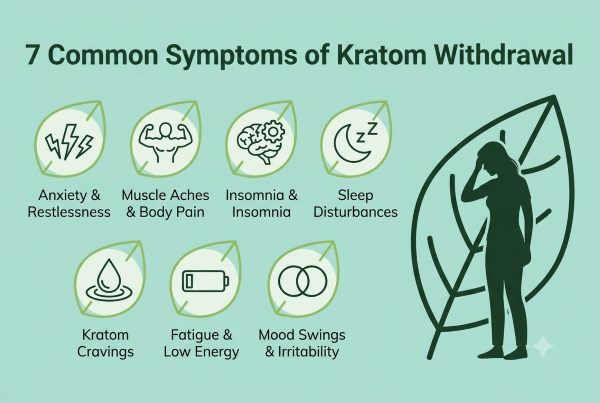
Kratom withdrawal symptoms closely resemble opioid withdrawal, including muscle aches, nausea, and significant sleep disturbances. Symptoms vary in intensity depending on how much and how long someone used kratom.
Common withdrawal symptoms include:
- Insomnia and disrupted sleep
- Muscle aches or spasms
- Nausea, vomiting, or diarrhea
- Anxiety, irritability, or restlessness
- Sweating, chills, or runny nose
- Depressed mood and intense cravings
Kratom Withdrawal Timeline Explained
Kratom withdrawal generally follows a predictable pattern, though individual timelines vary based on dosage and duration of use. Most people notice symptoms within the first day.
Timeframe | What Typically Happens |
6 to 12 hours | Early anxiety, restlessness, mild cravings |
12 to 48 hours | Symptoms intensify, insomnia and nausea begin |
Days 2 to 4 | Peak symptoms, including worst insomnia and body aches |
Days 5 to 7 | Physical symptoms start easing |
Weeks after | Lingering sleep issues, anxiety, or low mood possible |
Fact: Kratom withdrawal symptoms often begin twelve to twenty-four hours after use.
Not sure if what you’re feeling is withdrawal? DeLand Treatment Solutions can help you find out.
How Long Does Kratom Stay in Your System?
Kratom typically stays in your system for one to nine days, depending on dosage, frequency of use, and individual metabolism. Regular, heavy users tend to clear it more slowly than occasional users.
Factors that affect how long kratom stays in your system include:
- Frequency and duration of use
- Dosage amount taken regularly
- Individual metabolism and liver function
- Hydration and overall health
This is one reason withdrawal timing and severity can look so different from person to person.
Why Kratom Withdrawal Insomnia Happens
Kratom affects opioid and neurotransmitter pathways involved in relaxation and sleep regulation. When kratom use stops, the brain temporarily struggles to regulate sleep on its own.
Research on kratom withdrawal notes that psychological symptoms like insomnia and anxiety often persist longer than physical symptoms and are a leading driver of relapse during recovery.
This is exactly why insomnia can feel like the hardest part of withdrawal, even after nausea and body aches fade.
Expert Advice: Tapering kratom gradually under medical guidance reduces withdrawal severity and discomfort.
Kratom Withdrawal Treatment Options
Kratom withdrawal treatment typically combines medical support, symptom management, and behavioral therapy to address both physical and psychological symptoms. There are currently no FDA-approved medications specifically for kratom withdrawal, so care is individualized.
The FDA has warned consumers about safety concerns associated with kratom use, reinforcing the importance of professional guidance rather than attempting withdrawal without medical support.
Helpful treatment options include:
- Medically supervised detox for symptom management
- Sleep-focused support during acute withdrawal
- Cognitive behavioral therapy (CBT) for anxiety and cravings
- Treatment for any co-occurring substance use
- Ongoing counseling to prevent relapse
Persistent insomnia doesn’t have to mean starting kratom again. DeLand Treatment Solutions can help.
When to Seek Help for Kratom Withdrawal
It’s time to seek professional help if withdrawal symptoms feel unmanageable, if cravings keep pulling you back, or if kratom use is combined with other substances. Attempting withdrawal completely alone increases the risk of relapse.
Consider reaching out if you notice:
- Insomnia lasting well beyond a week
- Intense cravings that feel impossible to resist
- Worsening anxiety or depression
- Combined use of kratom with alcohol or other drugs
- Repeated failed attempts to quit on your own
Get Help for Kratom Withdrawal Today
DeLand Treatment Solutions understands how easily kratom dependence can develop, especially when it starts as an attempt to manage pain, stress, or sleep. Our clinical team treats withdrawal and any underlying mental health needs together, not in isolation.
Our DeLand, Florida facility offers a full continuum of dual-diagnosis care, including residential treatment in a private, supportive setting designed to help you through the hardest days of withdrawal safely.
What sets our approach apart:
- A 12-bed residential program for personalized, focused care
- Joint Commission-accredited programs and licensed clinical staff
- Integrated treatment for substance use and mental health together
- Family involvement woven into the recovery process
- A calm, restorative environment on two private acres
If kratom withdrawal insomnia has taken over your nights, you don’t have to push through it alone. Call DeLand Treatment Solutions or visit our contact page to get started.
FAQs
How long does kratom withdrawal insomnia last?
Kratom withdrawal insomnia usually peaks between the second and fourth day after stopping use, then gradually improves over the following week. While most people begin sleeping better within seven days, mild sleep disturbances or vivid dreams may continue for several weeks, particularly after heavy or long-term kratom use.
What is kratom exactly?
Kratom is a tropical tree native to Southeast Asia whose leaves contain compounds that affect opioid receptors in the brain. It is commonly sold as powders, capsules, extracts, or teas and marketed as an herbal supplement, despite having no FDA-approved medical use in the United States.
What is kratom used for?
People commonly use kratom to relieve pain, boost energy, reduce anxiety, or self-manage opioid withdrawal symptoms. Although some users report perceived benefits, these uses have not been proven safe or effective, and regular use carries a genuine risk of developing tolerance, dependence, and addiction over time.
What are common kratom withdrawal symptoms?
Common kratom withdrawal symptoms include insomnia, muscle aches, nausea, anxiety, sweating, irritability, restless legs, diarrhea, and intense cravings. These symptoms often resemble mild to moderate opioid withdrawal and can vary depending on how long, how often, and how heavily kratom was used.
How long does kratom withdrawal typically last overall?
Most acute physical withdrawal symptoms improve within three to seven days after stopping kratom. However, lingering psychological symptoms, including anxiety, mood changes, cravings, and sleep disturbances, may continue for several weeks, particularly among people who used high doses or consumed kratom daily for extended periods.
How long does kratom stay in your system?
Kratom generally remains in the body for one to nine days, although detection times vary based on dosage, frequency of use, metabolism, hydration, and overall health. Heavy, long-term users may retain kratom metabolites longer than occasional users because the substance accumulates with repeated exposure.
What kratom withdrawal treatment options are available?
Treatment may include medically supervised detoxification, medications to ease withdrawal symptoms, cognitive behavioral therapy, relapse prevention planning, and treatment for co-occurring mental health or substance use disorders. A personalized treatment plan generally provides the best chance for long-term recovery and sustained symptom improvement.
Is kratom withdrawal dangerous?
Kratom withdrawal is rarely life-threatening by itself, but it can cause significant physical and emotional distress that makes quitting difficult. Medical supervision is especially valuable for people with heavy use, underlying health conditions, or co-occurring substance use because it improves comfort and reduces relapse risk.
Can you safely detox from kratom at home?
Some people with mild dependence may complete withdrawal at home, but professional guidance is strongly recommended for long-term or heavy users. Medical support can help manage symptoms, monitor complications, reduce discomfort, and improve the likelihood of completing detox without returning to kratom use.
Why does kratom withdrawal cause insomnia specifically?
Kratom influences brain pathways involved in relaxation, sleep regulation, and reward. When regular use suddenly stops, the brain temporarily struggles to restore its normal balance, often leading to difficulty falling asleep, frequent awakenings, restless nights, and vivid dreams until recovery progresses over several days.
Can kratom use lead to addiction?
Yes. Regular or high-dose kratom use can lead to tolerance, physical dependence, and addiction in some individuals. Over time, people may need increasing amounts to achieve the same effects and continue using despite negative consequences affecting their health, relationships, work, or overall quality of life.
Where can I get help for kratom withdrawal in Florida?
DeLand Treatment Solutions provides dual-diagnosis residential treatment for individuals struggling with kratom dependence and co-occurring mental health conditions in DeLand, Florida. If you or a loved one needs professional support, call (386) 866-8689 to learn more about personalized treatment options and available recovery programs.
References
- National Institute on Drug Abuse: Kratom
- U.S. Food and Drug Administration: Kratom Safety Information
- Drug Enforcement Administration: Kratom Drug Fact Sheet
- Cleveland Clinic: Kratom
- SAMHSA: Substance Use Treatment Resources
- Mayo Clinic: Insomnia
- DeLand Treatment Solutions: Residential Treatment Program
- DeLand Treatment Solutions: Facility Overview
Medical Disclaimer: This article is for informational purposes only and is not a substitute for professional medical or mental health advice; please consult a qualified provider or contact DeLand Treatment Solutions for personalized guidance.