When you or someone you care about lies every day, including about things that do not appear to matter, and it has now begun to put strain on relationships, trust, and day-to-day living, you are not dealing with dishonesty in the sense most people think of it.
Compulsive lying is the habit of repeating, often pointless lying even when the truth would be more convenient or when the lies bring actual harm. It is not a formal diagnosis by itself but often occurs with other conditions such as anxiety, depression, or personality disorders. The most common treatment is cognitive behavioral therapy, which assists in determining the triggers and thought process behind the behavior and develops healthier and more honest reactions.
This guide unravels the nature of compulsive lying, whether it is a mental illness, the role of CBT in the treatment, and the actual recovery process.
What Is Compulsive Lying?
Compulsive lying is a habitual kind of lying that persists even when the lies have no apparent use, no true advantage and frequently lead to the destruction of relationships and trust.
Compulsive lying is usually habitual in nature and automatic, unlike the occasional lies that are told to prevent conflict or to avoid hurting one’s feelings. It may occur irrespective of the circumstances, in some cases even where telling the truth would have been equally easy.
Common characteristics include:
- Lying frequently, even about small or unnecessary details
- Elaborate stories that grow more detailed over time
- Lying without an obvious external motive
- Difficulty stopping the pattern despite wanting to
Trying to understand a loved one’s compulsive lying, or your own? Call DeLand Treatment Solutions.
Compulsive Lying Vs. Pathological Lying
Compulsive lying and pathological lying are often used interchangeably, though there is a meaningful distinction between the two.
Type | Key Characteristics |
Compulsive lying | Habitual and reflexive, often without a clear motive |
Pathological lying | More elaborate and self-serving, designed to impress or elevate the person’s image |
Both involve chronic dishonesty, but the underlying psychological drivers can differ. Pathological lying, sometimes called pseudologia fantastica, was first clinically described in 1891 and often involves detailed, believable fabrications that may include some truthful elements.
Is Compulsive Lying A Mental Illness?
Compulsive lying is not currently recognized as a standalone diagnosis in the DSM-5, though it is a widely acknowledged behavioral pattern among mental health professionals.
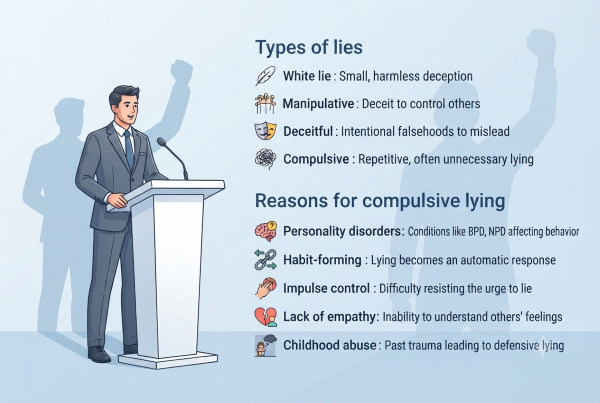
Instead, compulsive lying often appears as a symptom or coping mechanism connected to other conditions, including:
- Anxiety disorders
- Depression
- Antisocial personality disorder
- Narcissistic personality disorder
- Borderline personality disorder
- Factitious disorder
Research on pathological lying notes that while it is not currently classified as a standalone diagnosis, growing research supports the idea that it may deserve formal recognition as a distinct diagnostic entity, given its measurable patterns and impact.
Fact: Pathological lying was first clinically described by a physician in 1891, over 130 years ago.
Effects Of Compulsive Lying
The effects of compulsive lying extend far beyond the lies themselves, often damaging the relationships and trust that matter most.
Effects on relationships:
- Erosion of trust with partners, friends, and family
- Isolation as loved ones pull away
- Damaged credibility, even when telling the truth
Effects on the individual:
- Persistent guilt, shame, or anxiety
- Low self-esteem
- Increased stress from maintaining fabricated stories
- Difficulty forming genuine, secure relationships
Clinical literature on compulsive lying describes internal guilt as a common thread among those who struggle with it, noting that many compulsive liars experience real distress and low self-esteem tied to their own behavior, even when the lies are not malicious in intent.
Watching a loved one struggle with compulsive lying is painful and confusing. DeLand Treatment Solutions can help.
What Is Cognitive Behavioral Therapy (CBT)?
Cognitive behavioral therapy, or CBT, is a structured form of psychotherapy that helps people identify and change unhelpful thought patterns that drive their behavior.
CBT is based on the idea that thoughts, feelings, and behaviors are all connected, meaning changing distorted thinking can meaningfully change behavior over time. It is one of the most widely researched and used forms of therapy for a broad range of mental health conditions.
Compulsive Lying Treatment
Compulsive lying treatment typically targets whatever underlying condition or emotional pattern is driving the behavior, since the lying itself is often a symptom rather than the root cause.
Common treatment approaches include:
- Assessment: Identifying any underlying conditions contributing to the lying
- Cognitive behavioral therapy: Addressing the thought patterns and triggers behind the behavior
- Dialectical behavior therapy: Building emotional regulation skills, especially when lying is tied to intense emotions
- Trauma-informed therapy: Addressing past experiences that may fuel the pattern
- Group therapy: Providing accountability and outside perspective
Clinical research on treatment approaches for pathological lying identifies CBT as the most widely recommended method, helping individuals identify the triggers and thought patterns that precede lying and develop healthier alternative responses.
Is There Treatment for Compulsive Lying?
Yes, there is treatment for compulsive lying, and meaningful change is possible with the right therapeutic approach and genuine motivation from the person involved.
Recovery generally depends on:
- Willingness to acknowledge the pattern honestly
- Identifying and treating any underlying mental health conditions
- Consistent engagement with a skilled therapist over time
- Building healthier coping strategies to replace the lying
Expert Advice: Address the underlying emotional trigger, not just the lie itself, for lasting change.

How To Stop Lying Addiction
How to stop lying addiction, or compulsive lying, generally requires more structure than simply deciding to be more honest.
Helpful steps include:
- Identify triggers: Notice the situations or emotions that tend to prompt lying
- Pause before responding: Build in a moment to choose a more intentional response
- Practice small honesty wins: Start with low-stakes situations to build confidence
- Work with a therapist: Professional support significantly improves long-term success
- Address shame directly: Guilt often fuels further lying rather than preventing it
CBT Techniques For Compulsive Lying
CBT for compulsive lying uses specific techniques to interrupt the pattern and build more honest, intentional responses over time.
- Trigger identification: Recognizing the emotional or situational cues that precede lying
- Cognitive restructuring: Challenging the beliefs that make lying feel necessary
- Impulse control practice: Learning to pause before responding automatically
- Role-playing exercises: Practicing honest responses in a safe therapeutic setting
- Relapse prevention planning: Preparing for high-risk situations where lying feels tempting
Compulsive Lying and Personality Disorders
Compulsive lying frequently overlaps with certain personality disorders, and understanding this connection often shapes the right treatment path.
- Antisocial personality disorder: Involves reduced empathy and a self-image that lying helps maintain
- Narcissistic personality disorder: Lying may protect a fragile or inflated self-image
- Borderline personality disorder: Emotional dysregulation can drive impulsive dishonesty
When lying is connected to a personality disorder, treatment typically needs to address the broader condition, not just the lying behavior itself, for meaningful and lasting progress.
DeLand Treatment Solutions: Treatment for Compulsive Lying
Compulsive lying can quietly wear down trust in relationships, one small lie at a time. DeLand Treatment Solutions offers evidence-based care to help address what’s driving the behavior, not just the behavior itself.
Whether it’s tied to anxiety, trauma, or a personality disorder, our team is here to help you or your loved one rebuild trust and find healthier ground.
Reach out through our contact page or call us to speak with someone who genuinely understands.
FAQs
Can compulsive lying be cured completely?
While there is no single cure for compulsive lying, many people experience significant and lasting improvement through consistent therapy. Addressing underlying mental health conditions, developing healthier coping strategies, and practicing honesty over time can substantially reduce the behavior and improve relationships.
Is compulsive lying the same as being a sociopath?
No. Although compulsive lying can occur in people with antisocial personality disorder, it is also seen in individuals with anxiety, depression, trauma histories, personality disorders, and other mental health conditions. Compulsive lying alone does not indicate someone is a sociopath.
How can I tell if someone is a compulsive liar?
Common signs include lying frequently across many situations, telling elaborate or inconsistent stories, lying even when there is little obvious benefit, and continuing to distort the truth despite evidence or negative consequences affecting relationships and daily life.
Can trauma cause compulsive lying?
Yes. For some people, compulsive lying develops as a coping strategy following traumatic experiences. If honesty previously resulted in punishment, rejection, or emotional harm, lying may become an automatic way of seeking safety, control, or emotional protection.
How can family members support someone who lies compulsively?
Family members can help by approaching the issue with empathy rather than blame, encouraging professional treatment, setting healthy boundaries, and reinforcing honest communication. Maintaining consistency while avoiding enabling behaviors supports both recovery and healthier family relationships over time.
Is medication used to treat compulsive lying?
There is no medication specifically approved to treat compulsive lying. However, medications may be recommended when underlying conditions such as anxiety, depression, obsessive-compulsive disorder, or other mental health disorders contribute to the behavior and require treatment.
How long does treatment for compulsive lying typically take?
Treatment varies depending on the underlying causes, symptom severity, and individual commitment to therapy. While some people notice meaningful improvement within a few months, long-term behavioral change often requires ongoing therapeutic support and consistent practice of healthier habits.
Can compulsive lying be a symptom of OCD?
In some cases, yes. People with obsessive-compulsive disorder may become preoccupied with fears about having lied or acted dishonestly, leading to compulsive reassurance-seeking or repeated confessing rather than intentionally deceiving others for personal gain.
Why do compulsive liars sometimes seem unaware of their lying?
For some individuals, lying becomes such a deeply ingrained habit that it occurs automatically with little conscious awareness. Therapy helps increase insight into these patterns, making it easier to recognize triggers and replace dishonesty with healthier responses.
Can rebuilding trust after compulsive lying really happen?
Yes. Rebuilding trust is possible, but it requires patience, consistent honesty, accountability, and sustained behavioral change. Professional therapy can support both the individual and their loved ones as they work toward restoring healthy communication and stronger relationships.
References
- American Psychological Association – Pathological Lying
- National Institutes of Health – Pseudologia Fantastica
- American Journal of Psychotherapy – Pathological Lying: Psychotherapists’ Experiences and Ability to Diagnose
- Substance Abuse and Mental Health Services Administration
- American Psychiatric Association – DSM-5-TR
- National Institute of Mental Health – Personality Disorders
- Mayo Clinic – Personality Disorders
- MedlinePlus – Mental Health
- GoodTherapy – Compulsive Lying: Signs, Causes, and Treatment
- DeLand Treatment Solutions – Personality Disorder Treatment
Disclaimer: This information is for educational purposes only and should not replace professional medical or psychological advice. If you or someone you know is in crisis, please contact 988 (Suicide and Crisis Lifeline) or seek immediate emergency care. For more information, visit DeLand Treatment Solutions.