When you have a baby and you are not experiencing happiness, but instead you are feeling overwhelmed, numb, or just not doing something that you think other people should do, then hear this first, you are not a bad parent and you are not alone.
Dealing with postpartum depression begins with the acceptance of the condition as a medical problem, rather than a personal failure. Treatment usually involves a combination of therapy and support groups with or without medication and the practical provision of such support as rest, childcare help and open communication with a partner or family. When treated properly and supported, most individuals will notice a significant difference in three to six months.
Postpartum depression is something that is much more prevalent among new parents than most people would actually expect, but is still something that people are whispered about rather than openly discuss. That silence adds that much more to an already difficult season.
This guide walks through what postpartum depression actually looks like, how it differs from the baby blues, how long it tends to last, and real treatment options and support to help you or someone you love start feeling like themselves again.
Postpartum Depression Vs. Baby Blues
Postpartum depression and the baby blues are not the same, even though they are often confused with one another.
The baby blues affect the majority of new parents and typically involve mood swings, crying spells, and mild anxiety that resolve on their own within about two weeks. Postpartum depression is more intense, longer lasting, and interferes with daily functioning.
Factor | Baby Blues | Postpartum Depression |
Onset | First few days after birth | Can begin within weeks of birth |
Duration | Resolves within 1 to 2 weeks | Lasts weeks to months without treatment |
Intensity | Mild mood swings | Persistent sadness or emptiness |
Daily impact | Minimal | Interferes with caring for self or baby |
Treatment needed | Usually resolves on its own | Often requires professional support |
If symptoms last longer than two weeks or feel like they are getting worse, it is time to reach out to a healthcare provider.
Postpartum Depression Symptoms
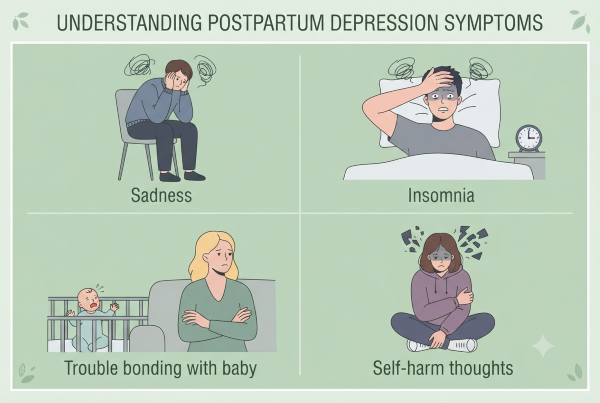
Postpartum depression symptoms go beyond typical new-parent exhaustion and often interfere with daily functioning and bonding with the baby.
Common symptoms include:
- Persistent sadness, emptiness, or hopelessness
- Loss of interest in things you used to enjoy
- Difficulty bonding with your baby
- Overwhelming fatigue beyond normal sleep deprivation
- Changes in appetite or sleep unrelated to the baby’s schedule
- Intense irritability or anger
- Feelings of guilt or inadequacy as a parent
- Withdrawing from friends and family
- In severe cases, thoughts of harming yourself or your baby
The Office on Women’s Health notes that postpartum depression symptoms are more severe and longer lasting than the baby blues, and unlike the baby blues, they generally require support from a healthcare professional to improve.
If you are having thoughts of harming yourself or your baby, please reach out to the 988 Suicide and Crisis Lifeline or seek emergency care right away.
How Long Does Postpartum Depression Last?
Postpartum depression often lasts three to six months with proper treatment, though untreated cases can persist for a year or longer in some individuals.
Research paints a wide range depending on treatment access:
- With treatment: Many people see significant improvement within three to six months
- Without treatment: Symptoms can persist for a year or more in a meaningful share of cases
- Long-term risk: Some studies suggest a smaller percentage of parents experience lingering symptoms for several years
Research from the National Institutes of Health has found that a notable portion of mothers continue to experience elevated depressive symptoms years after childbirth, which is part of why ongoing screening beyond the first few months matters.
Fact: About 1 in 7 new parents experience postpartum depression after having a baby.
Fighting postpartum depression alone is exhausting. DeLand Treatment Solutions is here to help.
What To Do When Going Through Postpartum Depression
If you are in the middle of postpartum depression right now, a few practical steps can help you start finding solid ground again.
- Talk to your doctor or midwife: They can screen your symptoms and connect you with appropriate care
- Tell someone you trust: Isolation makes postpartum depression worse, not better
- Ask for practical help: Childcare, meals, or household tasks can lighten the load significantly
- Prioritize sleep where possible: Even short stretches of rest can meaningfully affect mood
- Avoid isolating decisions: Involve your partner, family, or provider before making major changes
Ways To Deal With Postpartum Depression
There is no single fix for postpartum depression, but combining several approaches tends to work better than relying on one alone.
- Professional support: Therapy, particularly cognitive behavioral therapy, has strong evidence behind it
- Medication when appropriate: Antidepressants can help, and some options are considered safe during breastfeeding
- Support groups: Connecting with other parents facing similar struggles reduces isolation
- Physical movement: Gentle activity, even short walks, can support mood regulation
- Realistic expectations: Letting go of the pressure to “do it all” reduces unnecessary guilt
Postpartum Anxiety and Postpartum Depression
Postpartum anxiety often occurs alongside postpartum depression, and the two can be difficult to separate without professional evaluation.
Signs of postpartum anxiety include:
- Constant worry about the baby’s health or safety
- Racing thoughts that are hard to quiet
- Physical symptoms like a racing heart or restlessness
- Difficulty relaxing even when the baby is safe and cared for
Because anxiety and depression frequently overlap postpartum, treatment often needs to address both conditions together rather than treating one in isolation.
Expert Advice: Seek professional support if symptoms last beyond two weeks or worsen.
Postpartum Depression Treatment Options
Postpartum depression treatment options generally combine therapy, medical support, and practical lifestyle changes tailored to the individual’s needs.
Common treatment approaches include:
- Individual therapy: Especially cognitive behavioral therapy and interpersonal therapy
- Medication management: Antidepressants prescribed and monitored by a psychiatric provider
- Group therapy: Peer support from others navigating similar postpartum struggles
- Family therapy: Helping partners and family members understand and support recovery
- Intensive outpatient care: For more severe or persistent symptoms requiring structured support
The Substance Abuse and Mental Health Services Administration emphasizes that untreated maternal depression can affect the whole family system, which is why early, comprehensive treatment benefits both the parent and child.
How To Overcome Postpartum Depression And Anxiety
Overcoming postpartum depression and anxiety is possible, and most people fully recover with consistent treatment and support.
Recovery tends to go more smoothly when:
- Treatment starts early rather than waiting for symptoms to worsen
- Support systems, including partners and family, stay involved
- Both depression and anxiety symptoms are addressed together
- Follow-up care continues even after initial improvement
Recovery is rarely a straight line, and setbacks do not mean treatment is not working.
DeLand Treatment Solutions: Help for Postpartum Depression
Postpartum depression can make even simple days feel impossible. Add anxiety, mood swings, or substance use as a way to cope, and things can feel even harder to manage alone. DeLand Treatment Solutions offers real, evidence-based care to help you feel steady again. Every treatment plan is built around you, through programs like:
- Depression Treatment Program
- Anxiety Disorder Treatment
- Women’s Rehab Program
- Mood Disorders Treatment
- Dual Diagnosis Program
- Family Therapy
If your symptoms are closely tied to pregnancy or childbirth, it’s often best to start with your OB-GYN or a perinatal mental health specialist. Our focus is on ongoing depression, anxiety, and mood care, and we’re especially equipped to help when postpartum struggles overlap with substance use.
Reach out through our contact page or call us to speak with someone who genuinely understands.
FAQs
How soon after birth can postpartum depression start?
Postpartum depression can begin within the first few weeks after childbirth, but it may also develop anytime during the first year after delivery. In some cases, symptoms start during pregnancy, a condition known as perinatal depression, which is treated similarly.
Can postpartum depression happen after a second or third baby?
Yes. Postpartum depression can develop after any pregnancy, regardless of whether someone experienced it with previous births. While a history of postpartum depression increases the likelihood of recurrence, many people experience it for the first time after a later pregnancy.
Is postpartum depression only related to hormones?
No. Hormonal changes after childbirth contribute to postpartum depression, but they are only one part of the picture. Sleep deprivation, emotional stress, limited social support, difficult pregnancies or deliveries, and personal or family mental health history also play important roles.
Can dads or partners experience postpartum depression?
Yes. Fathers and non-birthing partners can experience postpartum depression, sometimes referred to as paternal postpartum depression. Symptoms may include persistent sadness, irritability, anxiety, withdrawal, or difficulty adjusting to parenthood, and professional treatment can be just as beneficial for partners.
Is medication safe while breastfeeding for postpartum depression?
Some antidepressants are considered compatible with breastfeeding and are commonly prescribed when the benefits outweigh the potential risks. A healthcare provider can recommend the safest medication based on an individual’s symptoms, medical history, and breastfeeding goals.
What is the difference between postpartum depression and postpartum psychosis?
Postpartum depression causes persistent sadness, hopelessness, fatigue, and difficulty functioning, while postpartum psychosis is a rare psychiatric emergency involving hallucinations, delusions, severe confusion, or disorganized thinking. Postpartum psychosis requires immediate emergency medical care and should never be managed at home.
Can postpartum depression affect bonding with the baby?
Yes. Postpartum depression can make it difficult to feel emotionally connected to a baby, leading to guilt or worry about parenting. These challenges are symptoms of the illness rather than a reflection of someone’s abilities, and treatment often helps strengthen bonding over time.
How is postpartum depression diagnosed?
Healthcare providers diagnose postpartum depression using validated screening questionnaires, a detailed discussion of symptoms, their duration, and how they affect daily life and caregiving. They may also evaluate for related conditions, such as postpartum anxiety or postpartum obsessive-compulsive disorder.
Does postpartum depression go away on its own?
Some mild cases improve over time, but many people benefit significantly from treatment, including therapy, medication, or both. Without appropriate care, postpartum depression can persist for months and may affect both the parent’s well-being and the family’s overall health.
When should someone seek emergency help for postpartum depression?
Emergency care is needed immediately if someone has thoughts of harming themselves or their baby, experiences hallucinations or delusions, becomes severely confused, or is unable to safely care for themselves or their child. These symptoms require urgent psychiatric evaluation and treatment.
References
- Office on Women’s Health – Postpartum Depression
- National Institutes of Health – Postpartum Depression May Last for Years
- Centers for Disease Control and Prevention – Timing of Postpartum Depressive Symptoms
- Substance Abuse and Mental Health Services Administration
- Cleveland Clinic – Postpartum Depression
- Mayo Clinic – Postpartum Depression Diagnosis and Treatment
- American College of Obstetricians and Gynecologists – Postpartum Depression
- 988 Suicide and Crisis Lifeline
- National Institute of Mental Health – Perinatal Depression
- DeLand Treatment Solutions – Depression Treatment Program
Disclaimer: This information is for educational purposes only and should not replace professional medical or psychological advice. If you or someone you know is in crisis, please contact 988 (Suicide and Crisis Lifeline) or seek immediate emergency care. For more information, visit DeLand Treatment Solutions.