The first step to mental health awareness is awareness of mental health and that is what this guide provides. This article is a presentation of levels of anxiety in a clear, practical manner so that you can identify symptoms and causes and how to find effective solutions. Whether you are feeling a bit of worry or having a full-scale panic, the most important thing is to understand how anxiety functions, and that will be the first step in making you feel better.
The anxiety is on a continuum, with a slight feeling of uneasiness to intense panic. Making an early diagnosis of symptoms prevents the escalation. There are anxiety disorders that are widely prevalent and easily treated. It can be caused by genetics, brain chemistry, trauma and stress. Quality of life can be enhanced greatly by professional care, therapy and lifestyle changes.
What is an Anxiety Disorder?
An anxiety disorder is a psychological disorder, which is accompanied with excessive, nonstop, and uncontrollable fear, dread, or worry, which interferes with normal life. These are chronic diseases that cause serious physical and emotional symptoms as opposed to transitory anxiety and can take up to six months or longer. They can be treated and medicated very easily.
Types of Anxiety Disorders
It is known that there are many forms of anxiety disorders with their peculiarities:
- Generalized Anxiety Disorder (GAD): This is a worry that is not remitted and is usually about life in general.
- Panic Disorder: It is an abrupt outburst of deep fear and it is normally followed by panic attacks.
- Social Anxiety Disorder: Fear of social situations or fear of other people criticizing.
- Specific Phobia: A radical fear of some things or situations.
- Separation Anxiety Disorder: It is the unreasonable fear of being separated from loved ones.
- Agoraphobia: A phobia of places that might appear hard to leave or which might not provide help.
Selective mutism is a form of speech disorder where a victim might be capable of speaking.
Familiarity with such types results in the explanation of how anxiety can be represented in different forms among individuals.
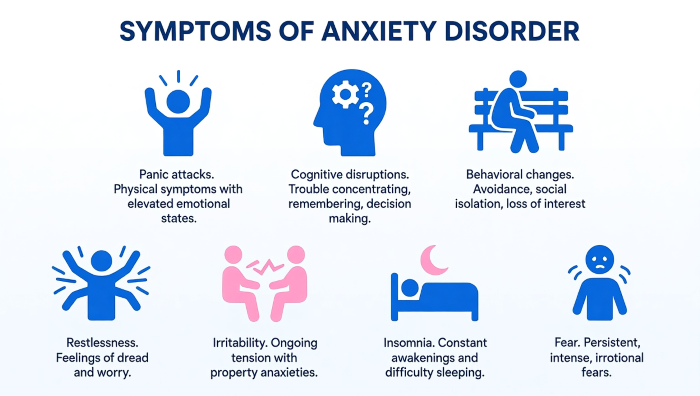
Symptoms of Anxiety Disorders
The consequence of fear has its physical and mental implications. The symptoms are different in each instance and according to the condition; however, general symptoms are:
- Always feeling nervous or anxious.
- Uneasiness or nervousness.
- Hyperventilation or dyspnea.
- Difficulty concentrating
- Sleep disturbances
- Muscle tension
- Irritability
In more radical situations, individuals may experience panic attacks and the physical effects may be serious, such as chest pains, the feeling of dizziness, and the sense that one is out of control or he/she is in danger.
What are the Causes of Anxiety Disorders?
It does not have a single source of anxiety. Instead, it is usually an integration of a mixture of circumstances:
Genetics: The family history can be a risk factor of anxiety.
Brain Chemistry: Inequality of neurotransmitters that govern mood.
Life Experiences: Trauma, incessant stress or significant life alterations.
Medical Conditions: chronic ailment, hormonal disorders or neurological.
Substance Use: the substance may be alcohol, caffeine, or drugs that may develop the symptoms or aggravate them.
These are the aspects that must be informed concerning anxiety and the formulation of a special treatment plan.
Seeking help from DeLand Treatment Solutions provides essential guidance
What are the 4 Levels of anxiety?
The mental health workers usually describe the four stages of the development of anxiety to have a clearer image of the phenomenon:
1. Mild Anxiety
It is the most popular and least difficult level. It may be a small nervousness or worry but may also cause one to be alert, concerned and inspired. To serve as an example, one can feel a little nervous when making a presentation.
2. Moderate Anxiety
At this level, the symptoms are more evident. Human beings are extremely impatient, distracted, or have an inability to relax. The concentration is more difficult to sustain and the physical manifestations may show themselves in the increased heart rate.
3. Severe Anxiety
It is very unsettling due to extreme anxiety. Individuals may be overpowered, horrified, or unable to focus on work. The physical symptoms worsen, and avoidance behavior may develop that inhibits normal activities.
3. Panic-Level Anxiety
The extreme level is the extreme one and it is characterized by panic attacks in some cases. Chest pains, shortness of breath, dizziness, trembling or loss of control may also be experienced by people. In this stage, one may need immediate help or intervention.
The description of the levels of anxiety can help people to comprehend the range in which they may be and when they may seek professional help.
How are Anxiety Disorders Diagnosed?
The diagnosis is usually carried out by a general check-up by a specialized mental health medical practitioner. This process could involve:
- Symptomatic and personal history.
- Psychological surveys or tests that are standardized.
- Physical examination in order to rule out physical etiology.
It has some diagnostic criteria, such as those of the DSM-5, according to which professionals identify the exact type of anxiety disorder. Early and accurate diagnosis can be a significant contribution to the treatment outcomes.
How are Anxiety Disorders Treated?
The type and the extent of anxiety determine the variation of the therapy, but it typically involves the integration of the approaches.
1. Therapy
Cognitive Behavioral Therapy (CBT) is one of the best and evidence-based therapies. It helps an individual to identify the bad habits of thinking and replace them with better and healthier thinking.
2. Medication
There are other cases where such drugs as antidepressants or anti-anxiety drugs can be administered to prevent the symptoms, particularly when the anxiety is moderate to severe.
3. Lifestyle Changes
Consistent and healthy habits might prove essential when handling anxiety:
- Regular physical activity
- Balanced nutrition
- Adequate, restorative sleep
The practice of stress management is mindfulness or deep breathing or meditation.
4. Support Systems
The admiration, acceptance, and belongingness with the trusted friends, family, or support systems can be acquired.
The awareness of such treatment means people will be able to make themselves more active in the field of their mental health and wellness, and make themselves more positive.

Seeking Help for Your Anxiety
In case anxiety is taking a toll in your life, then you do not need to go through it single-handedly. The professional help will help you to achieve a balance, decisiveness and assurance.
Caring and personal treatment is a combination in DeLand Treatment Solutions. The members of our professional staff know that the individual work of each person is unique. We provide effective care and an optimistic environment that would allow you to move on with your life forcefully.
Live towards a healthier and less stressful life. Learn what to do, educate yourself on your symptoms and initiate your recovery path nowadays.
To explore options for supervised support, contact DeLand Treatment Solutions
Disclaimer
This content is for informational and educational purposes only and is not a substitute for professional medical advice, diagnosis, or treatment. If you are experiencing severe anxiety or distress, please seek support from a qualified healthcare or mental health professional.
Sources
- Cleveland Clinic – Anxiety Disorders Overview
- American Psychiatric Association (DSM-5)
- National Institute of Mental Health (NIMH)
- Anxiety & Depression Association of America (ADAA)
FAQs
What are the 4 levels of anxiety?
The four levels include mild, moderate, severe, and panic. Each stage reflects increasing intensity of symptoms, from manageable worry to overwhelming fear that can disrupt daily functioning and require immediate attention or professional support.
What causes anxiety levels?
Anxiety levels are influenced by genetics, brain chemistry, stress, trauma, and lifestyle factors. Environmental triggers and underlying medical conditions can also contribute, making each person’s experience unique and requiring individualized understanding and care.
How to treat low level anxiety?
Low-level anxiety can be managed with lifestyle changes such as exercise, proper sleep, and relaxation techniques. Mindfulness, breathing exercises, and reducing caffeine intake can also help maintain emotional balance and prevent symptoms from escalating.
What are 7 types of anxiety?
Seven common types include generalized anxiety disorder, panic disorder, social anxiety disorder, specific phobias, separation anxiety disorder, agoraphobia, and selective mutism. Each type presents distinct symptoms but shares underlying patterns of excessive fear and worry.
What are the 5 stages of anxiety?
The five stages often include mild, mild-to-moderate, moderate, severe, and panic. These stages reflect increasing emotional and physical intensity, helping professionals assess how anxiety impacts daily functioning and determine appropriate treatment strategies.
What is the 5-4-3-2-1 anxiety thing?
The 5-4-3-2-1 technique is a grounding exercise that helps reduce anxiety. It involves identifying five things you see, four you feel, three you hear, two you smell, and one you taste to refocus attention.