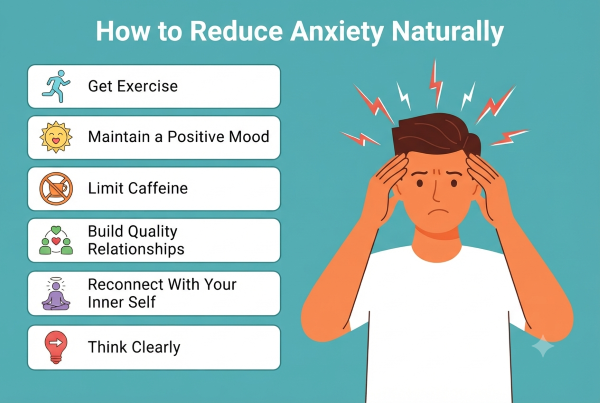
When you’re looking for ways to fight anxiety naturally, you’ll want to try healthy habits you can incorporate into your daily routine, such as exercise, luxurious sleep, deep breathing, mindfulness, activity and caffeine limitation, eating regular meals, and connecting with stress-relieving individuals. These may help reduce anxiety for many, but if anxiety is ongoing or intense, it is necessary to seek anxiety treatment and a unique approach to mental health.
Everyone has felt anxiety at some time. A sense of overwhelm can come down the chute when you have a ton of work on, family chores to manage, health issues to deal with, and life events that can take a sudden turn for the worse.
You’re not the only person who’s wondering:
How to ease anxiety naturally? The good news is that there are several all-natural remedies available to reduce stress, maintain emotional balance, and assist in general mental wellness.
It’s best to practice natural methods continually. If anxiety starts affecting daily functioning, relationships, work or sleep, though, it could be the healthiest thing to get anxiety treatment.
At DeLand Treatment Solutions, we provide information that will help you identify your symptoms and navigate to a treatment plan that is personalized to fit you for longterm emotional health.
Key Takeaways
- The only way to ease anxiety is to begin starting with customary wellness routines.
- Exercise can reduce stress hormones and boost feelings of well-being.
- Deep breathing and mindfulness quiet your nervous system.
- Symptoms of anxiety might be lessened if an individual eats balanced meals and does not consume too much caffeine.
- One of the most powerful natural anxiety remedies is good sleep.
- Building social supports helps promote emotional resilience.
- Treatment is recommended for more frequent, severe, or disruptive symptoms appropriate for the professional practitioner.
Understanding Anxiety
Anxiety is the body’s response to stress or a perceived threat. Can help to keep you alert in situations which are difficult. When anxious feelings start to happen regularly, become strong, or get out of control, they can have a negative impact on your physical, emotional, and functional state.
Common symptoms include:
- Constant worrying
- Racing thoughts
- Difficulty concentrating
- Muscle tension
- Restlessness
- Rapid heartbeat
- Trouble sleeping
- Irritability
- Fatigue
Understanding what you can do to lower anxiety naturally can be useful for coping with daily stresses before they take a toll on you.
100% Confidential Support is Available 24/7
No matter what you’re going through, you’re not alone. Our dedicated team is here to provide a safe, judgment-free space where you can talk openly and honestly. Whether you need emotional support, resources, or just someone to listen.
We’re here for you—completely confidential and always respectful of your privacy. Call us today!
Why Natural Anxiety Management Matters
Numerous individuals can get help from lifestyle modifications instead of medications. The key with natural anxiety management is to make your body better equipped to manage stress and take care of your brain and nervous system in the process.
These strategies might be helpful:
- Lower stress hormones
- Improve sleep quality
- Increase emotional resilience
- Help promote good physical well-being.
- Minimize daily symptoms of anxiety.
Naturally, the best strategy is to integrate a regimen.
Deland Treatment Solutions
Battling with Drug and Alcohol Addition? Remember, you are not alone and we are here to help you!
Exercise Regularly
One of the best methods for physical health is also the best for emotional health: activity!
Exercise releases endorphins that naturally help to lift mood and decrease stress.
Helpful activities include:
- Walking
- Swimming
- Cycling
- Yoga
- Strength training
- Dancing
You notice a difference after moving a bit most days, whether it is 20 or 30 minutes.
Practice Deep Breathing
Increased breathing generally becomes shallow and rapid when anxiety increases.
Slow, controlled breathing helps your nervous system to know that you’re not in danger.
Here is a basic workout:
- Slowly take a deep breath in through the nose for a count of four.
- Pause for 4 seconds without breathing.
- Steadily breathe out for 6 seconds.
- Repeat for a few minutes.
Deep breathing exercises throughout the day will help to alleviate the physical “downside” of other signs and symptoms of anxiety.
Prioritize Quality Sleep
A vicious cycle that can result from poor sleep and anxiety.
Anxiety could get worse when you can’t get sleep. Similarly, anxiety could prevent sleeping.
Improve sleep by:
- Abiding by a consistent bedtime schedule
- The best way to do this is to take a break from screens before sleeping at night.
- A dark and fresh bedroom is the key to keeping cool. A dark, roomy bedroom is the key to keeping cool.
- Caffeine late in the day
- Creating a relaxing bedtime routine
When learning how to reduce anxiety naturally, the other key factor to remember is to get a good night’s rest.
Eat a Balanced Diet
You should get the right nutrition to balance out your mood.
Eat foods that will give you a steady energy release, such as:
- Fresh vegetables
- Fruits
- Whole grains
- Lean proteins
- Healthy fats
- Nuts and seeds
Do not skip meals, as it can make you feel more anxious because of company you are expecting to see but may not recognize until later.
Minimize over-sweetened or highly-processed food, as this can also help to create emotional balance.
Reduce Caffeine Intake
Caffeine can increase:
- Racing heartbeat
- Nervousness
- Restlessness
- Difficulty sleeping
Slowly cutting back on coffee, energy drinks or any other soft drinks that contain significant amounts of caffeine could help bring anxiety under control if it is interfering with daily living.
Practice Mindfulness Every Day
With mindfulness of the present moment, you can decrease your fears about what may happen in the future.
Some simple mindfulness exercises are:
- Guided meditation
- Body scans
- Journaling
- Gentle stretching
It’s important to set aside time for some special breathing.
Ten minutes a day will help improve your emotional handling skills.
Stay Connected With Others
Anxiety can seem very overwhelming in isolation.
Discussing the situation with friends you know and trust gives emotional support and ensures that you’re not up against problems on your own.
Examples of healthy connections are:
- Family
- Friends
- Support groups
- Faith communities
- Therapists
Emotional recovery can be greatly bolstered by social support.
Seeking help from DeLand Treatment Solutions provides essential guidance
Spend Time Outdoors
Many find it soothing to be in the presence of nature.
Applying the artistic techniques of walking, sitting by water, and green spaces can calm stress, help improve one’s mood, focus, and more.
It is not just about the exercise, but the benefits to mental health can also be gained from taking a short walk during lunch.
Limit Alcohol and Recreational Drugs
A few individuals accept beverages or medications to manage anxiety at least briefly.
Sadly, they tend to become addictive and cause anxiety with prolonged use.
Addiction and anxiety may not have to be treated separately; if you are experiencing both, there is professional anxiety treatment and addiction care that can help treat both.
Learn to Challenge Negative Thoughts
It’s common for the brain to have a readiness to panic when anxious.
When you have thoughts that are making you anxious, you can do this instead:
- But is there a truth to the fear?
- What other result could there have been?
- Have I come across these situations before?
The more you practice challenging anxious thinking patterns, the easier this will get over time.
Create Healthy Daily Routines
Routine minimizes uncertainty and can help your nervous system to feel safer.
Include:
- Regular meals
- Exercise
- Consistent sleep
- Relaxation time
- Breaks during work
- Daily hobbies
The small steps, a day at a time, can really make a difference.
When Natural Methods Aren’t Enough
Moderate and severe anxiety may require additional help, such as natural remedies.
If you have anxiety that produces any of the following symptoms, then you may need professional anxiety treatment:
- Panic attacks
- Constant worry
- Difficulty working
- Social withdrawal
- Ongoing sleep problems
- Sometimes there’s no medical reason for physical symptoms.
- Longitudinal anxiety, several months.
Therapy, medication as needed, and/or lifestyle counseling are options included in the treatments under the care of a professional.
Small Daily Habits Make a Big Difference
There’s a secret trick to reducing anxiety naturally, and you’ll not need to make big changes all of a sudden. By incorporating these aspects gradually, one by one, start with one or two healthy habits, practice them regularly, and establish a healthier routine for mental health.
Don’t wait to look for professional anxiety treatment if anxiety is having a negative impact on your life, your relationships, your work, or your happiness. At DeLand Treatment Solutions, we are available to help you with all of your needs and give you the support you need to become a new person for the future, feeling confident, hopeful, and better equipped to cope.
Compassionate Anxiety Treatment at DeLand Treatment Solutions
Don’t suffer from anxiety without help.
At DeLand Treatment Solutions, our professional counselors use expertise and compassion to give individual treatment for anxiety based on your particular needs and concerns. If you have anxiety from stress, trauma, or life changes or are struggling with substance abuse and find yourself without the same level of confidence or quality of life, we are by your side to help.
Call DeLand Treatment Solutions today to speak privately with one of our friendly staff members. Making the first step towards mental well-being may result in sustaining change.
Frequently Asked Questions
How can I reduce my anxiety naturally?
Regular exercise, deep breathing, mindfulness, healthy eating, quality sleep, and reducing caffeine can naturally lower anxiety. Practicing these habits consistently often provides better long-term results than relying on occasional stress relief techniques.
How to stop being anxious about being anxious?
Recognize that anxiety itself is not dangerous, even though it feels uncomfortable. Practice accepting anxious feelings without judging them, use slow breathing, and redirect your attention toward the present moment instead of fearing future anxiety.
How to stop worrying and overthinking?
Set aside dedicated “worry time,” challenge negative thoughts with evidence, practice mindfulness, and stay engaged in meaningful activities. Journaling and talking with a therapist can also help reduce repetitive thinking patterns.
What calms anxiety right away?
Slow deep breathing, grounding exercises, progressive muscle relaxation, stepping outside for fresh air, or focusing on your five senses can quickly calm your nervous system during moments of heightened anxiety.
What triggers anxiety?
Common anxiety triggers include financial stress, relationship problems, health concerns, lack of sleep, excessive caffeine, major life changes, trauma, work pressure, and ongoing uncertainty. Everyone’s triggers are different and may change over time.
What is the #1 worst habit for anxiety?
Avoiding situations because of anxiety often reinforces fear and makes symptoms stronger over time. Learning healthy coping skills and gradually facing fears with support can improve long-term emotional resilience.
What drinks are good for anxiety?
Water is essential for overall health. Many people also find herbal teas such as chamomile or peppermint relaxing. Limiting highly caffeinated drinks may help reduce nervousness, restlessness, and sleep disruption associated with anxiety.
Why won’t my anxiety go away?
Persistent anxiety may be influenced by genetics, chronic stress, trauma, medical conditions, or untreated mental health disorders. If symptoms continue despite lifestyle changes, professional anxiety treatment can help identify underlying causes and create an effective treatment plan.
Disclaimer
This article is for educational purposes only and should not replace professional medical advice, diagnosis, or treatment. If you experience persistent anxiety, panic attacks, thoughts of self-harm, or worsening mental health symptoms, consult a qualified healthcare provider or licensed mental health professional immediately.
References
- Mayo Clinic Health System. Tips to Help Ease Anxiety. https://www.mayoclinichealthsystem.org/hometown-health/speaking-of-health/tips-to-help-ease-anxiety
- Healthline. 16 Simple Ways to Relieve Stress and Anxiety. https://www.healthline.com/nutrition/16-ways-relieve-stress-anxiety