For years, you’ve been having trouble focusing. Maybe since childhood. Perhaps it’s only getting worse in recent years. You’re exhausted from trying to keep it together. You miss deadlines. You are losing things all the time. Are unable to organize thoughts or space. You begin projects and fail to complete them. You’re distracted and disorganized, affecting relationships. Everyone says you simply have to work harder. Try to focus. Do better to be responsible.
But you are trying. You’re tired of trying. What if the issue isn’t willpower? What if it’s your brain? What if you needed treatment as opposed to simply better habits?
Attention-deficit/hyperactivity disorder is a condition of the brain’s development. It’s not a character flaw. It’s not laziness. It is a neurological truth that impacts the way your mind works with attention, impulse management, and executive functioning. What’s great about it is that there’s a comprehensive approach that works. With the right combination of therapy and medication management and support from professionals who do understand ADHD, your life changes when you get the proper evaluation.
What ADHD Treatment Actually Involves
ADHD treatment isn’t just medication. That’s a misconception that keeps people from getting the comprehensive care they need.
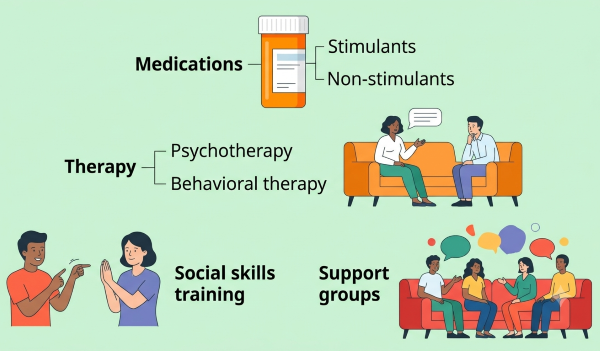
Real ADHD treatment is multidisciplinary. It combines evaluation and diagnosis, medication management, therapy, skills training, and lifestyle support. Different people need different combinations depending on their specific presentation, comorbidities, and life circumstances.
Comprehensive Evaluation and Testing is where everything starts. This isn’t quick. A proper ADHD evaluation includes a detailed clinical interview covering your developmental history, symptom patterns, how ADHD affects different areas of your life, your personal and family history, and any comorbid conditions. It includes standardized rating scales and psychological testing to measure attention, executive function, and other relevant capabilities. It might include neuropsychological testing if indicated. The evaluation generates a clear diagnostic picture so you understand what you’re dealing with.
Medication Management is often part of treatment. ADHD medications work. When properly prescribed and monitored, they significantly improve focus, impulse control, and executive function. Most commonly, these are stimulant medications like methylphenidate or amphetamine-based medications. Sometimes non-stimulant options work better. The goal is finding the right medication at the right dose with minimal side effects. This requires ongoing monitoring because needs change.
Therapy is crucial. Cognitive Behavioral Therapy designed for ADHD helps you understand your thinking patterns and develop strategies to manage challenges. Some therapists use coaching approaches that are very practical. Group therapy provides community and shared learning. Family therapy helps educate loved ones and repair relationships damaged by untreated ADHD.
Skills Training and Coaching teaches concrete tools. Time management. Organization. Decision-making. Emotional regulation. Body awareness. These are skills many people with ADHD never developed naturally and benefit tremendously from learning systematically.
Lifestyle Support addresses sleep, exercise, nutrition, and stress management because these foundational elements dramatically affect ADHD symptoms. Regular exercise is actually as effective as medication for some people. Sleep deprivation makes ADHD exponentially worse. Good nutrition supports brain function.
The most effective ADHD treatment combines multiple modalities tailored to your specific needs.
Why Florida Has Excellent ADHD Treatment Options
Florida actually has some of the most comprehensive ADHD treatment infrastructure in the country.
The state has multiple major treatment centers specializing in ADHD. Many offer both in-person and telehealth options. The climate and lifestyle can support recovery. Florida has a network of specialists including psychiatrists, psychologists, behavioral specialists, and specialized therapists who focus specifically on ADHD. Many centers offer partial hospitalization programs and intensive outpatient programs specifically for ADHD. The healthcare infrastructure is sophisticated. Insurance coverage is generally available. And there’s growing recognition that ADHD treatment is essential for people of all ages.
Whether you’re in Miami, Tampa, Orlando, Jacksonville, or smaller communities, ADHD treatment is accessible in Florida.
Stop struggling with executive dysfunction alone. Call DeLand Treatment Solutions right now to build a personalized ADHD therapy and medication plan.
Levels of ADHD Care Available
Different people need different intensities of care.
Outpatient Psychiatry involves regular appointments with a psychiatrist for evaluation, diagnosis, and medication management. This is appropriate for people with mild to moderate ADHD who don’t have significant comorbidities and have stable home situations. Appointments might be monthly or every two months once stabilized. This is often covered by insurance and is the most affordable option.
Outpatient Therapy and Coaching provides therapy, skills training, and coaching for managing ADHD. Therapists help with organization, time management, decision-making, and addressing the emotional toll of living with undiagnosed or untreated ADHD. This is appropriate as the primary treatment for some people and as a complement to medication for others.
Telehealth Treatment is increasingly popular and highly effective. Secure video sessions with psychiatrists for evaluation and medication management. Online therapy with ADHD-specialized therapists. Email and messaging communication with providers. This works particularly well for people in rural areas, those with transportation challenges, or anyone who needs flexibility. Research shows telehealth is as effective as in-person for ADHD treatment in most cases.
Intensive Outpatient Programs provide more intensive support. Multiple hours daily of structured programming. Group therapy, individual therapy, psychoeducation, and skills training are all coordinated. This is appropriate for more severe presentations, people with comorbidities, or those who’ve struggled with less intensive treatment. People live at home but attend the program daily.
Partial Hospitalization Programs provide daytime treatment similar to IOP. This bridges residential and outpatient care. Appropriate for severe presentations or when intensive support is needed.
Residential Treatment provides 24/7 care for severe ADHD with significant functional impairment or when other levels haven’t worked.
Most people benefit from a combination of medication management with a psychiatrist and therapy or coaching with a mental health professional.
Finding the Right ADHD Treatment Center
Not all ADHD treatment centers are equal. Here’s what to look for.
- Comprehensive Evaluation: The center should conduct a thorough evaluation, not just hand you a prescription. If they’re seeing you for 15 minutes and sending you home with pills, that’s not adequate.
- Psychiatry Expertise: The center should have board-certified psychiatrists or psychiatric nurse practitioners with specific ADHD training. ADHD medication management requires expertise.
- Therapy Integration: The center should offer or coordinate therapy as part of treatment. Medication alone is incomplete.
- Individualized Plans: Treatment should be customized to you, not a template. Everyone’s ADHD looks different.
- Comorbidity Expertise: Many people with ADHD also have anxiety, depression, trauma history, or substance use issues. The center should address these simultaneously.
- Ongoing Monitoring: The center should have regular follow-ups to assess how treatment is working and make adjustments.
- Insurance Navigation: The center should help with insurance questions and billing.
- Communication: The team should listen, answer questions, and involve you in treatment planning.
- Experience: Look for centers with years of experience treating ADHD specifically, not just general psychiatry.
Comparison: ADHD Treatment Modalities
Here’s how different treatment approaches compare:
Treatment | Format | Intensity | Cost | Best For | Effectiveness |
Psychiatry Only | In-person or telehealth | Low to moderate | Moderate | Medication management | Good if adequate |
Therapy Only | Individual sessions | Low to moderate | Varies | Skills and psychological work | Good if adequate |
Medication Plus Therapy | Combined approach | Moderate | Moderate to high | Most people | Excellent |
Intensive Outpatient | Daily programming | High | High | Moderate to severe, comorbidities | Excellent |
Partial Hospitalization | Daytime program | High | High | Severe presentations | Excellent |
Residential Treatment | 24/7 care | Maximum | High | Severe, high risk, treatment-resistant | Excellent |
Telehealth Combined | Video psychiatry and therapy | Moderate | Moderate | Anyone needing access or flexibility | Excellent |
Most people achieve the best outcomes with combined medication management and therapy.

Getting Help at DeLand Treatment Solutions
If you’re struggling with ADHD and need comprehensive evaluation and treatment, DeLand Treatment Solutions offers specialized care.
We understand ADHD. We understand it’s a neurodevelopmental condition requiring multidisciplinary treatment. We understand it often co-occurs with other conditions like anxiety, depression, or substance use issues. And we have the expertise to address all of it.
We recognize that untreated ADHD doesn’t just affect your ability to focus. It affects your relationships, your career, your self-esteem, and your mental health. Comprehensive treatment changes all of that.
If you’re tired of struggling, if you want to understand what’s actually happening with your attention and executive function, or if you’re ready to try treatment, reach out. Call us at (386) 866-8689 or visit our contact page to schedule an evaluation. Our team is ready to help you understand your ADHD and build a treatment plan that works.
FAQs
Is ADHD Treatment Just Medication?
No. Medication is only one part of a comprehensive ADHD treatment plan. Effective care often combines medication management with therapy, skills training, coaching, and lifestyle changes. While medication can improve attention and focus, behavioral strategies help individuals manage daily challenges and build long-term success.
Can ADHD Be Diagnosed in Adults?
Yes. Many people are not diagnosed with ADHD until adulthood, especially if symptoms were overlooked during childhood. Increased responsibilities at work, school, or home often make symptoms more noticeable. Adult ADHD is common, and effective treatment can significantly improve functioning and quality of life.
How Long Does ADHD Treatment Take?
Treatment timelines vary depending on symptom severity, individual goals, and the types of interventions used. Some people notice medication benefits within weeks, while therapy and behavioral changes develop gradually. Many individuals experience meaningful improvement within several months, though ongoing support may remain beneficial.
Are ADHD Medications Addictive?
When prescribed and used as directed, ADHD medications generally have a low risk of addiction. These medications are intended to improve attention, impulse control, and executive functioning rather than create euphoria. Regular monitoring by a healthcare professional helps ensure safe and effective treatment.
What If Medication Doesn’t Work?
Finding the right ADHD medication sometimes requires adjustments in dosage or trying different options. Some individuals respond better to non-stimulant medications, while others benefit from combining medication with therapy and lifestyle changes. A healthcare provider can evaluate treatment effectiveness and recommend appropriate modifications.
Can I Manage ADHD Without Medication?
Some individuals successfully manage ADHD symptoms through therapy, coaching, organizational strategies, exercise, and structured routines. This approach may be sufficient for milder cases. However, many people with moderate to severe ADHD experience greater symptom improvement when medication is included as part of treatment.
Is ADHD Treatment Covered by Insurance?
Many insurance plans provide coverage for ADHD evaluations, medication management, therapy, and related services. Coverage details vary depending on the provider, policy, and treatment type. Treatment centers and healthcare providers can often help verify benefits and explain potential costs before services begin.
What’s the Difference Between ADHD and Just Being Disorganized?
Everyone experiences occasional disorganization, but ADHD involves persistent difficulties with attention, impulse control, memory, and executive functioning. These challenges affect multiple areas of life and continue despite effort to improve. ADHD is a recognized neurodevelopmental condition rather than simply a habit or personality trait.
How Do I Know If I Have ADHD?
A professional evaluation is the most reliable way to determine whether ADHD is present. Symptoms must be persistent, affect daily functioning, and occur across multiple settings. A qualified healthcare provider can assess your history, symptoms, and overall functioning to establish an accurate diagnosis.
Can ADHD Be Cured?
ADHD is a lifelong neurodevelopmental condition and is not considered curable. However, symptoms can often be managed very effectively through medication, therapy, coaching, and lifestyle adjustments. With proper treatment, many individuals experience substantial improvement and successfully meet personal, academic, and professional goals.
References
- Psychology Today. “Florida ADHD Treatment Centers.” https://www.psychologytoday.com/us/treatment-rehab/florida?category=adhd
- Medvidi. “Online ADHD Treatment and Medication Prescription in Florida.” April 2026. https://medvidi.com/services/adhd-treatment/fl/
- Sylvia Brafman. “ADHD Therapy and Treatment Center Near Fort Lauderdale, FL.” April 2026. https://sylviabrafman.com/mental-health-treatments/adhd/
- Advanced Psychiatric Health. “ADHD Treatment Center Florida.” January 2026. https://www.aphflorida.com/what-we-treat/adhd/
- ADHD Advisor. “Florida ADHD Telehealth – Online Diagnosis and Treatment.” https://www.adhdadvisor.org/states/florida
- Healing Psychiatry Florida. “ADHD Treatment in Orlando, Florida.” December 2024. https://www.healingpsychiatryflorida.com/services/psychiatry/orlando-fl/adhd/
- Virtual Psychiatric Care. “Online ADHD Treatment and Medication in Florida.” https://www.virtualpsychiatriccare.com/adhd-treatment-florida
- South Florida Psychiatry. “ADHD Treatment in Miami, Florida.” https://southfloridapsychiatry.co/adhd/
- ADHD Treatment Center of Florida. “Services.” January 2026. https://adhdfl.com/services/
- NAMI. “ADHD: National Alliance on Mental Illness.” https://www.nami.org/mental-health/adhd
This content is for informational purposes only and does not constitute medical advice or a clinical recommendation. For a personalized assessment, please consult a licensed mental health professional. To learn more about evidence-based mental health and addiction treatment in Florida, visit delandts.com or call (386) 866-8689.