Marijuana is often thought of as harmless. With more states in the United States allowing it people are starting to see that it’s not. Using marijuana for a time can actually hurt your relationships with family, your mental health and your job. This is a concern. So can anyone go to rehab for marijuana addiction? Yes, they can.
Many people in treatment centers are there for marijuana addiction. It’s hard to overcome. Some people have a problem with marijuana more than others. They might use it all the time. For them it’s an addiction. They keep using it even if it’s ruining their lives.
They might feel withdrawal symptoms. Use unhealthy ways to cope.
If marijuana is ruining your life getting help is an idea. You can go to rehab to get treatment for marijuana addiction. Usually people go to rehab because they have a marijuana use disorder. They go when they can’t stop craving marijuana or when its hurting their health. In rehab you can get counseling, therapy and plans to help you stay sober.
There has been some confusion about how bad marijuana is compared to other substances, like opioids or alcohol. Marijuana might not be as physically harmful as these substances. However it can still hurt your mind. You can feel withdrawal symptoms from marijuana. Marijuana is treatable. I think people need to understand that marijuana can be a problem and that help is available for marijuana.
- People look for help when their marijuana use gets out of control. This usually happens when marijuana starts to mess up their life.
- Marijuana treatment programs give support to those who need it.
- These services focus on health issues caused by using marijuana.
- Treatment plans for marijuana help people stay on track. Avoid going back to old habits.
Different therapies for marijuana use help individuals recover from its effects. They help people get their life back on track with marijuana. Marijuana support groups also play a role, in the recovery process from marijuana.
Key Takeaways
- Marijuana can be addictive. Marijuana usage can have a negative impact on mental health, motivation and relationships as well, as daily living because of marijuana.
- If someone develops a dependence upon cannabis, which is also known as marijuana, they can develop withdrawal symptoms when they attempt to stop using marijuana.
- These treatment programs will help individuals learn to predict and attempt to use healthy coping strategies.
- The key aspect(s) of healing are treatment and mental healthcare.
- The inclusion of the family can help reinforce the engagement in treatment. As soon as the family is engaged, the achievements of the treatment process can be supported in the longer term.
- Structured interventions and situations of accountability and relapse prevention supports are aspects of professional care.
Understanding Marijuana Dependence
Marijuana is simply a fun drug to many people, with few or no harmful consequences.
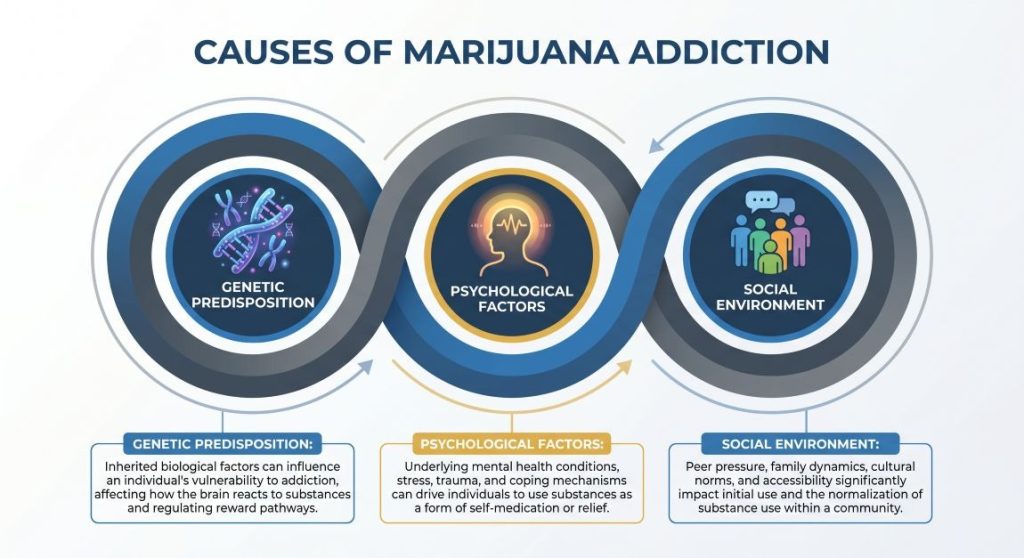
However, it’s possible, in the long run, to get used to taking it regularly, emotionally as well as mentally. Sure, over the years, there have been some people who resort to marijuana to not only cope with stress, anxiety, sleep disorders, and traumas but also to cope with boredom or depression
If a person continues to use, despite the harmful impacts, it could be a sign of cannabis use disorder. This can be mild, moderate or severe and impacting numerous areas of life.
Common signs include:
- You really want to smoke marijuana more often than you planned to. You find that you are thinking about using marijuana all the time and you want to use it more.
You have a time when you want to stop or limit your alcohol use. You try to drink or quit drinking altogether. - You just cannot seem to do it. The thing is, marijuana and alcohol are causing problems for you. The reason is that you cannot reduce how much you use marijuana and alcohol or stop using marijuana and alcohol.
- Failing to maintain concentration and/or motivation.
- Events: mood swings/irritability (but not when intoxicated with cannabis)
- Avoiding family/friend interaction,
- Low attainment/performance at school or work
- An increase in anxiety or depression,
- Wasting a lot of time getting or making marijuana
Few people have actually deemed the dangers of marijuana dependency as serious, as many hold the view that marijuana usage in their community is okay and condone marijuana use. The psychological or emotional dependence, however, may prove to be not worth it and can be so strong that it is best to move forward with professional assistance.
Seeking help from DeLand Treatment Solutions provides essential guidance
100% Confidential Support is Available 24/7
No matter what you’re going through, you’re not alone. Our dedicated team is here to provide a safe, judgment-free space where you can talk openly and honestly. Whether you need emotional support, resources, or just someone to listen.
We’re here for you—completely confidential and always respectful of your privacy. Call us today!
Why People Seek Rehab for Weed
As varied as the people in treatment are the various reasons they are in treatment. Some have a problem with the daily heavy smoking of cannabis. Others suffer from increased problems with their mental health that are related to marijuana use.
Individuals go for treatment when:
Mental Health Symptoms Become Worse
Marijuana can also lead to anxiety and paranoia, panic attacks and depression or emotional upset, particularly among heavy and/or chronic users. An individual experiencing mental health issues could over time become more severely affected.
They cannot Quit Alone
A few individuals try to quit several times but go through the cycle of several tries to stop and then fall back again. Without some kind of aid, it can be difficult to quit because of the craving, irritability, insomnia and discomfort that occur when giving it up.
Relationships Begin Suffering
If a person consistently uses marijuana, he could be separated from family members or lovers and friends. Family or friends may observe mood swings, decreased motivation, dishonesty and emotional isolation.
Daily Responsibilities are Neglected
Relying on cannabis can affect a job, school, money or objectives. Over time, some may lose some confidence of themselves or may grow weak at their positions.
Co-Occurring Addiction or Trauma Exists
Some will use pot in combination with another drug and some will use pot and drink while smoking. A few people consume marijuana to dull the emotions of trauma and/or stress. All of this is treated in-depth together as a professional treatment.
Deland Treatment Solutions
Battling with Drug and Alcohol Addition? Remember, you are not alone and we are here to help you!
What Happens in Rehab for Weed?
Individuals’ treatment programs differ depending on their needs. Those who might need something more structured, in terms of treatment, residential, or outpatient counseling, may find some help.
DeLand Treatment Solutions may include the following treatments:
Individual Therapy
In a one-to-one counseling setting the client will be able to see the following: Client’s motivation for marijuana use; Client’s precipitants to marijuana use. Therapists utilize a modified treatment approach called cognitive behavioral therapy (CBT), motivational interviewing techniques and relapse prevention strategies.
Group Counseling
Group therapy has the idea that in a small way, within a group, people in the group have an environment that is supportive, that is, that is people who are connected and know others who struggle. Sharing experiences may help to decrease feelings of shame and isolation.
Mental Health Treatment
Feared depression, PTSD and stress-related disorders were among the many issues that many marijuana addicts were brought in with. Integrated Mental health care services help to resolve the causes of substance use and abuse.
Healthy Coping Skills
Recovery involves learning healthy coping mechanisms for emotions, boredom, stress and peer pressure without the use of cannabis.
Family Support
Family counseling can help in establishing a better relationship, regain trust and let family and friends know of the addiction and recovery.
Withdrawal Symptoms from Marijuana
One person thinks that marijuana does not really cause withdrawal symptoms. These symptoms are not life-threatening. They can be a real pain and may cause someone to start using again.
Withdrawal from drugs or alcohol can cause some of these problems:
- Irritability
- Anxiety
- Restlessness
- Insomnia
- Mood swings
- Reduced appetite
- Headaches
- Difficulty concentrating
- cravings
These symptoms start a few days after quitting marijuana and can last for a few days or several weeks, depending on how much marijuana was used.
When is Weed Use Considered a Problem?
Treatment is not needed for all marijuana users. Using marijuana can become a problem for marijuana users when marijuana use is needed to feel normal to unwind, and to function properly.
- You keep using marijuana even though it’s bad for you. It has bad side effects but you still need marijuana.
- You covered up, or lied about, using it
- Are not pushing themselves to accept responsibilities/hobbies
- It’s hard to get by without it on the emotional side.
- Your marijuana addiction trumps the importance of a relationship or a setting in which you would be setting goals.
Knowing these trends, professional help may be necessary so that you don’t find yourself with additional emotional and behavioral downfall.
The Importance of Professional Support
Part of the triumph of treatment is that no drug addict is responsible for their drug addiction by themselves. Marijuana dependence is often associated with emotional pain and trauma, stress or incorrect coping mechanisms. Otherwise, people can be in good recovery when their whole condition is treated for mental health issues and drug addiction.
Proper treatment can be done professionally; in addition, it offers:
- Accountability
- Structured recovery plans
- Emotional support
- Relapse prevention tools
- Safe therapeutic environments
- Long-term coping strategies
By some people, there is a stigma associated with getting treatment for their marijuana use because they feel they don’t need a treatment approach for marijuana, which is not true. Actually, coming seeking help is a token of self-awareness and strength.
Get Help at DeLand Treatment Solutions
Those who suffer mental health, relationship, motivational, or life changes due to their marijuana use aren’t the only ones with a problem. Truthfully, DeLand Treatment Solutions is packed with kind individuals that all understand the agony of securing him or her to experience his/her eyes once again and experience a better life to be lived with, along with customized addiction and mental health treatment.
Withdrawal can be a hard or difficult process to go through, but when you are trying to quit you can also feel withdrawal symptoms if you are feeling overwhelmed or if you are trying to quit, professional help can make it easier and more effective.
To learn more about treatment options and get a better understanding of a healthier pathway, give DeLand Treatment Solutions a call today.
Long-Term Recovery After Marijuana Rehab
Recovery is a journey and treatment doesn’t end when the journey does. More treatment, a support group, healthy habits and the awareness and understanding of the emotions.
Still recovering patients include:
- Developing healthy relationships
- Good stress management
- Being active
- Mindfulness practice
- Personal Goal Setting
- Avoid high-risk situations
- Of course, ongoing mental health treatment as needed
With the right support, they can get better and go back to normal but it will take some time.”

Take the First Step Toward Recovery
If you thought you needed to treat your marijuana addiction, it was then. If you’re having issues with mental health, motivation, relationships or your general work or day-to-day life due to cannabis use, help is out there. DeLand Treatment Solutions provides the treatment needed in a caring way and the treatment process can be tailored to the specific individual’s needs.
Call us today and find out how our treatment can help you regain your balance, your confidence and your emotional well-being.
Key Takeaways
- Co-occurring disorder involve a mental health condition and substance use disorder appearing together.
- It is through following integrated care plans that the conditions are treated simultaneously.
- CBT, as a behavioral therapy is critical in finding out what are the triggers and the building of resiliency.
- Professional oversight ensures that medication and therapy work together safely and effectively.
- Long-term stability is achieved through a combination of structured support and aftercare.
FAQ
How long is rehab for weed?
Treatment length varies depending on the individual’s needs, severity of cannabis use, and mental health conditions. Some people benefit from several weeks of outpatient therapy, while others may require 30 to 90 days of structured residential treatment.
Do people need to go to rehab for weed?
Not everyone requires professional treatment, but rehab may help people who cannot quit alone or experience serious emotional, mental health, relationship, or lifestyle problems related to marijuana use. Therapy and support improve recovery outcomes significantly.
Why is it so hard to quit weed?
Many people use marijuana to cope with stress, anxiety, trauma, or emotional discomfort. Over time, emotional dependence and withdrawal symptoms can make quitting difficult without healthy coping skills, accountability, and professional support systems.
Is it bad to quit weed cold turkey?
Quitting suddenly is usually not medically dangerous, but withdrawal symptoms like irritability, anxiety, insomnia, mood swings, and cravings can feel intense. Professional treatment and therapy may help people manage symptoms more successfully during recovery.
Can Family Members Participate In Rehab?
Yes. Many treatment programs encourage family involvement through counseling and educational sessions. Family participation can improve communication, rebuild trust, and create stronger emotional support systems that help individuals maintain long-term recovery after treatment.
Disclaimer
This content is for informational and educational purposes only and should not replace professional medical advice, diagnosis, or treatment. Always consult a licensed healthcare provider or addiction specialist regarding substance use or mental health concerns.
References
- Phoenix Rising Recovery – “Do People Go to Rehab for Weed?”
- National Institute on Drug Abuse (NIDA)
- American Psychological Association (APA)