In This Blog:
- Initial experimentation and the psychology of first use
- The transition into habitual and regular consumption
- Identifying the shift toward risky and problematic behavior
- Understanding the mechanics of psychological dependency
- The progression into chronic substance use disorders
- Strategies for therapeutic intervention and mental health support
The mental stage of addiction is an essential part of everybody who has to maneuver through the intricacies of substance use and behavioral health. The idea of addiction is a long-term process of psychological change, which, at the basic level, transforms the process of reward perception, stress perception, and self-control perception in the brain.
Having identified the various phases of addiction, individuals and their families will be able to know the early signs and solicit the necessary support in good time before the circle of dependency becomes highly integrated.
Mental stages of addiction depict how the brain amazingly responds to foreign stimuli, usually at the cost of long-term health of an individual. The first stage of initial interest in experimentation up to the obsessive mechanism of constant consumption is a step through the range of internal chemistry and cognitive priorities.
Expert Advice: Early psychological intervention can effectively disrupt the progression toward chronic dependency and health decline.
What Is the First Mental Stage of Addiction?
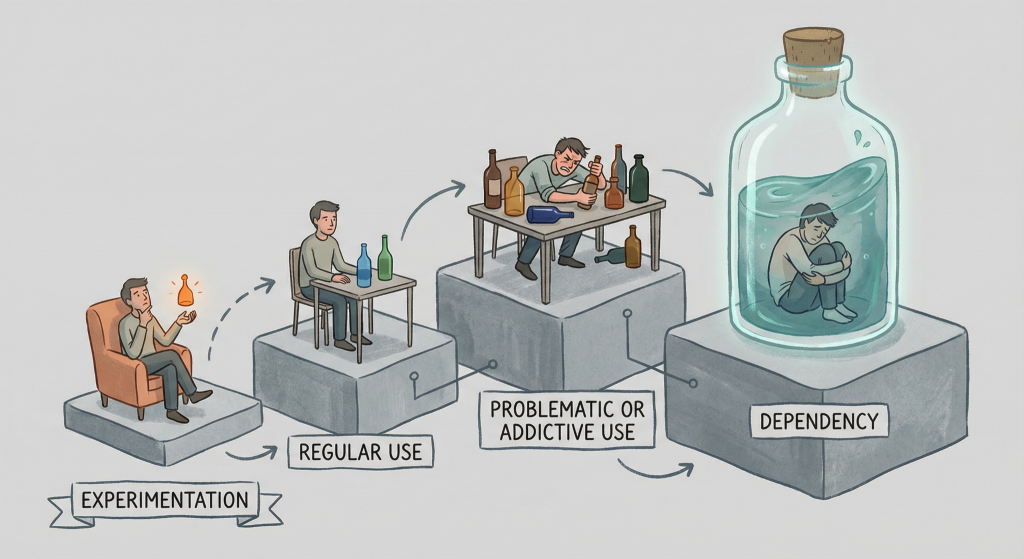
The first of the stages of addiction is almost always experimentation. During this period, an individual may try a substance or engage in a behavior out of curiosity, peer influence, or a desire to manage temporary emotional distress. At this level, use is generally infrequent and often occurs in social settings where the substance is readily available.
- Voluntary Choice: The individual feels a high degree of control over their participation.
- Positive Reinforcement: If the initial experience provides pleasure or relief, the brain notes it as a “reward.”
- Lack of Consequence: Because use is rare, the person often believes they are immune to the risks of dependency.
While experimentation does not always lead to a disorder, it is the necessary precursor. The brain’s reward system, specifically the release of dopamine, begins to create a memory of the experience that can drive future use.
When Does Addiction Become Regular Use?
As the individual moves into the second of the stages of addiction, the behavior becomes more regular. It is no longer just about curiosity; it becomes integrated into a person’s routine or social identity. Regular use may be used to enhance social experiences or to cope with the standard stresses of daily life.
- Predictable Patterns: Use occurs at specific times, such as weekends or after work.
- Functional Reliance: The person may start to feel that they need the substance to “unwind” or “have fun.”
- Increased Frequency: The gap between sessions narrows as the behavior becomes a habit.
During this phase, the individual still maintains their professional and personal responsibilities. However, the mental focus on the substance is beginning to grow. The brain is starting to adjust its baseline to expect the presence of the substance, laying the groundwork for tolerance.
FACT: Prolonged substance use fundamentally alters brain circuitry related to decision-making.
When Does Addiction Lead to Risky Behavior?
The third phase in the stages of addiction is characterized by risky or problematic use. This is a critical turning point where the negative consequences of the behavior begin to manifest. The individual may start to prioritize the substance over their safety, legal standing, or personal relationships.
Life Area | Impact of Risky Use |
Social | Frequent arguments with loved ones regarding use |
Legal | Engaging in activities like driving while impaired |
Occupational | Declining performance or increased absences at work |
What Does Psychological Dependency Look Like?
Psychological dependency represents a deep integration of the substance into the individual’s emotional regulation. When exploring the stages of addiction, this is where mental compulsion becomes a dominant force. The person feels that they cannot function “normally” or handle any level of stress without the substance.
- Compulsive Thinking: A significant portion of daily mental energy is spent thinking about the substance.
- Emotional Cravings: Intense feelings of anxiety or irritability when the substance is unavailable.
- Loss of Control: Repeated, unsuccessful attempts to cut back or quit.
Struggling with the mental stages of addiction? Call DeLand Treatment Solutions and let us help you find the right support.
What Is the Final Mental Stage of Addiction?
The final of the stages of addiction is the development of a chronic substance use disorder. At this point, the behavior has become a primary focus of the individual’s life. The compulsion to use is overwhelming, and the person may experience severe physical and mental health decline.
- Total Preoccupation: Every aspect of life revolves around obtaining and using the substance.
- Health Erosion: Neglect of physical hygiene, nutrition, and medical needs.
- Social Isolation: Withdrawal from anyone who does not support or participate in the behavior.
Therapies That Help With the Mental Stages of Addiction
Because the stages of addiction are rooted in psychological changes, behavioral therapies are essential for recovery. These interventions help individuals identify the thought patterns that drive their use and develop healthier ways to manage their emotions and environment.
- Cognitive Behavioral Therapy (CBT): Identifying and challenging the “automatic thoughts” that lead to use.
- Dialectical Behavior Therapy (DBT): Building skills for emotional regulation and distress tolerance.
- Motivational Interviewing: Strengthening the individual’s internal commitment to change.
Why Professional Help Matters in Addiction Recovery
For many people moving through the later stages of addiction, the environment plays a massive role in their ability to stay sober. A professional facility removes the immediate triggers and stressors that often spark a return to use.
- Constant Support: Access to counselors and wellness experts 24 hours a day.
- Peer Community: Connecting with others who are facing similar psychological challenges.
- Holistic Routine: Integrating nutrition, rest, and physical activity into a daily schedule.
Ready to take the next step? Call DeLand Treatment Solutions and let’s talk about how we can help you move forward.
How Nutrition Supports Brain Recovery From Addiction
The physical toll of the various stages of addiction often includes severe nutritional deficiencies. Restoring the body is a vital part of restoring the mind. Proper nutrition provides the building blocks the brain needs to repair neurotransmitter systems and improve cognitive function.
Wellness Pillar | Impact on Recovery | Strategy |
Hydration | Supports kidney function and mental clarity | Consistent water intake to flush the system |
Balanced Diet | Stabilizes mood and energy levels | Whole-food-based meals rich in vitamins |
Physical Activity | Boosts natural mood-enhancing chemicals | Daily gentle exercise to reduce anxiety |
How to Handle Triggers After Addiction Treatment
The transition back to daily life after completing a program is a critical phase. The various stages of addiction have often left the individual with deep-seated associations between certain people, places, and the urge to use.
- Trigger Identification: Knowing exactly which situations spark a craving.
- Environmental Planning: Making proactive changes to one’s living situation or social circles.
- Ongoing Support: Maintaining a connection to a counselor or support group.

How Family Support Helps With Addiction Recovery
Addiction affects the entire family unit, and involving loved ones in the process can lead to better outcomes. Educational sessions help family members understand the stages of addiction and how to provide healthy support without enabling harmful patterns.
Repairing trust and improving communication are core goals of family involvement. When the home environment is supportive and informed, the individual has a much higher chance of maintaining their gains and building a resilient future.
Building a Healthy Life After Addiction
Ultimately, moving through the stages of addiction toward recovery is about rebuilding a life characterized by purpose. It is about discovering new passions and reclaiming the ability to enjoy life with a clear and healthy mind.
Through professional support, individuals can rediscover their strengths and build a future that is truly their own. Recovery is a journey of growth and self-discovery, and with the right tools, a healthy and fulfilling life is entirely possible.
DeLand Treatment Solutions provides a professional framework for individuals looking to address the psychological impact of substance use. We emphasize evidence-informed practices and personal empowerment to foster long-term stability and health. Our team is dedicated to helping you build a foundation for a healthy future without making guarantees of specific outcomes.
Medical Disclaimer: This article is for informational purposes only and is not a substitute for professional medical advice.
To explore options for supervised support, contact DeLand Treatment Solutions
Key Takeaways
- Addiction progresses through identifiable mental stages, from experimentation to chronic use.
- Psychological dependency involves a mental compulsion that overrides self-control and logic.
- Behavioral therapies are essential for identifying triggers and changing thought patterns.
- A structured environment provides the safety and routine needed for brain recalibration.
- Physical wellness, including nutrition and hydration, supports cognitive and emotional recovery.
- Long-term success is sustained through comprehensive aftercare and a supportive social network.
FAQs
How long does it take to move through the stages of addiction?
The timeline for moving through the stages of addiction varies significantly for every individual. Factors such as the type of substance, frequency of use, biological makeup, and underlying mental health conditions all play a role. For some, the progression happens in weeks, while for others, it takes years.
Can someone skip the experimentation stage?
Technically, experimentation is always the first step, as it represents the initial exposure to the substance. However, some individuals may move through the early stages of addiction very rapidly, especially if they are using highly potent substances or have a strong genetic predisposition to dependency.
Is it possible to recover from the chronic stage?
Yes, recovery is possible at any point in the stages of addiction. While the chronic stage presents more complex challenges, professional intervention, behavioral therapy, and a supportive environment can help individuals regain their health and stability.
Why is psychological dependence so difficult to break?
Psychological dependence is difficult to break because it involves changes to the brain’s reward and stress-response systems. The brain has “learned” that the substance is necessary for survival or emotional balance, making the compulsion to use feel as strong as the need for food or water.
How can I help a loved one in the risky use stage?
If a loved one is in the risky use stage, the best approach is to encourage them to seek a professional assessment. Focus on expressing concern for their safety and health without judgment. Early intervention during this stage can often prevent a progression into more severe dependency.
References
- National Institute on Drug Abuse (NIDA) https://nida.nih.gov/
- Substance Abuse and Mental Health Services Administration (SAMHSA)
- Centers for Disease Control and Prevention (CDC) https://www.cdc.gov/
- National Institutes of Health (NIH) https://www.nih.gov/
- American Psychological Association (APA) https://www.apa.org/