Inpatient drug rehab facilities are residential centers. Care, structure, and support are provided 24 hours a day as you recover from addiction. You’re not in everyday environments that would trigger them. At all times, a team of nurses, doctors, and therapists is with them. This is the type of care that for many is the difference between a successful recovery and a recovery that fails.
Key Takeaways
- An inpatient drug rehab center will provide round-the-clock medical and clinical treatment in a structured, live-in environment.
- This is usually anywhere from 30 days to 90 days in duration, with longer stays yielding better and longer-lasting results.
- Daily therapy combined with peer support and a removed environment from triggers all go together to create proper coping skills.
- Aftercare planning begins before you depart, helping to preserve your progress made upon getting into treatment.
- It depends on the drug addiction and your health requirements and on the ambiance at home.
What Are Inpatient Drug Rehab Facilities?
Inpatient drug rehab facilities are treatment centers at which you reside on site during treatment. You’re not just a visitor coming in for an appointment. You are there day and night with the team supervising your health and progress.
It isn’t the same as outpatient care. Outpatient care is when you return home at night. At an inpatient drug rehab facility, you’re constantly monitored. You have a fixed routine for each day. If a medical concern arises, assistance is quickly provided. It’s a big deal during initial recovery. Withdrawal symptoms and cravings may be severe and unforeseen.
The majority of stays last from 30 days up to 90. Counselors are your career consultants. You enter into group therapy. You develop behaviors that help you to have a drug- and alcohol-free life. It is not about just helping you to get through withdrawal. It’s to assist you in creating a solid base that will withstand it.
How Inpatient Drug Rehab Facilities Support Long-Term Recovery
The process of recovery is not a short-term process that simply encompasses detox. It’s about learning new ways to think, cope, and live. Inpatient drug rehab facilities are designed around it in a few important aspects:
First, they take you away from your familiar surroundings. A brain reset from a drug addiction starts when you get away from environments, people, and stress that encourage drug abuse. Second, they’ll offer therapy every day and not every week. With this repetition, new coping skills will become remembered. Third, you’re in a group of people who have a sense of what you’re feeling. In some cases, that peer support is translated into more than just peer pressure; it’s accountability, in real time, and afterwards.
Evidence speaks this. Longer stays in structured treatment settings, as opposed to shorter programs or outpatient treatment programs alone, result in improved outcomes, as shown through studies. Your brain and body are not stabilized but have time to heal.
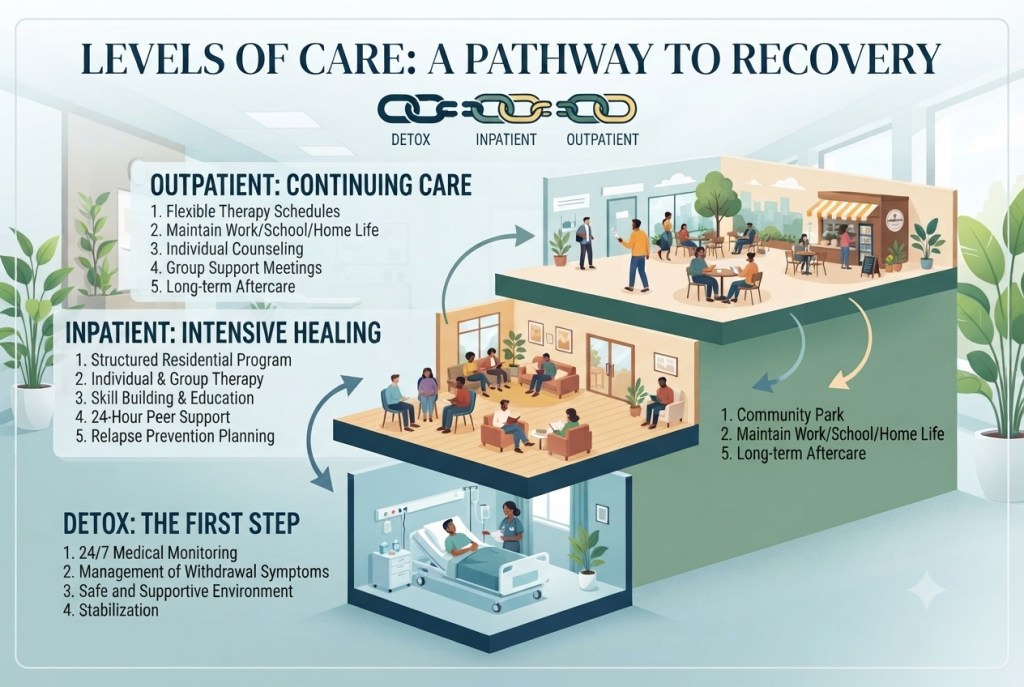
Levels of Care: Detox, Inpatient, and Outpatient
There is no single standard or style to addiction treatment. Typically progresses through phases. Understanding the role of inpatient treatment is crucial for selecting the appropriate treatment option.
For many, medical detox offers their first step. Typically, it will last 5 to 14 days. The emphasis is on helping you make it through withdrawal. Once that’s done, there are inpatient drug rehab facilities that provide full-time care for 30 to 90 days and provide daily care and treatment plans. The best level of this is for the more intense addictions or erratic domestic environments.
Outpatient care is next, or it suits less severe instances where you may go back home and still obtain solid assistance from it. Many go through each of these three stages. They begin with the most structure and phase down as they become more stable.
Seeking help from DeLand Treatment Solutions provides essential guidance
What a Day Looks Like Inside Inpatient Drug Rehab Facilities
The day begins early for a typical day. Mostly, waking up is around 7 am, and there may be morning medication required. Then breakfast is served, followed by the coping skills or addiction education session.
Group therapy will generally take place in the late morning. Discussions with peers about hardships and successes. There is frequently time for relaxation or the most trivial of entertainment. Then another therapy break, sometimes one-to-one, sometimes as part of a group. Support group meetings and/or free time before bedtime are common occurrences in evenings. Staff are available on-site 24 hours a day; help is always at hand.
The building of this structure is not a matter of control as such. It is a group of notes that create a rhythm for you to rely on. It takes the place of the chaotic addiction that it can cause by being steady and predictable.
If you are considering whether or not a facility is the appropriate level of care for yourself or a loved one, you do not need to figure it out by yourself.
Evidence-Based Therapies Used in Inpatient Drug Rehab Facilities
A good inpatient drug rehab holds no one hostage to just one way of doing things. They bring several established methods together and choose the most appropriate one(s) for the individual.
Individual therapy allows you to explore your past, trauma and goals with a licensed counselor. The benefit of group therapy is that it’s a way to create connections. It decreases the isolation often caused by addiction. Family therapy is a means of improving relationships that have been exacerbated by substance use.
CBT assists you in identifying and altering patterns of thinking that encourage drug use. Dialectical behavior therapy (DBT) will aid you in learning coping mechanisms for uncomfortable feelings rather than a substance. With opioid addiction, MAT uses medications (like buprenorphine) and treatment to help make a safer and more stable recovery. Additionally, there are complete programs that accommodate holistic possibilities, such as yoga, art treatment, or mindfulness instruction, which foster general health as well as medical treatment.
How Long Should You Stay? Treatment Length and Outcomes
Time is key in recovery. Studies have always revealed that residential drug addiction rehabilitation, when it comes to drug abuse, has been proven to be effective, particularly with the longer amount of time spent in the facility.
Thirty-day programs provide detox and initial stabilization treatment. A large part of the clinical work is usually left out in those. Sixty-day programs allow for additional time to address trauma and family dynamics. Their stay is usually more successful than short-term ones. Ninety-day programs provide the most extensive treatment interval and their level of effectiveness is highest.
Some participants might need a longer stay, particularly programs that also include employment training/experience or life skills activities before complete transition. Depending on the level of addiction, the right length will depend on the amount of support that is waiting at home.
Aftercare and Relapse Prevention
Going out of inpatient treatment is not the end of the road. It’s a transition. The outcome that ensues is essential if it’s going to work.
Your care provider typically helps you to set up an aftercare program before being discharged from treatment. The constant outpatient therapy, check-ins, and a plan to manage triggers at home. Support groups can help to keep you connected; they can be 12-step groups or SMART Recovery groups that will help you to stay accountable. There are sober living operators, which are in between. Family therapy can also continue to help families to build healthy relationships for recovery.
One of the most frequent triggers for relapses is failing to do this step. An effective aftercare program helps to take the work of treatment to the real world.

How to Choose the Right Inpatient Drug Rehab Facility
The first step to selecting the best facility is to make an honest assessment of your needs. Consider the severity of the addiction, co-occurring mental health issues and what kinds of supports you will have at home after treatment.
Look for the accreditation of a facility and also check reviews from previous patients! Be direct in your questions:
- What therapies do they provide?
- How many staff do they have per patient?
- Are co-occurring mental health morbidities treated?
- If necessary, is there medication-assisted treatment available?
There is a price difference as well. Most health insurance policies will pay for 100% or some portion of treatment at inpatient drug rehab centers. You may want to contact your provider or the admissions staff at the facility to confirm coverage before enlisting.
The most difficult part of the process is usually the first step, but that does not mean that you need to do this on your own. DeLand Treatment Solutions has fully individualized, evidence-based care that is provided and centered on you.
Call our admissions coordinators today for a no-cost and confidential consultation.
Frequently Asked Questions
What is the difference between inpatient and outpatient rehab?
Inpatient rehab means living at the treatment facility full-time with round-the-clock care. Outpatient rehab means living at home and attending scheduled sessions, which works better for milder cases with strong home support.
How long do people usually stay in inpatient drug rehab facilities?
Most stays run 30 to 90 days. Longer stays are linked to stronger, more lasting recovery outcomes, especially for more severe or long-standing addictions.
Does insurance cover inpatient rehab?
Many health insurance plans cover all or part of inpatient treatment. Coverage varies by plan and provider, so it’s best to verify your specific benefits before admission.
What happens during detox before inpatient rehab?
Medical detox typically lasts 5 to 14 days and focuses on safely managing withdrawal symptoms under medical supervision before deeper therapeutic work begins.
Is inpatient rehab right for everyone?
Not always. It fits best for severe addiction, unstable home environments, co-occurring mental health needs, or cases where outpatient treatment hasn’t worked in the past.
What therapies are used in inpatient drug rehab facilities?
Common therapies include individual counseling, group therapy, family therapy, CBT, DBT, and medication-assisted treatment, often paired with holistic options like mindfulness or yoga.
What happens after inpatient treatment ends?
Most people move into an aftercare plan, which may include outpatient therapy, support groups, sober living, or ongoing family therapy to protect their progress.
Medical Disclaimer: This content is for informational purposes only and is not intended as a substitute for professional medical advice, diagnosis, or treatment. Always consult a qualified healthcare provider or licensed addiction specialist about your specific situation. If you or someone you know is in crisis, call or text 988 (Suicide & Crisis Lifeline) or dial 911.
References:
- American Addiction Centers. “Inpatient Rehab: Finding Inpatient Rehab Near Me.” https://americanaddictioncenters.org/rehab-guide/inpatient
- National Institute on Drug Abuse (NIDA). “Treatment and Recovery.” https://nida.nih.gov/publications/drugs-brains-behavior-science-addiction/treatment-recovery
- Substance Abuse and Mental Health Services Administration (SAMHSA). Treatment Locator. https://findtreatment.gov